
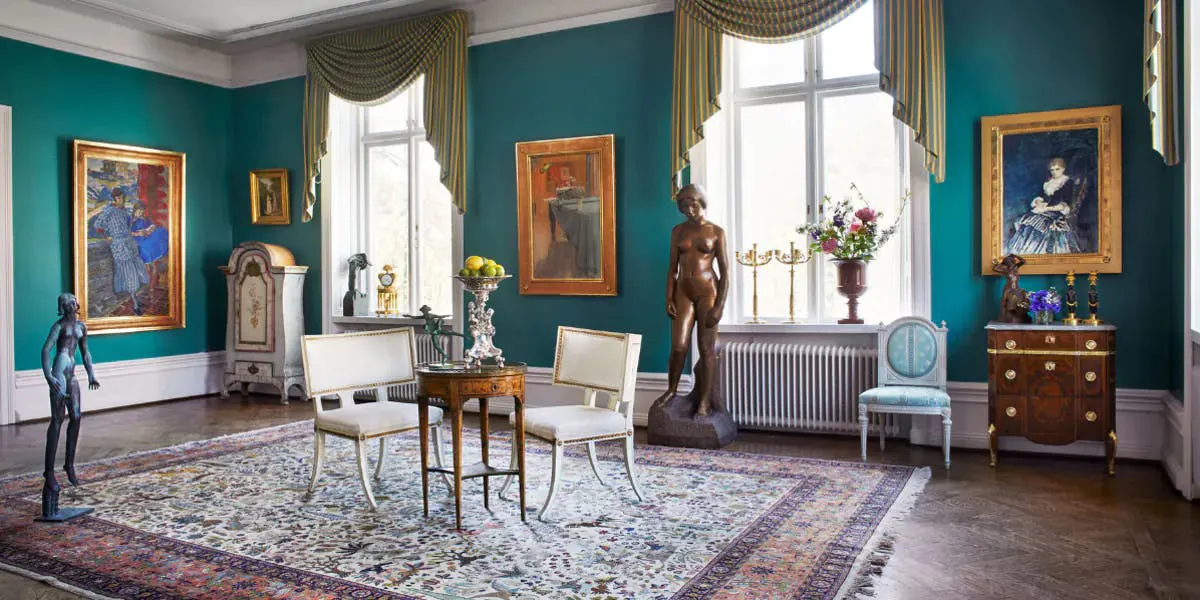
From 15-18 June, Uppsala Auktionskammare will be holding an auction of international quality. Western classics and Asian works are to be presented among an impressive range of fine art and craftsmanship from several important private collections. The auction will kick off with Lars Bellman's silver collection, which offers Swedish silver dating from the late Middle Ages to the days of the Empire style. Among the artwork in the catalogue are masterpieces by Anders Zorn, Carl Wilhelmsson, Carl Milles, and plenty of others. You will also find high quality furniture, textiles, jewellery, watches and much more.
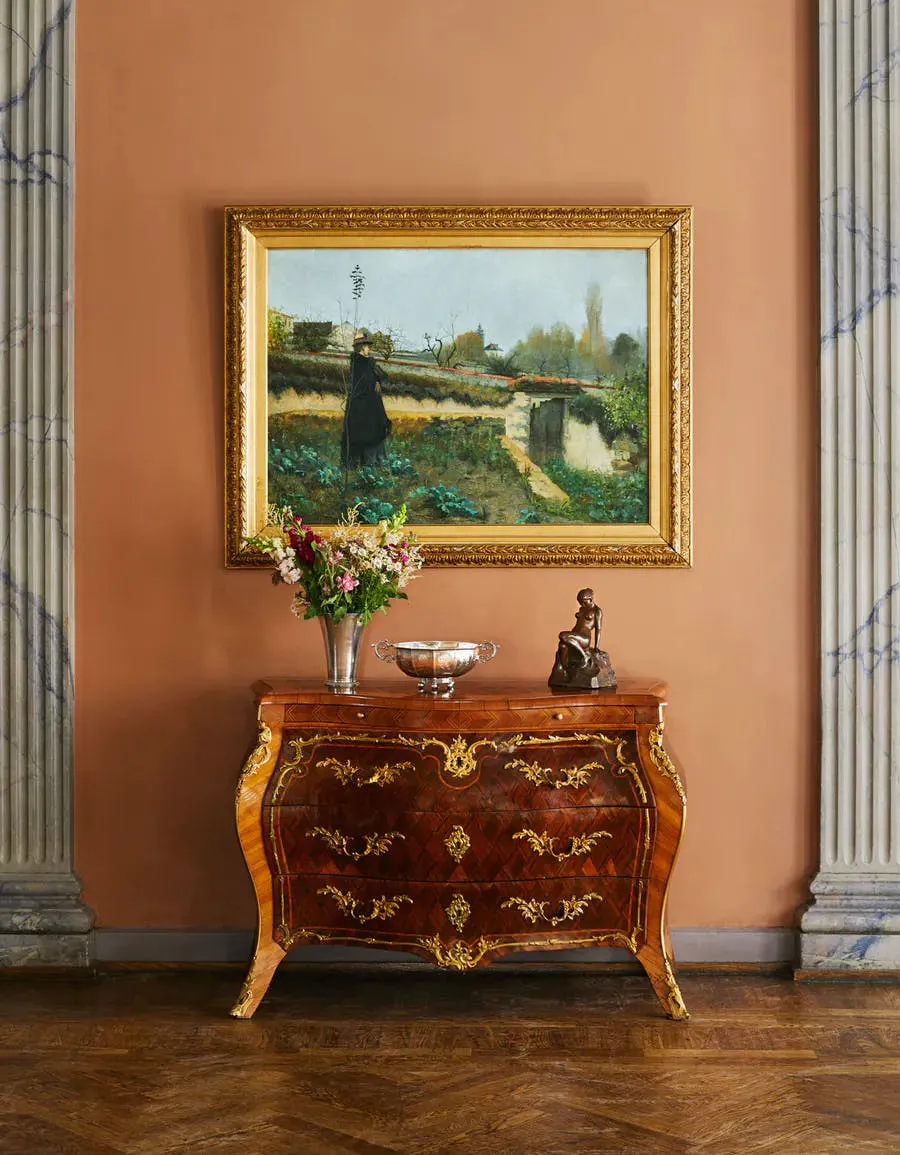
During the 1880s, many Swedish artists traveled to Paris and beyond, many of them ending their journeys at the small village of Grez-sur-Loing in the metropolis’ rural surroundings. Immersed in a picturesque setting, these artists used their canvases and sketch pads to capture the quiet beauty of everyday life.
After her years of study at the Royal Swedish Academy of Fine Arts in Stockholm, Julia Beck moved to Paris in 1879 to continue her studies at the Académie Julian. In the summer of 1882, her fellow painter and Swede Richard Bergh suggested that Beck and Karin Bergöö go to the artists' colony in Grez. The women then made their pilgrimage to the idyllic countryside, joining Carl Larsson, Nils Kreuger and Carolina Benedicks Bruce, among others.
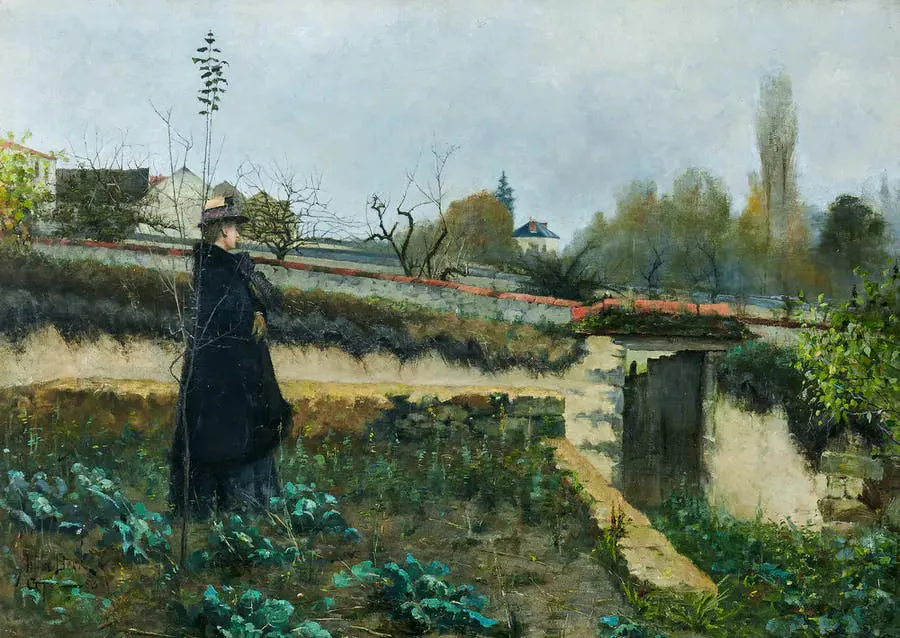
Like many of the other artists in Grez, Beck drew inspiration from the environments around her. From the art of portraiture, she transitioned to become an impressionist landscape painter. To that end, she would take her easel and paint what she saw in front of her. She had a refined instinct for capturing the light and atmosphere of her varied subjects, whether they be bridges, gardens, or lakes. She later explained the importance of painting from life: “The painting must be painted entirely in nature. Only in this way can the right atmosphere be achieved".
One of Beck’s paintings, included in the auction, depicts a woman standing in a garden and surveying the landscape ahead of her. Who the woman is remains unknown, but she represents the Scandinavian artist's encounter with the French countryside that left an indelible mark on Beck and her contemporaries.
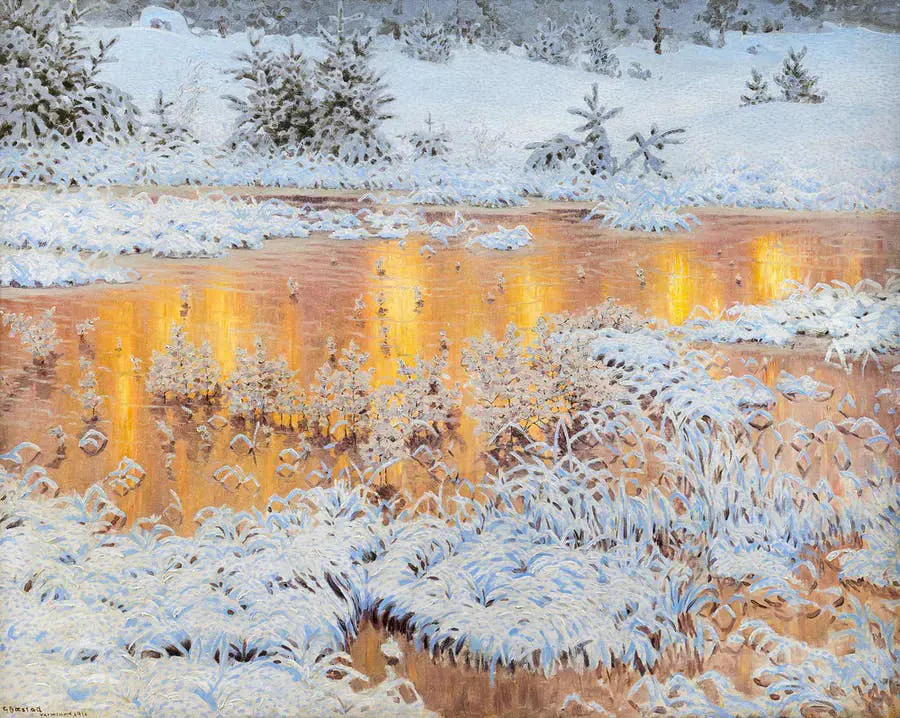
At the turn of the twentieth century, interest in the genuinely Swedish swelled. Seeing nature, experiencing it, absorbing it, and in turn recreating it, was a talent that no one succeeded in quite like Gustaf Fjaestad. Uninterested in engaging in methods that distorted nature, Fjaestad avoided styles like cubism, surrealism, and Dadaism which attracted other Swedish artists at the time. Instead, he wanted to paint nature as it appeared to him.
Solreflektioner i vinterlandskap, from 1916, depicts a sparkling winter day. The painting exhibits a combination of pointillistic technique and impasto which is used to depict the white snow. Paired with the wide and warm brush strokes that comprise the light and reflections, the landscape is infused with contrast and depth.
Fjaestad, notably and aptly called the 'master of hoarfrost', also kept busy by designing furniture and textiles, forging, and even making violins. He was also a talented athlete and belonged to the elite circles of skating and cycling.
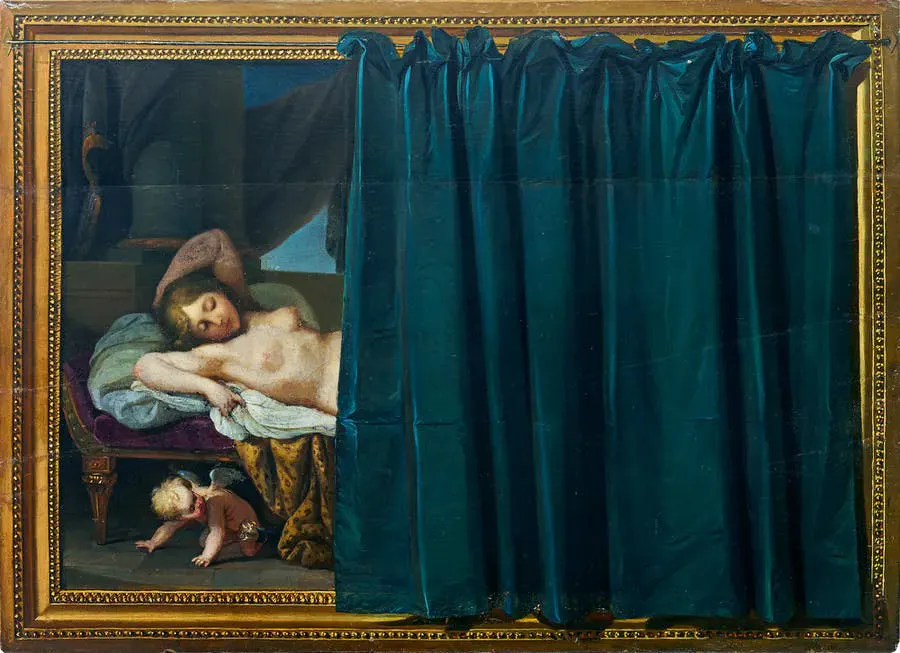
The above painting of a nude woman lying in bed with a winged putto under its frame is based on a famous art-history tradition that aims to fool the viewer's eye. The motif is partly covered by the blue curtain mounted on the gilded frame. However, closer inspection reveals that the curtain and frame are not 'genuine', but painted on the panel. The technique is known as trompe-l’oeil and is a much loved trick that can be traced back to ancient Roman myth.
In the Naturalis Historia, Pliny the Elder (23-79 AD) tells the myth of Zeuxis and Parrhasius, both of whom were famous Greek painters from the 5th century BC. As the story goes, the artists competed against one another to decide who was the best painter. Zeuxis painted a cluster of grapes that looked so real, birds tried to eat them. Parrhasius presented his painting while it was covered with a curtain, prompting Zeuxis to ask Parrhasius to remove it so that he could see it in its entirety. Unfortunately for him, he discovered that the curtain was in fact painted on the panel. Victory went to Parrhasius because he could deceive animals and humans alike.
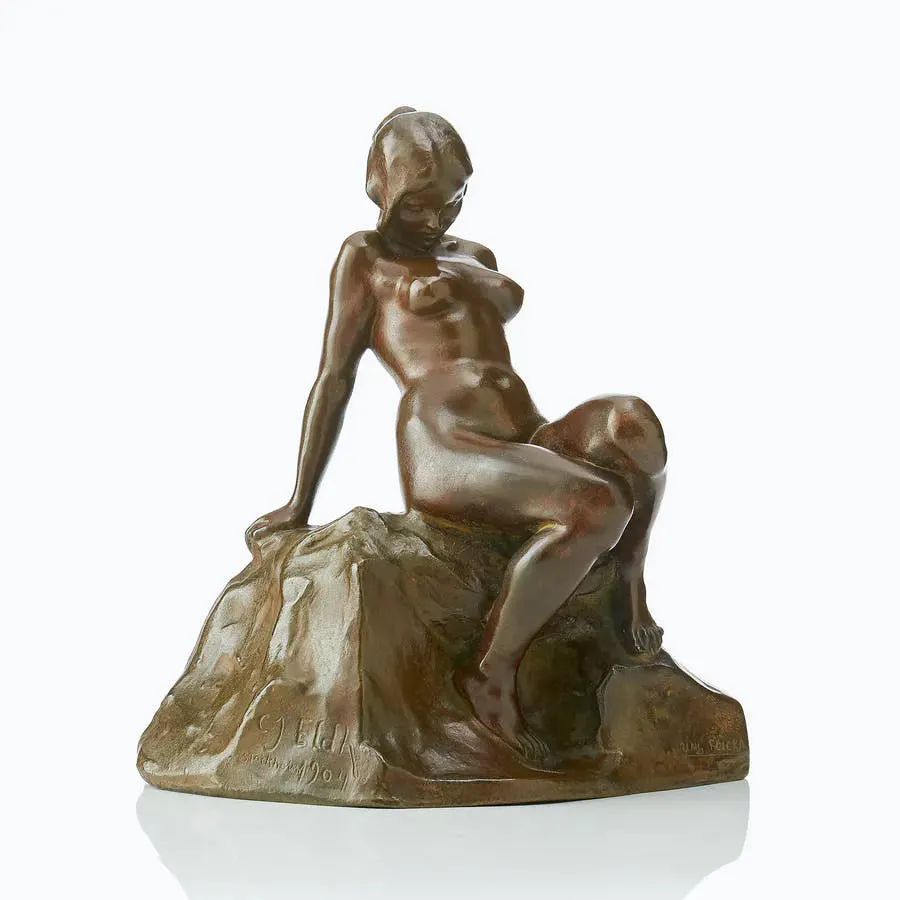
Carl Eldh was one of the most prominent Swedish sculptors of the last century. Following his years of study in Paris from 1897-1904, he was praised for his sculptures, which often took the form of young nude figures. Eldh's first sculpture after returning from Paris, cast in bronze and depicting a young woman sitting on a rock, is among the lots on offer at the auction.
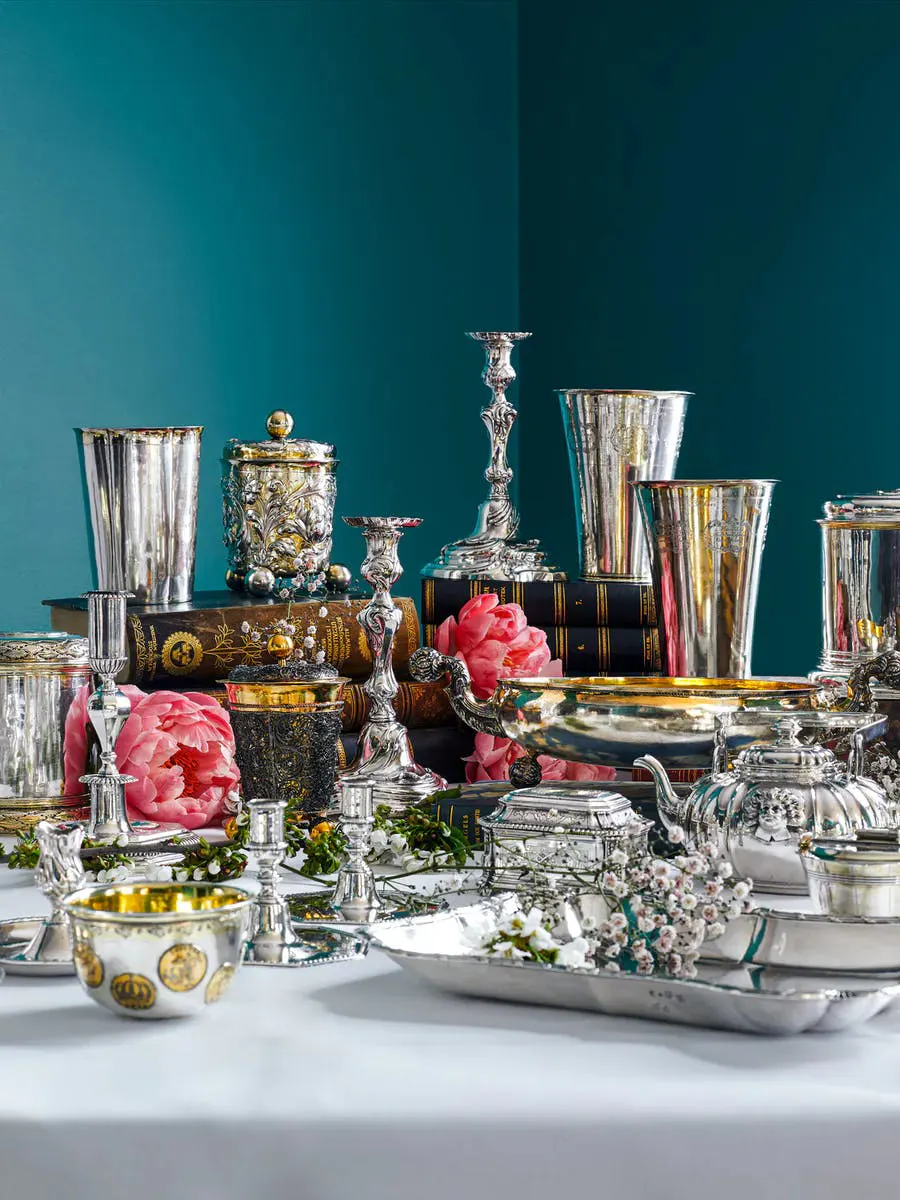
On Tuesday 15 June, Lars Bellman's magnificent silver collection will take the stage. Jan Ribbhagen, one of Sweden's foremost silver and jewellery experts, says: “In the property on Odengatan 62 where Lars Bellman grew up, there was also our company. My two brothers and my father Kurt were all goldsmiths and my father was very interested in silver. Lars was the same age as my brothers and they gladly invited him to take part in this craft – and dad told me! There, Lars' love of silver took off in earnest.”
Among the 234 pieces on offer, you will find a pair of slanted silver goblets. Coming to us from 1702, the cups were made by Henning Petri in Nyköping, himself one of the most important goldsmiths outside Stockholm during the Baroque period. The cups are excellent examples of Swedish baroque silver’s characteristic simplicity in contrast to the flashy and richly decorated silver of the time.
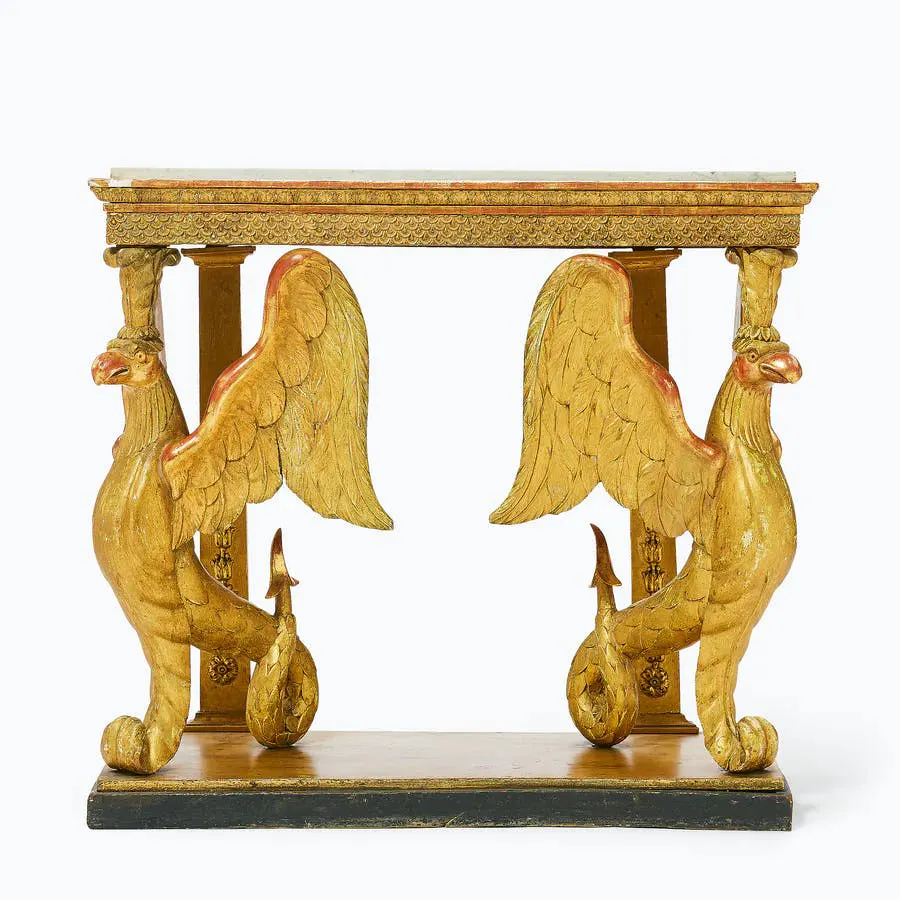
Uppsala Auktionskammare offers a variety of high-class furniture featuring everything from colourful folk to Gustavian artisanry. One highlight is an Empire console table designed by Carl Fredrik Thim, who was an active mirror manufacturer and wholesaler in Stockholm from 1818-34. The beautiful table is adorned with gold leaf and has a wood-carved decoration of winged mythological creatures. The top is Carrara marble, one of the world's most famous types of marble and one which saw extensive use during the Roman Empire’s heyday.
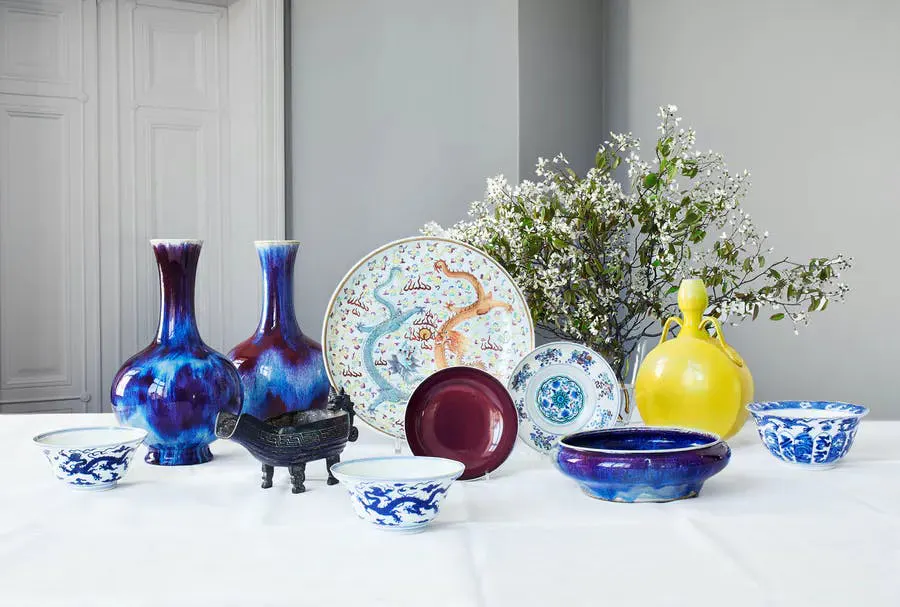
The last day of the auction boasts the well-stocked Asian catalog, which offers an assortment of curiosities and artworks from different periods of Asian history such as textiles, porcelain, scrolls, lacquerware, bronzes and carpets.