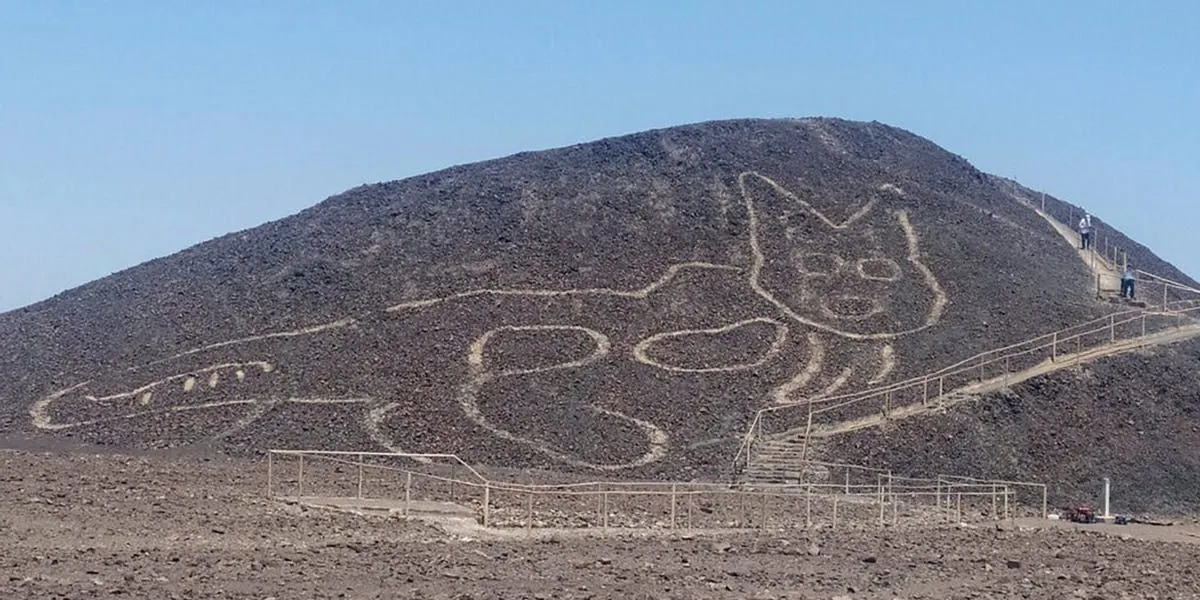
The Nazca geoglyphs, large figures drawn into the ground, are the work of a pre-Inca culture active between 300 BC and 800 AD. These silhouettes, which encompass significant parts of the Peruvian landscape, represent stylised animals, including the monkey, the heron, the hummingbird, the dog, the spider, the condor, the pelican and the sperm whale. Now, a large-scale feline has also been discovered.
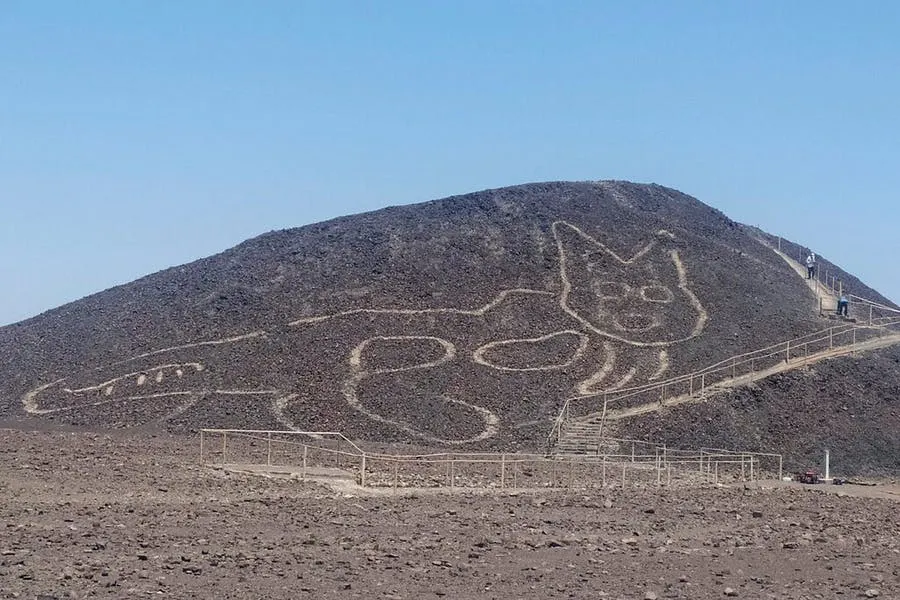
Found by chance during construction work to facilitate access to one of the hills of the site, the new monumental geoglyph depicting a cat spans 37 meters long. According to Peru's Ministry of Culture, which announced the find in a statement, the silhouette was barely visible and was on the verge of disappearing due to its location on a fairly steep slope and the effects of erosion. The geoglyph has been cleaned up and conservation work has started.
Related: Archaeologists Discover the World's Oldest Illustrated Book
The feline is represented with the body in profile and its head facing out, visible with well-defined lines. According to archaeologists, its stylistic characteristics suggest that the work dates from 200-100 BC, the end of the Paracas period, and it would therefore predate the other figures of Nazca. Representations of felines of this type are frequent in the iconography of the pre-Columbian civilisation of Paracas, as evidenced by some of their ceramics and textiles.
Related: The Oldest Mayan Site Discovered in Mexico
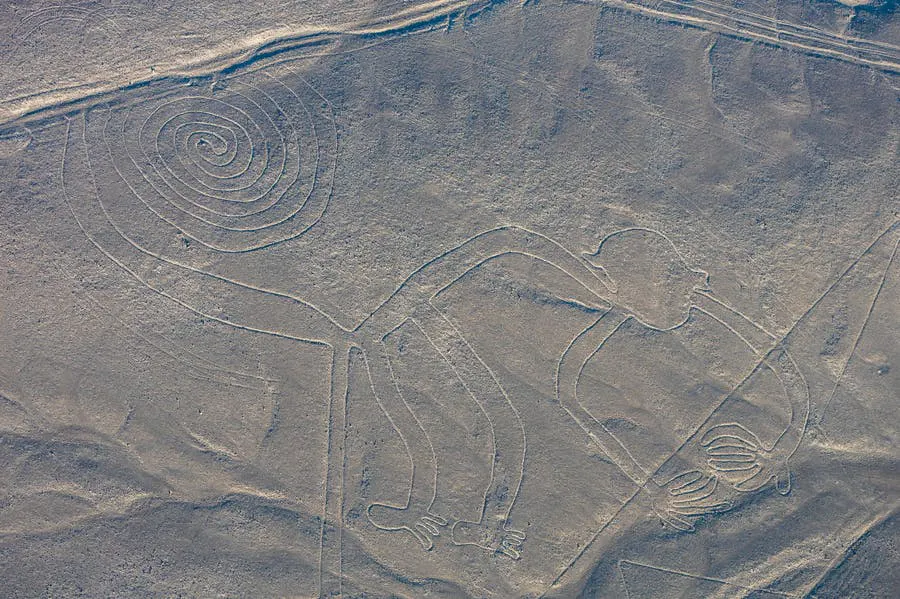
This discovery enriches the cultural heritage of the region. The Nazca geoglyphs have been a UNESCO World Heritage Site since 1994 and are one of the most fascinating works created by man. Johny Isla, head of the team of archaeologists working on the geoglyphs, said he is surprised at each new discovery, but remains convinced that other works still await them.
The Ministry of Culture, on the other hand, was enthusiastic about the excitement generated by this discovery, saying in a statement, “Even in times of pandemic, the staff of the Ministry of Culture contributed to research, conservation and development of tourism in the region, especially in the province of Nazca."