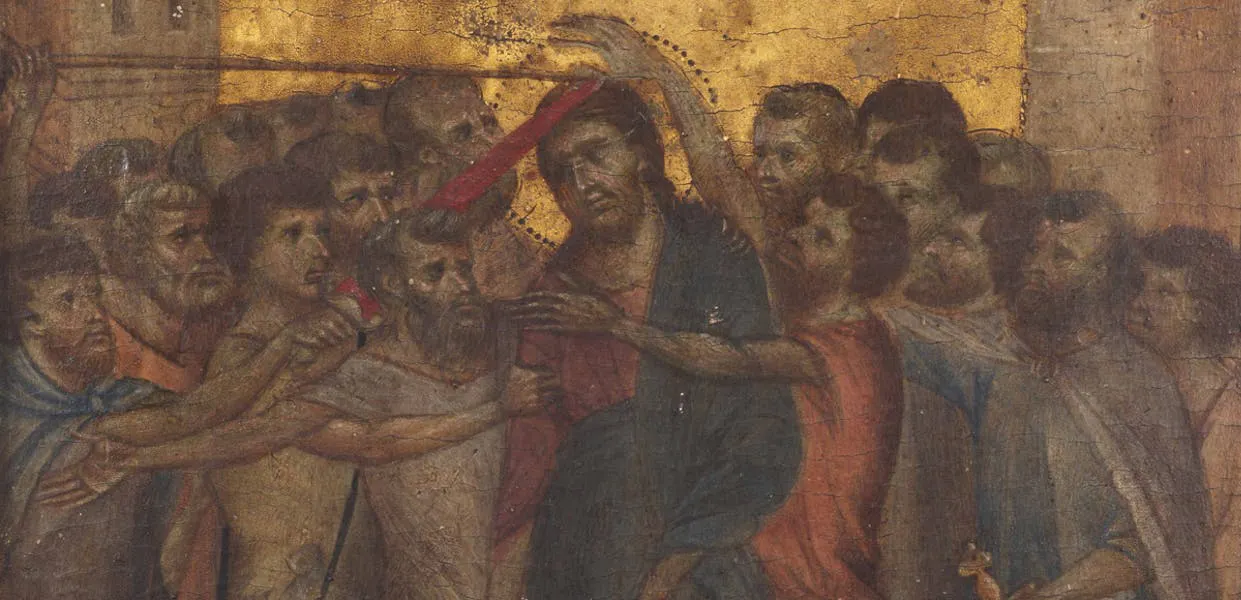
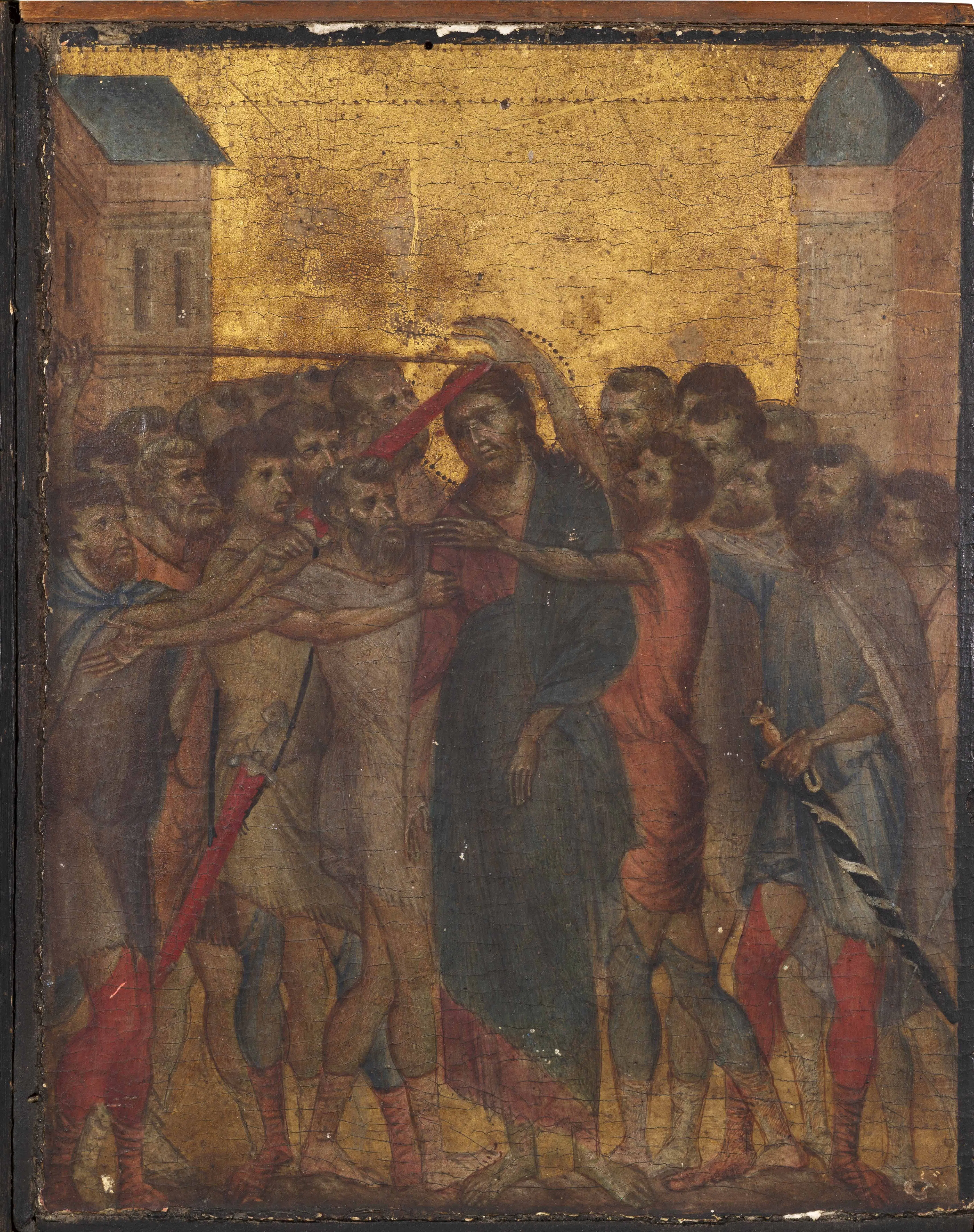
The discovery of the small painting in a kitchen in Compiègne, France, shook the art world after it was authenticated as a work by Cimabue. The Derision of Christ or The Christ Mocked, was then auctioned on 27 October 2019 for the record sum of US$26.6 million (£20.29 mil), becoming the most expensive pre-Renaissance painting in the world.
Since the Louvre was not able to raise the funds necessary to purchase the painting at auction, the work came into the possession of a private collector (suspected to be Chilean billionaires Alvarro Saieh Bendeck and Anne Guzman Ahnfelt). However, at this point the work did not yet have an export certificate.
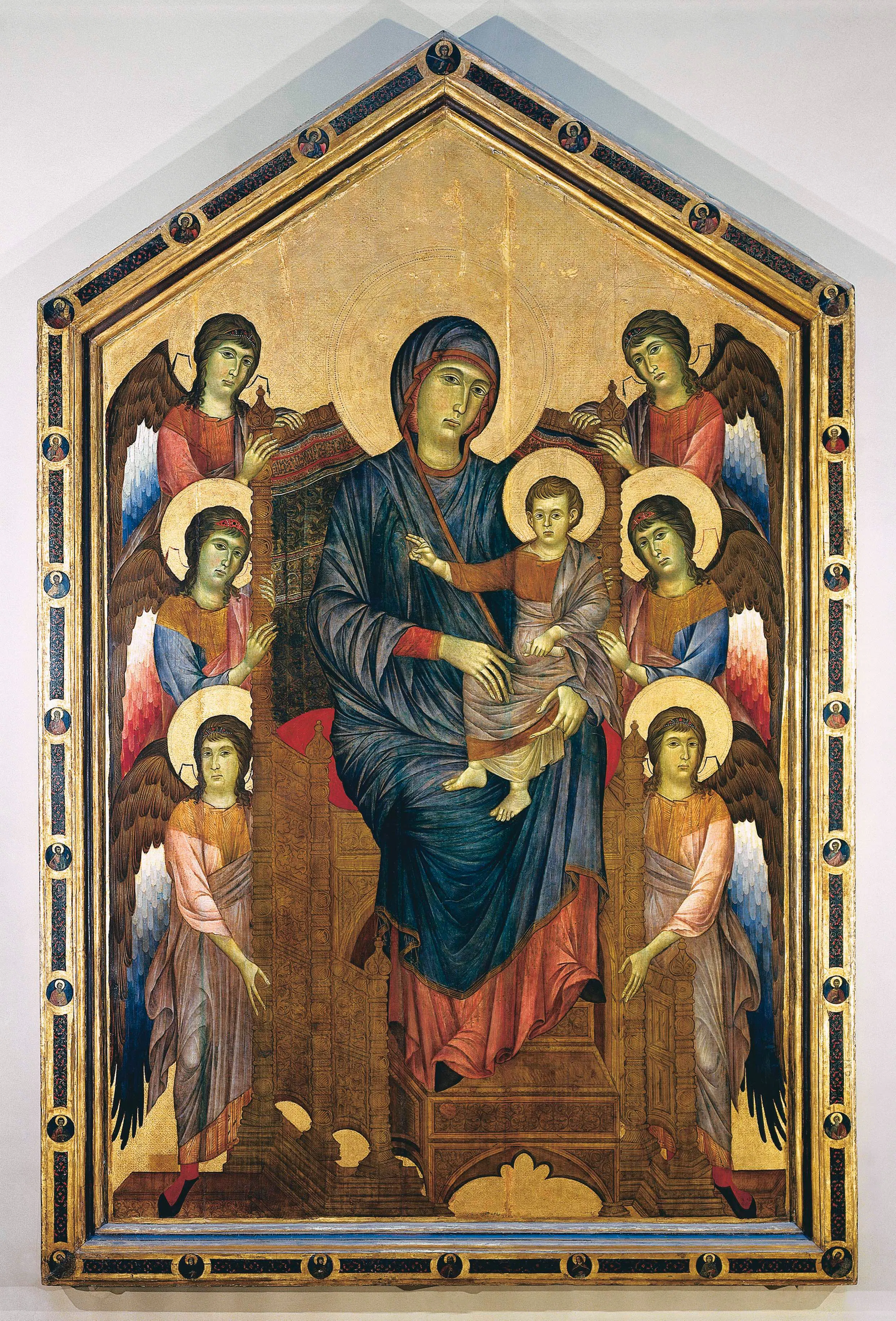
Franck Riester, French Minister of Culture, declined the issuance of the certificate, announcing that the painting has been recognised as a "national treasure" and would not leave the country for a period of 30 months from the notification of the verdict to the owner. This delay will be used "to raise the funds necessary to carry out an acquisition for the benefit of public national collections", and will perhaps allow the panel to join the Maestà, a Cimabue work depicting the virgin with child, already preserved at the Louvre.
"I salute the eminent role played by the export control system for cultural goods for the protection and enrichment of the national heritage," said Reister, "and I thank the members of the Advisory Committee on National Treasures, under the leadership of its chairman, Edmond Honorat, whose careful examination of the certificate refusal proposals clarifies my decisions. Thanks to the time given by this measure, all efforts can be mobilised so that this exceptional work comes to enrich the national collections."
La Derision du Christ is an egg on tempera painting with a gold background on poplar panel and depicts one of the most painful scenes of the Passion: the moment when Jesus, after being arrested and tried, is crowned with thorns, mocked and flogged by soldiers. The work is part of a devotional diptych from 1280 of which two other works are known: The Flagellation of Christ (Frick Collection, New York) and The Madonna and Child enthroned and surrounded by two angels (National Gallery, London).
Cimabue, or Ceno Di Pepo (his real name), is a major figure of the pre-Renaissance era who broke with the formalism of Byzantine painting and put the human at the centre of the composition.