
The well-known Italian designer Massimo Vignelli said it best: good design is visually powerful, intellectually elegant and, above all, timeless – a statement proven true by the lots offered at auction by Incanto Casa d'Aste e Galleria on 12 and 13 July, in two sales where design, quality and beauty will take the lead.
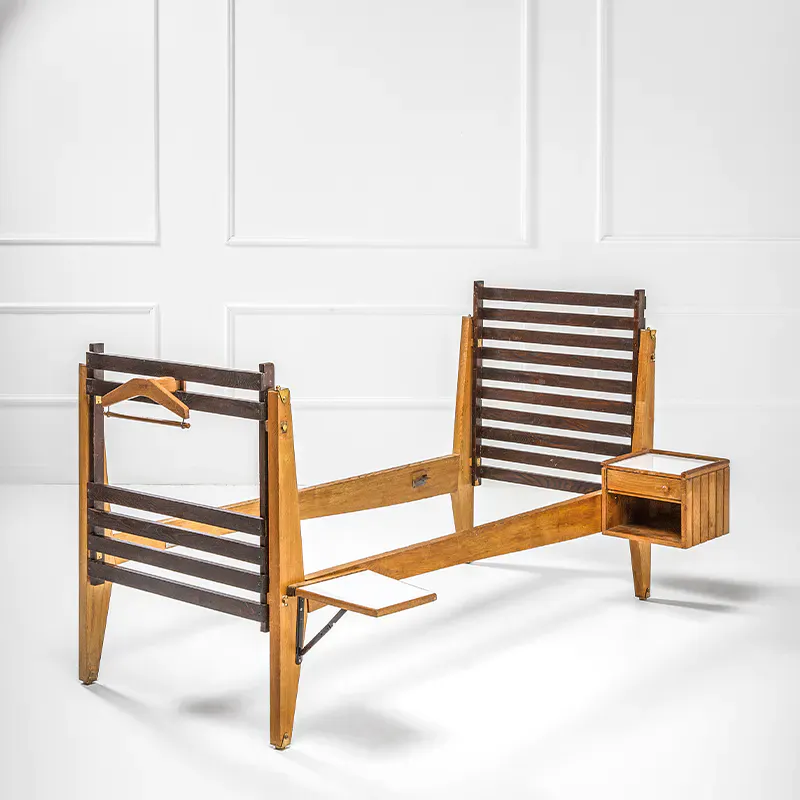
Let’s begin with the Classic Design auction, which brings together a fantastic production of Italian furniture and lighting ranging from the 40s to the most excellent designs of the late 60s, the golden age of Made in Italy. In those years, architects such as Carlo Mollino, Gio Ponti, Paolo Buffa, and Franco Albini designed their furniture with the help of the best craftsmen, defining the taste of the interiors of the Italian middle class according to the principles of modernist functionalism. That functionality is well represented in these two side-by-side or stackable beds by Mollino. Made of solid oak wood, brass and plastic laminate, they are equipped with two sliding hangers and two suspended bedside tables. They come from the Casa del Sole in Cervinia, and although they were made around 1955, they remain exquisitely modern.
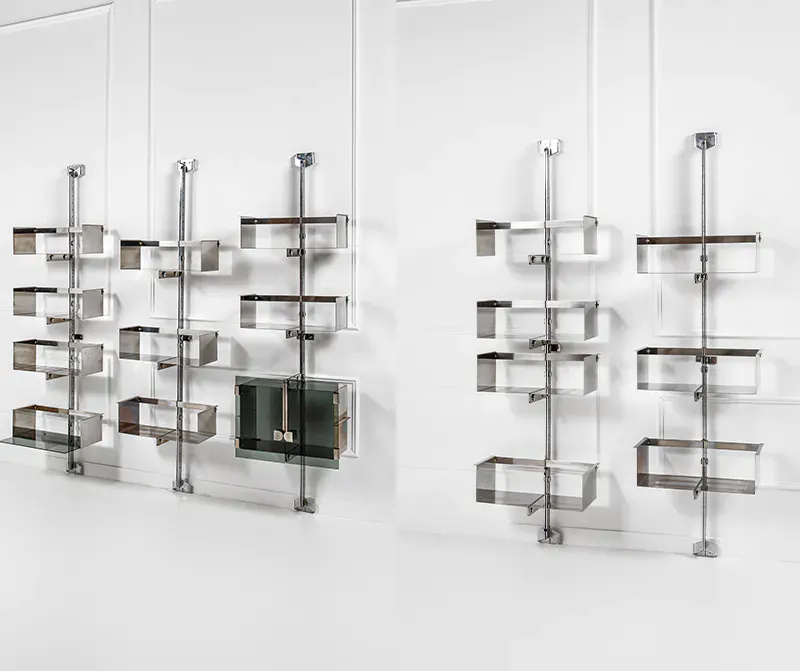
Another example of timeless design, the P700 is a suspended modular bookcase system, with elements in polished and shaped chromed steel assembled with visible screws. This captivating design was created by Vittorio Introini for Saporiti in the late 1960s, when designers experimented with the curved multilayer of chromed steel.
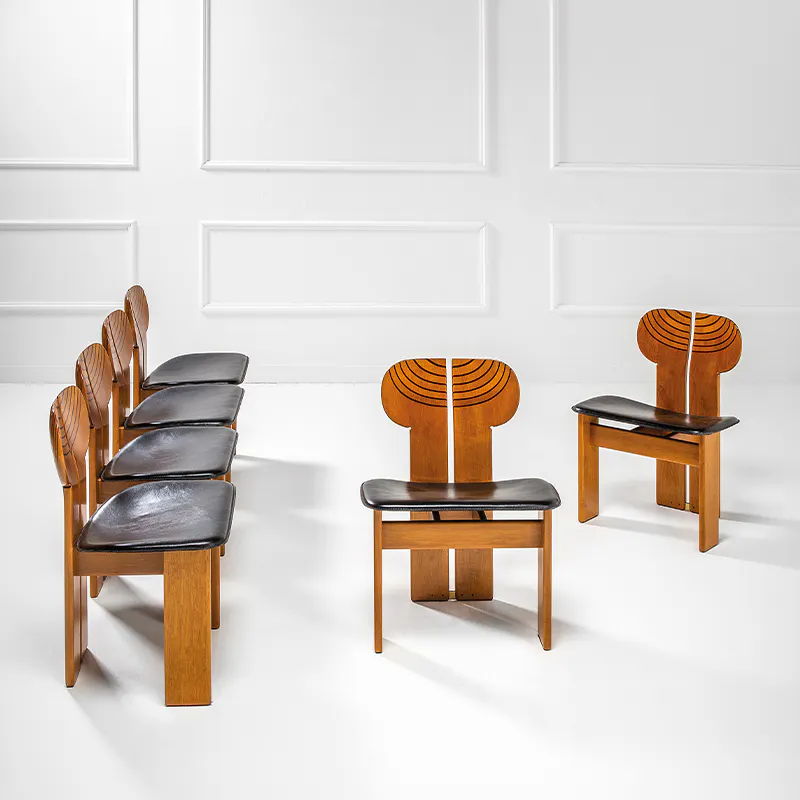
To this period also belong these magnificent sculptural wooden furnishings made by Afra and Tobia Scarpa, who worked with Maxalto to create the Artona line, using production processes typical of cabinet making and lutherie. The six Africa chairs are made of solid walnut wood and ebonized wood inlays, striking a sculptural effect of overlapping layers of different types of wood. These are not just simple chairs, but sculptures whose design somehow manages to become harmonic.
The second auction, scheduled for 13 July, is dedicated to New Design and features designs characterised by a strong innovative drive. From the late 1960s onwards, the crisis of modernism led to the search for new aesthetic values in design. A new form of contemporary society needed interpreting: it came out complex, articulated, fragmented, and contradictory. Furnishings no longer had a defined shape, but were deconstructed, reinvented, and enriched with multiple functions. In this period, innovative studios such as Memphis, Studio Alchimia, UFO, and then individually Andrea Branzi, Ettore Sottsass, Alessandro Mendini were born.
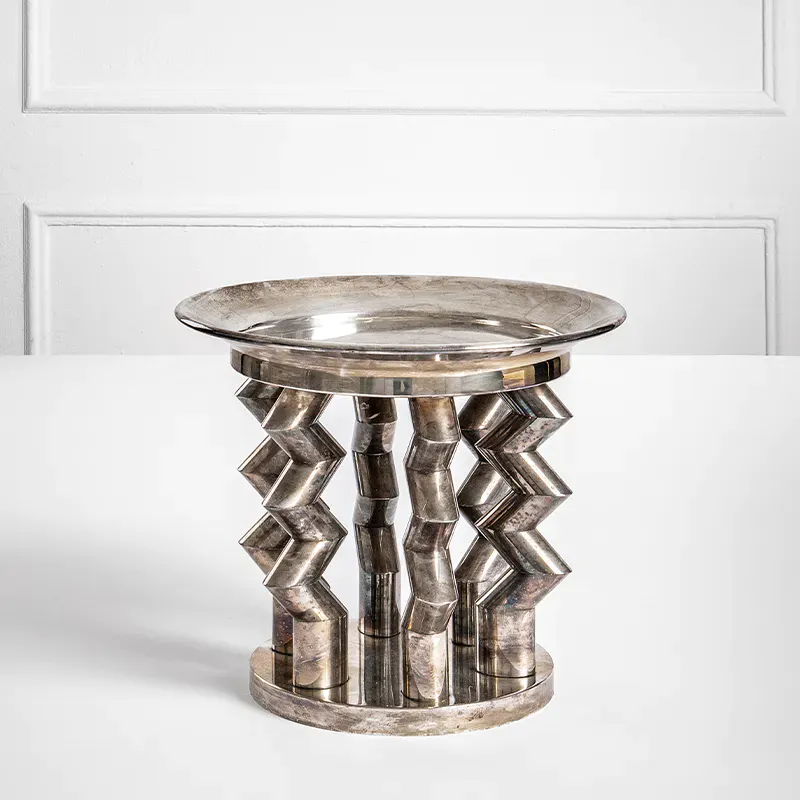
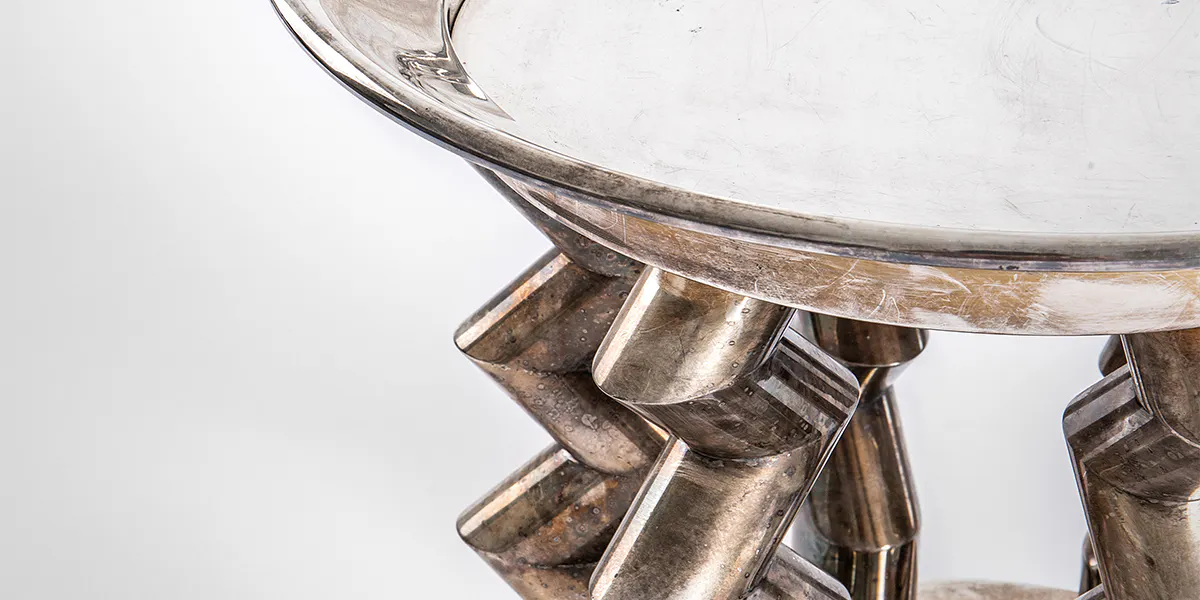
The Murmansk centrepiece was designed in 1982 by Ettore Sottsass and is made up of overlapping geometric elements in silver-plated metal. The top sits on 6 zigzag tubes, posing like a smirk in the face of industrial production.
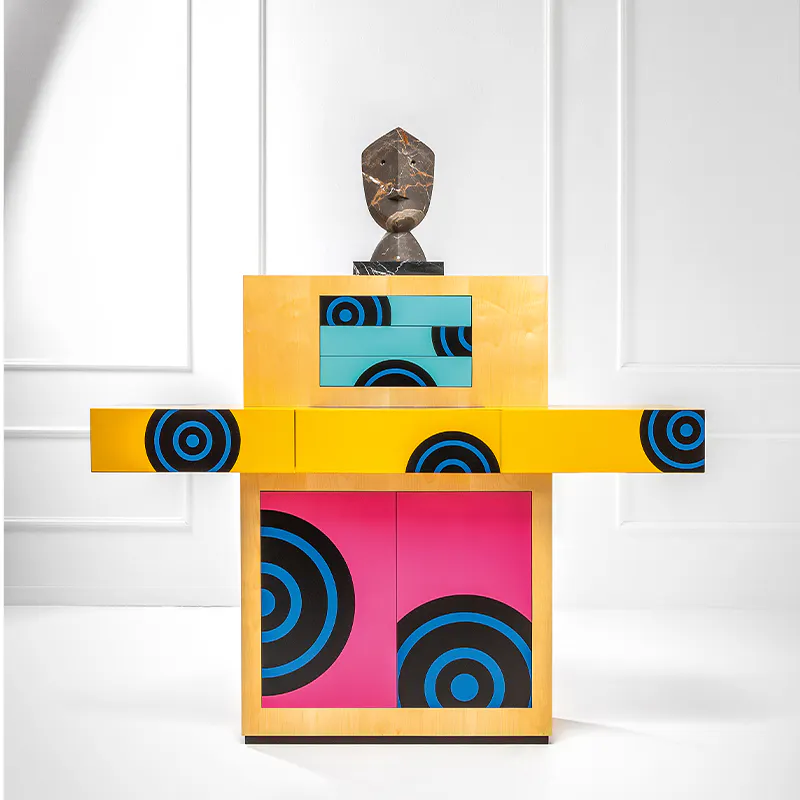
Another exuberant example of this colourful and creative period is the sideboard by Alessandro Mendino for Cleto Munari, composed of 3 overlapping wooden elements and a marble mask, looking like a sort of archaic totem, witty and functional at the same time.
During this period, foreign designers and artists, such as Shiro Kuramata for Memphis and Ron Arad for Cappellini, also significantly contributed to Italian design.
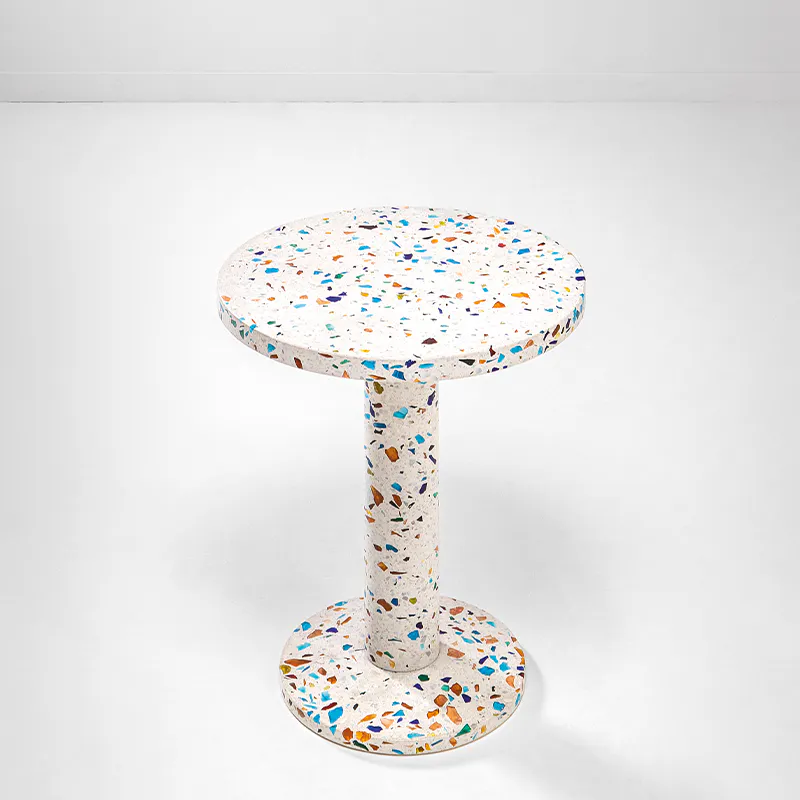
This Kyoto coffee table by Shiro Kuramata for Memphis was made in 1983 with coloured glass flakes (Star Piece) set in a cement mixture. It seemingly pays homage to the ancient Venetian tradition of terrace floor-making while also searching for a new expressive effect that attempts to capture the light of the stars. That same light tends to capture the visually powerful, intellectually elegant and, above all, timeless Design.
Discover the entire catalogue of Incanto Casa d’Aste e Galleria on Barnebys