Italian auction house Cambi is kicking off the summer with exciting new sales in its Milan office, located at Via San Marco 22. This time, the twentieth century is the thread uniting each of the lots on offer on the days of 22 and 23 June: the two catalogues are '20th Century Italian Glass and Ceramics' and 'Fine Design', both arrays of refined lots coming from private collections.
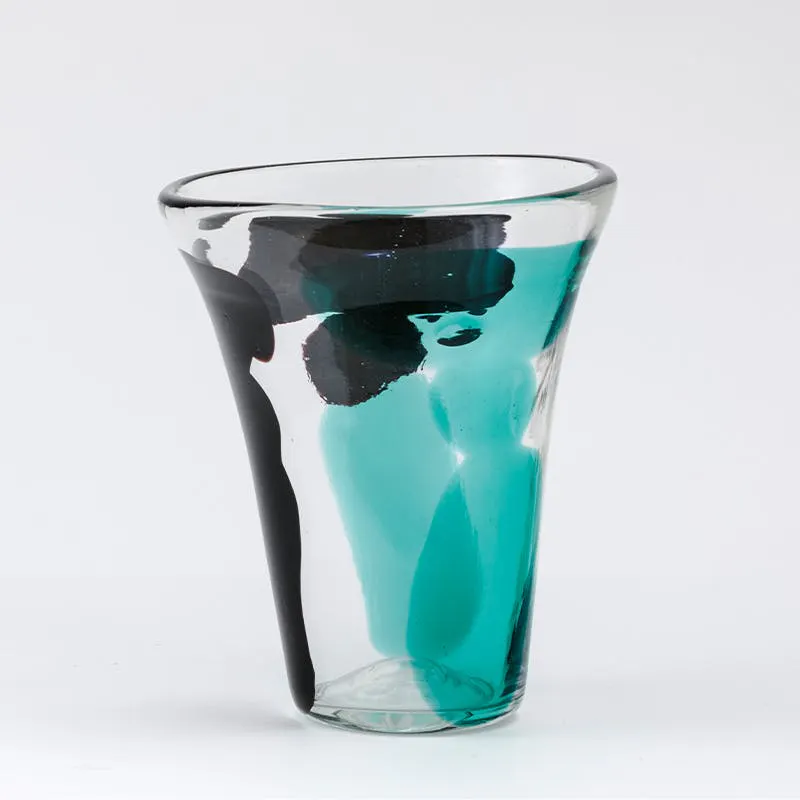
The top lot in this catalogue is an exceptional truncated cone vase designed by Fulvio Bianconi and produced by Venini. This design is particularly successful in its form and in the alternating colours of its polychrome decoration, which allows it to produce varying chromatic effects depending on the observer's point of view. Gio Ponti and Paolo Venini became fast friends in the early 1920s and were later to become esteemed collaborators. The bonds of trust forged by these two important masters of the Italian art scene led the architect and designer Gio Ponti to work with great passion for the Venini company at different stages of his career, creating precious objects that added to the storied mythos of the most famous artistic glass factory in the world. An excellent example of this collaboration is a 1950s chandelier made of multicoloured blown glass, a refined decoration with a surprising pop and a decidedly contemporary spirit – despite being almost 70 years old.
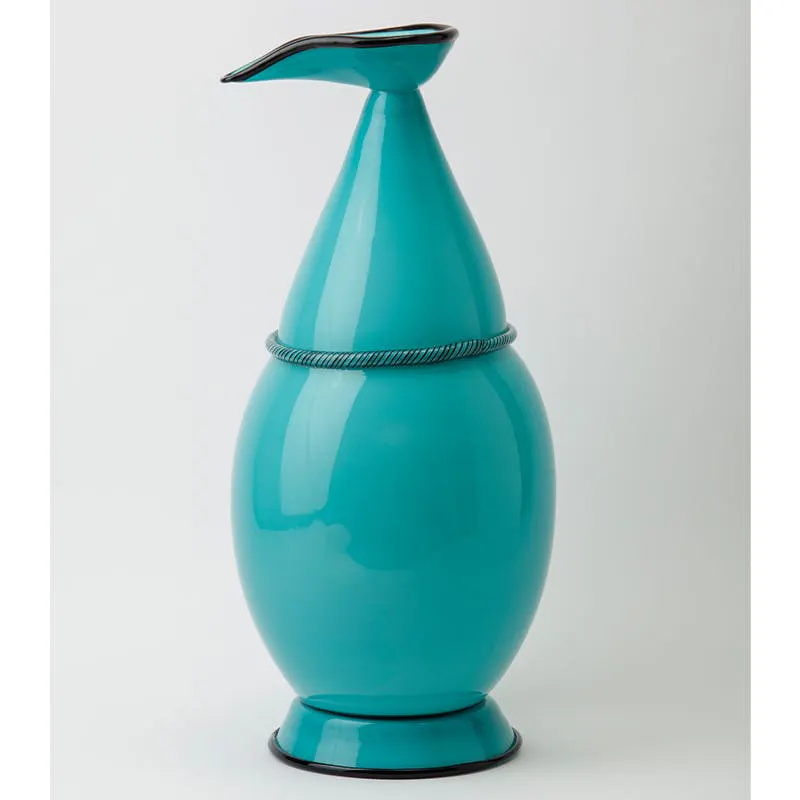
Another particularly interesting Venini vase is from the Turquoise and Black series. Designed by Tomaso Buzzi, the vase sports an asymmetrically shaped opening, truncated cone foot, and horizontal ridges in black glass. It also had the distinction of being just one part of an extremely rare series presented at the 18th Venice Biennale in 1932. The model that inspired Tomaso Buzzi is a Persian silver jug from the 10th-11th century which was exhibited in London at Burlington House in 1931 and which the author probably saw published in the Dedalo magazine directed by Ugo Ojetti.
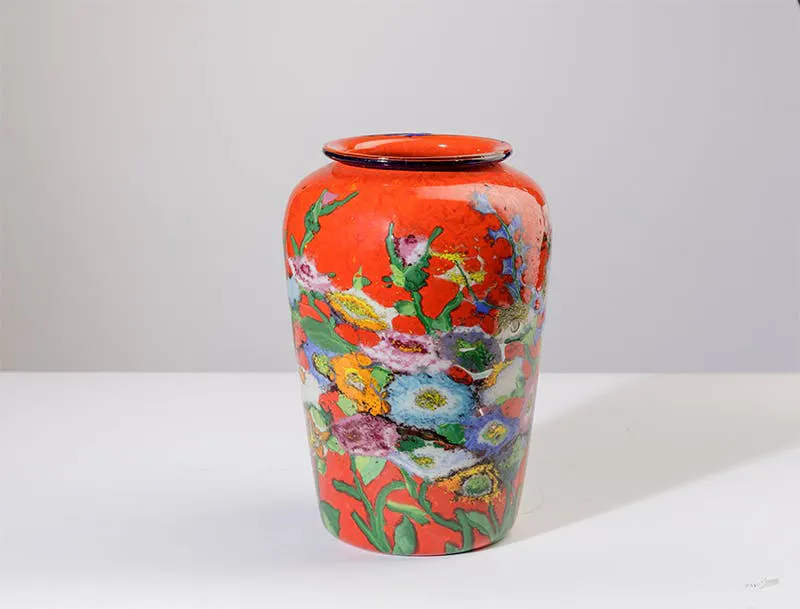
Leafing through the catalogue you will also notice the incredible Benvenuto Barovier Vase, one of the rare examples that showcases the different experimental techniques developed by the Barovier cousins in their furnace in the early twentieth century are clearly visible. The vase, with a shape that is more similar to oriental porcelain than it is to the classic Murano tradition, is entirely covered with a mosaic of polychrome tiles with a strong red lacquer finish, also clearly of Chinese inspiration. On this almost homogeneous background stand out – as in a symbolist painting – large flowers and branches with leaves that give the object an extremely picturesque decorative quality.
Finally, we bring to your attention the refined sculpture, Virgin with Goat, fashioned in majolica terracotta by Enrico Mazzolani, as well as a large blown glass vase by Vittorio Zecchin.
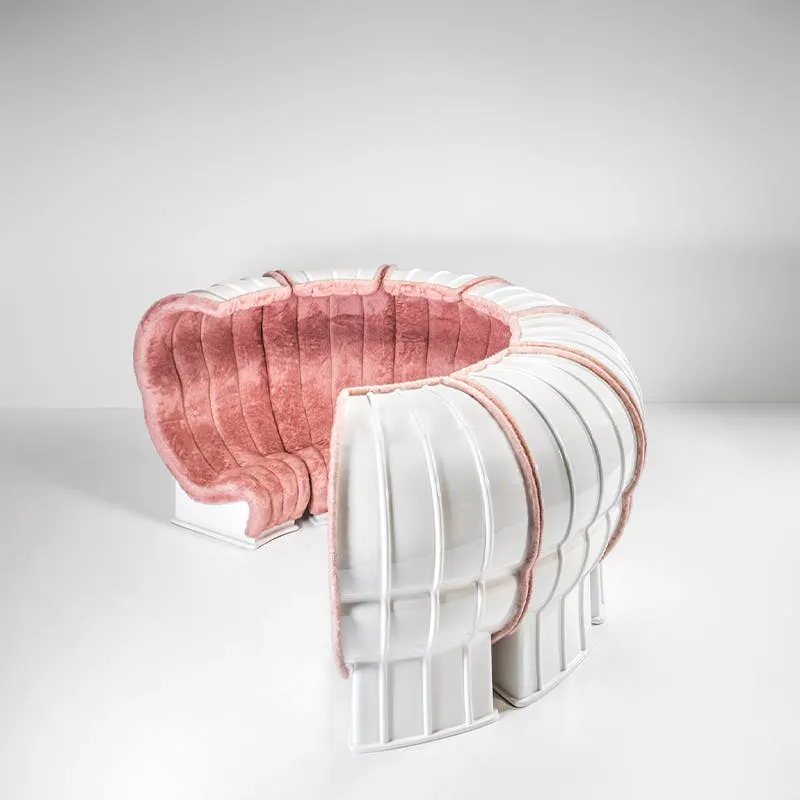
On 23 June, Cambi will be presenting one of its most highly anticipated catalogs of the year: the Fine Design auction, a collection of important international and Italian design elements. Among the most interesting lots we find the Bazaar, an elaborate modular sofa model produced by Superstudio, with a frame structure in polyester resin and double-curved fibreglass and upholstery cut from acrylic fabric. Impossible to ignore and visionary in form, the Bazaar is a home sculpture that surprises and arouses reflection in the observer. The unmistakable trait of genius, as this creation most certainly demonstrates, manifests itself when the observer is unable to take his eyes off of an object that should be simple: the Superstudio sofa performs its practical task very well and, at the same time, it also assumes a more poetic responsibility, a role devoted to inspiration and contemplation.
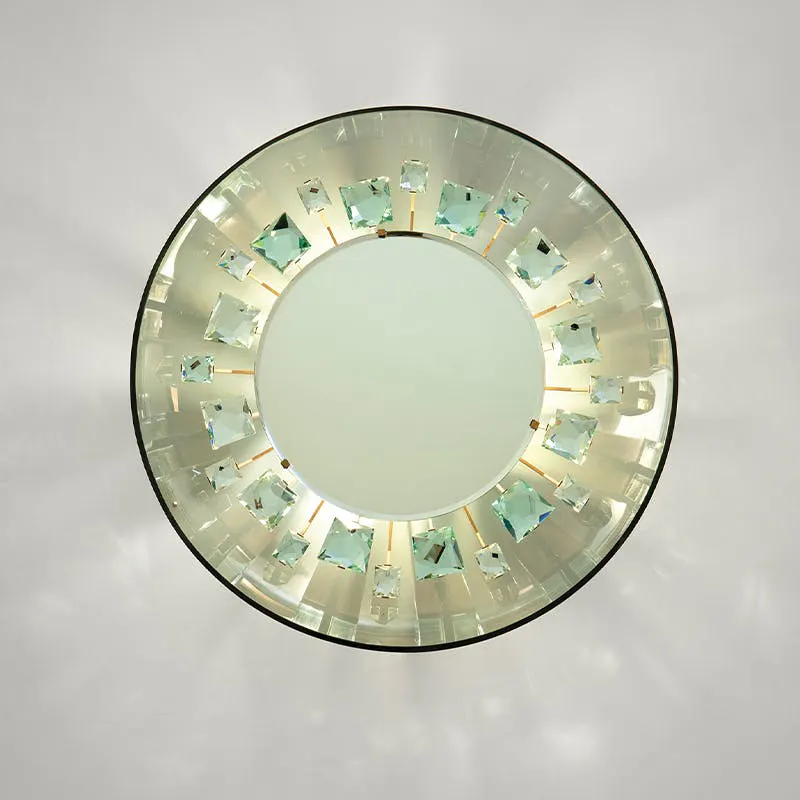
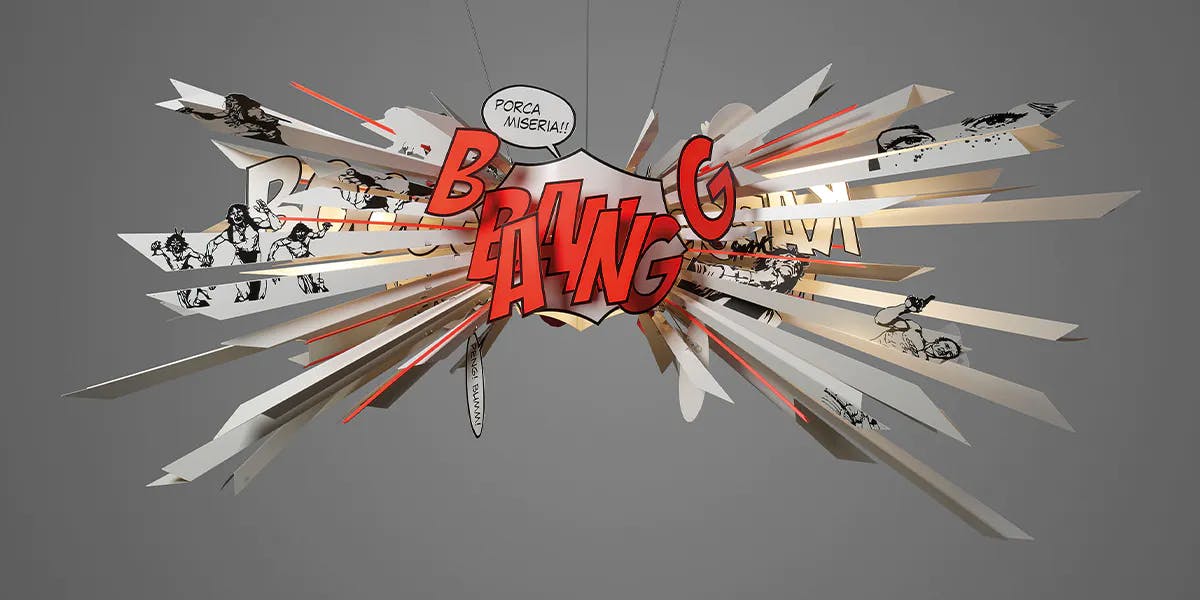
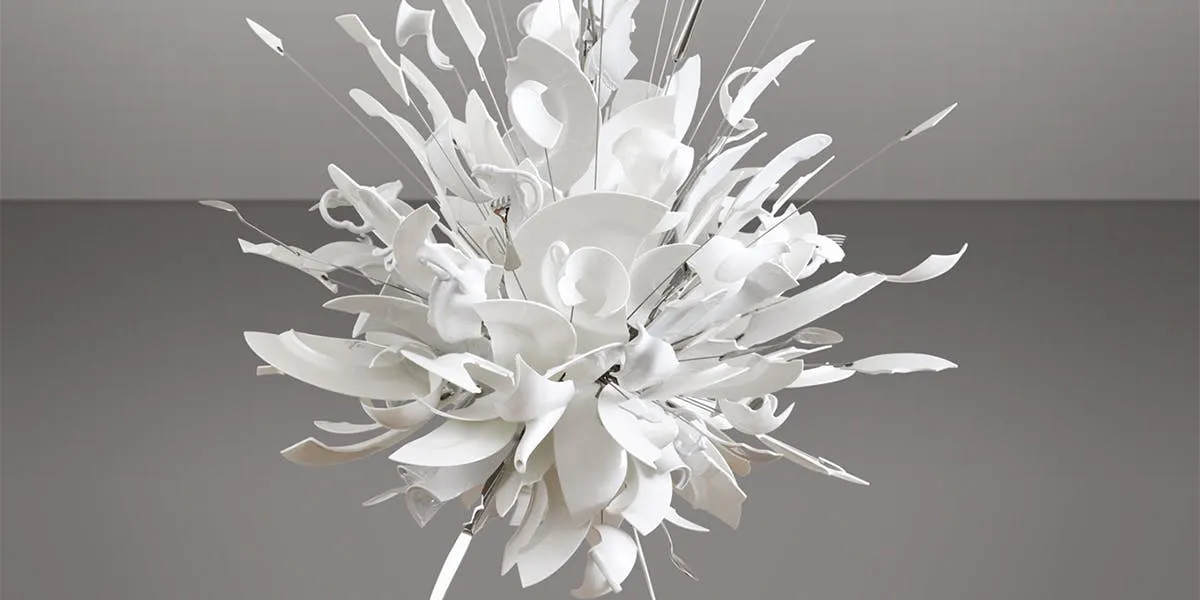
Another important piece is the Rara bright mirror mod. 2044, signed Max Ingrand. The mirror, whose structure is made of glass and brass, is accompanied by a thick beveled crystal frame which is also coloured and mirrored. Continuing to peruse the catalogue, we find two fun and unusual lots by Ingo Maurer, a brilliant lighting designer since 1966, who was able to instil his works with a profound love for beauty and with a deep passion for technological solutions.
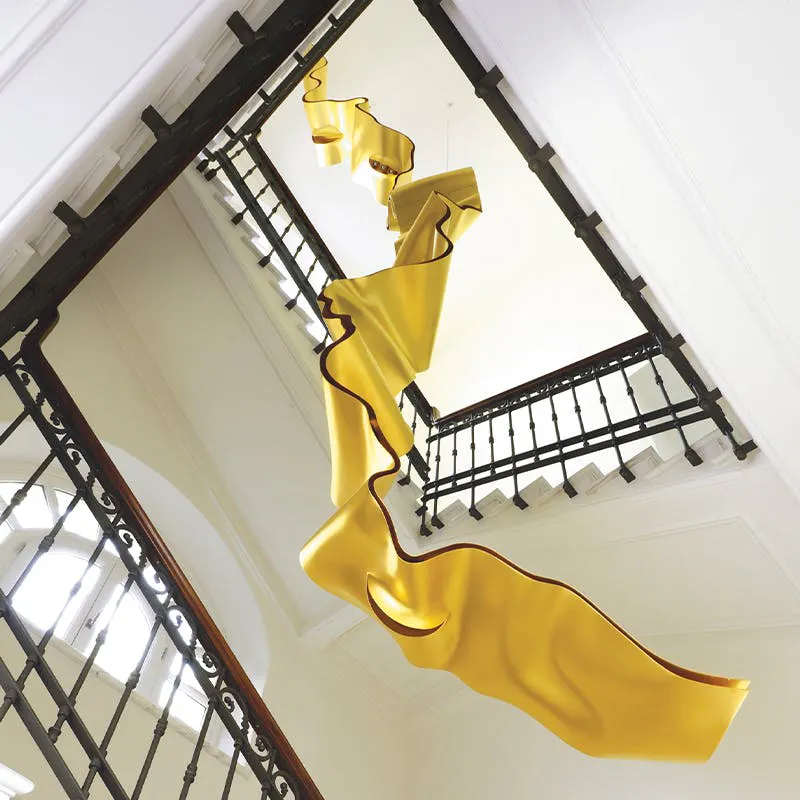
The most impressive lot of the sale is the Golden Ribbon, a large luminous sculpture made up of two sheets of metal and shaped and gilded by hand. Each Golden Ribbon is created with a shape and a cut that make it a unique piece, and in this instance the lot was created for a private order in Portofino and measures approximately 9 meters. Originating from the idea of gold and luxury, it takes the form of a huge floating ribbon, a golden bow that unravels in space with seemingly no regard for the laws of physics and flows organically and smoothly, creating a perfect representation of the idea of energy.
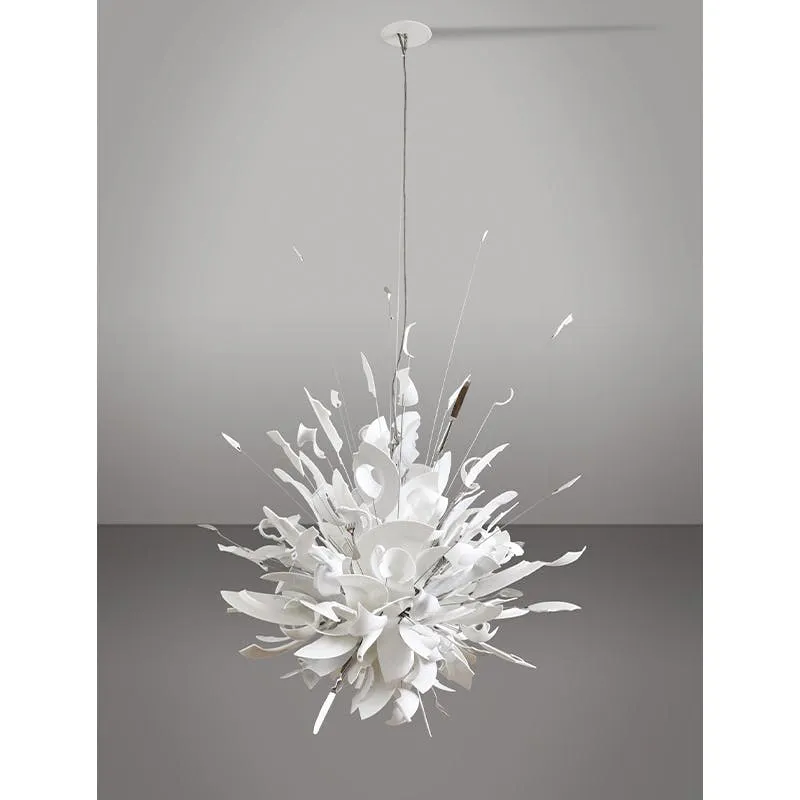
Great fun is also to be found among the other parts of the catalogue, take the 'Porca Miseria!' suspended lamp, which comprises a metal structure and glazed porcelain elements, and it was created as part of a limited run. At the exhibition of the production version in 1994, this name was the exclamation of the first Italian visitor which definitively baptised the work: such an extremely complex design to construct limits the production to just a few well-balanced specimens each year and strikes such a chord with its viewers as to make one exclaim a genuine and heartfelt Porca Miseria! (holy sh***!).
Also deserving of mention is the rare low table mod. Round Cube from the Plurimi series by Gabriella Crespi, with a lacquered wood and brass structure. Eclectic, sophisticated, and almost prophetic in her vision of a union between design and fashion, Gabriella Crespi embodies the vocational spirit of high artisanry, the daughter of an aristocratic environment where perfection is sought both through elegantly innovative lines and through the use of the best materials and craftsmen.