The 2022 season is coming to a close at Wannenes with an auction dedicated to collectors and lovers of fine watchmaking, in an event full of exclusive lots and highlights which, thanks to their rarity, are truly unique in their kind. The Pocket Watches and Table Clocks Sale, scheduled for 12 December at the Auditorium of Palazzo Recalcati in Milan, will be preceded by viewings in the same Milanese location from 9 to 11 December.
The catalogue contains 280 lots. Among the highlights which stand out for their exceptional nature is a fruit knife with a watch and musical movement probably made by Piguet and Meylan for the Chinese market between 1805 - 1815.
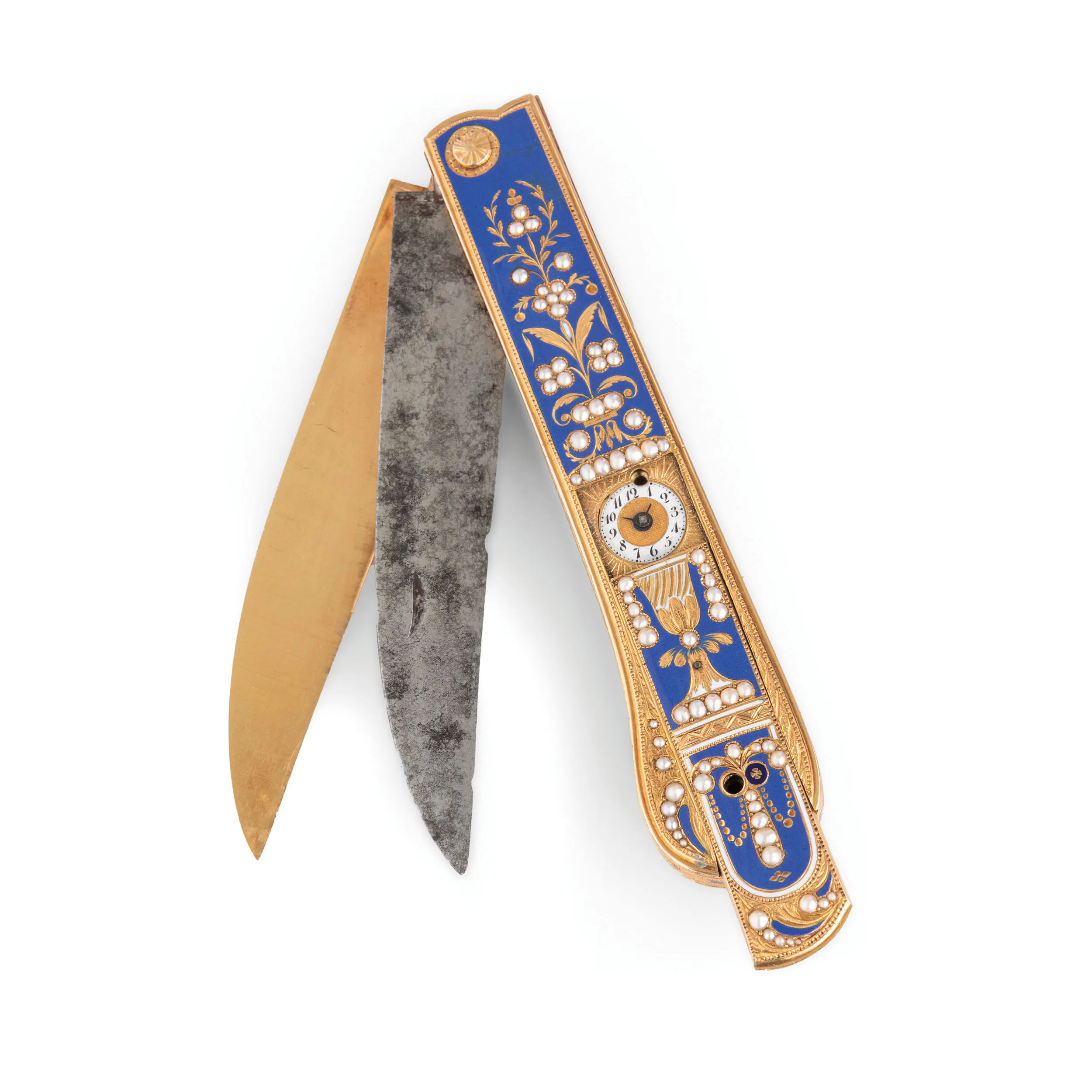
Fruit knives (or penknives) have always been considered peculiar treasures, unusual and precious, made to be collected rather than used daily. Most models have a single blade, but the lot in the auction is equipped with a double blade. This peculiarity places it, together with three other known models with the same characteristic, in a narrow circle of unique manufacturers in the world. Among known examples, the first resides in the watch collection of Sir David Salomons in the L.A. Mayer Museum of Islamic Art in Jerusalem, and was previously preserved in the collection of Gustav Loup. The second example of this knife, a twin of the lot at auction, is kept in the collection of the Patek Philippe Museum in Geneva. The third example was presented at Sotheby's ‘Important Watches’ auction, on 13 May 2018 in Geneva, and was probably a copy of that owned by Sir David Salomons.
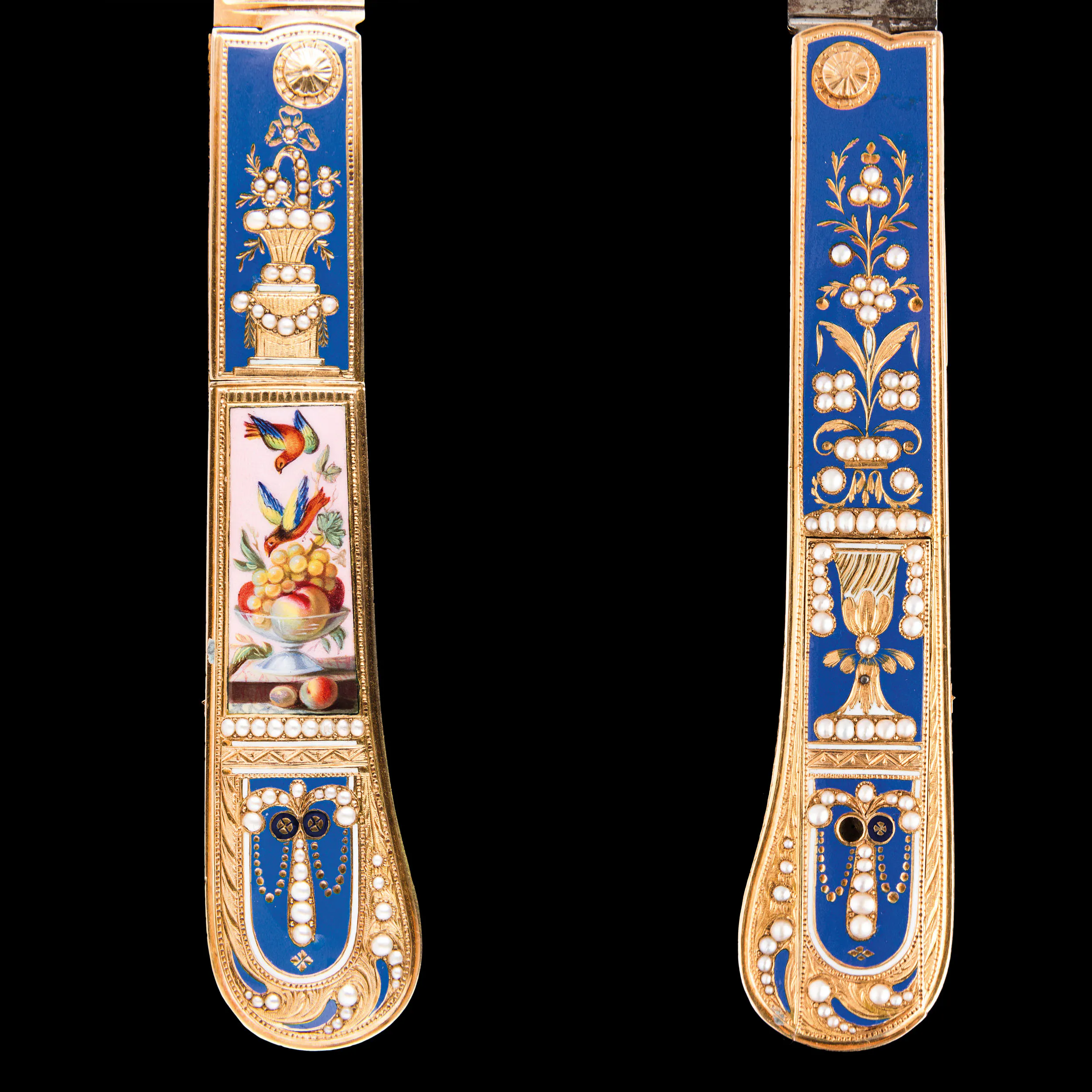
The fruit knife for sale is equipped with a cylinder movement clock designed and made by Antoine Favre in 1796 and also enriched by a carillon (a musical box) made of a six-piece comb hidden inside the handle. The carillon can be operated with a small button placed sideways. Miniature engineering work has made it possible to incorporate very small music boxes into an object of daily use by working the body of the product as a sounding board. The finely decorated yellow gold handle features on one side ‘taille d'épargne’ enamels and tiny pearls on a blue background, while on the other side a pink enamel panel depicting a still life with a basket full of fruit and flying lapwings. The sides are adorned with engraved chevrons and the knife comes with two folding blades, one of which is gold with a hallmark and one of which is steel.
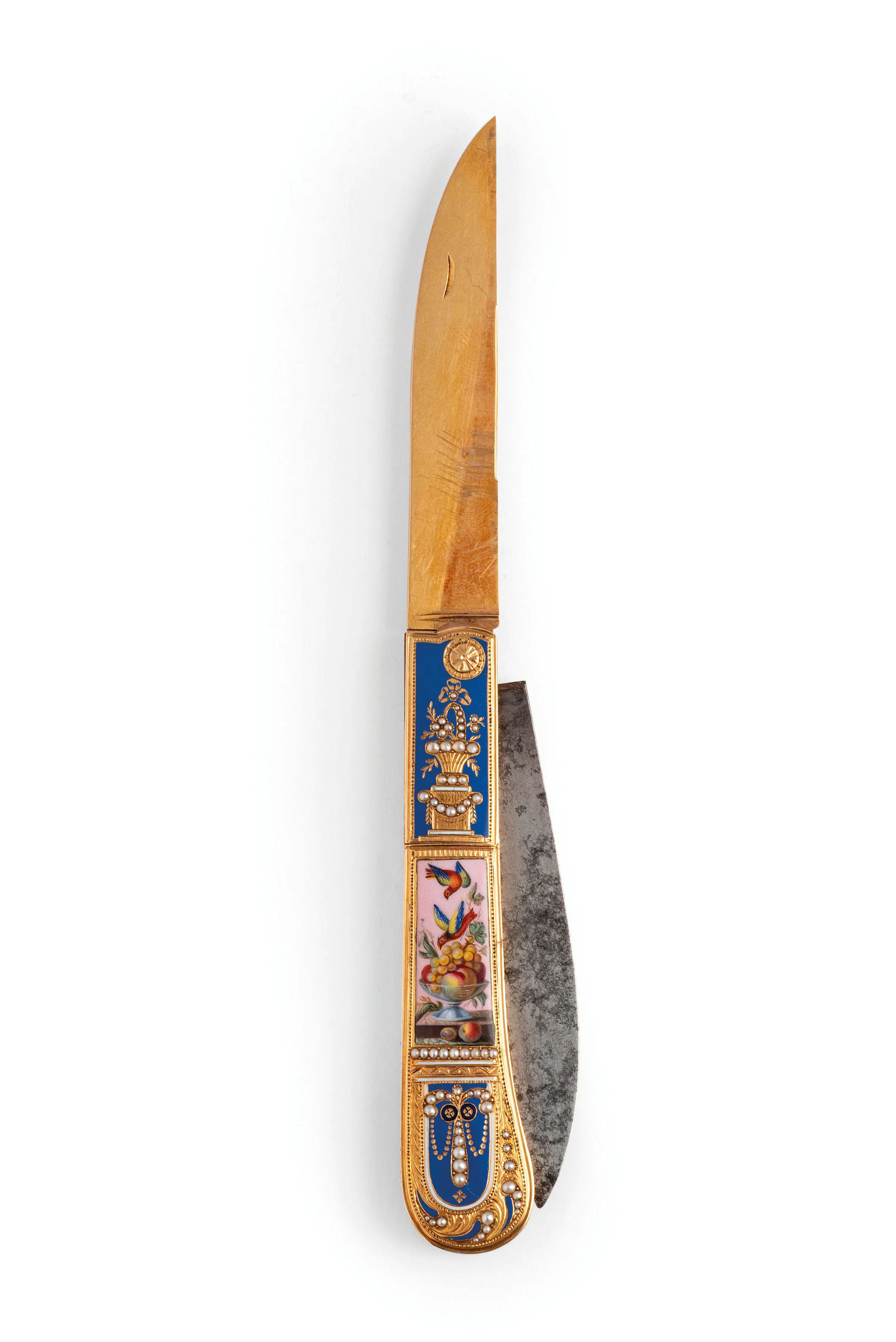
The legend goes that the gold blade was intended for cutting fruit, while the steel blade was for cutting flowers. Pushing the bottom panel away from the main side reveals the small clock for reading time. The lot has been completely restored before the auction by the master watchmaker Ribolini Gabriele, and at the moment, it is the only model of its kind available on the international market.
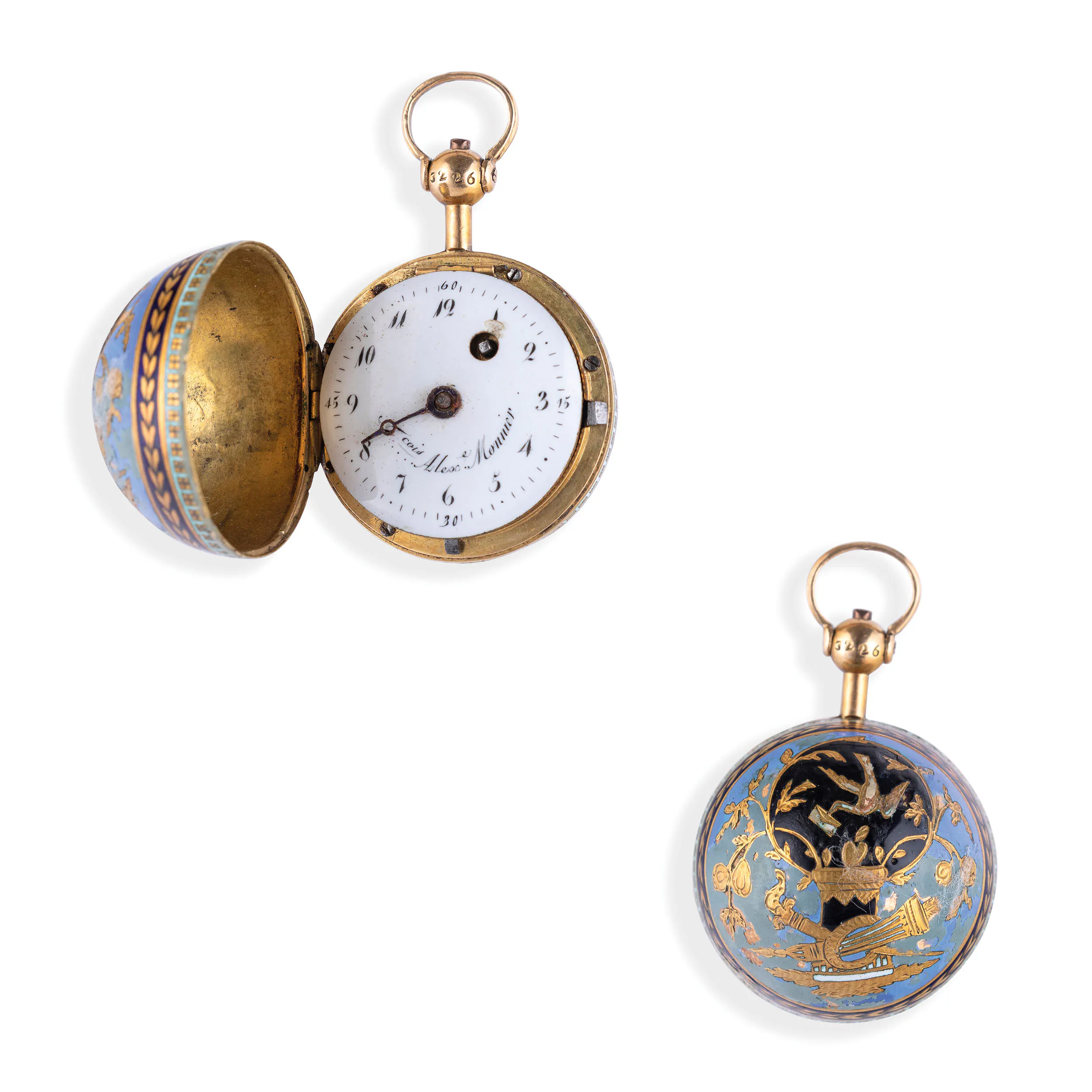
Equally noteworthy are three finely crafted 'Boulles', or pocket ball watches offered in this auction. The first is a gold pendant watch with enamels of Swiss origin, made around 1790 by Francois Alex Monnier.
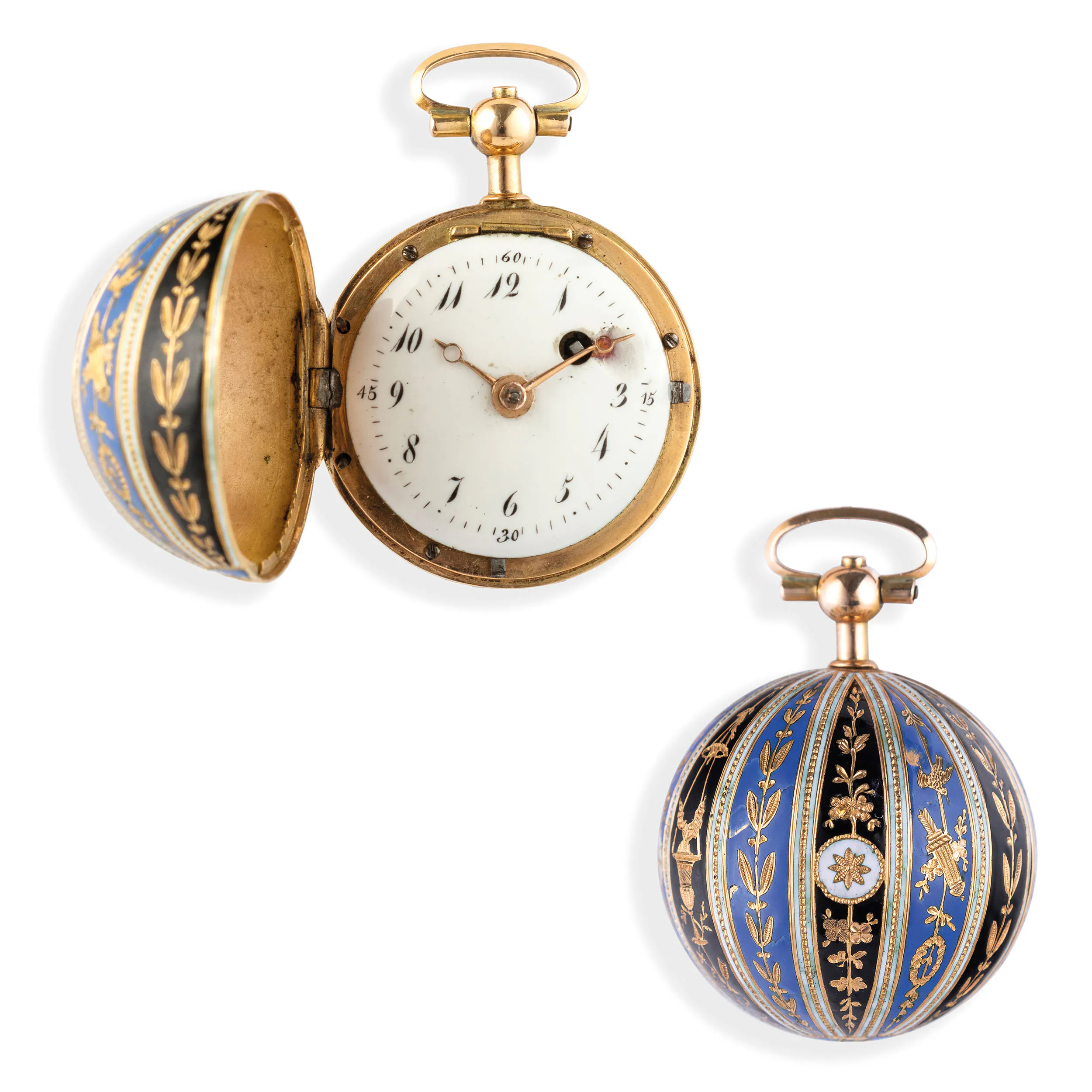
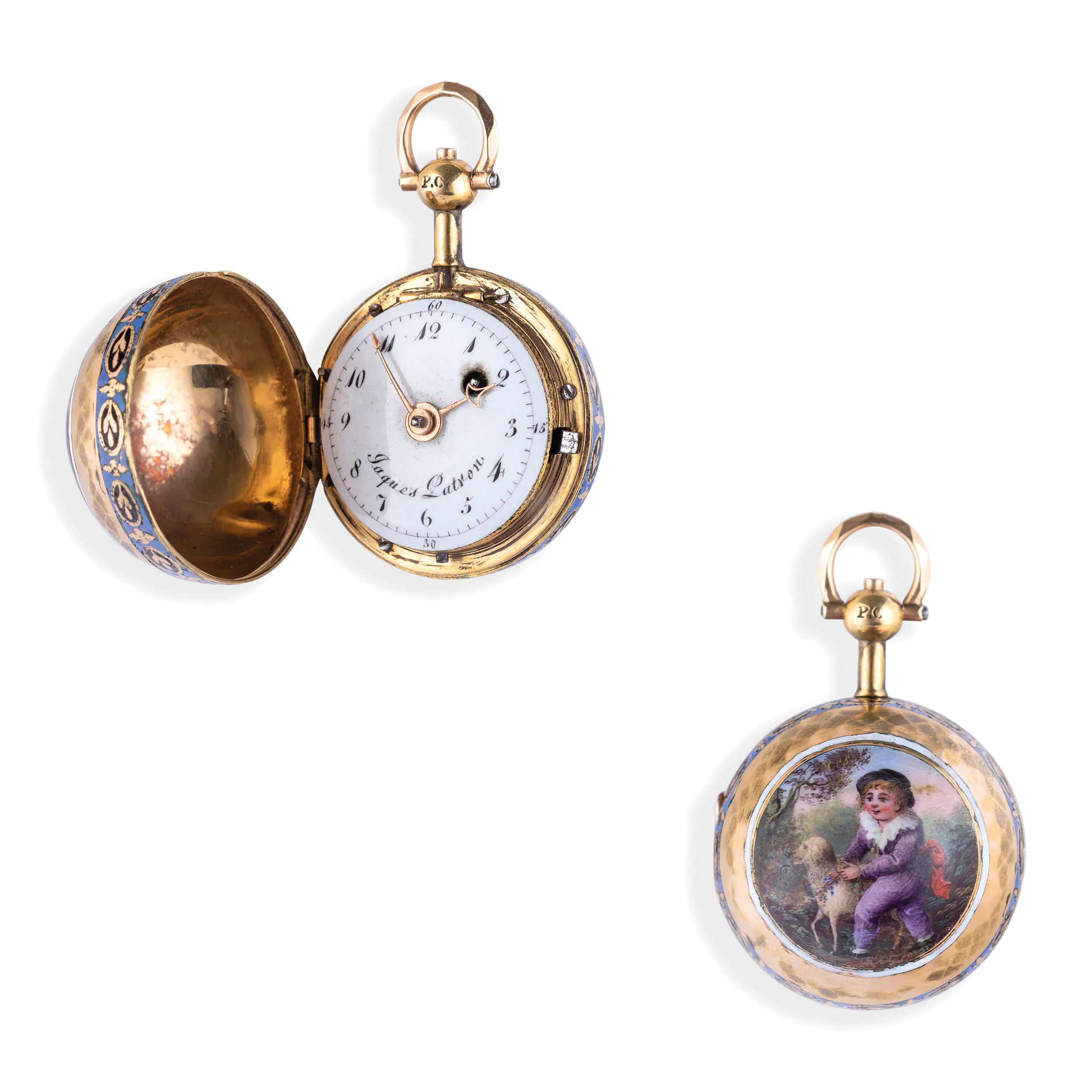
The second, also Swiss, but dating from around 1780, is a Berthoud, another pocket ball watch, with gold pendant and enamels with rod movement signed 'Berthoud à Geneve'. To conclude, the auction also offers a gold and enamel pendant watch signed Jacques Patron circa 1790.
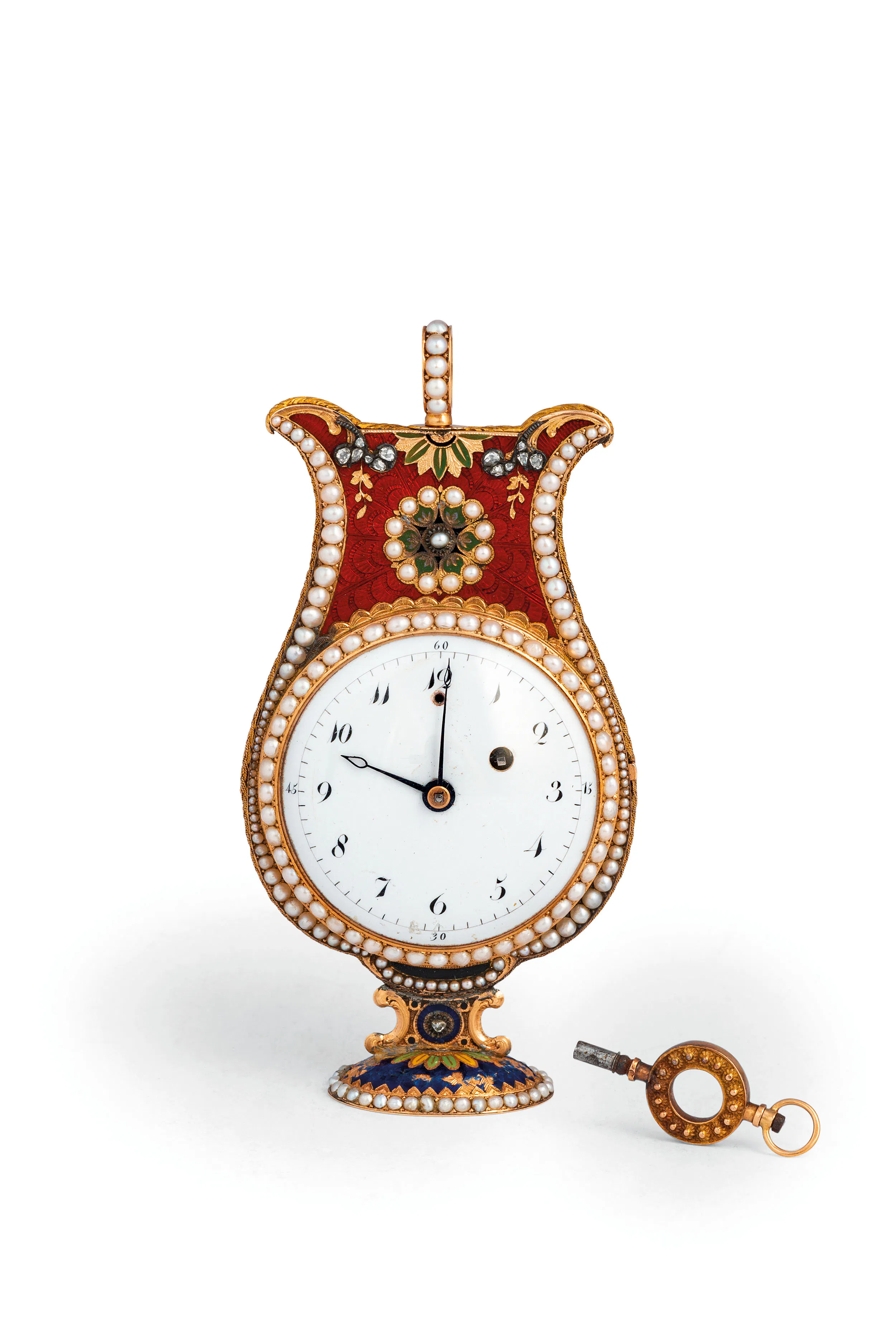
Also of typical Genevan manufacture is a rare table clock in yellow gold with a lyre-shaped case from around 1800. The front, in red enamel on a guilloché background, highlights the decoration of small degradè pearls and delightful floral-themed decorations with small burin-engraved racemes.
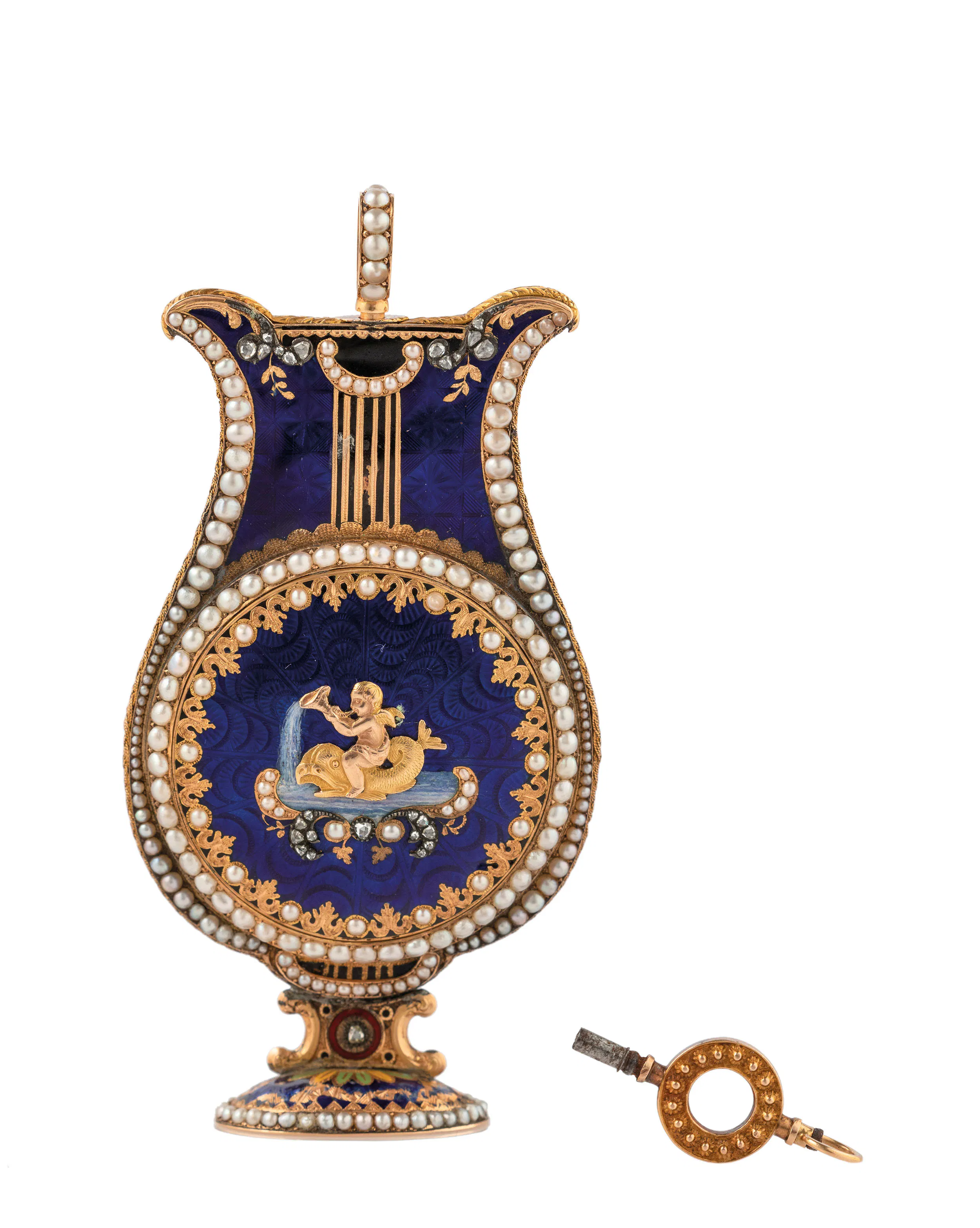
On the back, one stylised large lyre in royal blue enamel on guilloché background – also decorated with a double row of pearls – dominates the scene and is flanked by a central medallion depicting a young boy with a cornucopia riding a dolphin. The base with contrasting enamel is decorated with a small central diamond. The timepiece is equipped anonymous dial with Arabic numerals for the hours, burnished steel hands and a movement rod with the hour and quarter chime on the bell, activated by pressing the pendant.
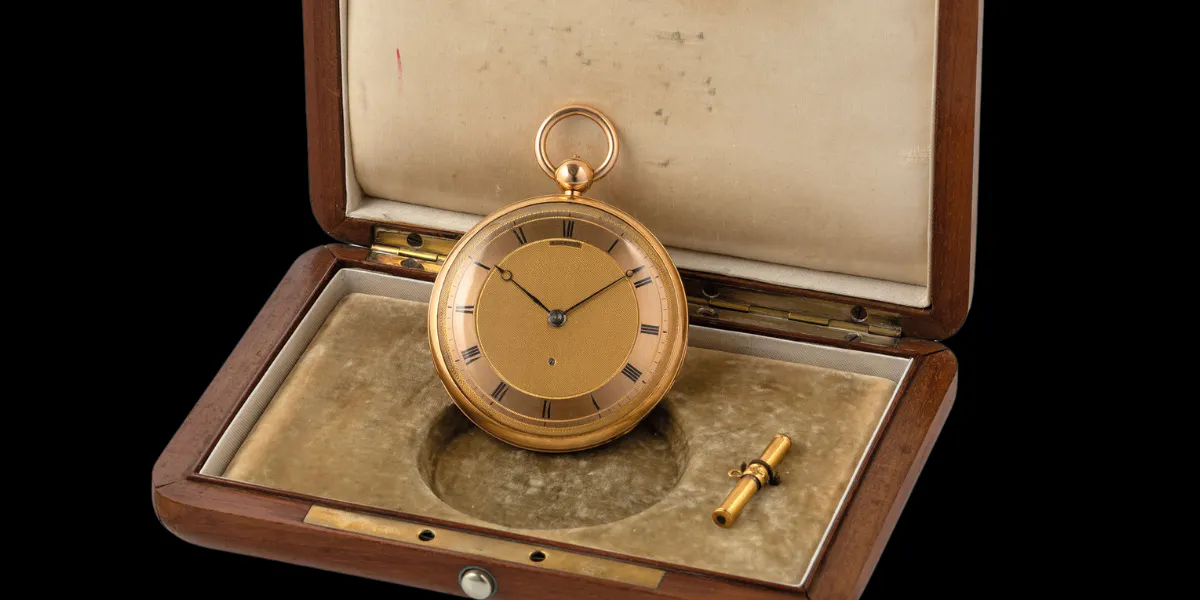
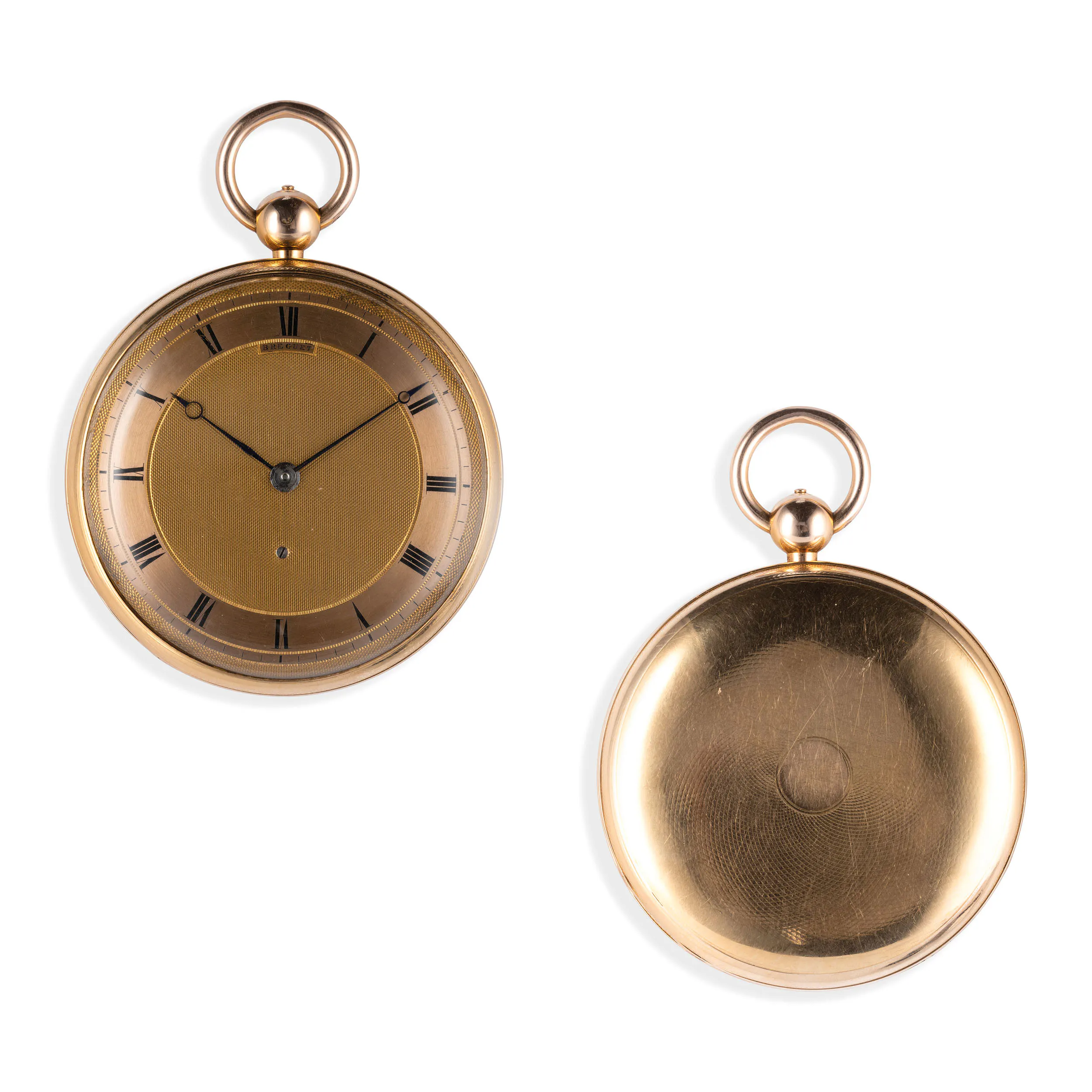
Moving on to pocket watches, a Breguet from circa 1820 certainly won't escape the eye collectors. The pocket watch is equipped with infrequent movement manufactured by Piguet & Meylan ('PM' monogram), independent hour and quarter chime, grand and petite sonnerie on passage, hour and quarter chime repetition from a push-button in the pendant, and a large selection lever and petite sonnerie.
Another unique piece from 1933 is the Art Deco style Vacheron Constantin produced by Philippe René Jaccard. The lot presents an architectural crate made of blocks of transparent rock crystal and rests on an ebonised wooden base with feet and structure in chromed metal. It features skeletonised movement with constant-force escapement and is supported by a 30-day power reserve.
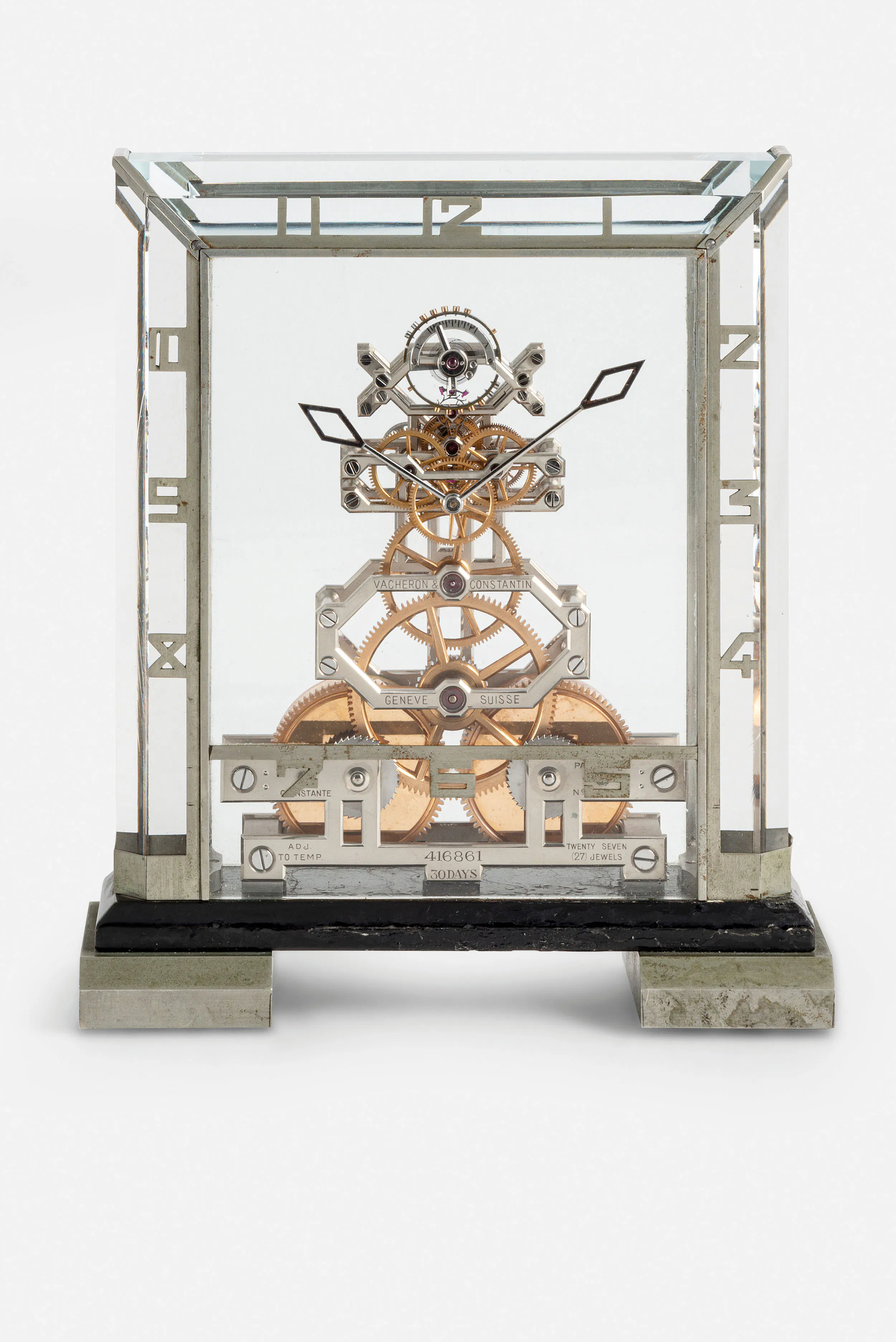
After meticulous research, it appears that only four specimens exist in the world with a differently shaped case and skeletonised movement patented by Philippe René Jaccard (a patent which was filed on 20 August 1929).
The careful research of Wannenes’ Pocket Watches and Wristwatches department has always led to a catalogue that offers a wide choice of watches, with models ranging from no-reserve lots to high-value brands and art objects as rare as they are exceptional. The Pocket Watches and Table Clocks sale will commence on 12 December.