![Coral-studded Kilic, Ottoman, 19th century [detail]. Photo © Hermann Historica GmbH](https://images.prismic.io/barnebys/5fd7f4fb-4d8c-4ada-b74e-7f6e5efb3682_f2cfe355-5eed-472a-9128-a7d9efd4cfe1_HHTitel.png.jpeg?auto=format,compress)
Hermann Historica in Grasbrunn near Munich is presenting an online auction from 21-25 June, stocked with more than 4,000 exciting historical lots. You can bid on a pair of cockatoos from the Nymphenburg porcelain factory, as well as celadon ceramics from China or two pith helmets from German officers who were stationed in East Africa around 1900.
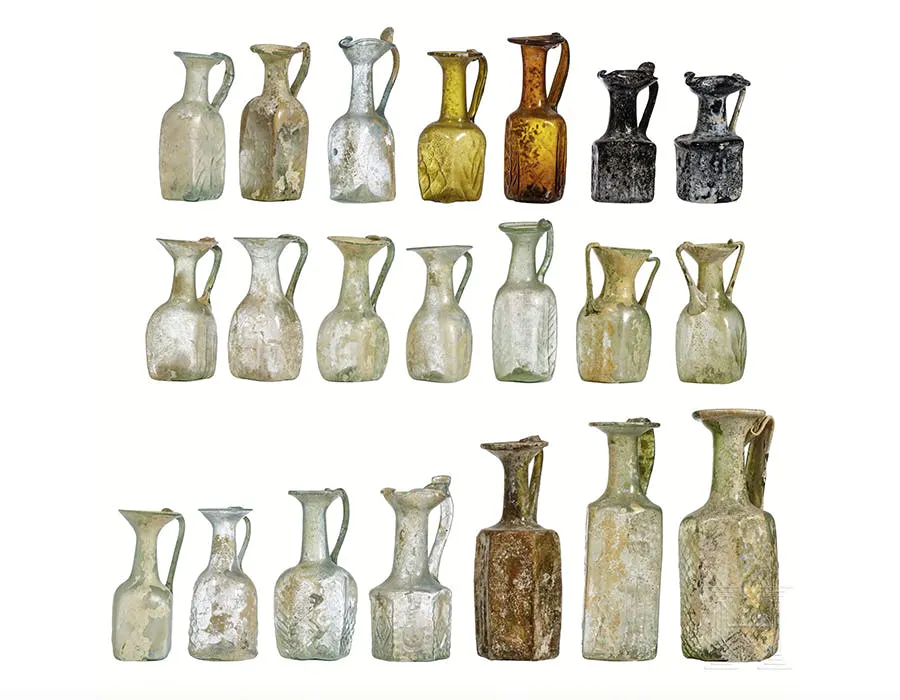
The auction series will open on 21 June with a ‘Works of Art, Antiquities’ sale. A definite highlight is a collection of twenty-one late Roman and early Byzantine glass bottles from the eastern Mediterranean (Israel), which are in excellent condition and will be offered starting at €15,000 (£12,890). The long-necked, square or hexagonal bottles differ in their details, such as the shape of the mouth, their decorative design or their number of handles.
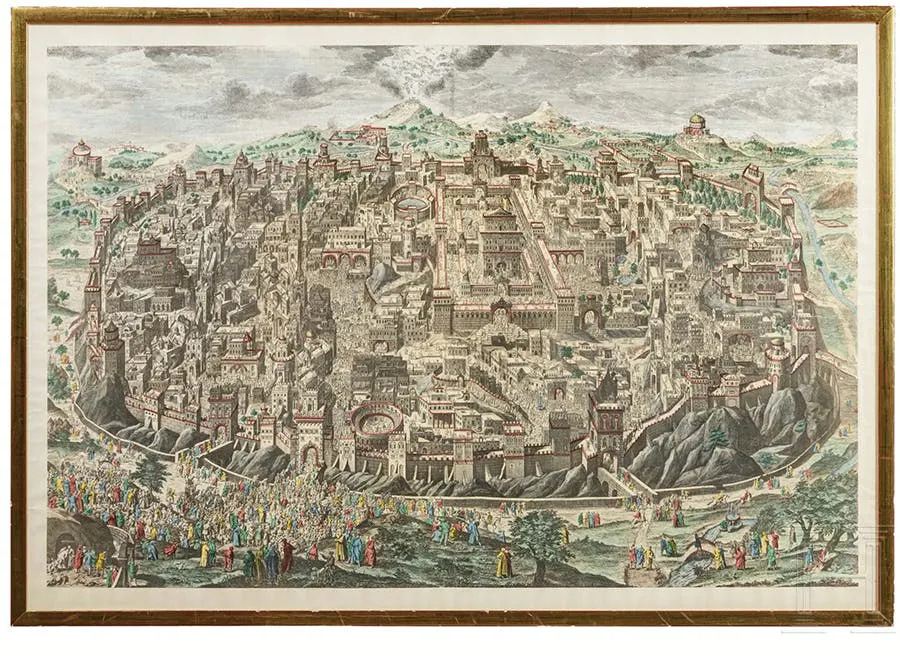
This coloured copper engraving from 1735, which was created by the Augsburg copper engraver Johann Daniel Herz (1693-1754), also takes us to the eastern Mediterranean, specifically to Jerusalem. Herz populated the entire panorama of the city with scenes from the passion story of Christ, and the engraving stands at 80 x 113 cm.
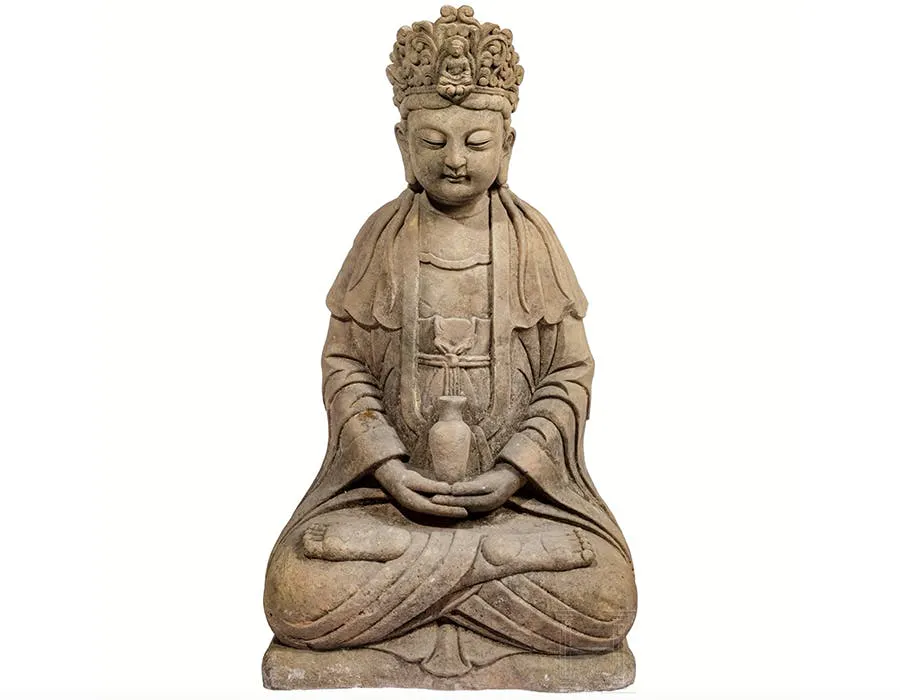
At €24,000 (£20,622), the lot with the highest starting price in this catalogue is this Guanyin sandstone sculpture from China. The female Bodhisattva of Mercy is shown in a seated meditation posture. The sculptor attached great importance to details, and carefully worked the clothes out of stone as well as the magnificent diadem.
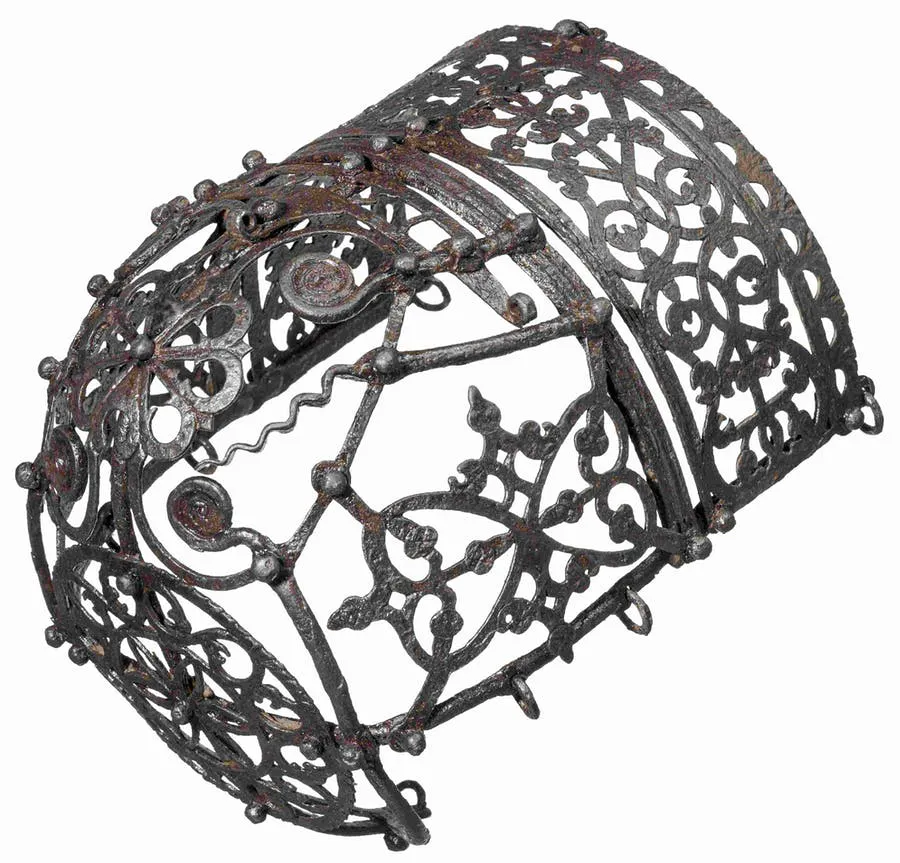
The next day, ‘Antique Arms and Armour from All Over the World’ are up for auction. Not only soldiers were protected, but also one of their loyal companions: the horse. In the Middle Ages, a well-trained warhorse not only carried his armoured rider into battle, but also contributed to the outcome of the battle through its calm demeanor, attention and consistency. This rare wrought-iron horse muzzle dates from 1562, after the time of knight battles and major tournaments.
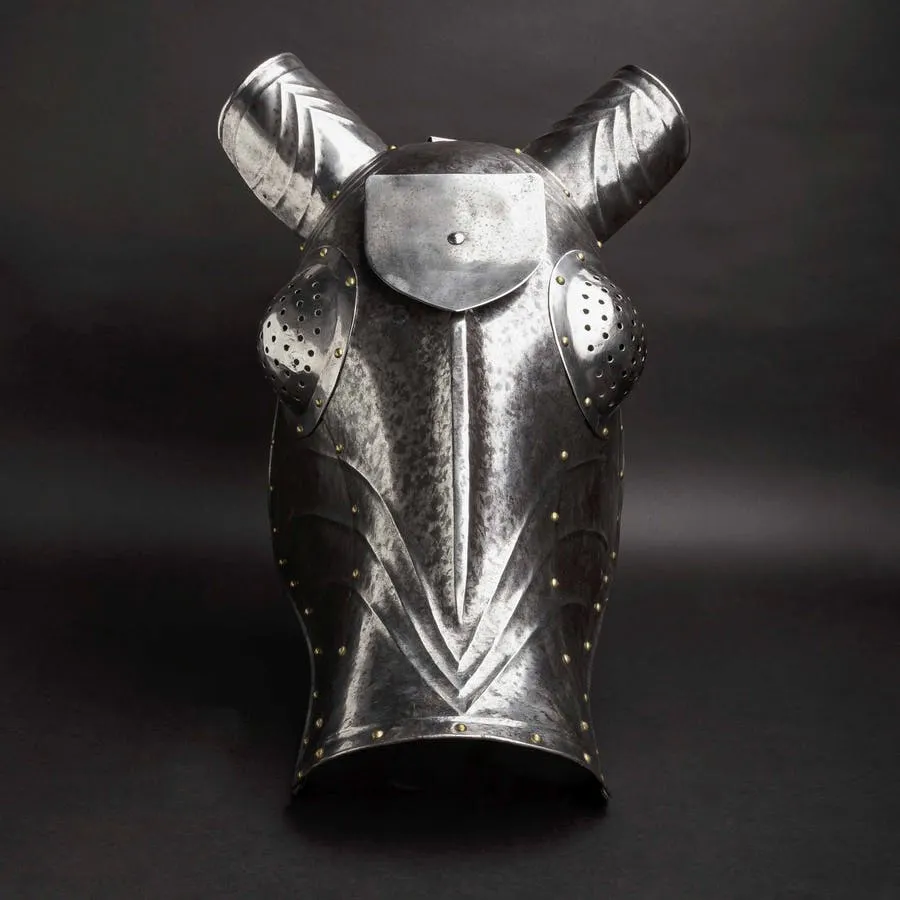
The historicism of the 19th century romanticised the valiant knights of earlier periods, with great respect for the time as well as for the craftsmanship. This shaffron, which was designed to protect a horse’s head and face, was made in the Gothic style from 1480.
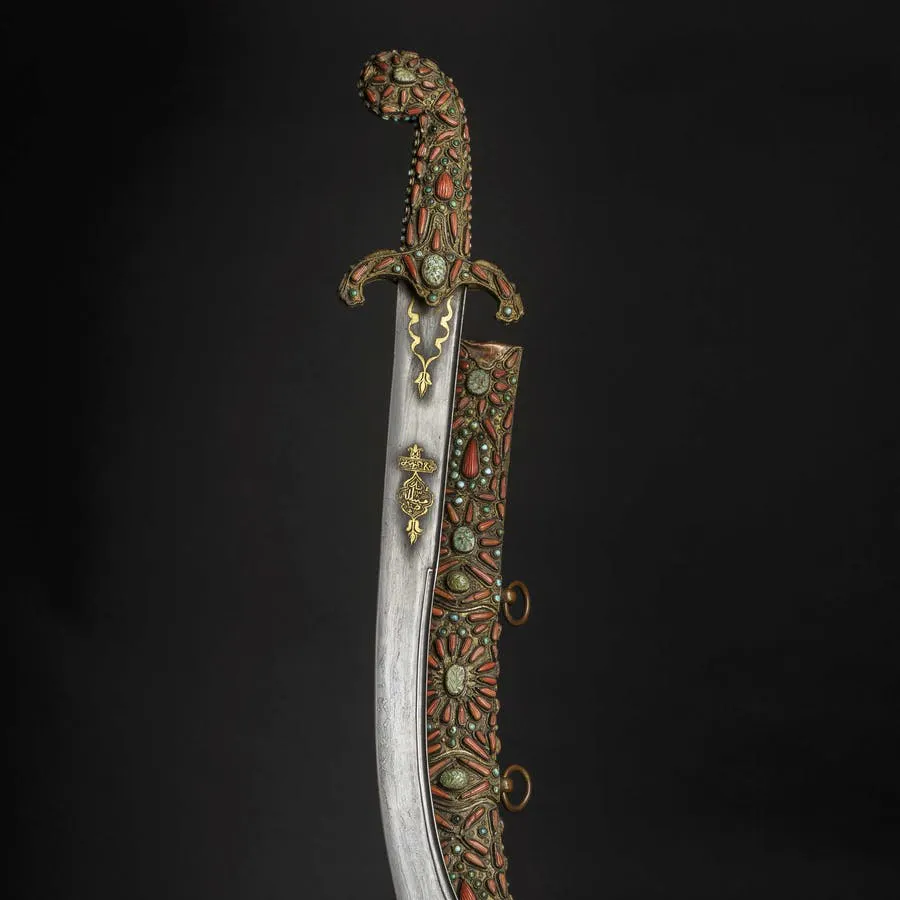
We are now switching from protective armour to edged weapons with this magnificent Kilic from the 19th century. The Ottoman work with a curved blade is made of Damascus steel with a gold tausia, and the elaborate decorations made of coral and turquoise underscores the high status of its owner.
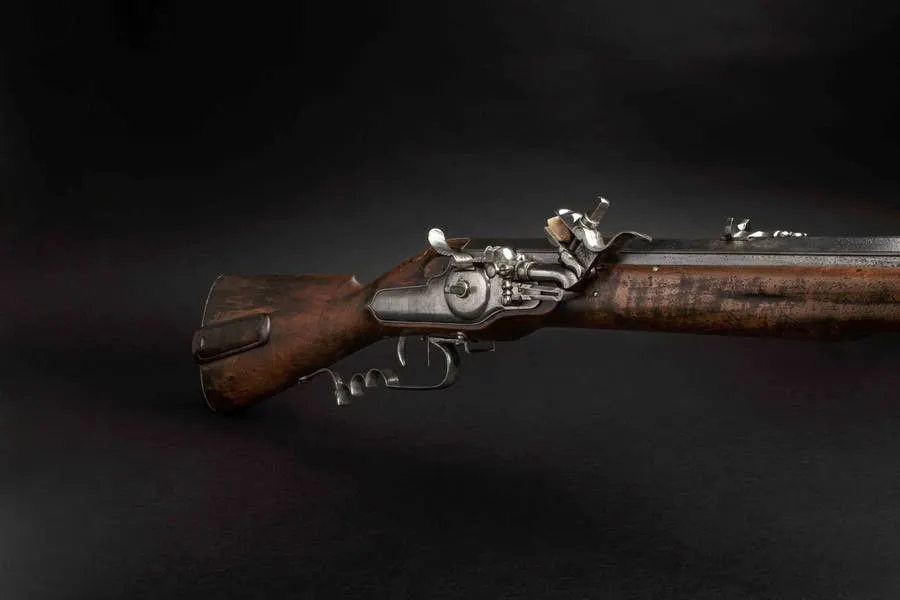
The auction of firearms from five centuries continues on 23 June. One noteworthy piece is a wheel lock Müller rifle from around 1700, made by the court rifle maker for Friedrich Wilhelm I of Prussia, Georg von der Fecht (1675-1740). It is an early work by a renowned gunsmith.
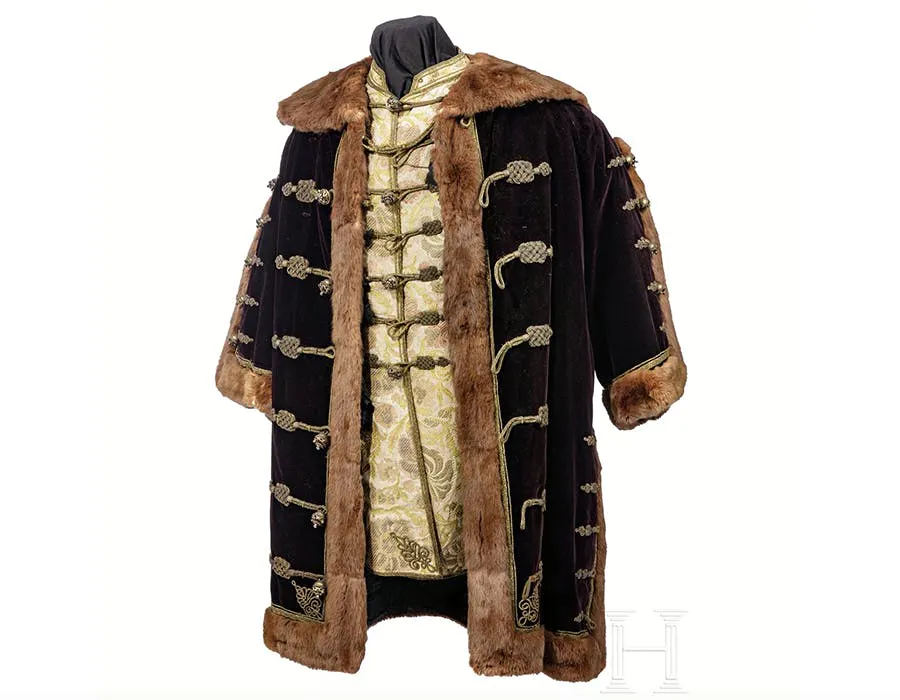
24 June is dedicated to international orders and military historical collectables. The historical clothing presented during this portion of the sale is especially eye-catching. The gala ensemble of a Hungarian magnate from the second half of the 19th century, consisting of a dolman made of silk brocade and a coat (mente) made of velvet with fur trimmings, is a particularly impressive piece.
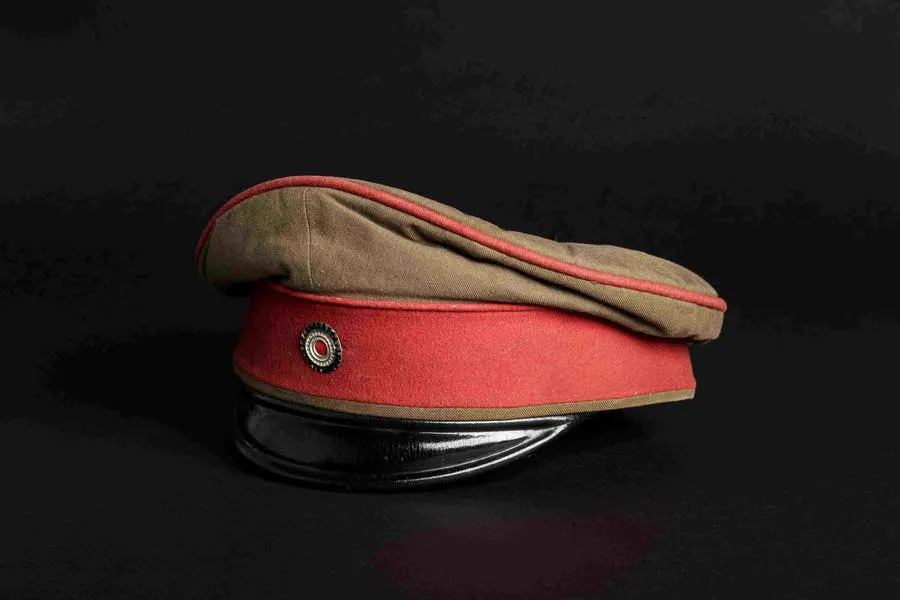
Along with the previously mentioned pith helmets, a peaked cap from the same context will also appear during the sale. Worn around 1900 by an officer of the protection force in Togo and Cameroon, this hat is made of khaki and ponceau red cloth and painted sheet metal.
Also on the afternoon of 24 June, during the auction of the Günter Adlung helmet collection, a variety of military headgear will be called up, including a US steel helmet from the 1960-70s with the inscription ‘Make love, not war’.
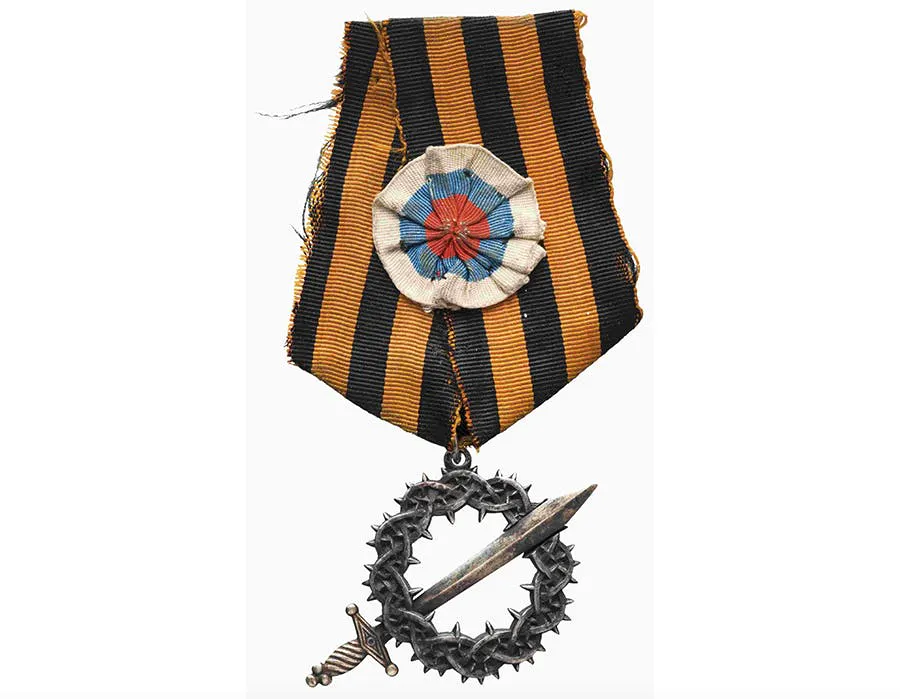
A highlight of the ‘International Military History from 1919’ auction that follows on 25 June is this badge of the first Kuban Ice Campaign, which was awarded to members of the volunteer army from 1918 onwards. The First Kuban Ice Campaign (also known as the Ice March) was part of the civil war that followed the 1917 Revolution, in which the Volunteer Army (White Guard) and the Bolshevik Red Army faced each other.
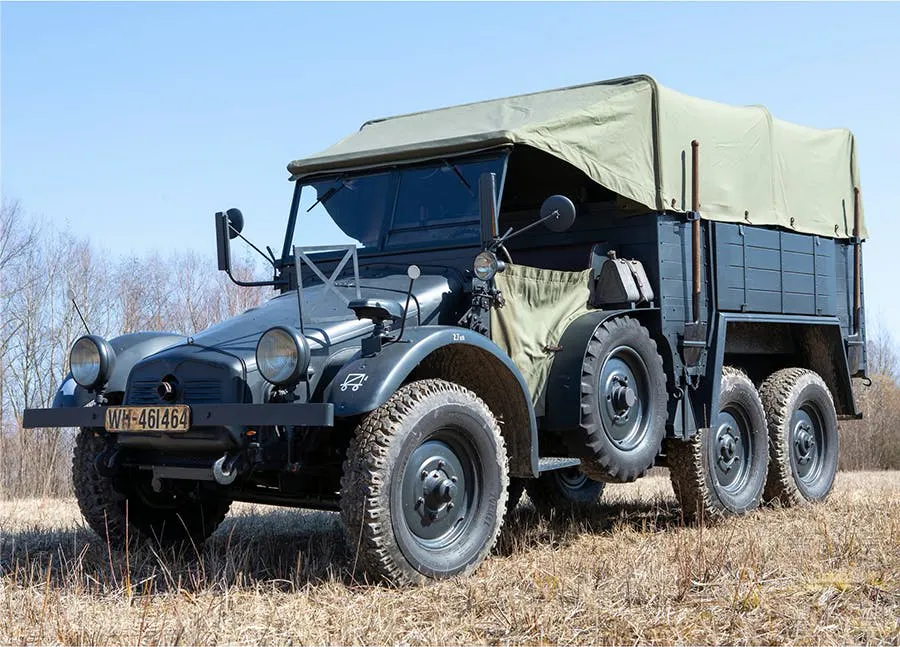
On 25 June there will also be an auction of ‘Military Vehicles’, which consists of only two lots. One of them is the all-terrain six-wheel truck with rear-wheel drive, ‘Kfz. 70’. The vehicle from 1941 is powered by a 3.5 liter four-cylinder boxer engine with 60 hp of the Krupp M 304 type, which earned it the nickname ‘Krupp Protze’. At least €145,000 (£124,597) is required for this singular vehicle.
All bidding will take place exclusively online, but in-person previews are available at Hermann Historica’s auction rooms, Bretonischer Ring 3, in Grasbrunn near Munich from 16-19 June. To view the military vehicles elsewhere, please contact the auction house.