
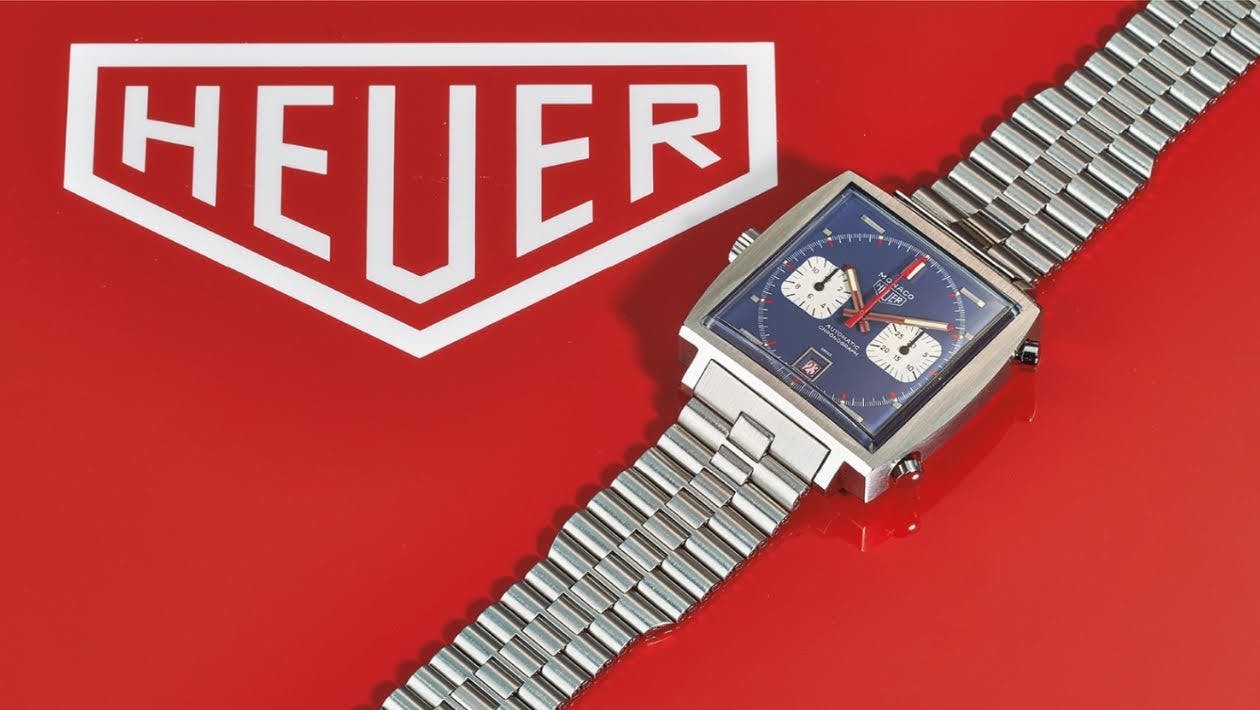
In 1860, the Swiss Édouard Heuer began a family watchmaking business in Saint-Imier, near Bern. In line with the country’s tradition, he produced quality watches that combined luxury, precision, and reliability. Heuer also developed a spirit of innovation that quickly made him successful. He invented a keyless, self-contained crown winder which was an unparalleled feat for the time, and earned him a triumph at the 1873 World Fair in Vienna.
Don’t Crack Under Pressure.
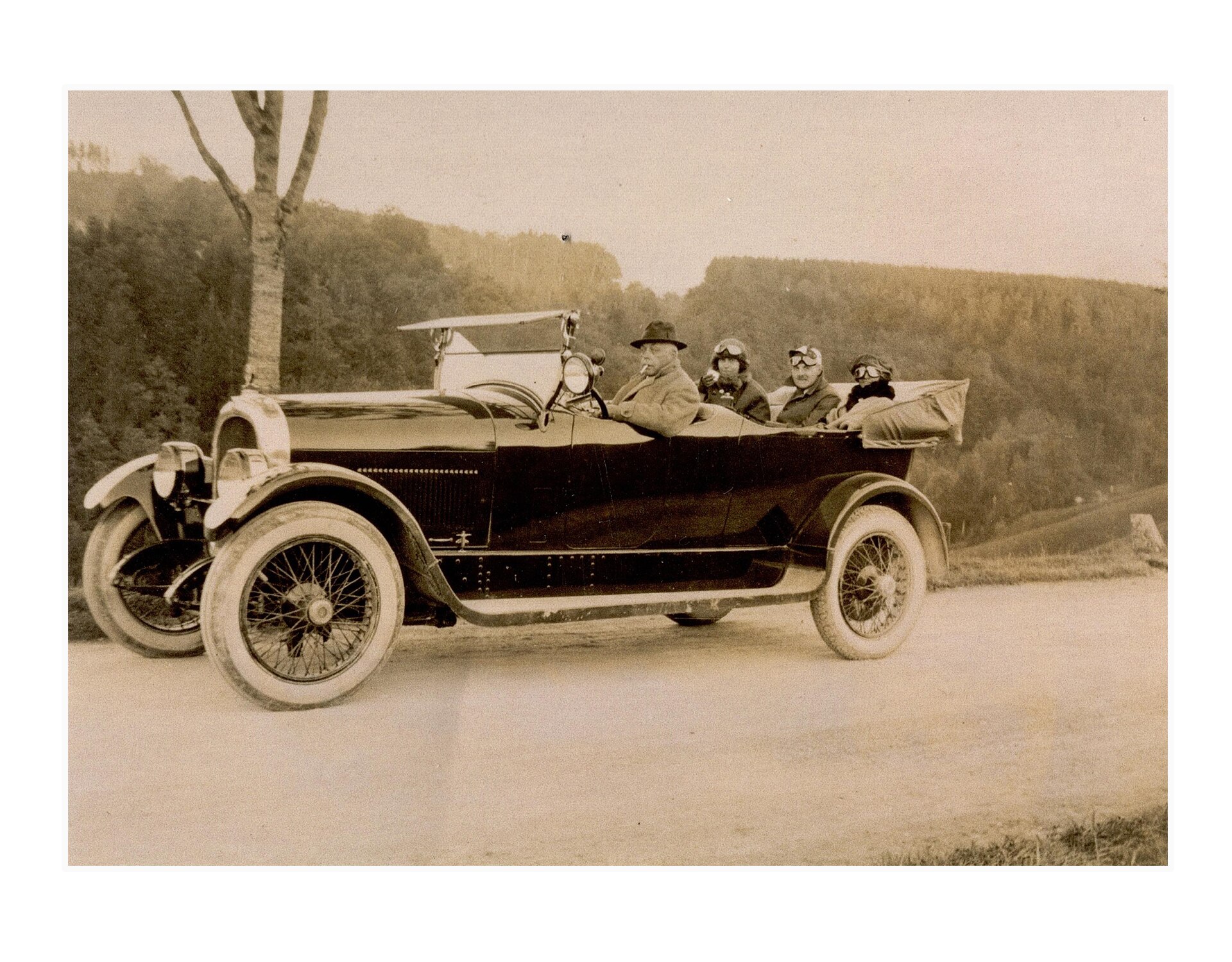
Heuer started manufacturing serial chronographs in the 1880s, a step which sealed the union of the brand within the sporting world. In 1887 Heuer invented the oscillating pinion, which is the basis of modern chronographs. He also developed pocket models that ensured his
success. His children, Jules-Édouard and Charles-Auguste, took over the business in 1892 and, guided by the same spirit of inventiveness, introduced the first waterproof case in 1895.
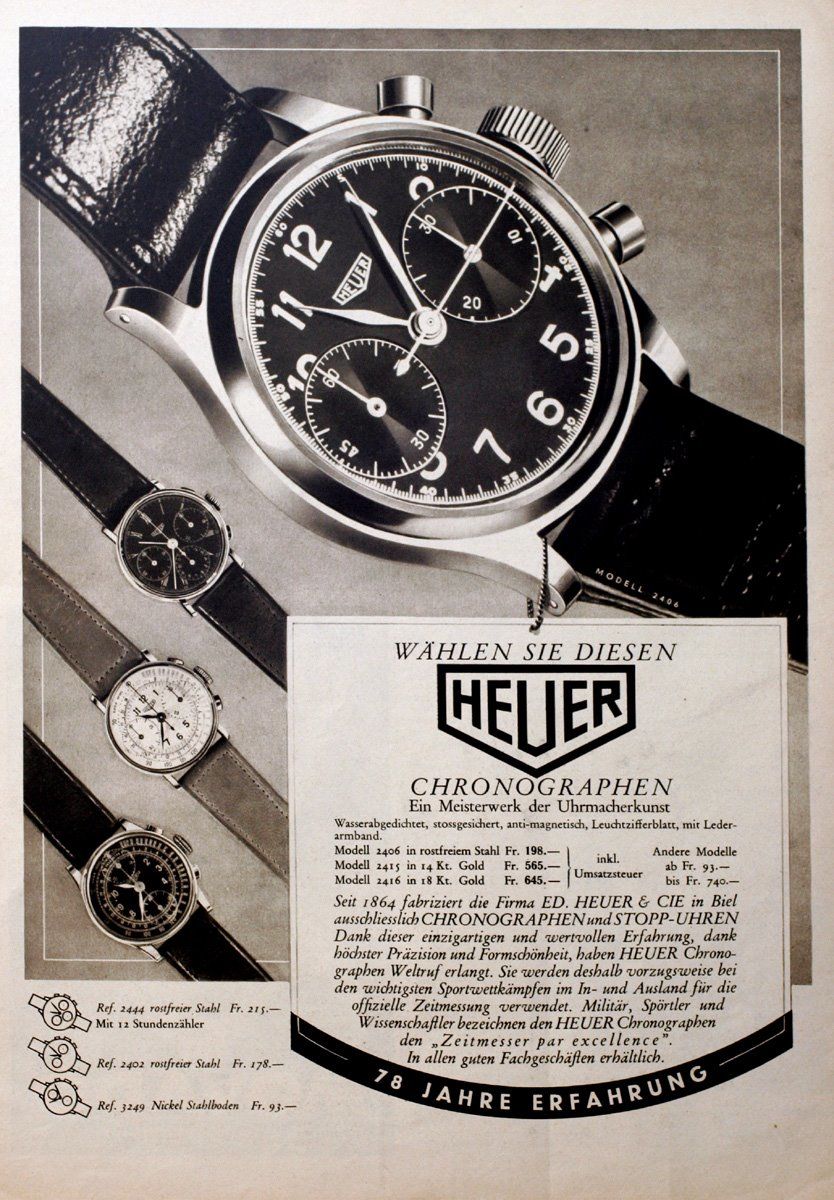
The real innovation came in 1916, with the chronographs Mikrograph and Microsplit, the first in the world to have an accuracy of 1/100 and 1/50 of a second. Because of this, Heuer became the official measurer of sports competitions, such as ski regattas and the Olympic Games. In 1933, the Autavia, a high-performance on-board meter for cars and aircraft, was introduced. The brand then entered into partnerships with public figures such as Harry Truman and Dwight Eisenhower, and in 1962 astronaut John Glenn wore a Heuer on the first American-manned flight around the Earth.
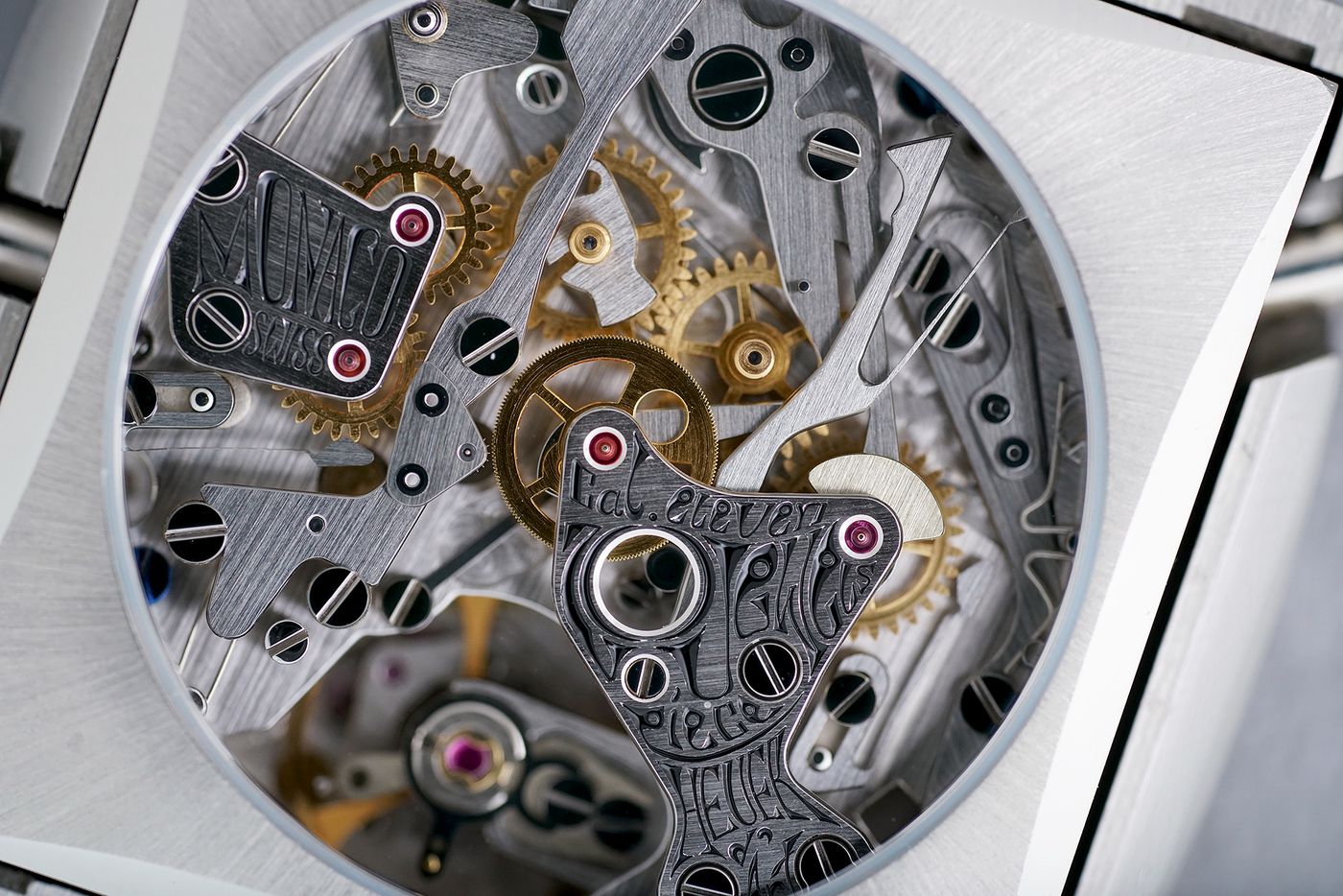
True to the sporting spirit of the company, Jack Heuer launched the Carrera collection in
1964. This one became one of the most beautiful series ever created, and racecar drivers Jo Siffert and Juan Manuel Fangio played the roles of luxury ambassadors. In 1965, the Microtimer, the first miniaturised electronic timing instrument with an accuracy of 1/1000 of a second, was introduced. Around this time, Heuer was quickly becoming a must in the world of rallying and F1. Additionally, the Monaco series, launched in 1969, was a great success – its innovative design with a square case chronograph is shown on-screen on Steve McQueen in the 1971 film Le Mans.
See also: The 10 Most Expensive Watches Ever Auctioned
In 1973, the Microsplit 820, the first electronic pocket timing instrument accurate to 1/100 of a second, was launched. In 1982, the 2000 series was launched, which included several essential features: water resistance to 200 metres, unidirectional rotating bezel, luminescent indexes and hands, double safety clasp, and scratch-resistant sapphire crystal. In the process, the company teamed up with McLaren Racing, which signified an extraordinary partnership that lasted until 2015. In 1992, the timing of F1 races began to be controlled by a GPS satellite detection system, ensuring accuracy to the nearest millionth of a second. After 1985 the TAG Group purchased the majority stake of the Heuer company and it became TAG Heuer. However, TAG Heuer failed to advance with the shift to new technologies and found itself in difficulty in the 1990s. It was later acquired by LVMH in 1999 for US$739 million (£566 mil).
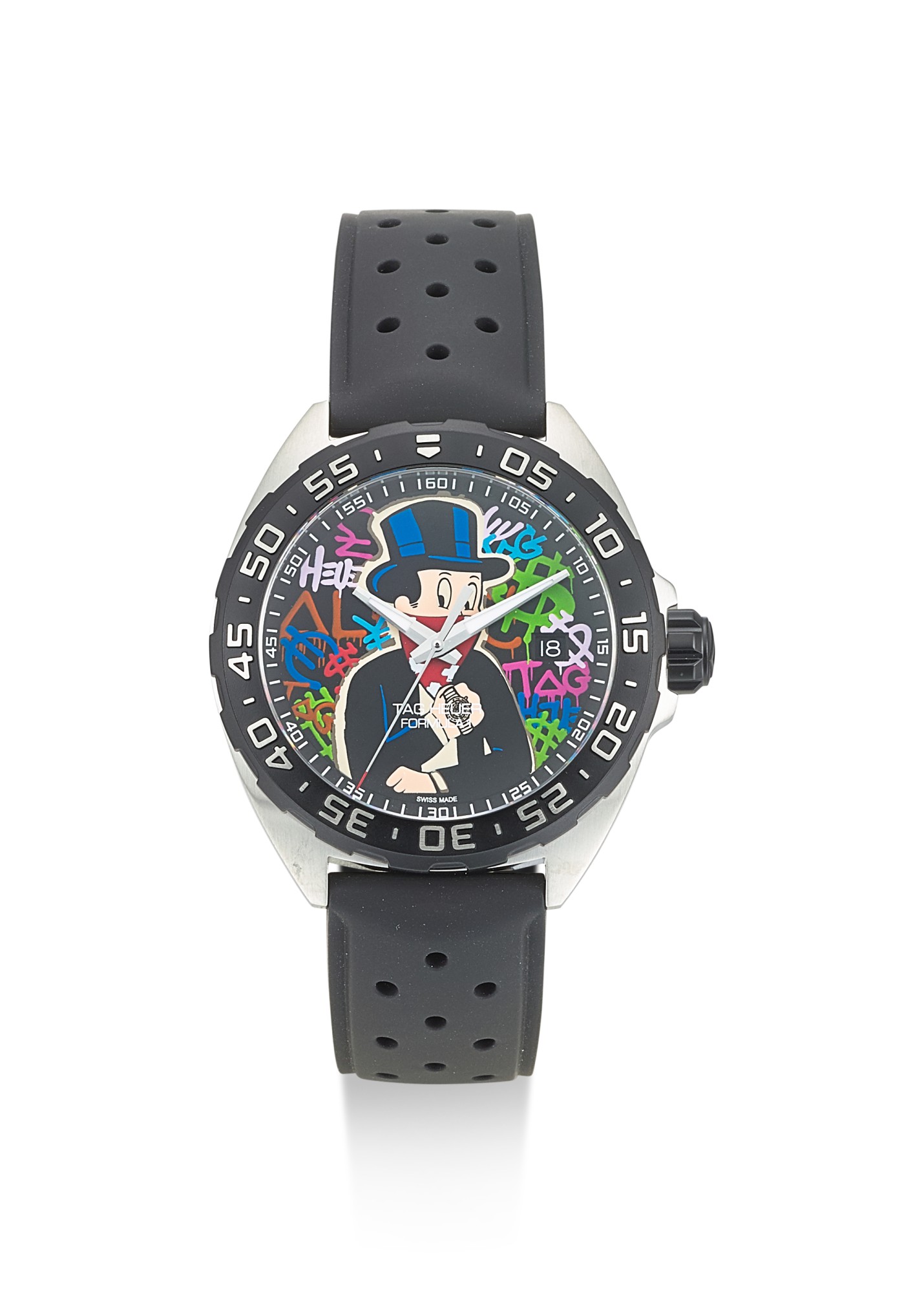
In the 2000s, large series such as Carrera and Monaco were relaunched in the format of concept watches. And now, new innovations such as the TAG Heuer Carrera Connected are emerging, a watch produced in partnership with Google and Intel. Today, TAG Heuer stands as one of the top five luxury watch manufacturers. The brand is present in more than 120 countries and sells 85% of its production directly. Current ambassadors include Chris Hemsworth, Patrick Dempsey, and Petra Kvitova. Particularly famous is their slogan “Don’t Crack Under Pressure”.
See also: Omega: A Cultural Icon
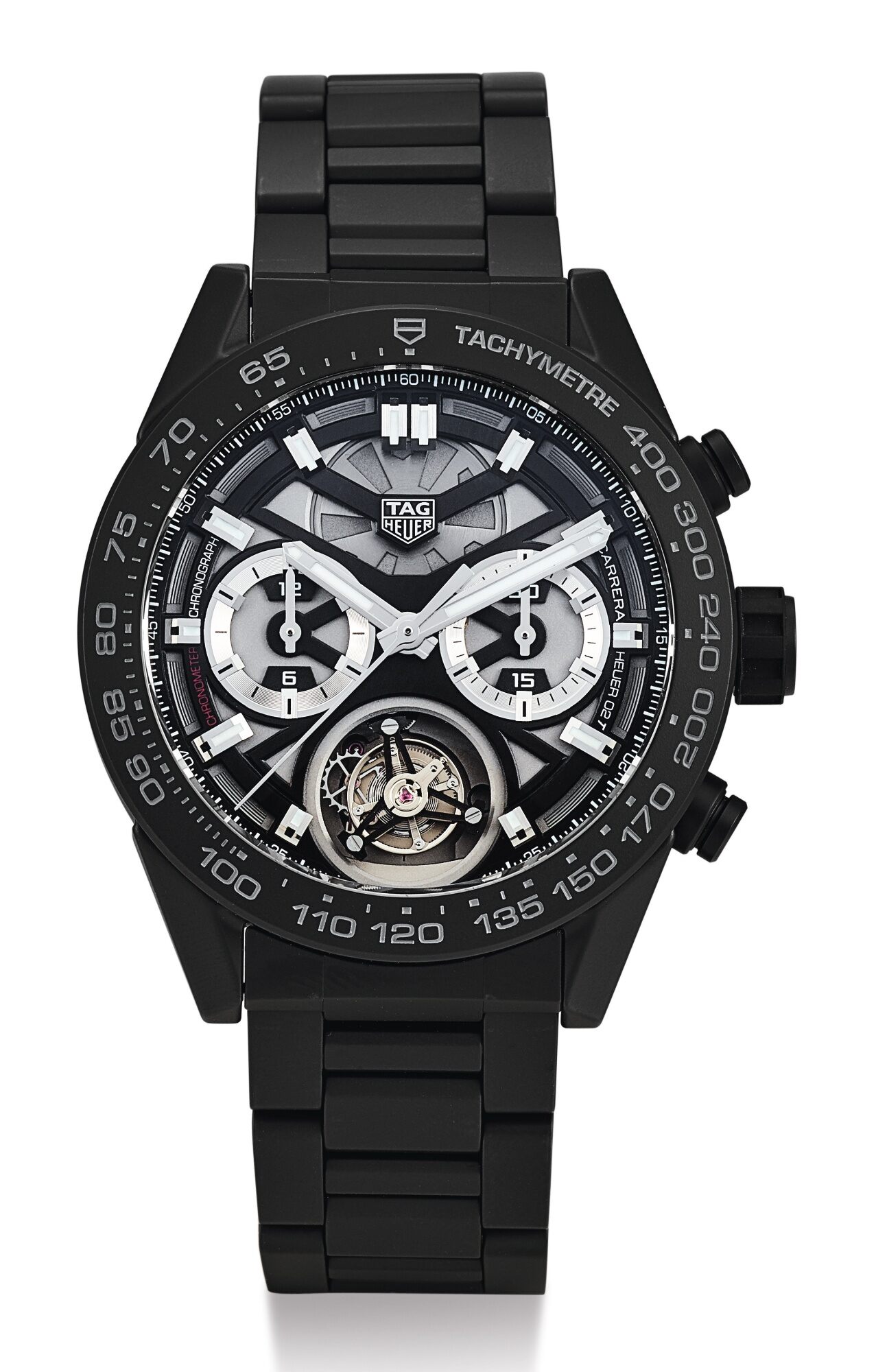
The highest level of standard remains at the heart of TAG Heuer's manufacturing process. Each model requires more than a year’s work, and their watches pass hundreds of tests from resistance to water, impact, twisting, compression, pressure and tension. The TAG Heuer school brings together some of the best workers in France and Switzerland, all dedicated to the ideal of performance and know-how associated with the brand. Rare pieces are auctioned for incredible prices. In 2017, a 1967 Autavia watch marked with the Indianapolis Motor Speedway logo sold for $199,500 (£154,812) at Christie’s New York.