Rossini’s sale of furniture, art and objects, to be held on 13 June, opens with a beautiful set of four vintage cars.

Starting with a 1928 C6 Torpedo, the first 14-hp 2242cc six-cylinder engine designed by Citroën, the car made its public debut at the Paris Motor Show in October 1928. The C6 was created for a more affluent clientele, and takes over the C4 model while delivering superior performance and luxury. Available in 11 different bodies, this model C6 Torpedo was created in 11,000 copies between 1928 and 1929, before the brand went on to make several changes.
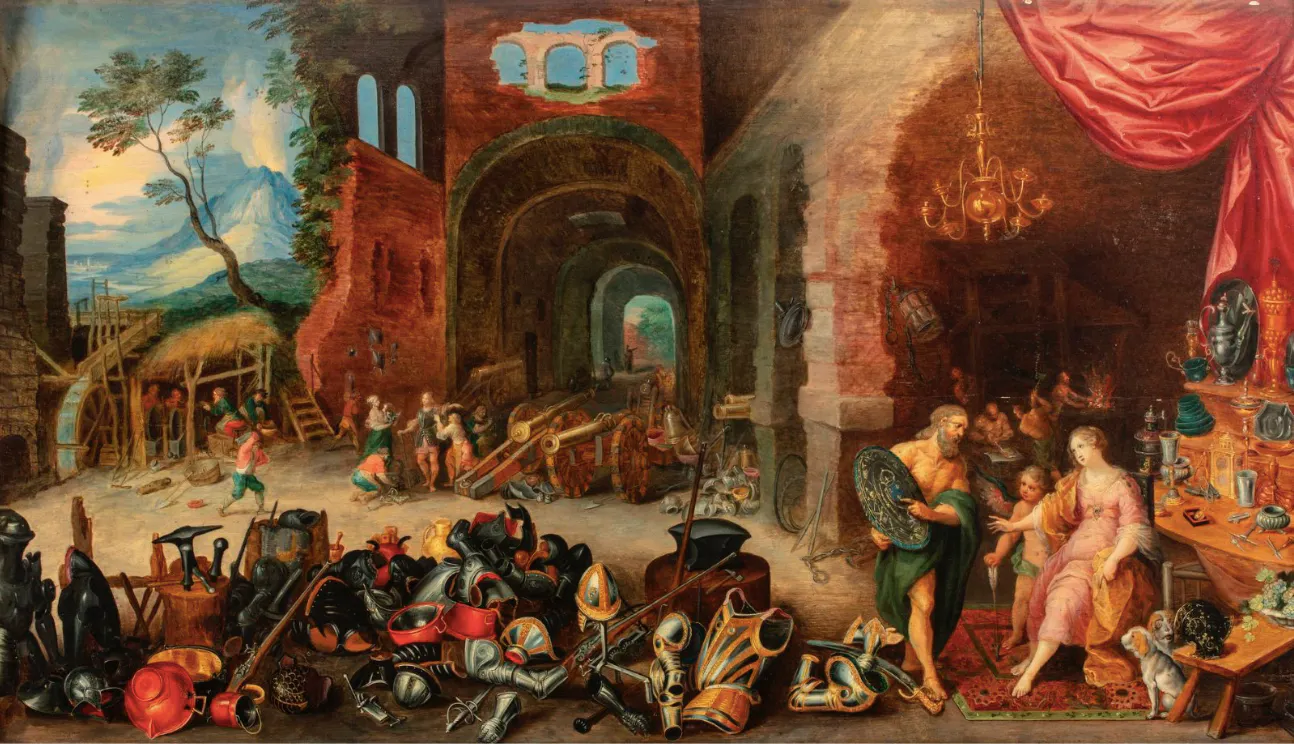
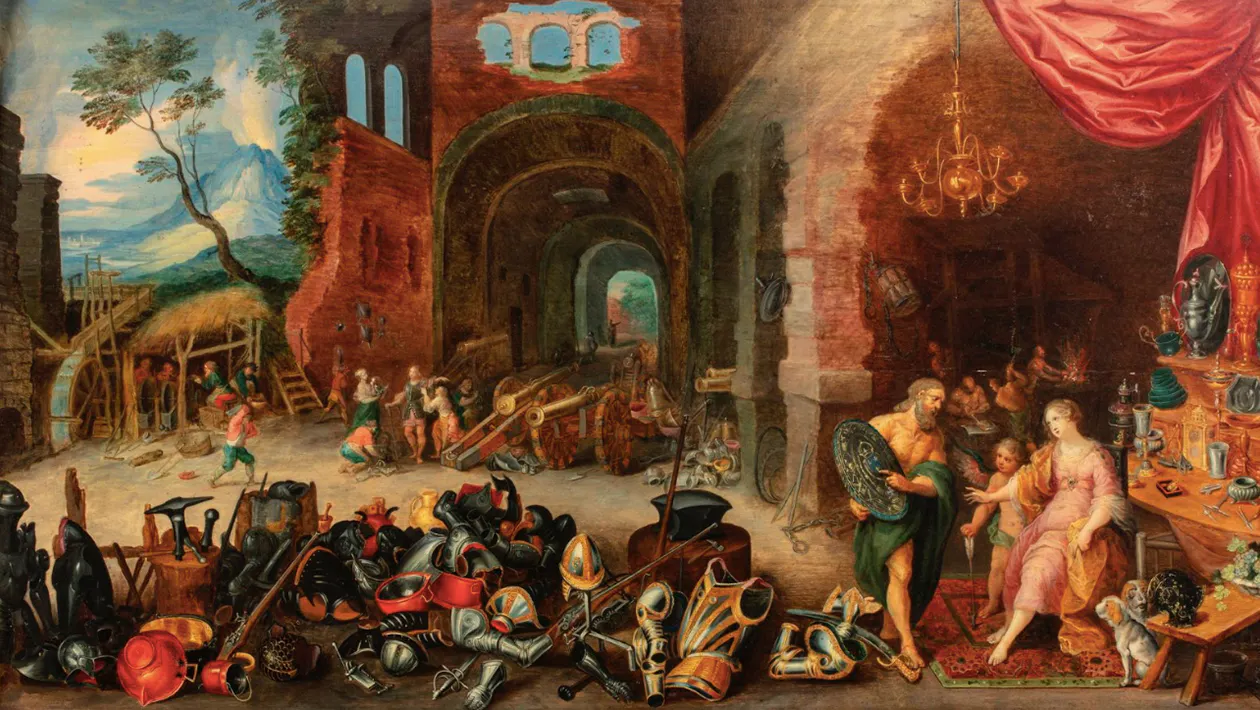
Vénus dans les forges de Vulcain (Venus in the Forges of Vulcain) is a remarkable oil on panel by Frans Francken II the Younger and the workshop of Jan Brueghel or Jan Brueghel II. In this work, Vulcain presents a shield with the arms of France to Venus, whose motif is reproduced on the helmet on the crossbow holder within the centre of the composition. Several versions of the work, attributed to Jan Brueghel I or II and Hendrick van Balen, were sold at Christie's in 1967 and 1998.
In the background, we can see two women and a squire who help a young warrior (most probably Mars or Aeneas), put on his armour and wear his helmet. The scene is identical to a composition by Jan Brueghel the eldest of 1613, which is now preserved at the Pinacothek in Munich.
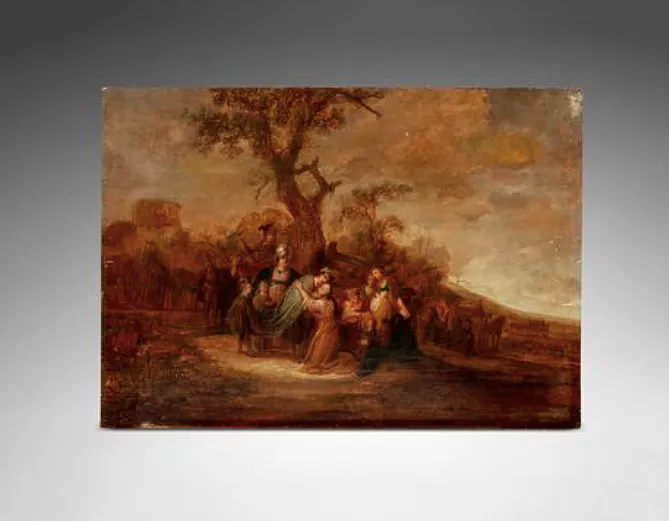
Jacob Willemsz de Wet, born in 1610 in Haarlem, the Netherlands, is a painter of the golden age known for his portraits of biblical characters and his landscapes. Jacob de Wet was presumed to be Rembrandt's pupil during the 1630s, and proved his reputation as an artist by being joined by a large number of disciples (35 in total, some of whom went on to find success themselves). Joseph accueillant son père en Egypte (Joseph Welcoming his Father to Egypt), the work by the master which is being offered at Rossini, is an oil on panel composed of three horizontal boards and dated 1642.
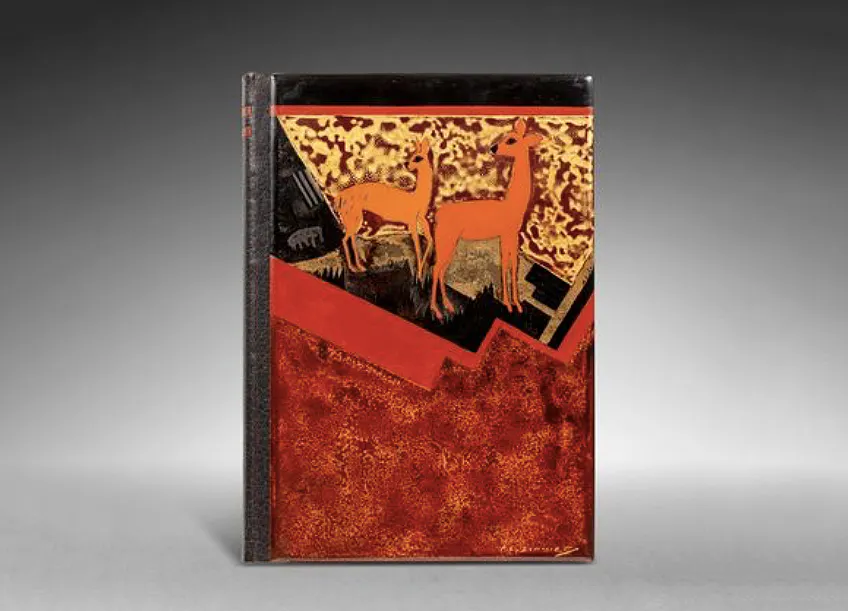
We now continue with a masterpiece from the Art Deco period: the book Cantique des Cantiques by F.-L. Schmied and translated by Ernest Renan. The book’s ornamentation, composition and arrangement are the work of the painter, engraver and printer Schmied, culminated here as a masterpiece and thus giving birth to one of the major books of the Art Deco period.
The work presents a decorative cover (from Dunand) including two deer in a stylised landscape with a gold background, meanwhile each page is decorated with compositions and initials engraved on wood and printed in colours, gold and silver. The page setting of Cantique des Cantiques was revolutionary for the time, proposing an entirely new aesthetic to the world of literature and printing. Established by Schmied on the initiative of a group of amateurs, this edition of 1925 was printed in 110 copies.
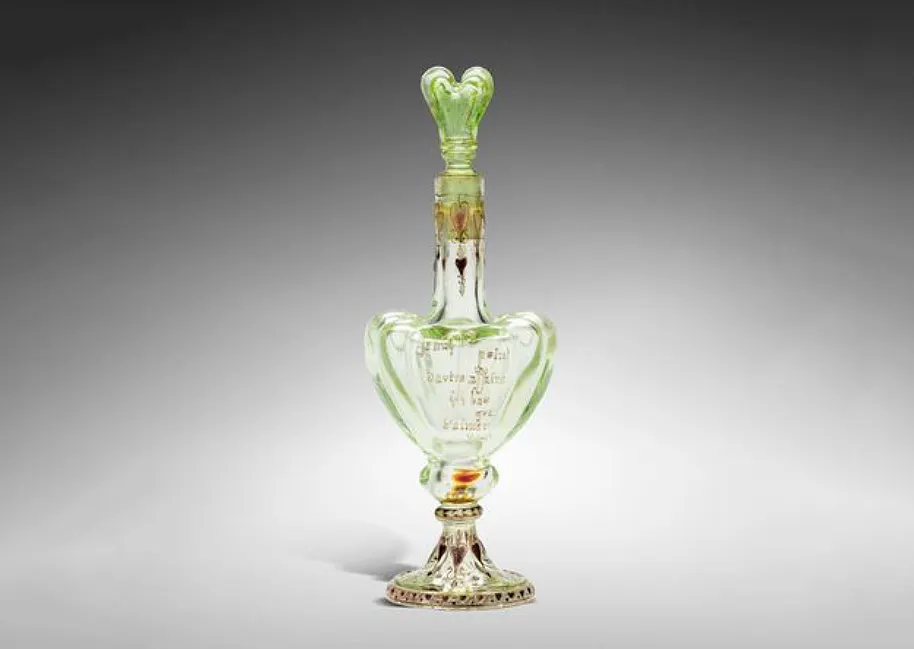
An exceptional ‘Cœur de Marie (Heart of Mary)’ bottle by Émile Gallé also joins the selection. Usually called ‘Verrerie parlante (Talking glassware)’, this rare glassware by Émile Gallé is a Symbolist work representative of the creator’s personality.
Beyond his passion for literature, Gallé was a man of faith and a committed artist who, throughout his life, did not hesitate to show his values and his humanist convictions. A convinced Hugophile, it is not surprising that to decorate the walls of this precious bottle, Gallé’s choice was focused on a verse from L'Art d'être grand-père (The Art of Being a Grandfather).
Victor Hugo, more than anyone else, embodied a messianic, almost Christlike figure of a man ready to endure the worst torments to defend his commitments.
Adorned with dicentra spectabilis flowers, in France the decoration of this glassware is known under the name of ‘Cœurs de Marie’ (The hearts of Mary)’ in reference to the pain of the Virgin, and of course bearing the name ‘bleeding hearts’ in Anglo-Saxon countries.
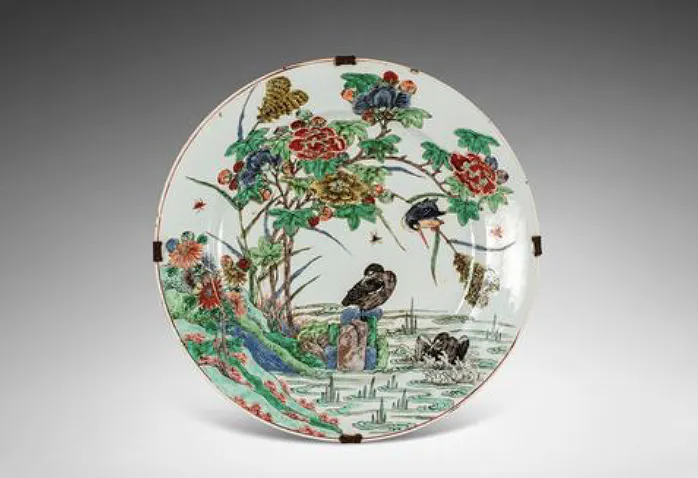
On the side of Asian art, Eastern presence comes in the form of a Chinese porcelain dish dating from the Kangxi period. The work is adorned with a green enamel decor, where a kingfisher and two cormorants move along a bank framed by flowering branches.
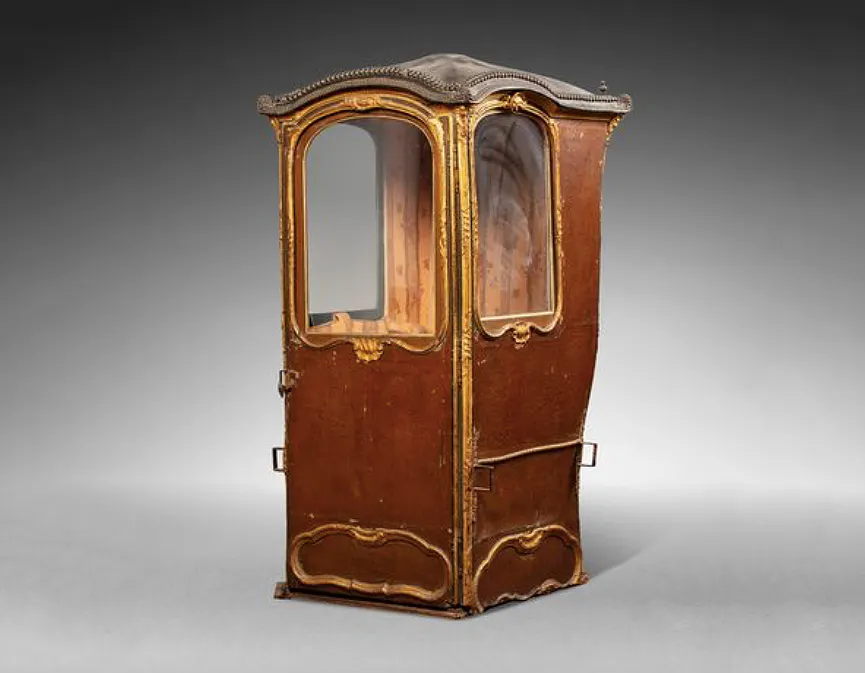
We end this preview with a rather surprising object, a chair in wood in the style of Louis XV. A practical and compact means of urban transport, the sedan chair became very popular with ‘personalities’ in Europe from the 16th to the 18th centuries. The walls are gilded with shells and also adorned with other decorative patterns.
Rossini’s entire catalogue includes 269 exceptional lots, which are going under the hammer on 13 June.
![Photo by Michal Matlon via Unsplash [detail]](https://images.prismic.io/barnebys/738766d7-2cc7-4258-9028-f5c634a4d9d3_Cover+final.jpg?auto=compress,format)