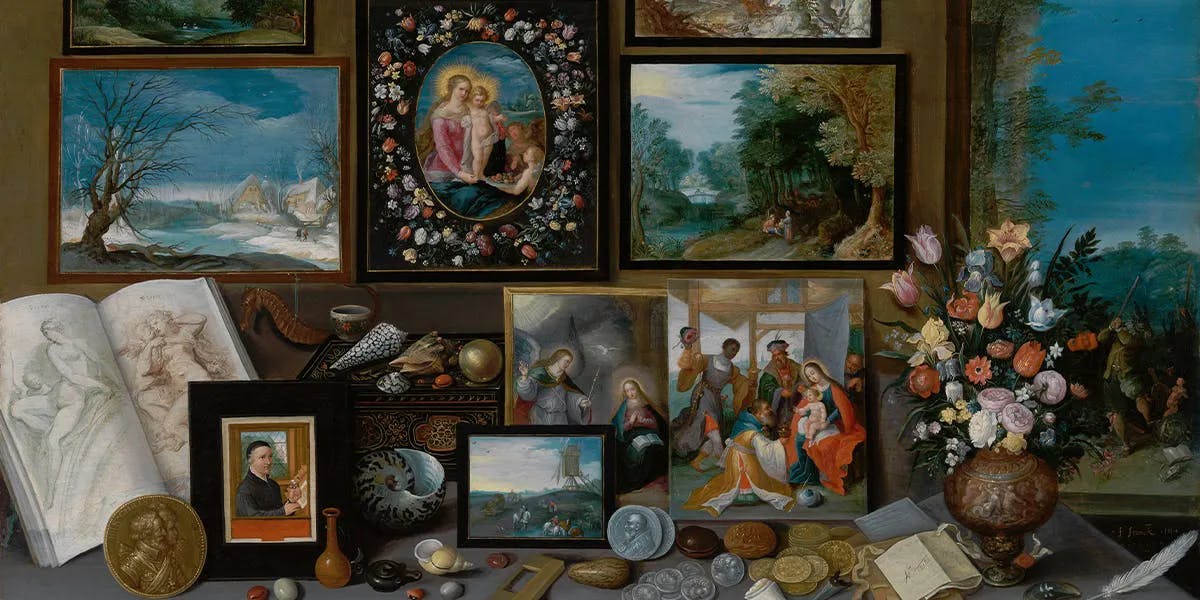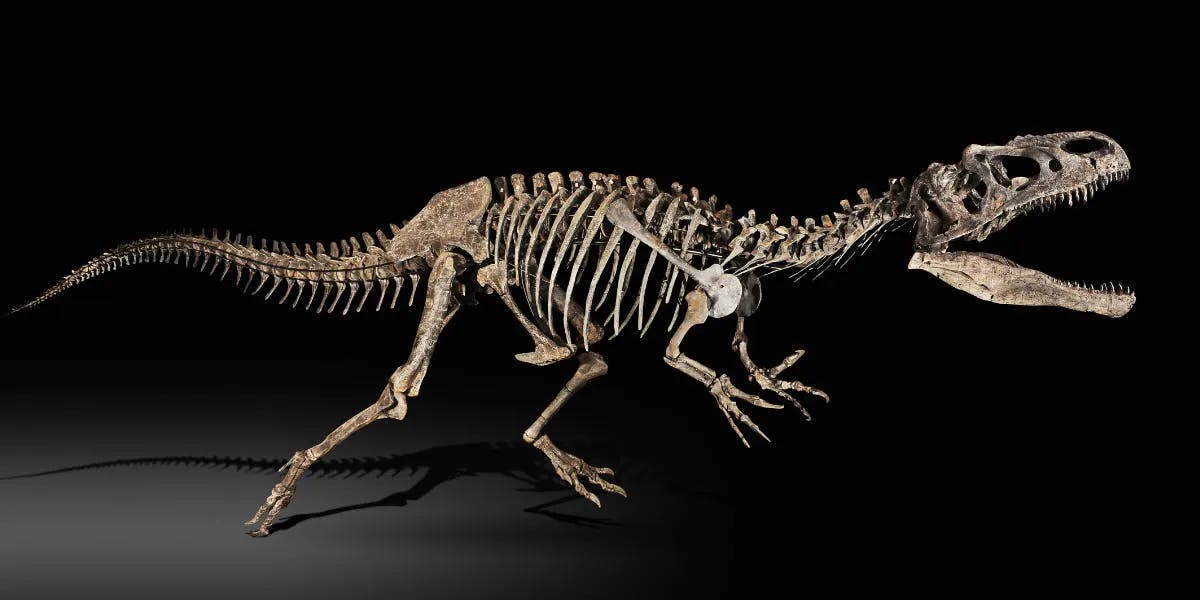
Prized for their rarity, beauty, or scientific significance, natural and unusual objects known as 'Naturalia' encapsulate millions—sometimes billions—of years of biological and geological history. Once confined to scholars' cabinets of curiosities, these marvels of the natural world now draw a wide and varied audience, from art collectors to enthusiasts of the natural sciences.
Collectors and science aficionados are in for a treat at the Naturalia et Paléontologie sale, set for 23 November at the Hôtel des Ventes d’Evreux, where an array of exceptional specimens will go under the hammer. With 288 lots on offer, the catalogue features significant minerals, fossils from the Upper Jurassic, and even an extraordinary Centrosaurus skull. Here’s a preview.
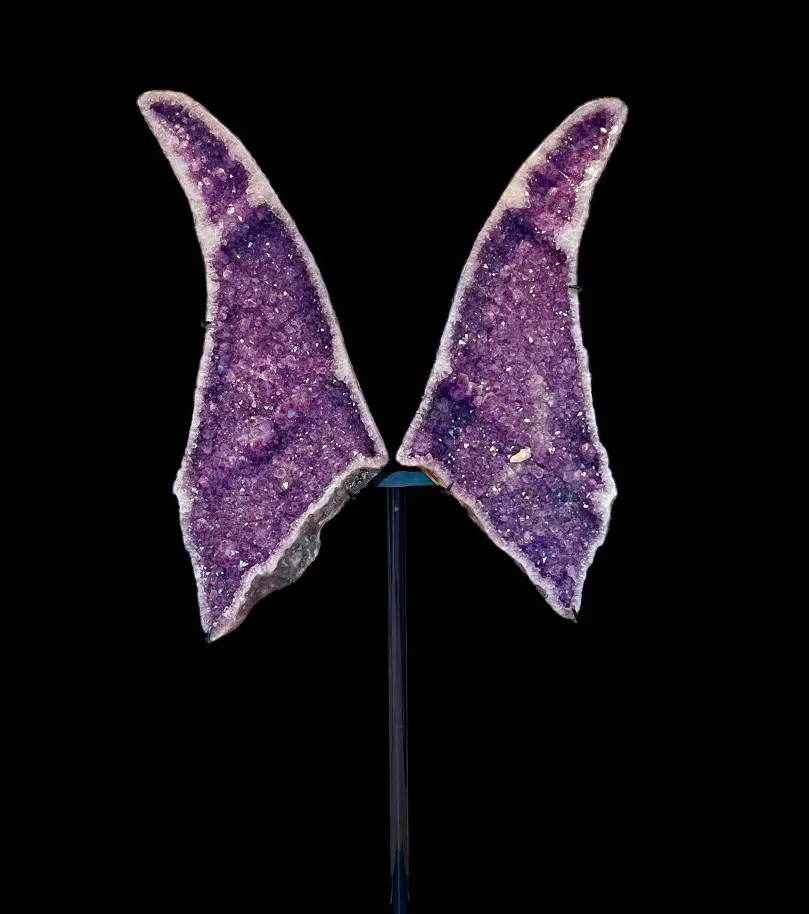
Among the mineral treasures is an impressive slice of amethyst geode of outstanding quality. This beautifully preserved geode, measuring 110 by 90 cm, comes from Brazil, which has been a major source of amethyst since the early 20th century and remains the world’s leading producer. Amethyst, a violet variety of quartz, is classified as a semi-precious stone; its colour remains stable only up to 250°C, highlighting the superior quality of this geode with its vibrant crystals and rich hues.
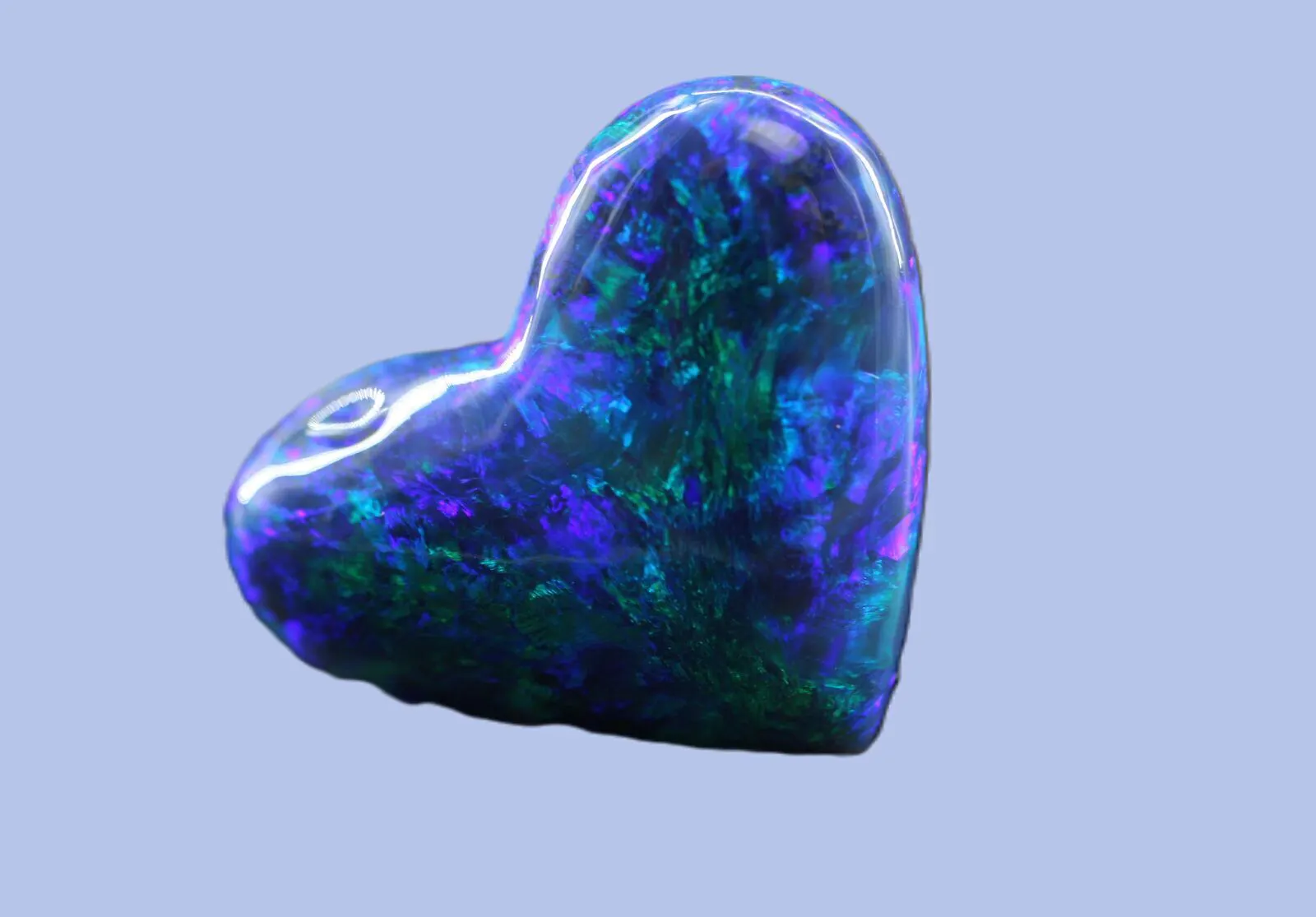
A rare opportunity awaits collectors with an exquisite heart-shaped black opal. Once described as a 'lamp of fire' for its vivid play of colour, opal is a captivating mineral with origins dating back as far as 4,000 BC. This particular specimen is exceptional not only for its shape but also for its size and weight, totalling 49.98 carats.
This opal is from Lightning Ridge in Australia, famed for its production of rare black opals. While deposits exist across all continents, Australian specimens are among the most sought-after, and those from Lightning Ridge are especially prized, with prices per carat ranging from €500 to €1,500 or more for stones of remarkable colour and size. Described by the auction house as "a true jewel of nature," this black opal would be ideal for creating a standout piece of fine jewellery.
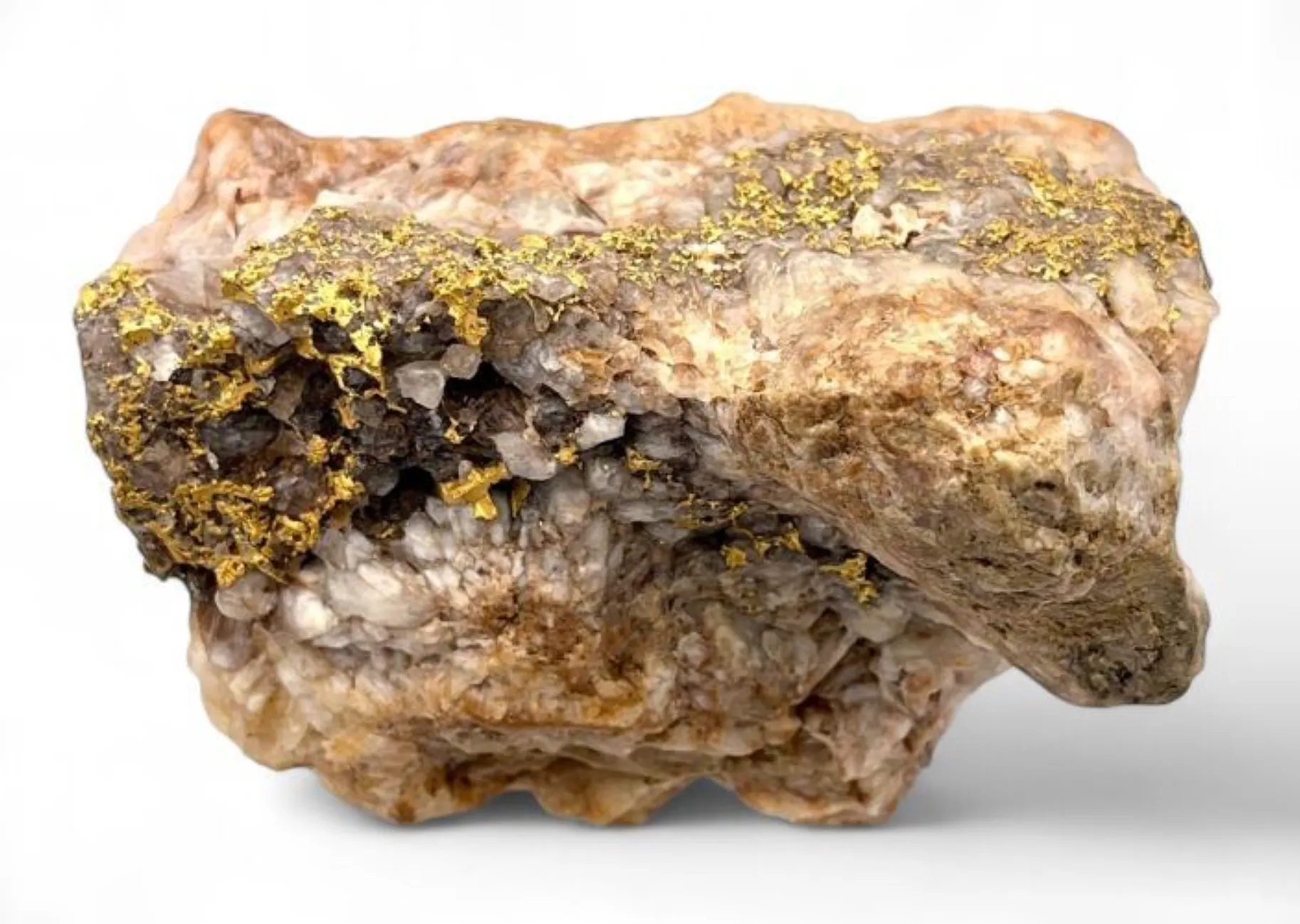
The sale will also feature a remarkable specimen of gold in quartz from Bois de Kervignac, located in Hennebont, western Morbihan. Containing 462 grams of pure gold within a total weight of 973 grams, this piece is the second-largest known in France, after one acquired by the Muséum d'Histoire Naturelle de Paris, which contains 1,077 grams of pure gold within a 3,360-gram mass. This major mineralogical find, measuring 10 by 7 by 6 cm, is an unmissable opportunity.
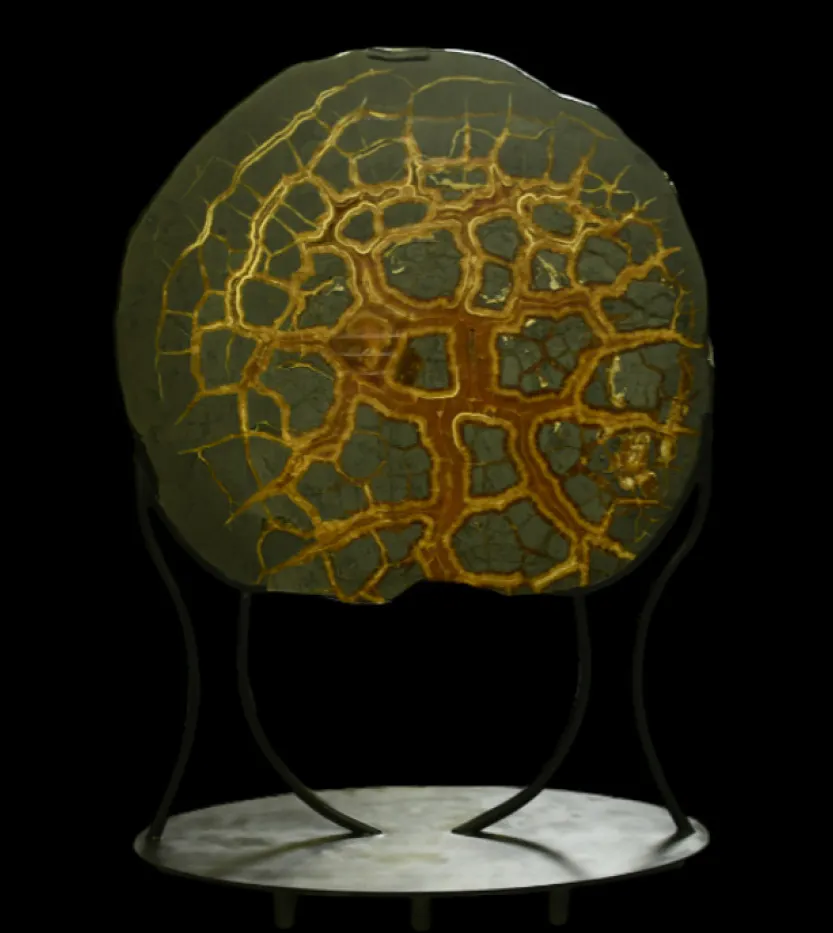
Moving further back along the geological timeline, the sale includes a giant septaria from the Lower Cretaceous, the earliest period of the Cretaceous era, which spanned from 145 to 100.5 million years ago. This extraordinary piece, originating from Russia, measures 135 by 123 by 2.5 cm and weighs a hefty 186 kilos, offering collectors a tangible fragment of a lost age.
Other significant minerals are also up for sale, including an agate from Bou Azzer (Morocco), an agate with chalcedony from Minas Gerais (Brazil), and a sandstone with exquisite patterns discovered in Utah, USA.

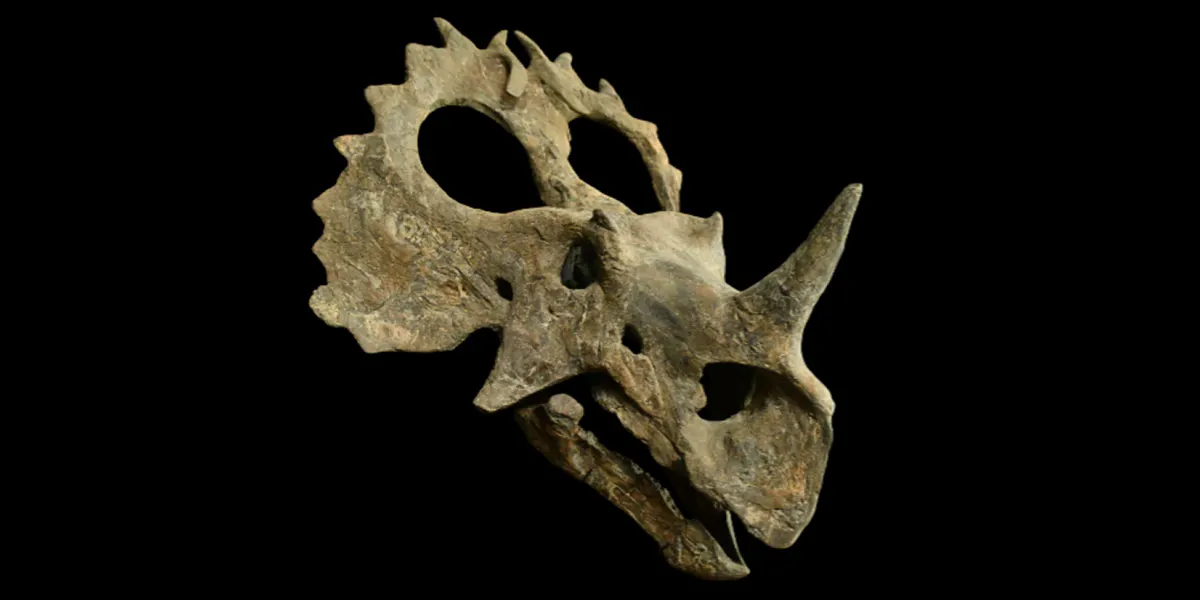
On to palaeontology, and the undisputed star of the auction: a Centrosaurus skull unearthed in Montana, USA. Approximately 60% complete, this specimen dates back to the Upper Cretaceous period (100.5 to 66 million years ago), a geological era interrupted by the massive "K-T" extinction. Centrosaurus, also known as the "spike lizard," was a large, herbivorous dinosaur native to North America, reaching up to 6 metres in length, 2 metres in height, and weighing 1.5 tonnes. Its defining feature, clearly visible in the skull on offer, is its single horn on the snout, which could point forwards or backwards.
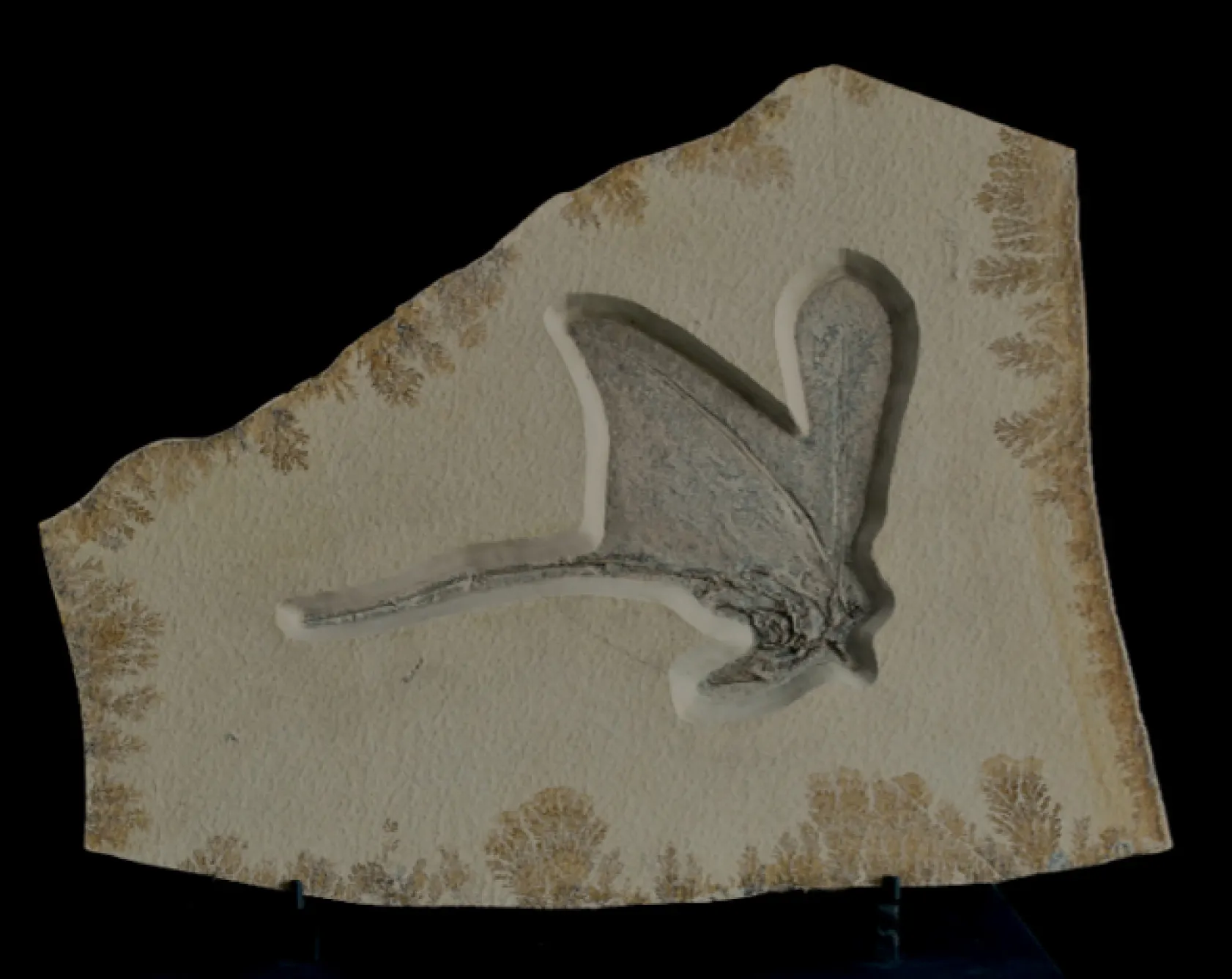
The sale concludes with an exceptionally rare specimen of Rhamphorhynchus, mounted in a dendrite-encircled plate from Solnhofen, Germany. On this plate, measuring 86 by 89 by 3 cm and weighing 49 kg, the relief of the Rhamphorhynchus—a pterosaur that lived during the Upper Jurassic, around 150 million years ago—is clearly discernible, recognisable by its "beak-snout" from which it takes its name.
Blending aesthetics, science, and history, this sale celebrates the evolution of life on Earth and fuels a growing market where demand for natural objects continues to rise. Join us on 23 November at the Hôtel des Ventes d’Evreux to acquire a piece of the past.