
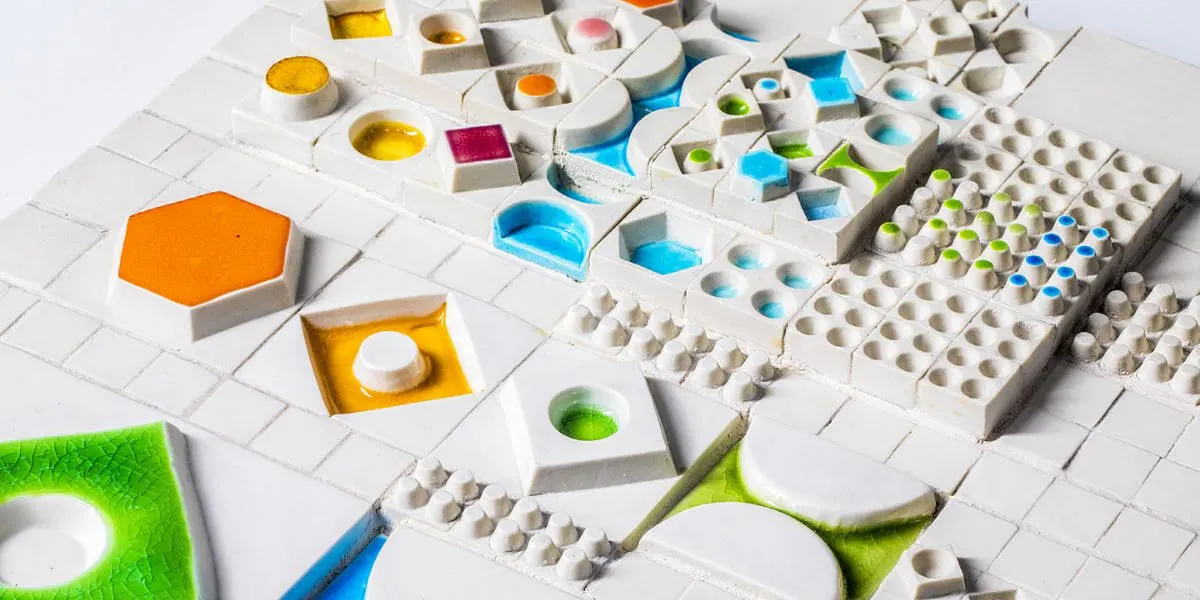
Alvar Aalto, Paavo Tynell, Märta Blomstedt and Eliel Saarinen appear again in the auction hall, but this time in Paris. It is time for Annmaris and PIASA to hold their joint auction FINNISH DESIGN - PIASA X ANNMARIS, PARIS on 15 September. The two auction houses have worked together to arrange the world's first Finnish design auction, which will be held outside Finland.
Over 250 fantastic objects will be on display at 118 Rue du Faubourg Saint-Honoré in Paris. There will be several rare objects, some of which are even classified as Finnish national treasures. Here are seven highlights you must not miss!
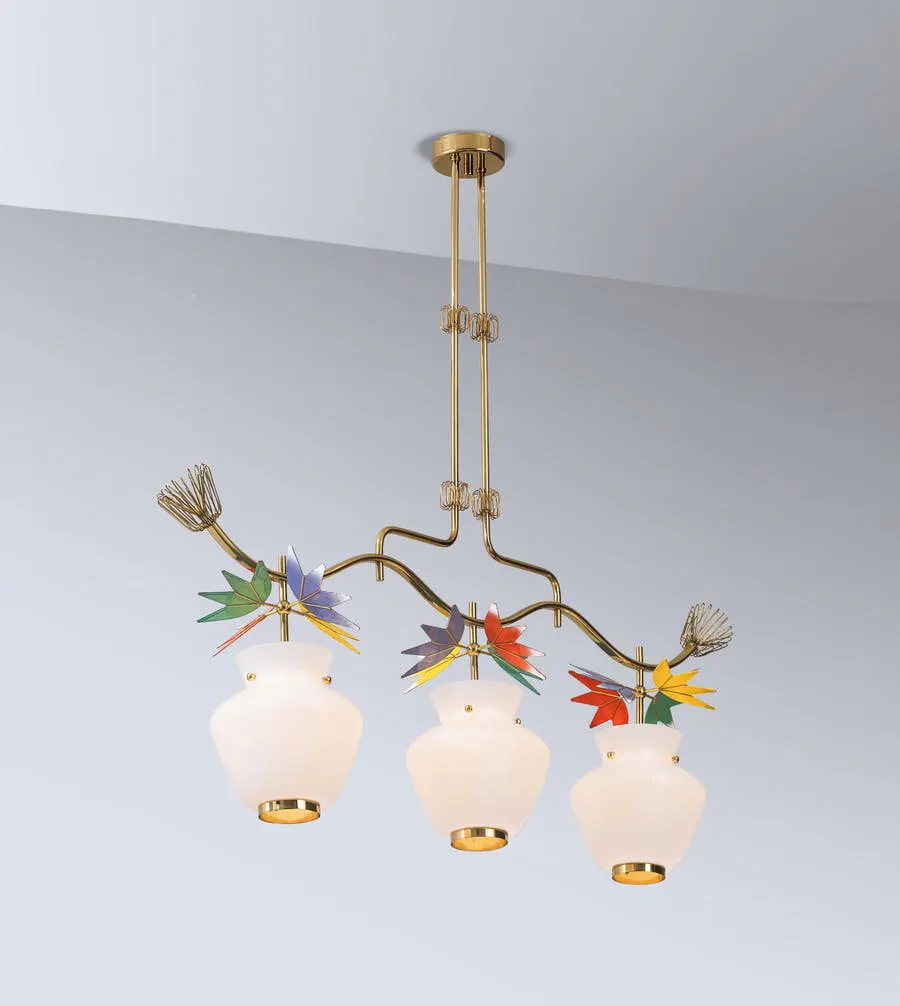
In the catalogue you will find Paavo Tynell and his nature-inspired brass luminaires. The Finnish champion is represented by over seventy pieces, and one favorite is the colourful chandelier that he designed in the late 1950s.
Tynell started working in metal as a teenager when he trained as a blacksmith, and his natural talent helped him quickly master the material. In connection with the increased availability of electricity in the 1930s, Tynell began designing luminaires for his company Taito Oy. The lighting company manufactured luminaires for both private households and public premises. Paavo Tynell's luminaires have illuminated all sorts of places around the world, such as the UN in New York and the Riksdag in Helsinki. Maybe one of his creations can move in with you?
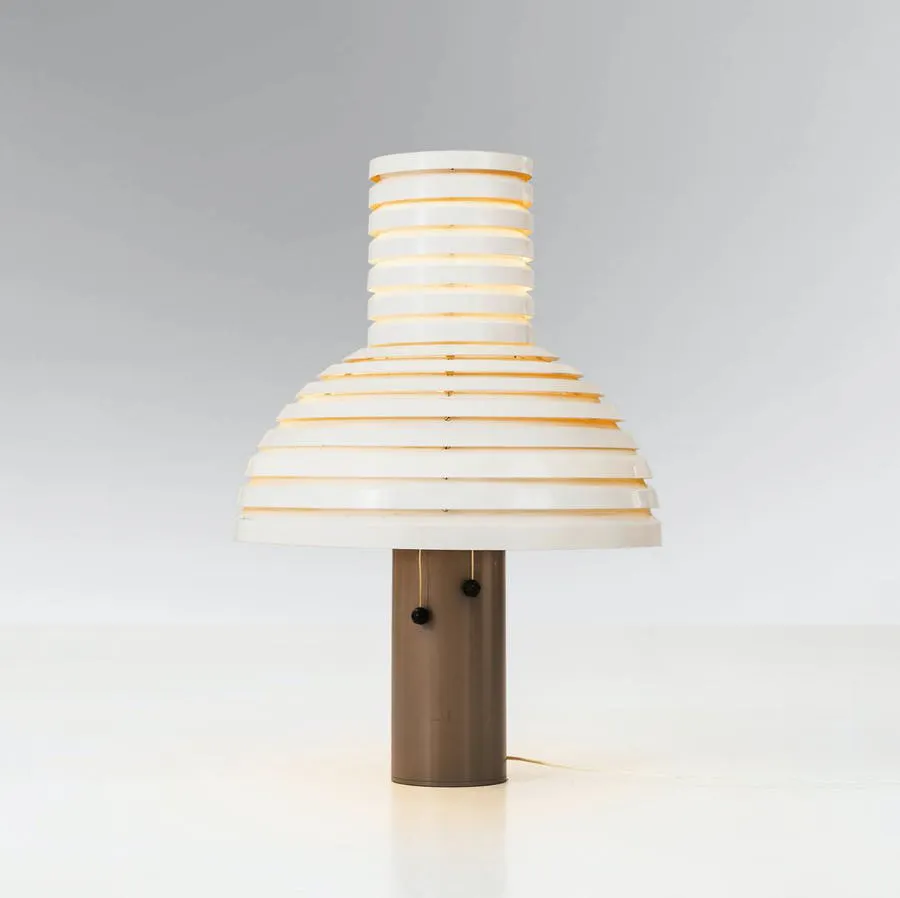
Antti Nurmesniemi was a Finnish interior designer who created everything from furniture and kitchen utensils to telephones and trains. He was married to the textile artist Vuokko Eskolin, who is best known as one of the leading designers at Marimekko and who designed the popular ‘Piccolo’ pattern. Nurmesniemi founded his own interior design and design agency, Studio Nurmesniemi, in 1956. He designed the interior of several churches, bank branches, hotels and other public buildings, such as the Finnish Embassy in New Delhi, India. Antti designed the ambassador's residence and was responsible for the design of the embassy's custom-made furniture. He also designed the luminaires, including the table lamp shown here.
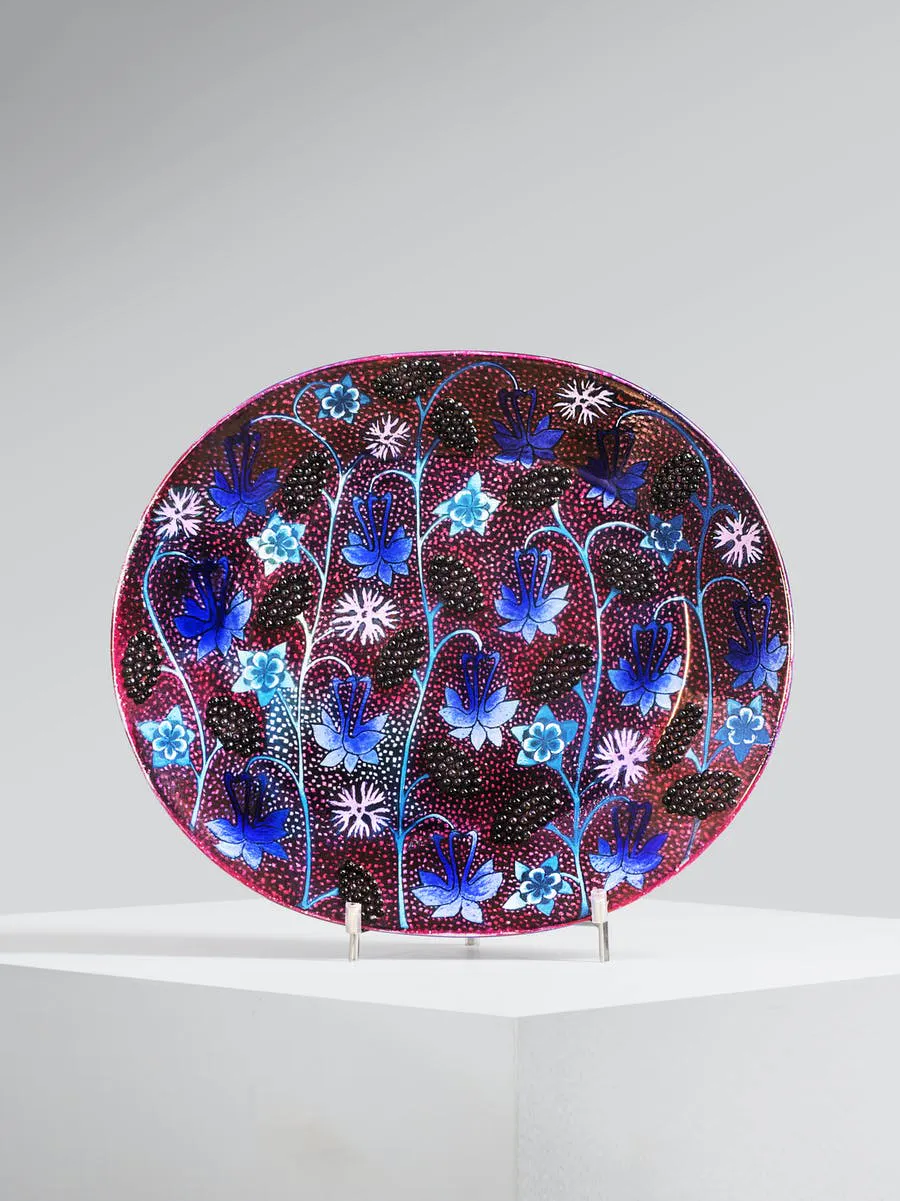
In the catalogue you will find ceramic works by several artists, including Birger Kaipiainen, Annikki Hovisaari and Liisa Hallamaa. Kaipiainen is represented by a dozen colourful products, such as this unique dish from the 1970s. Birger's oeuvre is characterised by both fabulous and surrealistic motifs. During the 1960s the object's surface began to become central to his production, and his works became larger and more ornate. Among other things, he began to decorate his art with ceramic pearls, just like on the plate pictured here.
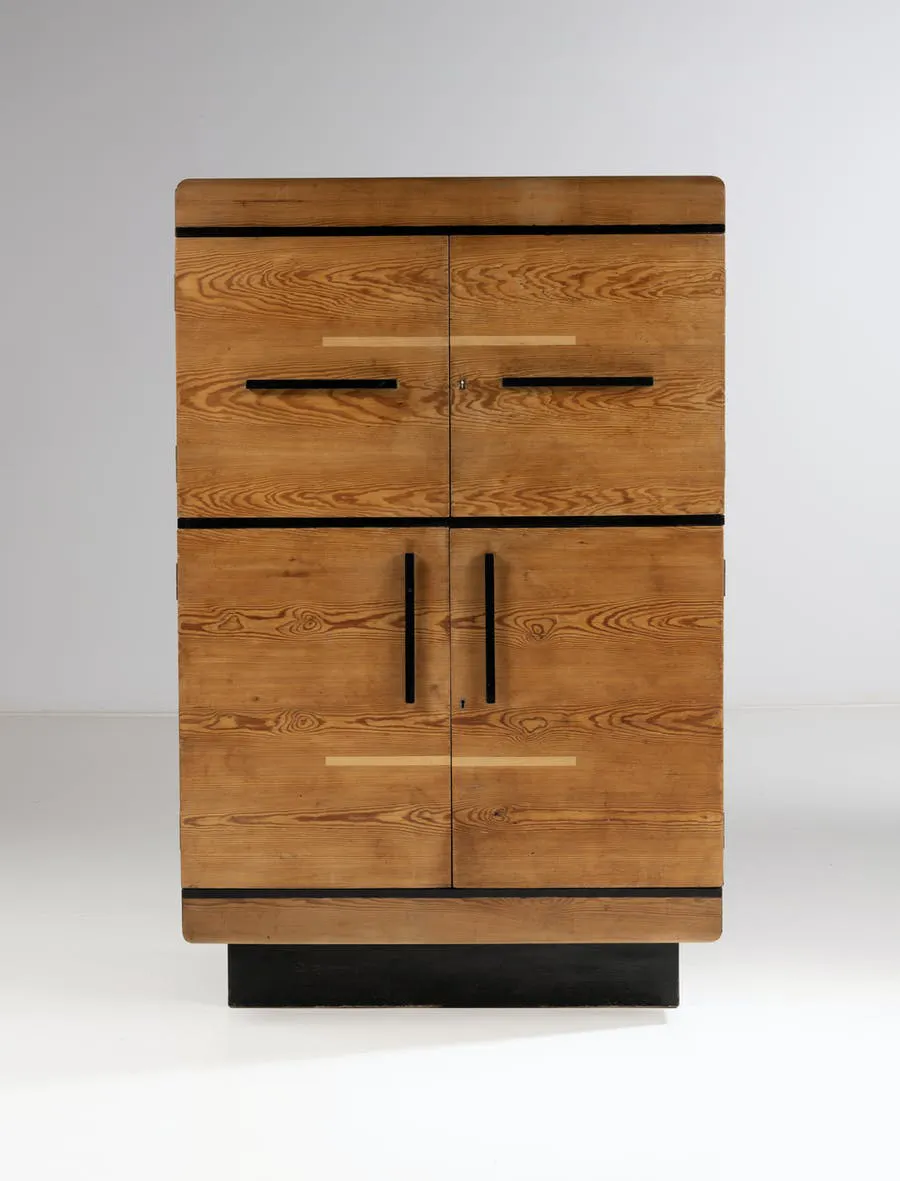
Birger Carlstedt was a pioneer in abstract art and a versatile creator who, in addition to painting, worked with interior design. He studied at the Finnish Art Association's drawing school 1926-1928 and in Paris during the 1920s and 1930s. He belonged to the group of artists who were open to new influences and dared to experiment with new forms of expression. Carlstedt became interested in the European avant-garde early on, and was particularly influenced by Cubism and Surrealism.
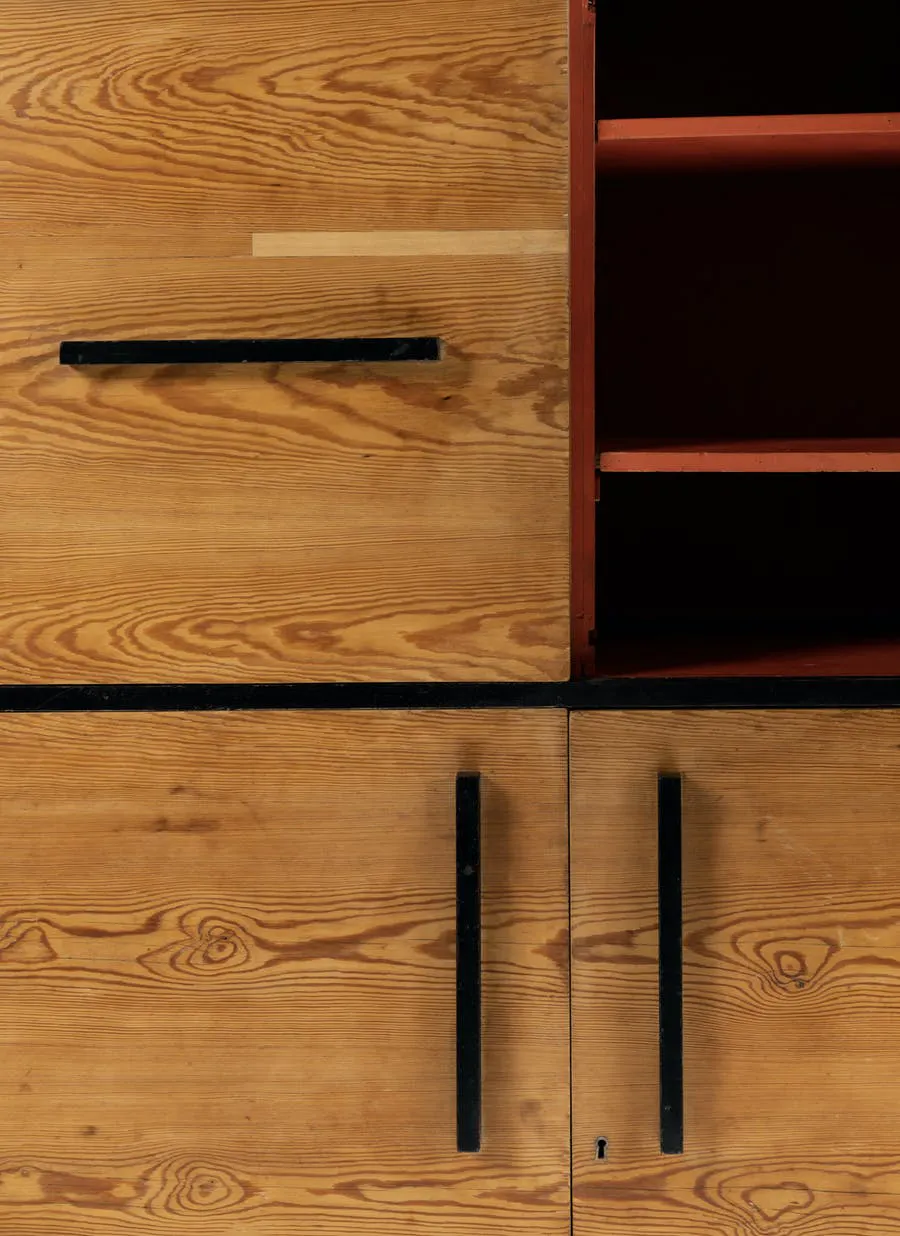
In 1929, Birger was commissioned to decorate his mother's restaurant Le Chat Doré. He drew inspiration from the famous café Aubette in Strasbourg, which had been decorated by Theo van Doesburg, Jean Arp and Sophie Taeuber-Arp in the late 1920s. The result was an ultra-modern venue characterised by geometric shapes and functionalism. Unfortunately, the Finnish public did not appreciate the design language and when his mother terminated the lease in 1933, the interior was destroyed.
Between October 2019 and January 2020, a large retrospective exhibition was held at the Amos Rex Art Museum in Helsinki. The exhibition ‘Birger Carlstedt: Le Chat Doré’ was a reconstruction of the legendary café and included the artist's oeuvre. Among other things, this cabinet that Carlstedt designed around 1930 was shown on display.

Olof Ottelin graduated as an interior designer in 1946. Two years later, he got a job as a furniture architect at Stockmann's drawing office, where he later became head of the furniture department and artistic director of the interior design departments. Ottelin became known for his solid wooden furniture and his comfortable and simple chairs. The pair of armchairs on offer were designed in the early 1950s and are called the ‘Jumbo’.
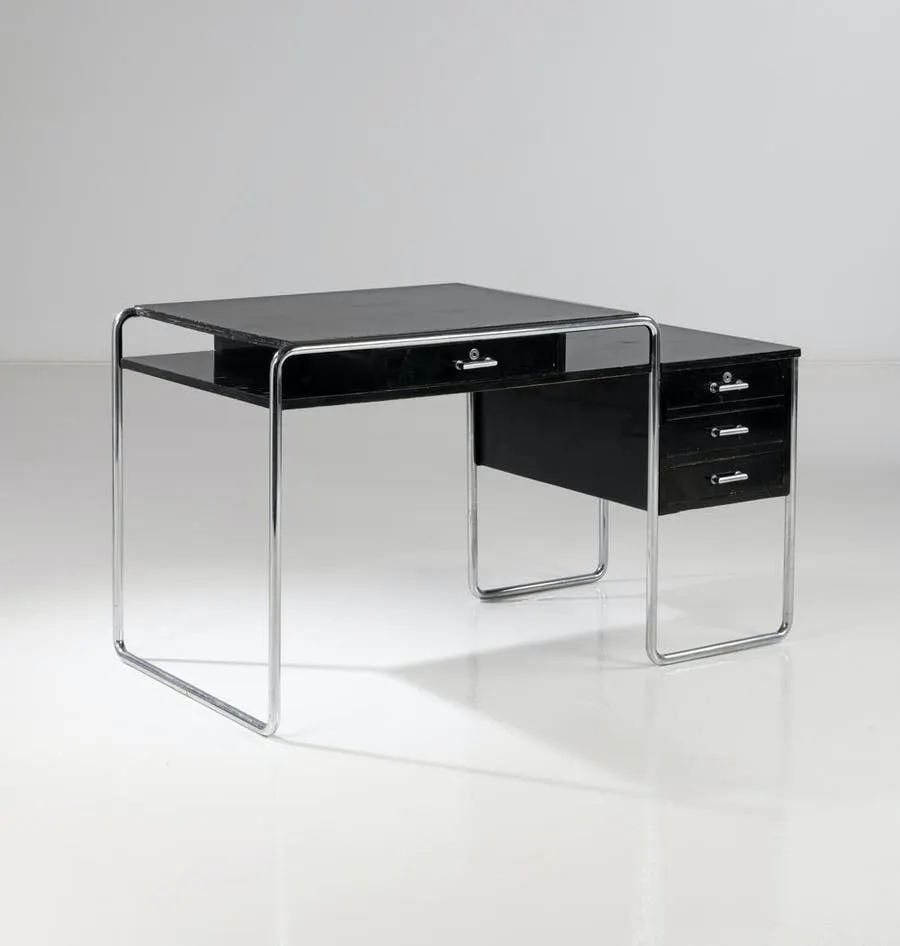
Pauli Blomstedt was a Finnish architect who was married to Märta Blomstedt, whose furniture can also be found in the catalogue. Pauli was of great importance for the introduction of functionalism in Finland, and, in addition to his architectural work, he also designed simple and stylish tubular steel furniture.

In Bazoches-sur-Guyonnes, about 40 kilometers southwest of Paris, is one of Alvar Aalto's most important private houses: Maison Louis Carré. It was the French art dealer Louis Carré and his wife Olga who commissioned Aalto to design the house in 1956. Carré, who was very interested in architecture, wanted a house where he could accommodate many guests, but which also had a private part. Three years later, the couple was able to move in.
Alvar Aalto placed great emphasis on the design of the overall experience, and the materials used for Maison Louis Carré were chosen with great care. For the exterior he used a local sandstone and inside was used pine from Finland. As in many of his other works, Aalto created a complete work of art that combines architecture and design. A large part of the furniture and fixtures have been designed especially for the house. Among other things, Aalto designed the table shown here, which was a prototype for a table for the legendary house.