In 1980, the novelist and artist William S. Burroughs gave a landmark lecture entitled The Four Horsemen of the Apocalypse at the Ecotechnical Institute of Aix-en-Provence. He invoked the Bible's Book of Revelation according to which the Four Horsemen of the Apocalypse are famine, pestilence, war, and death. It is this speech that led him to write the introduction to the catalogue of the Keith Haring exhibition entitled Apocalypse in 1988.
See also: Keith Haring: The Artist Who's Everywhere
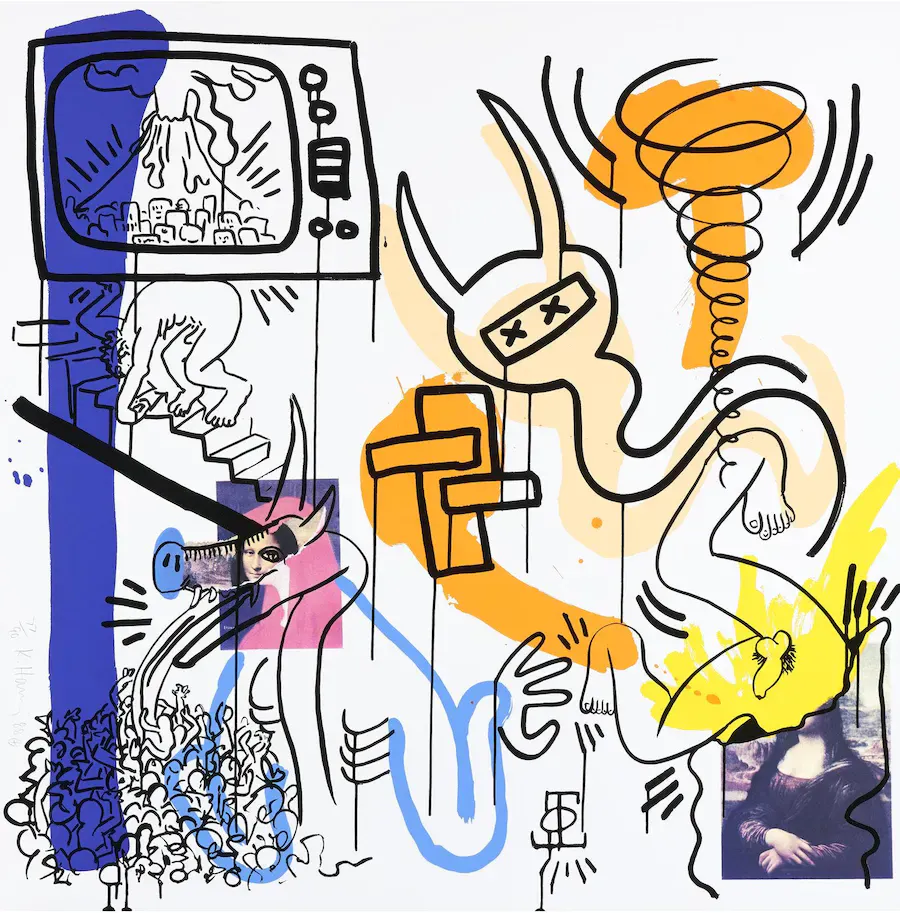
Keith Haring's Apocalypse series, consisting of 10 works, commented on the writings of William S. Burroughs and provided an intimate insight into living with HIV/AIDS in the context of a silent epidemic. Now emblematic of the artist's last years and his fight against the virus, the works offer a raw vision of HIV as a precursor to the end of the world.
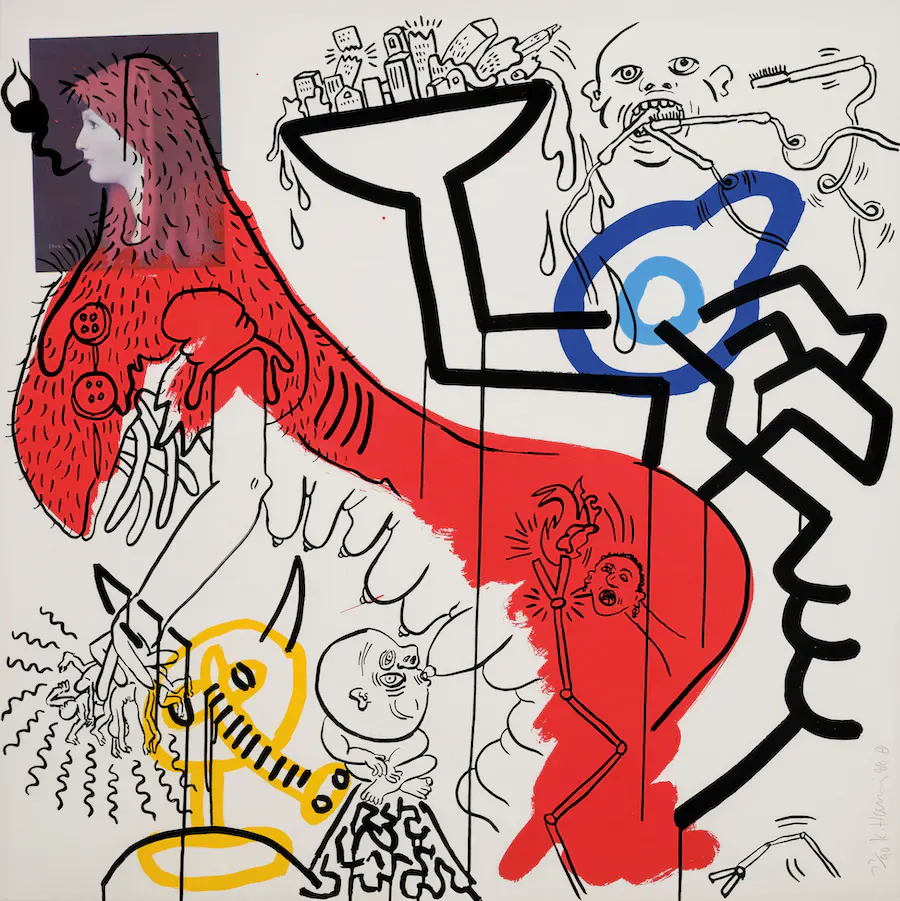
"Neon explosions and tornadoes erupt through crumbling cities, volcanoes spew molten colours as the earth's crust warps and shatters into jigsaw pieces," read Burroughs' writings that accompany the artwork.
Want more articles like this straight to your inbox? Subscribe to our free newsletter!
Burroughs had a violent vision of the apocalypse, close to the images that Keith Haring had of it. He imagined a totalitarian society where the authorities in place would spread a virus among the population and let its patients die.
Haring and Burroughs were prominent figures in the New York art scene of the 1970s and 1980s, particularly in the East Village neighbourhood of Manhattan. Together with other artists like Jenny Holzer, Barbara Kruger, Kenny Scharf and Jean-Michel Basquiat, they formed the heart of an anarchist movement made up of revolutionary-minded musicians, painters, writers, and creatives.
See also: Jean-Michel Basquiat: The Radiant Child
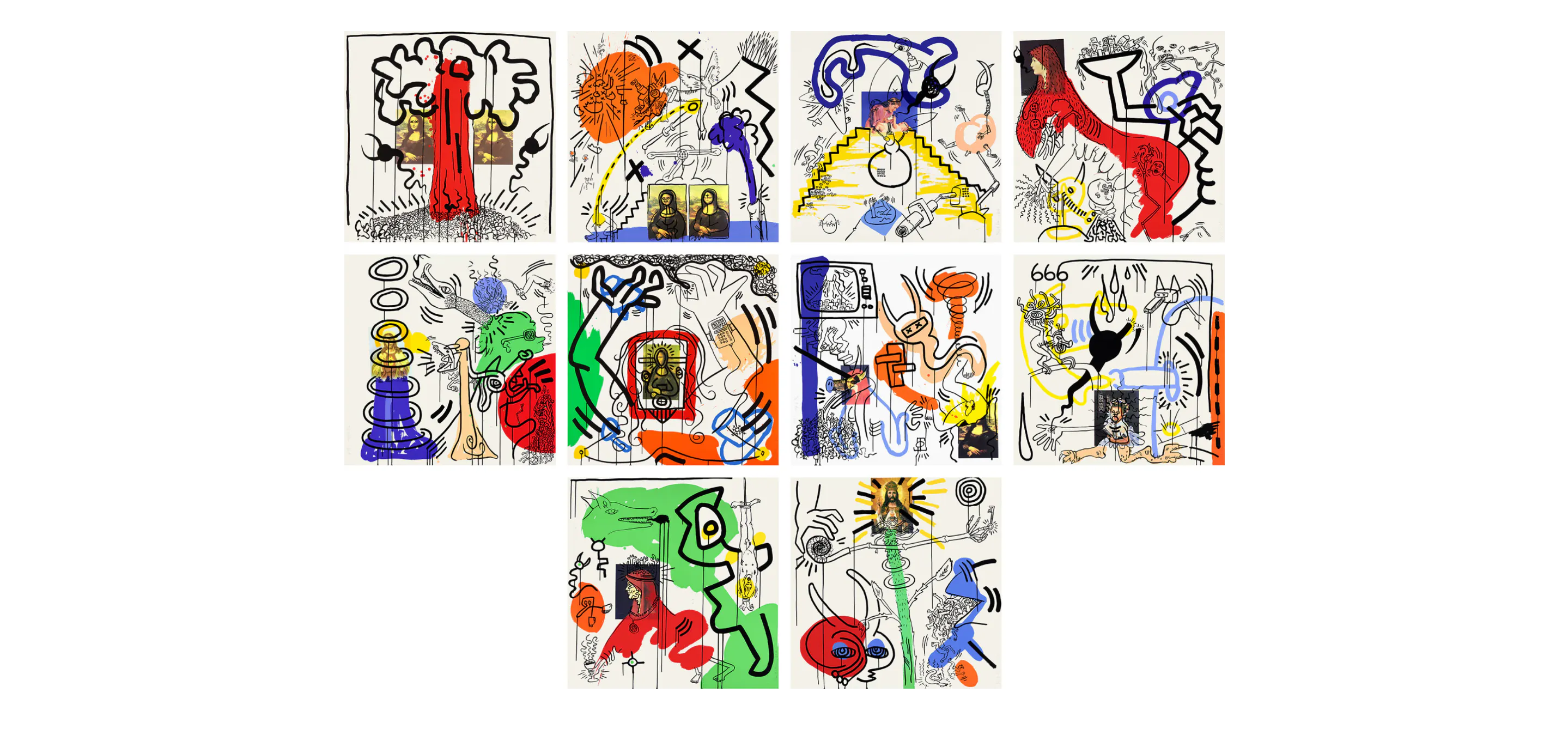
Keith Haring died on 16 February 1990 from complications related to his illness, only two years after the Apocalypse series premiered. In 2022, Phillips sold a set signed and numbered 4/90 for $151,200 (around £124,800), a record to date for the apocalyptic series of the famous New York urban artist.