
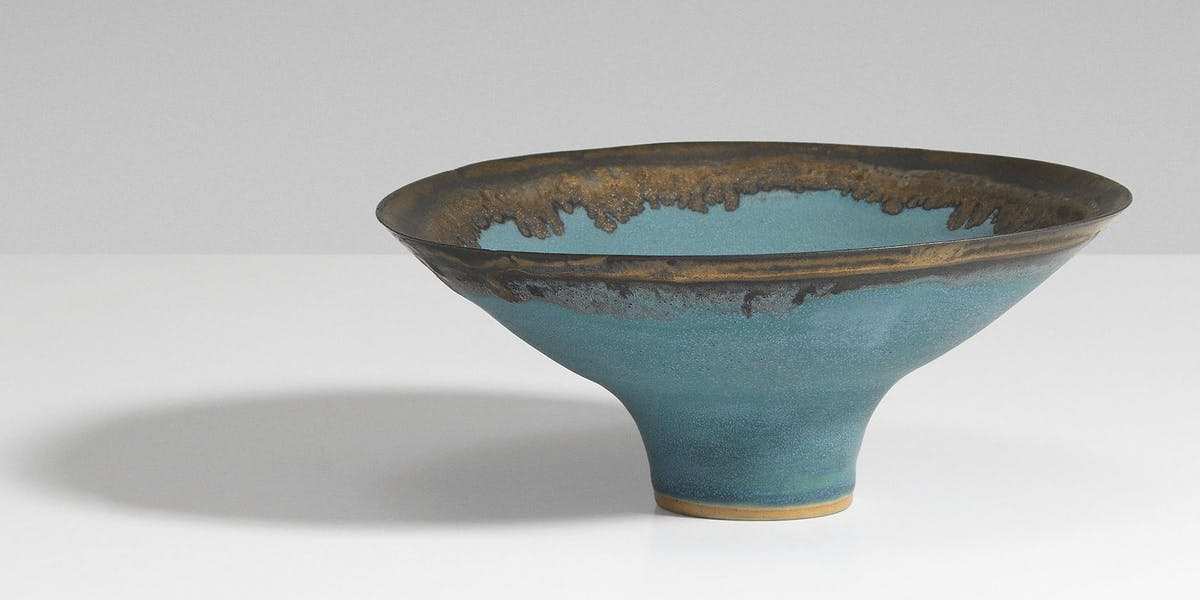
The ceramicist Lucie Rie, née Gomperz, was born on 16 March 1902 in Vienna, when the city was still the capital of the Austro-Hungarian monarchy. At the age of 20, under the influence of an uncle who loved art and archaeology, Rie studied pottery at the Kunstgewerbeschule (the school of arts and crafts) in Vienna. She went on to contribute to the renown of the Vienna Workshop – a precursor of modern design movements such as Art Deco and Bauhaus – which gathered innovative architects, fashion designers, graphic designers, artists and ceramicists. In this modern context, her work, despite being inspired by ancient forms, soon started getting attention. In 1925 she began presenting pieces at the International Exposition in Paris, where she later won a silver medal in 1937.
Fleeing the rampant Nazism and anti-Semitism in her native Austria, Rie seperated from her husband Hans Rie, whom she had married in 1926, and moved to London in 1938. To earn a living in her new homeland, she began making ceramic buttons and jewellery. She sold them to fashion designers, who were subject to wartime restrictions on manufactured goods and were happy to have more materials.
Some of her buttons are displayed in now English institutions, notably the Victoria and Albert Museum. Her studio, a former stable at 18 Albion Mews near Hyde Park, employed or sheltered several other war refugees. These included the physicist Erwin Schrödinger, and the young German Hans Coper, who proved to be an excellent potter and followed a career in that field.
See also: The 14 Most Expensive Female Artists
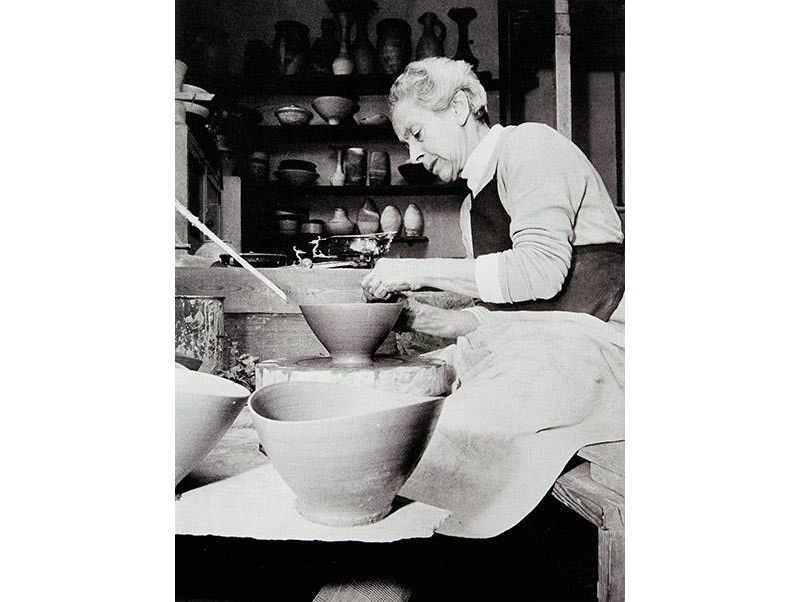
After the war, Rie returned to the pottery wheel and electric kiln and created pieces marked by both their modernity and purity and ancient, even prehistoric influences. She was said to be particularly impressed by her visits to the Neolithic and Bronze Age collections in the archaeological museum in Averbuty, England, and this shows through in her work. The austerity and roughness associated with Rie’s pottery were also characteristics of her personality, and her students at the Camberwell School of Art, where she taught from 1960 to 1972, had to become used to her ruthless honesty.
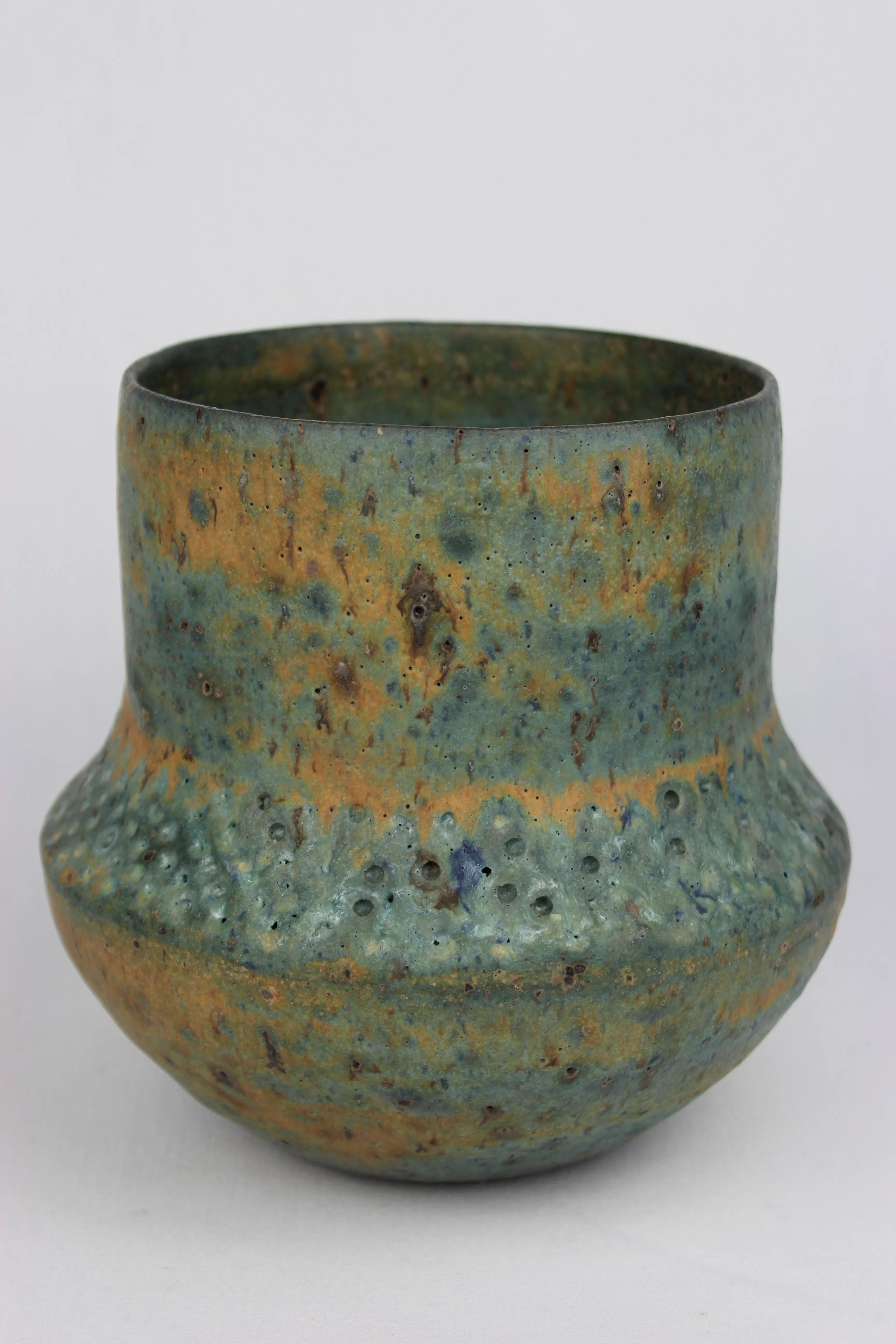
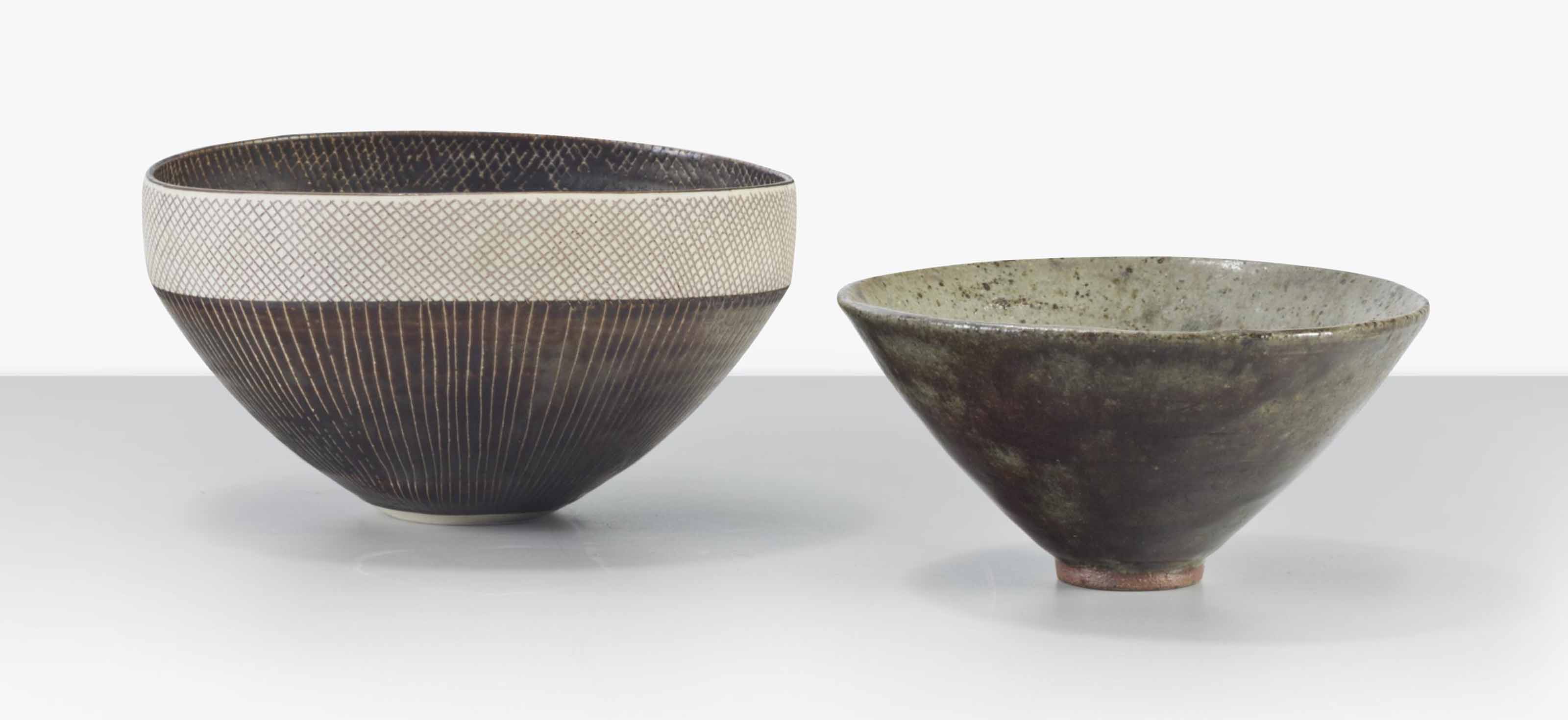
Rie kept an independent style beyond the trends and expectations of members of her entourage, such as Bernard Leach and Hans Coper. Whereas Coper favoured more monumental creations and Leach experimented with painted designs and complex forms, Rie mainly designed modestly-shapes vases, bottles and teacups. They had textured surfaces, sometimes coloured in bright, intermingling shades that highlighted the techniques of sgraffito (scratching through the top surface of clay to reveal a lower layer of a contrasting colour) and nériage (where different clays are mixed and used to make a vessel, and the numerous stacked layers appear as fine lines embedded in a surrounding colour in the finished piece). The seeming fragility of her creations contrasts with the customarily sturdy and solid appearance of stoneware.
See also: The 10 Most Valuable Sculptures Sold at Auction
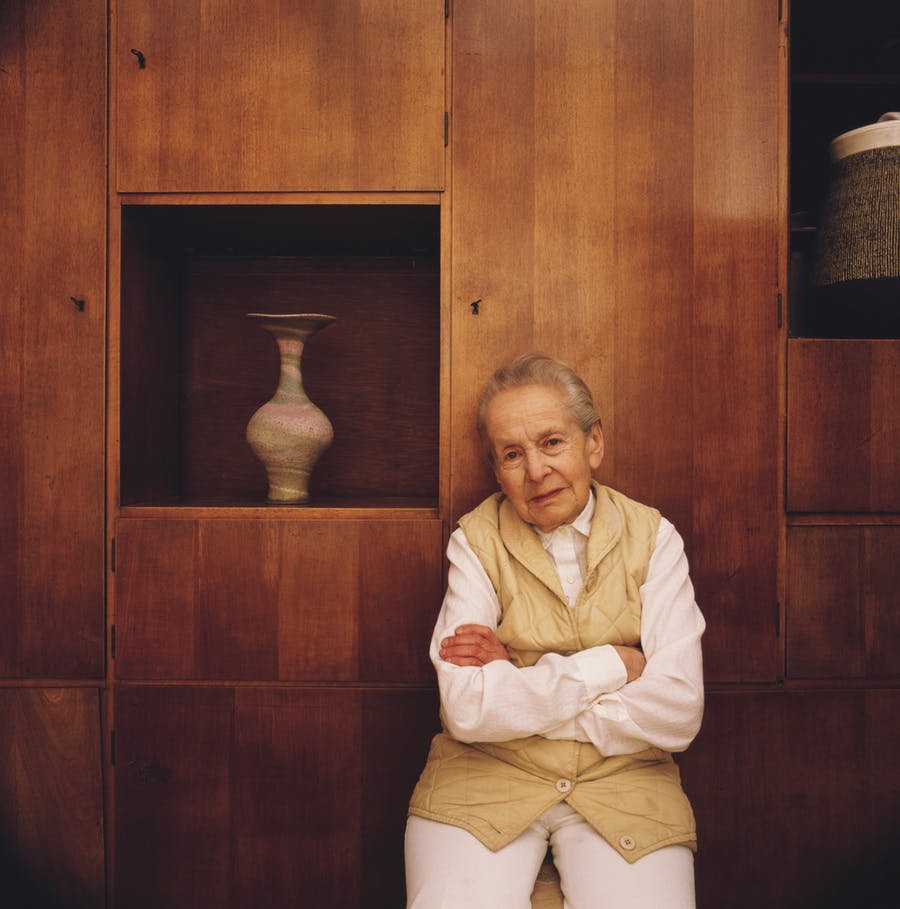
Rie continued to sit at the turntable until nearly 90 years of age, only forced to stop in 1990 after suffering the first of several strokes. A tireless worker, her dedication was widely recognised by prizes and renown across Britain. Appointed an Officer of the Order of the British Empire (OBE) in 1968, she was promoted and became a Dame in 1991. She also received honorary doctorates from the Royal College of Art in London and Heriot-Watt University in Edinburgh, Scotland.
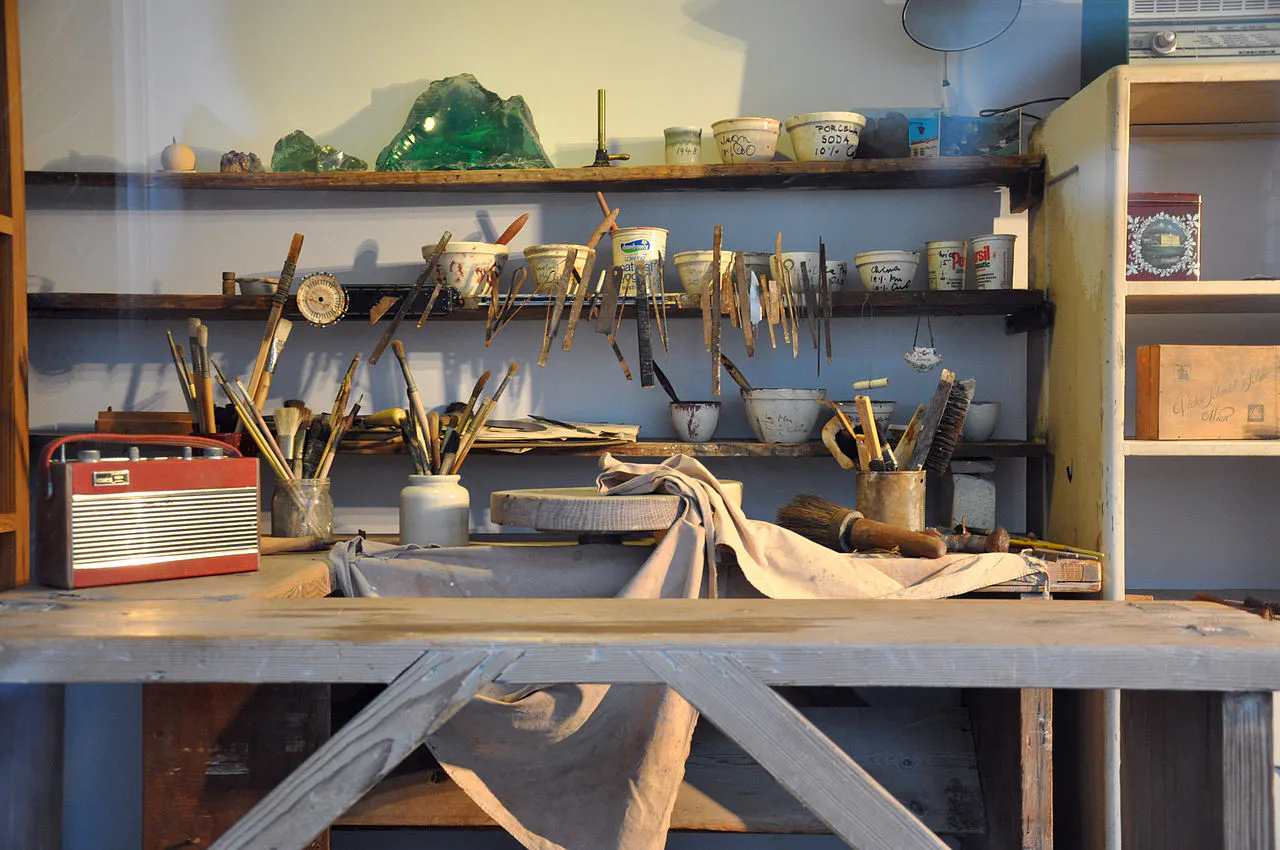
In the latter part of her life, Rie’s pottery, which flirted with the purity of Asian formalism (fashion designer Issey Miyake was among her friends) or appeared to be eroded by exposure to the elements, was presented in museums all over the world. MoMA in New York, the Carnegie Museum of Art in Pittsburgh, the Paisley Museum in Scotland, and numerous English institutions all showed her work, and the Victoria and Albert Museum even recreated her Albion Mews studio following her death in 1995.
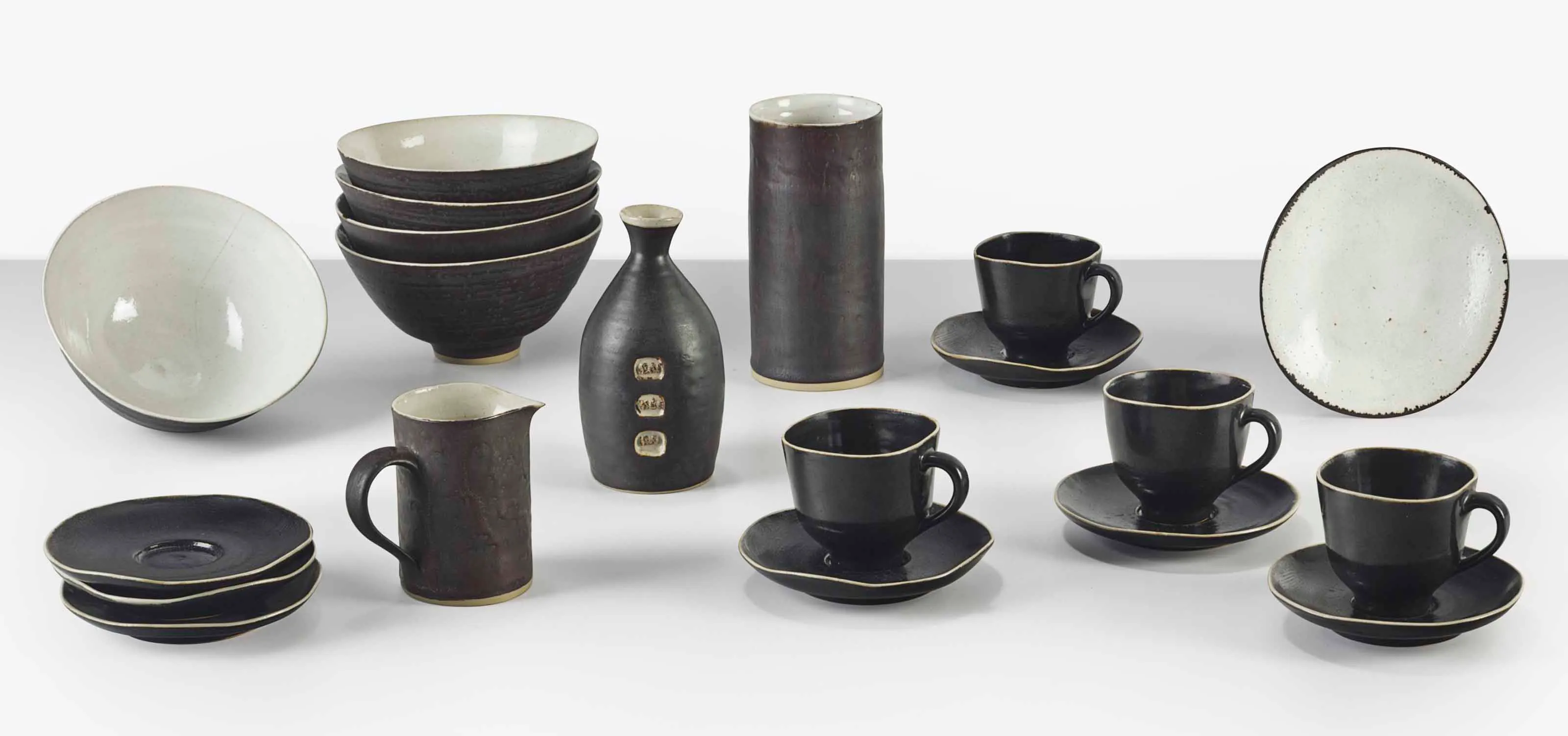
Today, Rie’s works are comparative in value to those of Hans Coper. Prized by American, British, European and Japanese collectors alike, their prices are capable of climbing to tens and even hundreds of thousands of pounds for significant pieces.
Simple yet rigorous in both her art and her life, the ceramicist, whose number remained listed in the British telephone directory despite her celebrity status, regularly received all sorts of visitors in her London studio near Hyde Park. A tea ceremony, so to speak, unceremonious as it might have been… served, no doubt, in cups made by Rie herself.