Stay up-to-date with the antiques world

By subscribing, you are agreeing to the privacy policy. Unsubscribe anytime.

Barnebys

Barnebys HQ

Brahegatan 10
BOX 5038
114 37 Stockholm

Company

  • About Us
  • Join Barnebys
  • Our Partners
  • Press
  • Career

Explore More

  • Barnepedia
  • Buying / Selling at auction
  • Auction Houses / Dealers / Galleries

Support

  • FAQ
  • Terms of Use
  • Privacy and Cookies policy
  • Contact us
  • Barnebys Group AB
  • Barnebys.se
  • Barnebys.com
  • Barnebys.co.uk
  • Barnebys.de
  • Barnebys.fr
  • Barnebys.es
  • Barnebys.it
  • Barnebys.hk
  • All auction items
  • Categories
  • Auction results
  • Magazine
  • Ancient Art
  • Arts & Graphics
  • Asian Art
  • Books, Maps & Manuscripts
  • Carpets, Rugs & Textile
  • Coins & Banknotes
  • Contemporary Art
  • Ethnographical
  • Fashion & Vintage
  • Folk Art
  • Furniture, Design & Mirrors
  • Glass
  • Jewellery & Gems
  • Lighting
  • Medals, Arms & Armour
  • Miscellaneous
  • Music & Musical Instruments
  • Nautica, Technica & Optic
  • Photographs
  • Porcelain & Pottery
  • Postcards & Stamps
  • Sculptures
  • Silver & Gold
  • Sports & Leisure
  • Tin & Metals
  • Toys & Collectables
  • Vehicles
  • Watches & Clocks
  • Wine & Spirits
  • Works of art
  • All auction items
  • Auction results
  • Magazine
  • Get a valuation
  • Auction system

Barnebys Magazine

LatestEditor's picksTopics
Magazine/Photography/Man Ray: The Surreal Visionary

Man Ray: The Surreal Visionary

From a South Philadelphia upbringing to the avant-garde streets of Paris, Man Ray shaped the very fabric of Dada and Surrealism.

25 August 2023Giulia Zileri Dal Verme
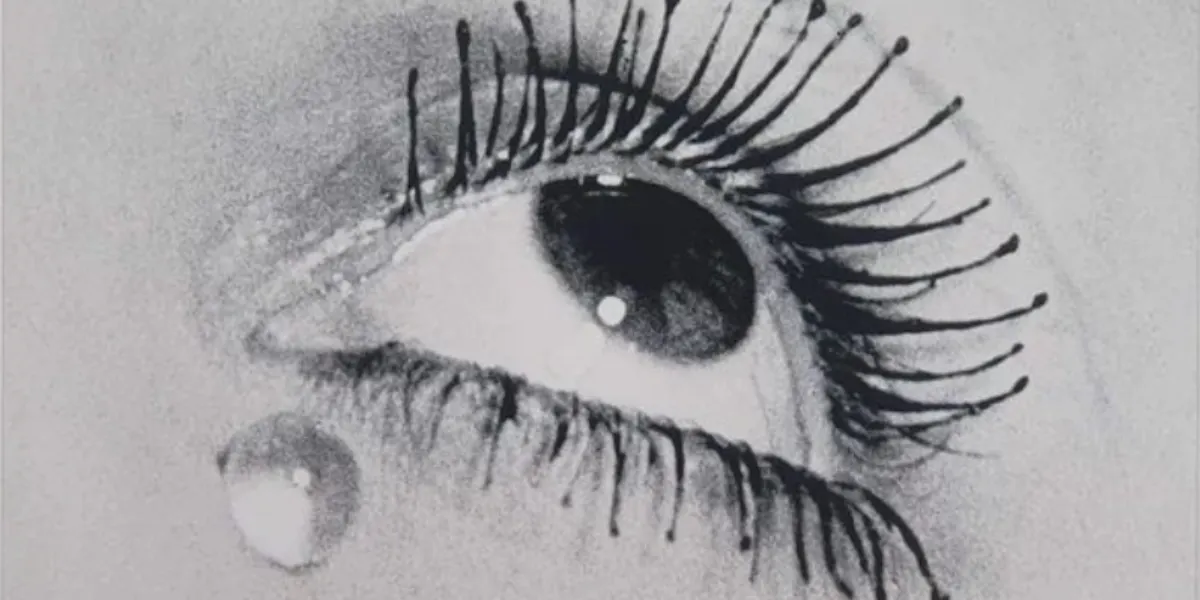
Man Ray (1890-1976), Larmes de Verre, 1932, gelatin silver print. Photo © Drouot

Man Ray (1890-1976), Larmes de Verre, 1932, gelatin silver print. Photo © Drouot

Man Ray, the eldest child of Russian Jewish immigrants, was born in South Philadelphia on 27 August 1890. Ray’s father worked in a garment factory and ran a tailoring business from home, where he enlisted the help of all his children. Though later in life he wished to distance himself from his family, his experience in tailoring had a lasting impact on his art, with art historians often noting the similarities between his collage and painting techniques and those of the tailoring craft.

See also: The 11 Most Expensive Photographers

He started his artistic career in New York as a commercial artist and technical illustrator, and he mainly reproduced 19th-century styles. Enrolment in the Ferrer School in 1912 sparked a period of personal artistic development.

In 1913, he attended the Armory Show, which first introduced him to avant-garde European art. From then on, he began to paint in the Cubist style, and finally began to develop his own style.

See also: The Armory Show: The Exhibition That Changed Everything
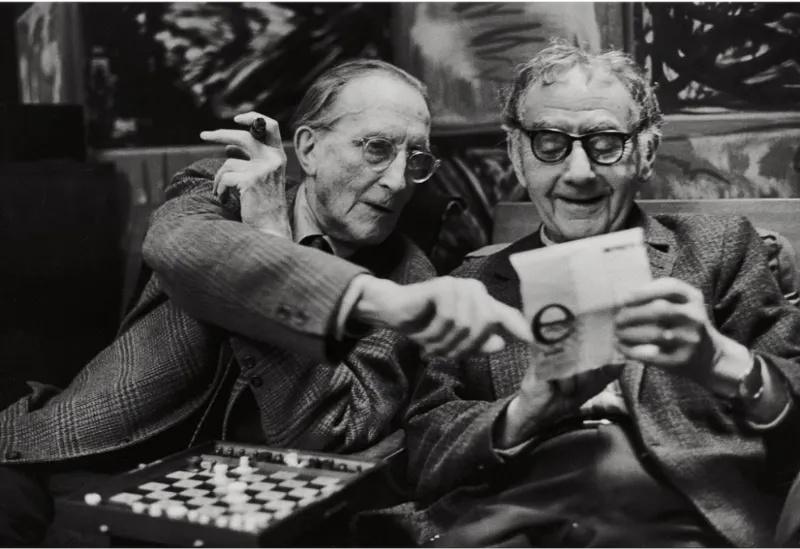
Henri Cartier-Bresson, Marcel Duchamp and Man Ray, Paris, 1968, gelatin silver print. Photo © PHILLIPS

A friendship with Marcel Duchamp, whom he met in 1915, led to their founding of the proto-Dada movement. Alongside Duchamp, who at the time was interested in portraying movement in static paintings, his works also began to depict movement. He initially took up photography in order to document his own works, and produced his first significant photographs in 1918.

See also: The DADA Eccentricity of Elsa von Freytag-Loringhoven

He then wholly dedicated himself to Dada, publishing two periodicals, exploring new photographic techniques and also working with 'readymades' - ordinary objects modified as artworks, which Duchamp later became best known for.
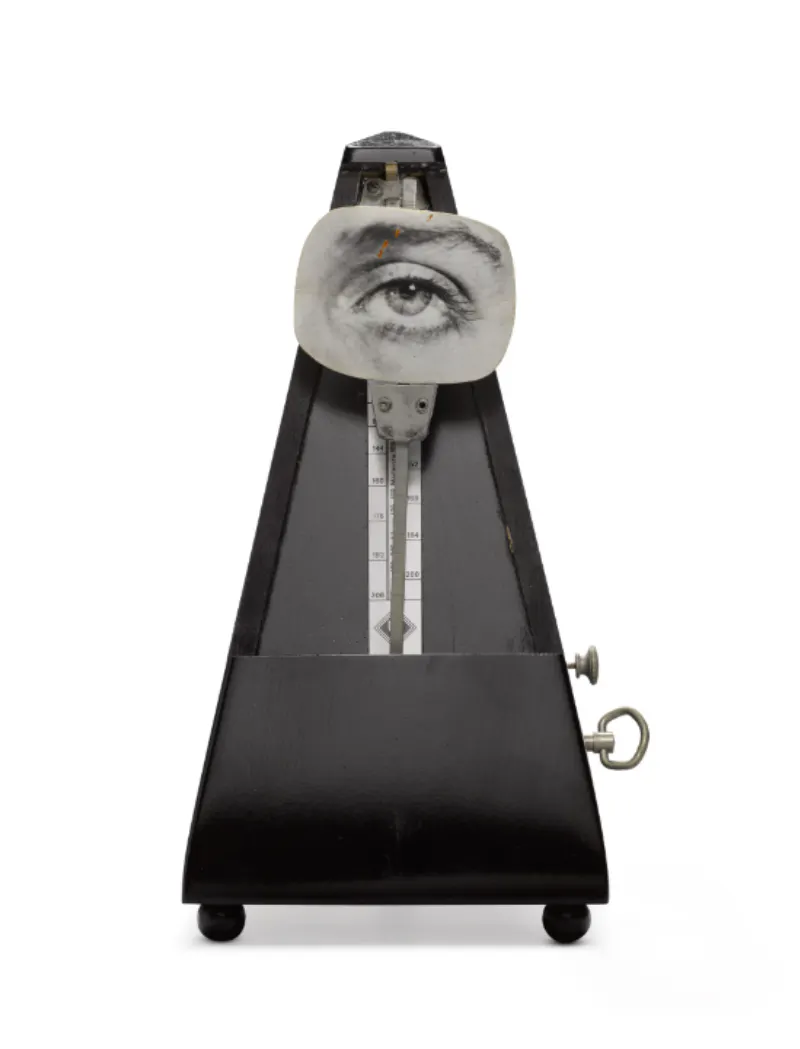
Man Ray (1890-1976), Objet indestructible, signed Man Ray, numbered 27/100. Readymade metronome with black-and-white photograph and original presentation box, originally conceived in 1923. Photo © Sotheby’s

In 1921, he moved to Paris, where he settled in the artistic neighbourhood of Montparnasse. There he met Kiki de Montparnasse (whose real name was Alice Prin), and the two fell in love. The couple would spend most of the 1920s together, and Kiki became the model of some of Man Ray’s most famous photographs, including Le Violon d’Ingres, which depicts Kiki's nude back with two f-holes painted on her as to resemble a violin.

See also: The Surrealists and the Subconscious
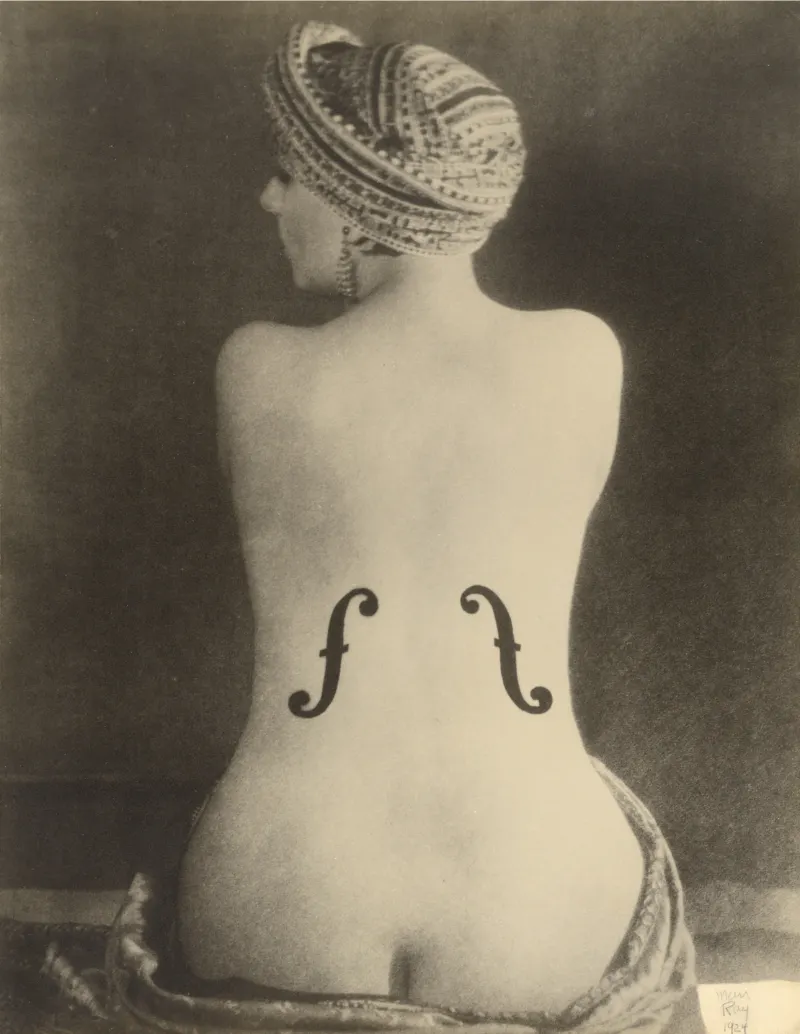
Man Ray (1890-1976), Le Violon d’Ingres, 1924, gelatin silver print. Photo in the public domain

The photograph was shown in 1925 at the first Surrealist exhibition at the Galerie Pierre in Paris, where Man Ray was featured alongside seminal artists such as Max Ernst, André Masson, Pablo Picasso and Joan Miró.

He also became famous for his photographs of African objects displayed in Parisian collections, leading to several famous pictures, including Noire et blanche from 1926, first published in Vogue, which depicts Kiki, her head lying on a table, holding an African mask.
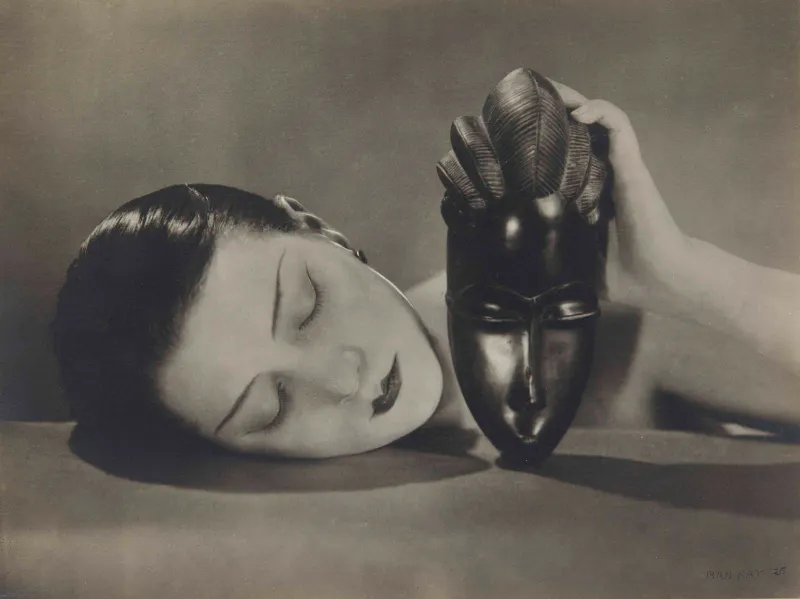
Man Ray (1890-1976), Noire et Blanche, 1926, gelatin silver print. Photo in the public domain

For two decades, Man Ray was one of Paris and Europe’s most-known photographers, and he shot portraits of the art world’s elite, including Peggy Guggenheim, Jean Cocteau, Salvador Dalí and many more.

See also: 6 Artists in Front of the Camera

Ray was forced to leave Paris because of the Second World War and settled in Los Angeles in 1940, where he met Juliet Browner, a trained dancer and artist's model. The two married in 1946 in a double ceremony alongside artist couple Max Ernst and Dorothea Tanning.
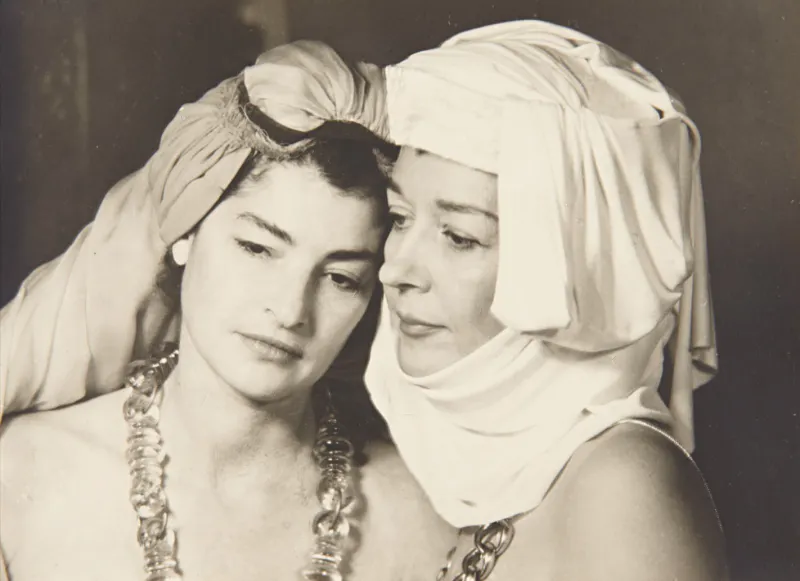
Man Ray (1890-1976), Juliet and Dorothea Tanning, 1946, gelatin silver print. Photo © PHILLIPS

Want articles like this delivered straight to your inbox? Subscribe to our free newsletter!

He returned to Paris after the war and continued to work on his art, including new paintings, collages, art objects and photographs, as well as returning to his earlier projects. He died in 1976 because of a lung infection.

Find more articles in Barnebys Magazine

man raymarcel duchampsurrealismdadaphotography

Subscribe to Barnebys Magazine

By subscribing, you are agreeing to the privacy policy. Unsubscribe anytime.

About the author

Giulia Zileri Dal Verme

Giulia Zileri Dal Verme is the Global Senior Editor at Barnebys Magazine. She read Classics at Oxford University and studied Art Business at Sotheby’s Institute of Art. Her research focuses on the intersection between cultural practices and visual art, with a keen interest towards the ancient world. She is engaged in the auction market and particularly fascinated by London’s thriving art scene.

Read more from this author
Giulia Zileri Dal Verme

Discover similar items at auction

Portrait of Man Ray - 1974 by Andy Warhol

Portrait of Man Ray - 1974 by Andy Warhol

GB
Castlegate House Gallery
Details
Raymond Fuyama

Raymond Fuyama

GB
Roseberys
Details
Man Ray (1890–1976) - Man Ray – Paris 1972

Man Ray (1890–1976) - Man Ray – Paris 1972

IT
Catawiki
Details
Man / Deke Leonard - 1

Man / Deke Leonard - 1

NL
Catawiki
Details
Man Ray *

Man Ray *

DE
Dorotheum
Details
RAY & CHARLES EAMES, "Lounge Chair mit Ottomane"

RAY & CHARLES EAMES, "Lounge Chair mit Ottomane"

DE
Eppli
Details

Bring your auction to collectors worldwide!