Many artists have made their talent available to the stage, but Marc Chagall went a step further by creating the entire ceiling of the main hall of the Opéra Garnier in Paris, the backdrops of the Moscow State Jewish Theatre and the murals of the Watergate Theatre in London.
Work on the production of The Magic Flute began in 1964. The then 77-year-old artist met with the director of the New York Metropolitan Opera, Rudolph Bing, and the opera director Günther Rennert, to adapt the famous stage work by Wolfgang Amadeus Mozart. Chagall was entrusted with the design of the set and the costumes – a project that would keep him busy for three years. The result was 120 costumes, 26 props and 13 stage sets, each 65 feet high. Chagall proved that with his colourful palette and dreamy compositions he was exactly the right person to highlight the beauty of Mozart's 'magical' work.
I painted bright walls! I painted musicians, dancers on stage! With blue, red, yellow. Play, sing, leap!
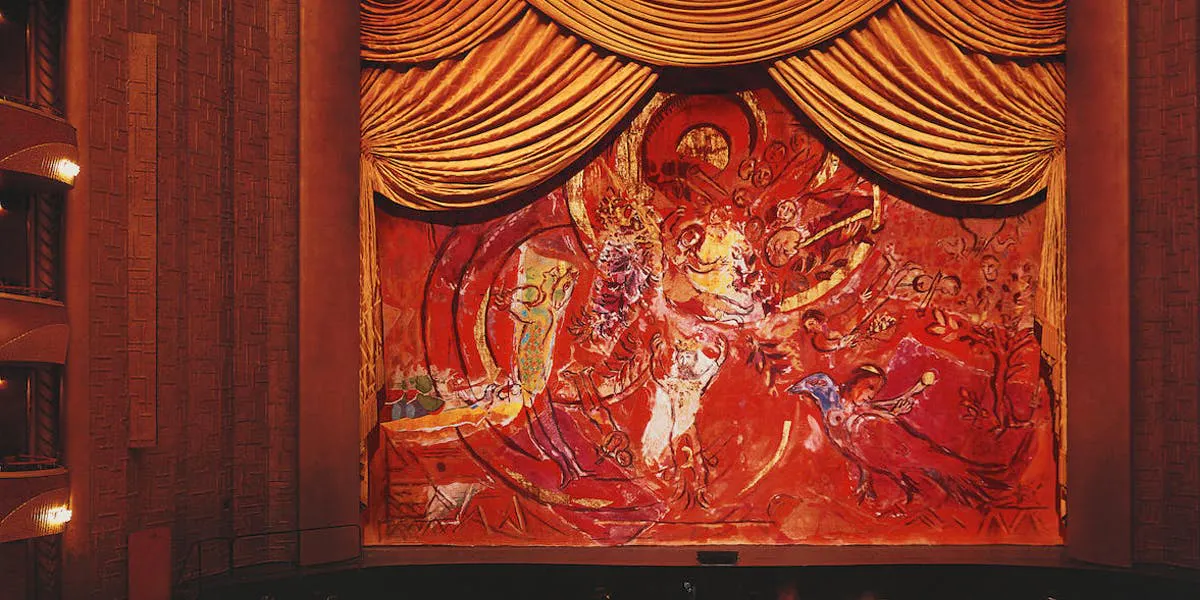
Now, the curtain designed for the final scene of The Magic Flute is hitting the market. The curtain evokes a lyrical world where characters seen throughout Chagall's work are brought together. The composition includes the best-known elements of his iconography: trumpeter angels, fantastic animals playing instruments, floating violins, cellos and dancers. The father figure of Sarastro, High Priest of the Sun, stands at the centre of the composition, his arms raised, the yellow crown on his head reminiscent of the biblical kings David and Solomon. To Sarastro's left stands the Queen of the Night, a winged figure, half human, half bird, playing the flute.
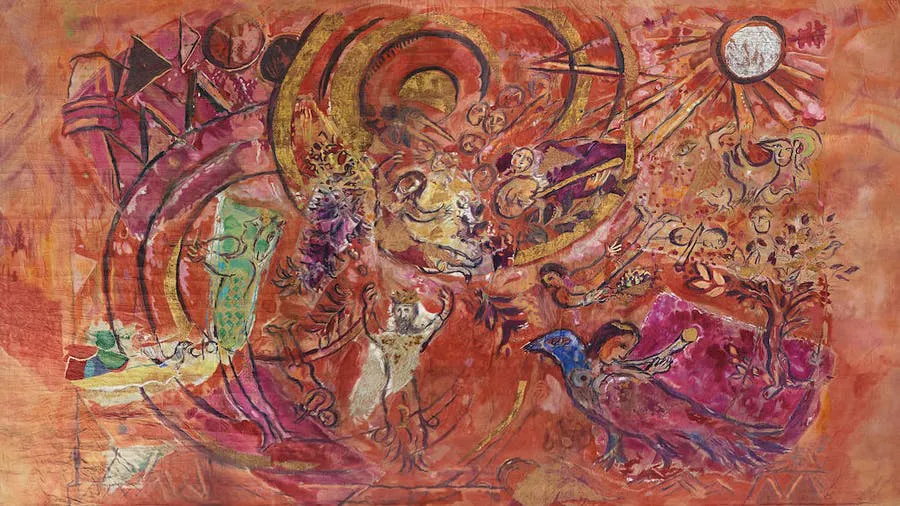
The monumental work will be offered at Bonhams' Impressionist and Modern Art Sales in New York on Tuesday, 17 November, with an estimate of $250,000-450,000 (£190,000-340,000).
See also: History's 6 Most Popular Film Posters
As Mozart's opera was complex and involved many scene changes, the visual narration of Chagall's creations had to adapt to the musical and performative techniques of the opera. These concepts were new to him, and to ensure the successful execution of his sketches, Chagall discussed every detail of the costumes and sets with Russian stage designer, Volodia Odinokov. “I painted bright walls! I painted musicians, dancers on stage! With blue, red, yellow. Play, sing, jump!" he declared.
Odinokov transferred Chagall's sketches to the huge area of the stage curtains. Using an optical device (which he himself had designed), Odinokov brilliantly transformed Chagall's gouaches into great decorations, without losing the intense colours the painter desired. Chagall then applied the final touches to the costumes and masks himself, bringing the characters to life.
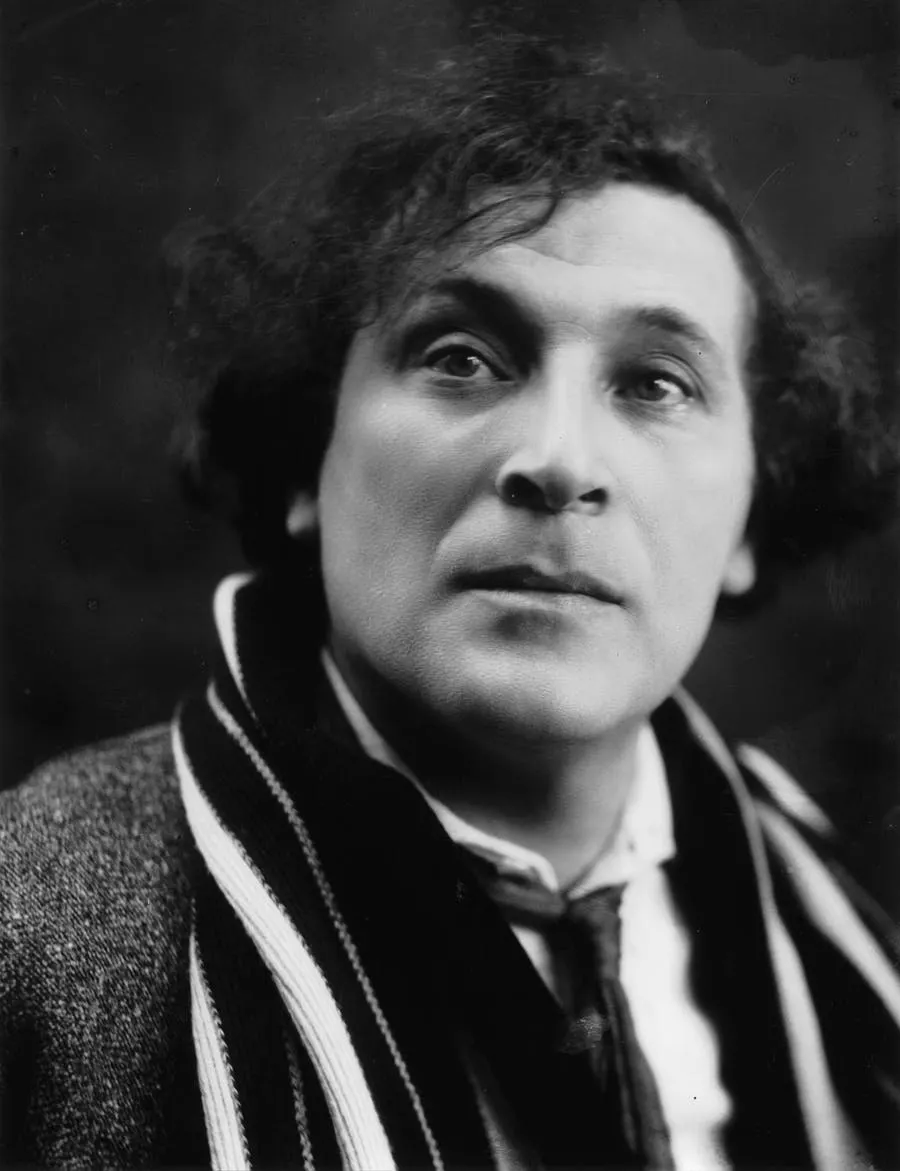
At 77, Chagall had just unveiled the ceiling of the Paris Opera for the ballet Daphnis et Chloé by Ravel. The work was a tribute to the great composers who inspired his art and who performed in opera. Chagall was fascinated by the world of the stage and his ability to integrate his lyrical imagery into a pictorial representation of sound is evident throughout his work, although his stage work is often the least examined aspect of his career.