Stay up-to-date with the antiques world

By subscribing, you are agreeing to the privacy policy. Unsubscribe anytime.

Barnebys

Barnebys HQ

Brahegatan 10
BOX 5038
114 37 Stockholm

Company

  • About Us
  • Join Barnebys
  • Our Partners
  • Press
  • Career

Explore More

  • Barnepedia
  • Buying / Selling at auction
  • Auction Houses / Dealers / Galleries

Support

  • FAQ
  • Terms of Use
  • Privacy and Cookies policy
  • Contact us
  • Barnebys Group AB
  • Barnebys.se
  • Barnebys.com
  • Barnebys.co.uk
  • Barnebys.de
  • Barnebys.fr
  • Barnebys.es
  • Barnebys.it
  • Barnebys.hk
  • All auction items
  • Categories
  • Auction results
  • Magazine
  • Ancient Art
  • Arts & Graphics
  • Asian Art
  • Books, Maps & Manuscripts
  • Carpets, Rugs & Textile
  • Coins & Banknotes
  • Contemporary Art
  • Ethnographical
  • Fashion & Vintage
  • Folk Art
  • Furniture, Design & Mirrors
  • Glass
  • Jewellery & Gems
  • Lighting
  • Medals, Arms & Armour
  • Miscellaneous
  • Music & Musical Instruments
  • Nautica, Technica & Optic
  • Photographs
  • Porcelain & Pottery
  • Postcards & Stamps
  • Sculptures
  • Silver & Gold
  • Sports & Leisure
  • Tin & Metals
  • Toys & Collectables
  • Vehicles
  • Watches & Clocks
  • Wine & Spirits
  • Works of art
  • All auction items
  • Auction results
  • Magazine
  • Get a valuation
  • Auction system

Barnebys Magazine

LatestEditor's picksTopics
Magazine/Painting/Mark Rothko: The Emotional Power of Colour

Mark Rothko: The Emotional Power of Colour

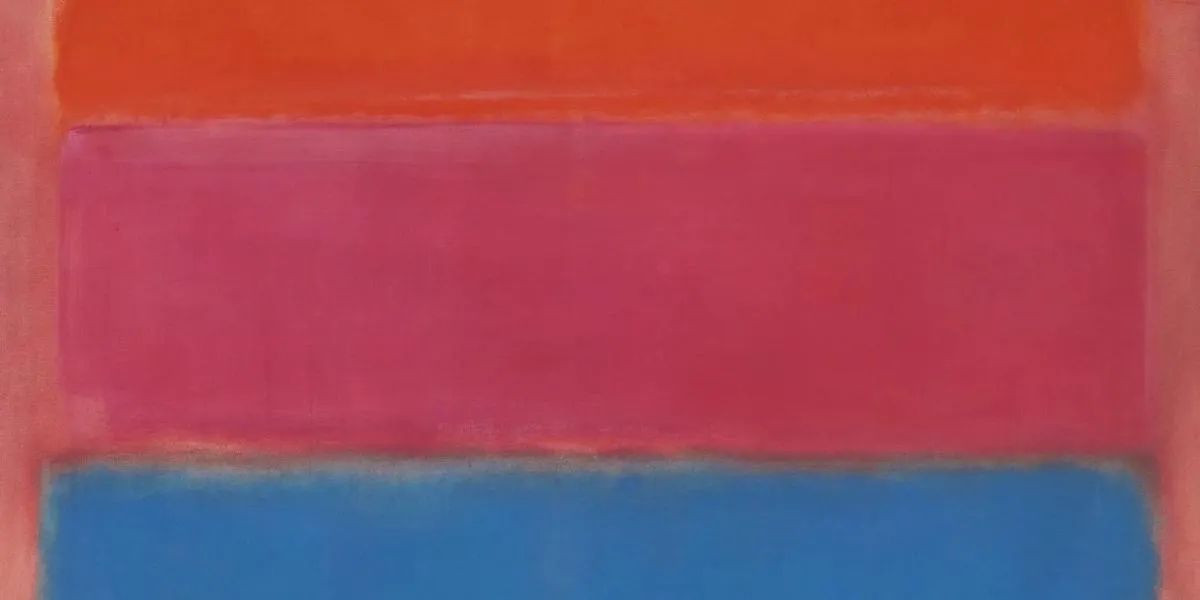
Rothko famously painted colourful abstract rectangles, which can today be understood as painted dramas.

20 September 2022
Mark Rothko, No. 1 (Royal Red and Blue)
signed, titled #1 and dated 1954 on the reverse
oil on canvas. 113 3/4 x 67 1/2 in. 288.9 x 171.5 cm. Photo © Sotheby's (detail)

Mark Rothko, No. 1 (Royal Red and Blue) signed, titled #1 and dated 1954 on the reverse oil on canvas. 113 3/4 x 67 1/2 in. 288.9 x 171.5 cm. Photo © Sotheby's (detail)

A painting is not a picture of an experience; it is an experience.

Markus Yakovlevich Rothkowitz, better known as Mark Rothko (Daugavpils, Latvia, 25 September 1903 - New York, 25 February 1970), was an American painter of Latvian-Jewish origin, often classified as an Abstract Expressionist and considered one of the most prominent figures of this type of art.

As a child, Rothko left his native country of Latvia with his family to move to America. He later attended Yale University, but dropped out to move to New York and study with Max Weber. Also in the Big Apple, he founded, in 1948, an art school with William Baziotes, Robert Motherwell and Barnett Newman.
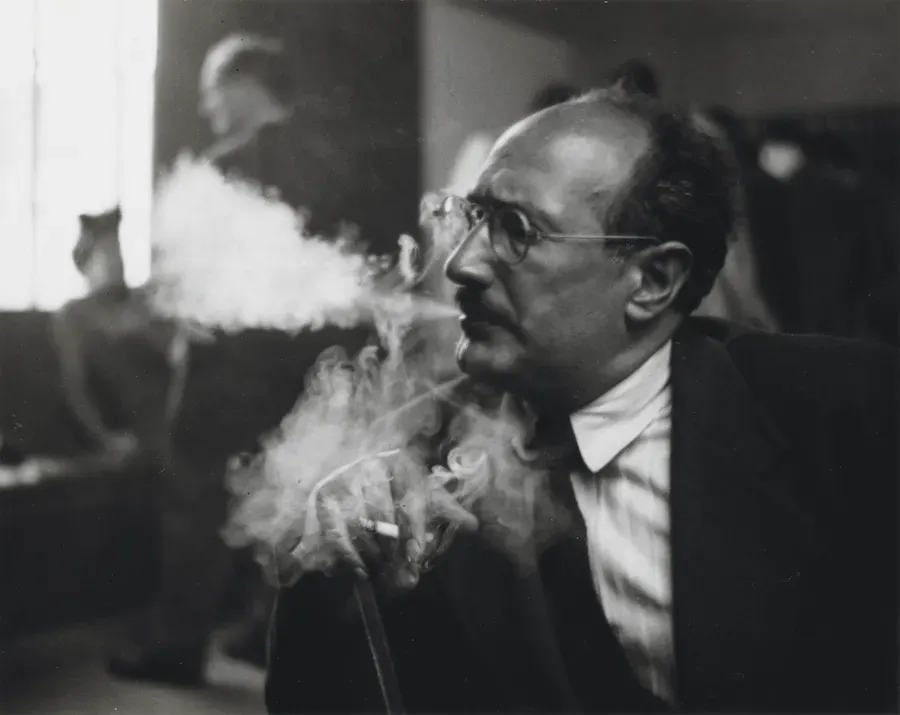
William Heick (1916), Mark Rothko, California School of Fine Arts, 1949-1950, gelatin silver print, subsequently printed, signed and dated in pencil (on the backing); signed, titled and dated in pencil (on the back of the support) 20.2 x 25.1 cm. Photo © Christie's

At the end of the 1930's, he developed a pictorial style made up of flat figures, but by around 1945 he transformed his paintings, inspired by the techniques and images of Surrealism. With the support of Peggy Guggenheim, he was able to set up a personal show at her New York gallery 'Art of This Century'.

In the late 1940s and early 1950s, Rothko developed what is called his mature style, focusing on core emotions by filling his canvases with rectangles of intense colours. In this sense he is considered by many to be a precursor of Colour Field painters, such as Helen Frankenthaler.

See also: Helen Frankenthaler: 5 Facts to Know
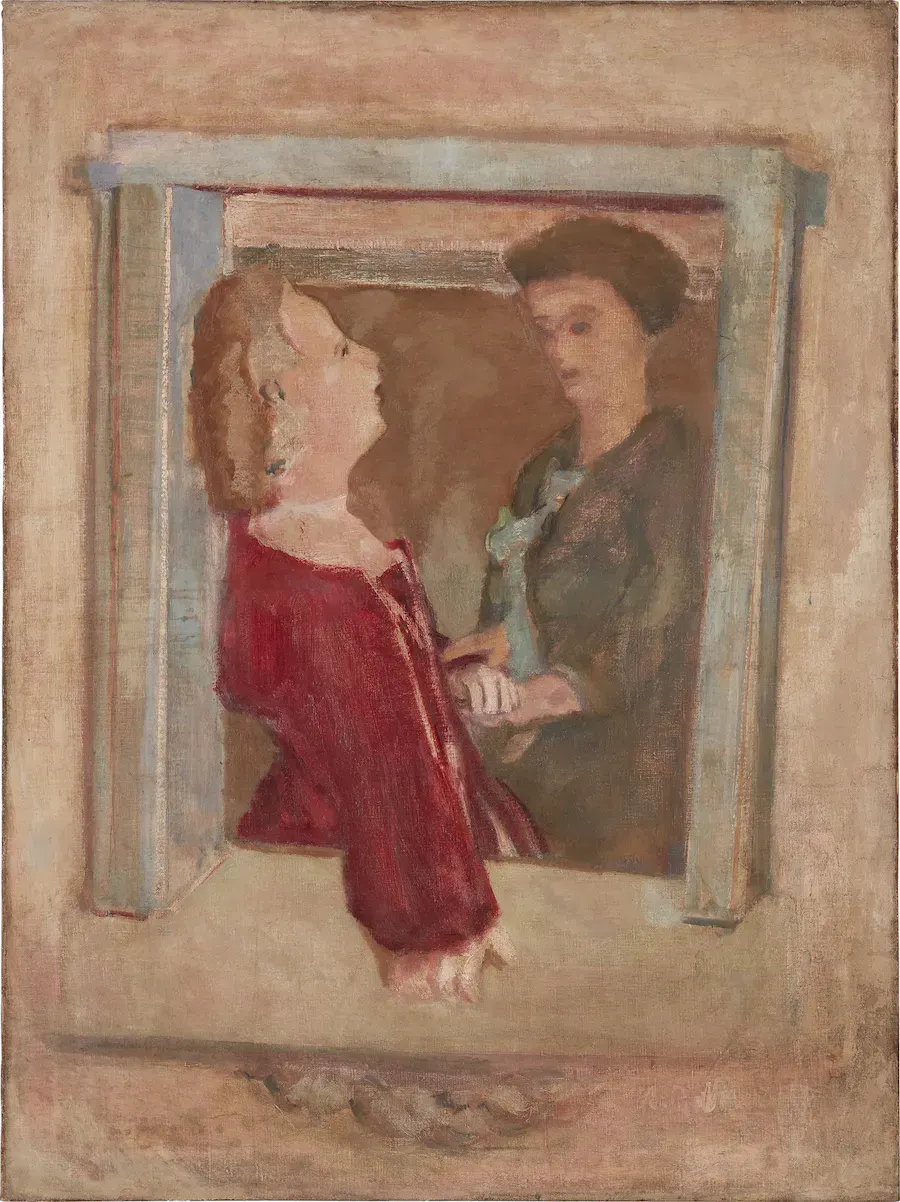
Mark Rothko (1903 - 1970), Two women at the window, oil on canvas, around 1937, 101.6 x 76.2 cm. Photo © Sotheby's

His abstracted rectangles with indistinct outlines later became his trademark and today can be understood as painted dramas aimed at eliciting an emotional response from the viewer. Towards the end of the 1960s, the vivid tones of reds, oranges, and pinks in these works darkened into grays and blacks.

Want more articles like this delivered straight to your inbox? Subscribe to our free newsletter

Physically and psychologically worn out by a life marked by alcoholism and smoking, Rothko committed suicide in his New York studio on 25 February 1970.
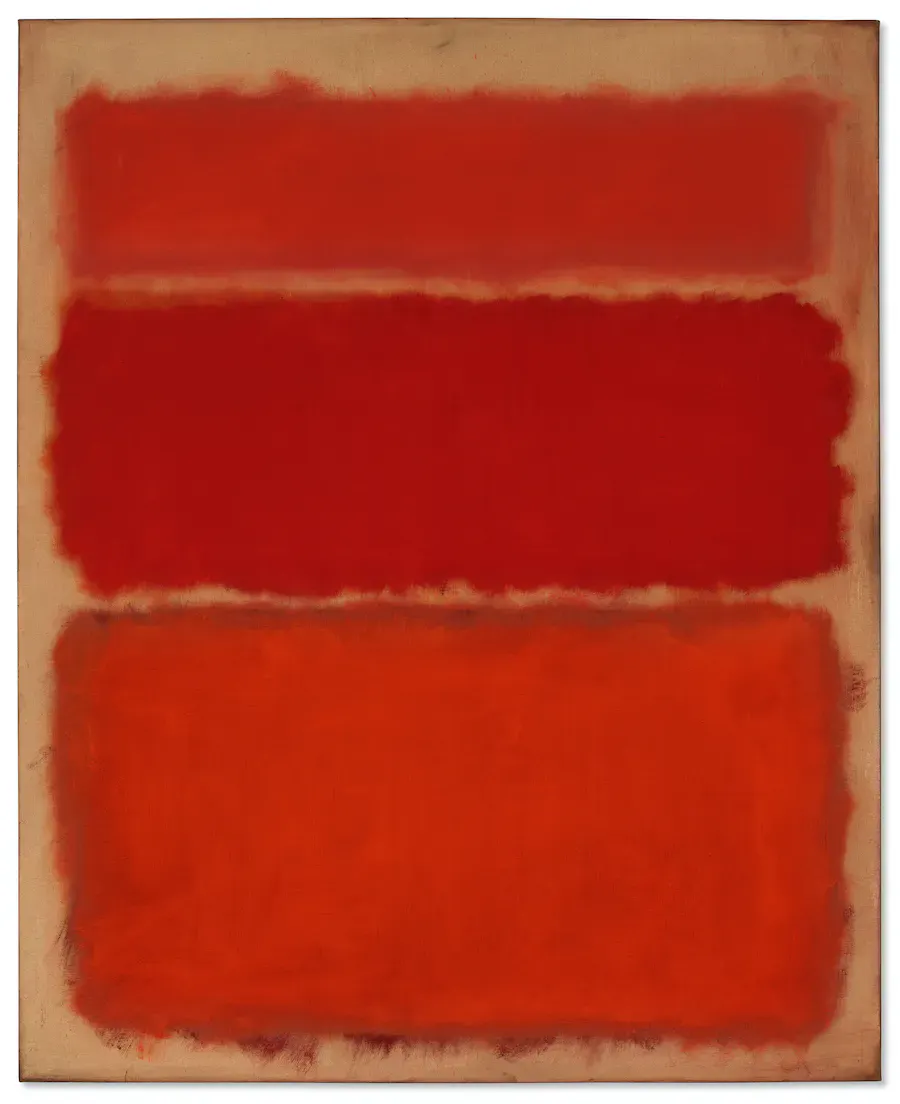
Mark Rothko (1903 - 1970), Untitled (Shades of Red), signed and dated "MARK ROTHKO 1961" (on the reverse), oil on canvas, 175.3 x 142.2 cm, painted in 1961. Photo © Christie's

Posthumously, Rothko actually became more famous, and in the 2000s became one of the most expensive artists in the world, with his works selling for tens of millions.
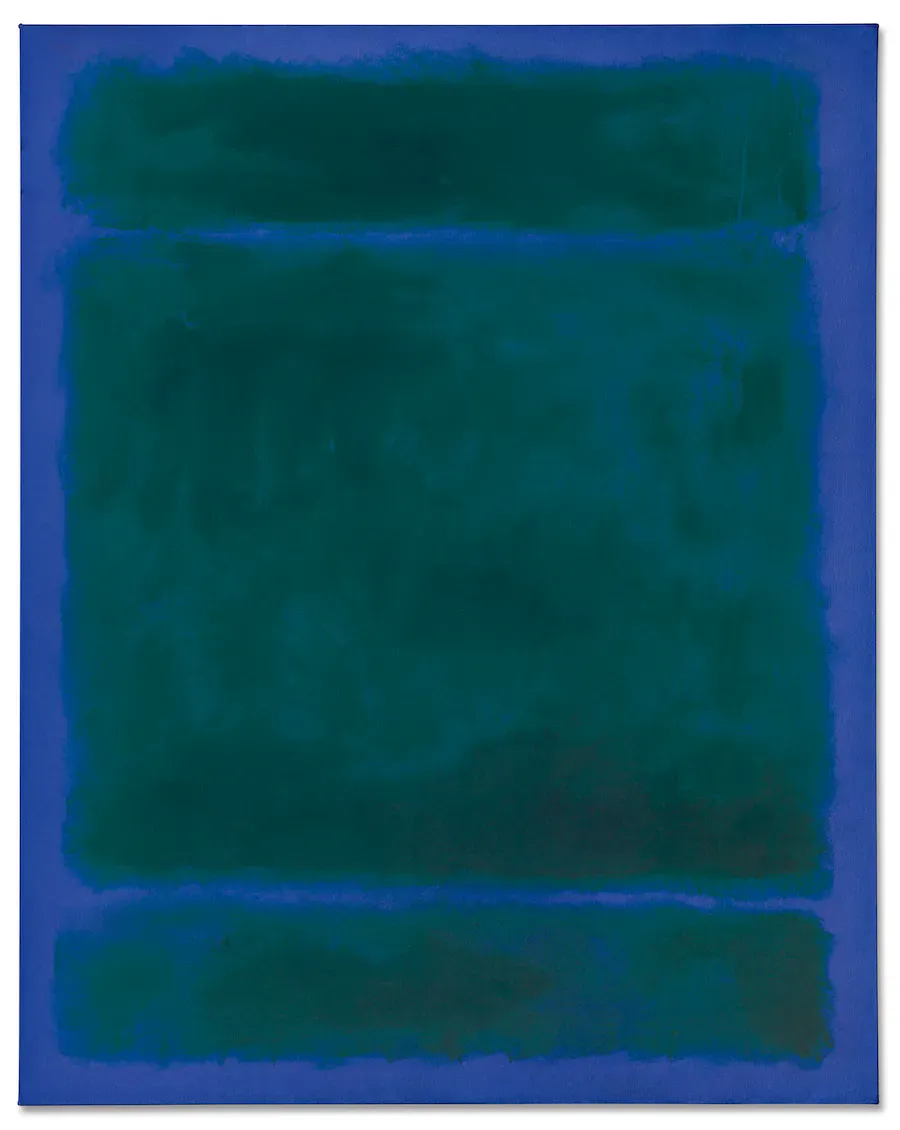
Mark Rothko (1903 - 1970), Untitled, oil on canvas, 172.7 x 137.2 cm, painted in 1970. Photo © Christie's

Increasingly, his paintings have fetched sky-high prices at auction and on the art market. In 2012, Orange, Red, Yellow sold for $86.8 million (around £53.4 million) at Christie's, and in 2014, No. 6 (Violet, Green and Red) was bought by Russian tycoon Dmitry Rybolovlev for a shocking $186 million. Most recently, last year his 1951 No. 7, the most expensive work in the Macklowe Collection at Sotheby's, reached $82.4 million.
Read more articles in Barnebys Magazine

mark rothkopaintingsabstract expressionismcolour fieldrothko

Subscribe to Barnebys Magazine

By subscribing, you are agreeing to the privacy policy. Unsubscribe anytime.

Explore related articles

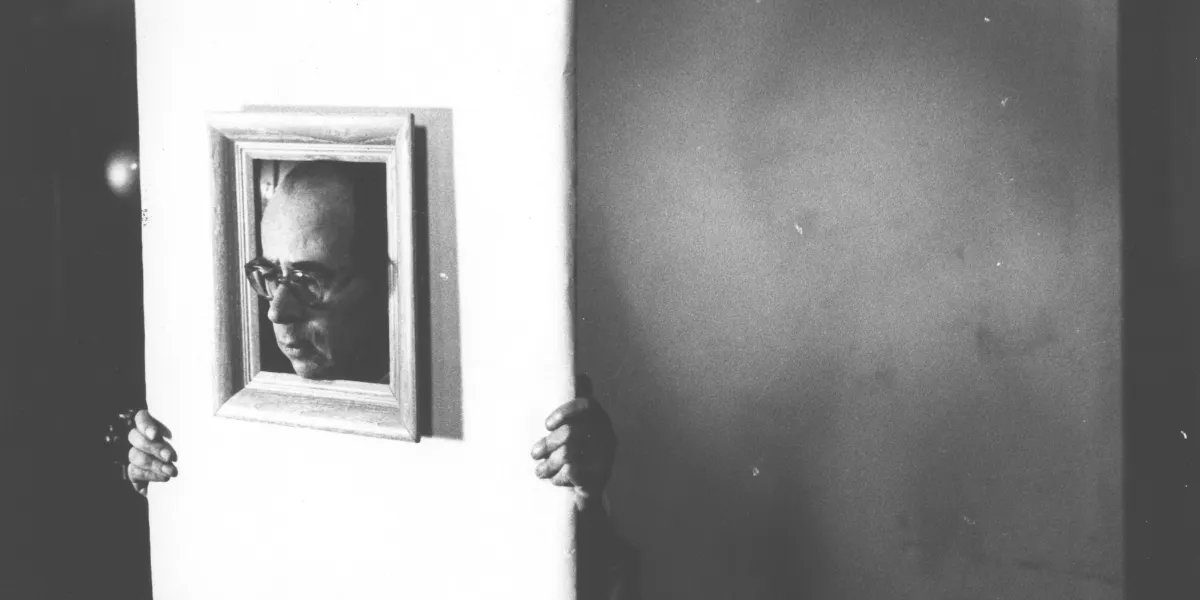
The head of photographer Philippe Halsman (1906 - 1979) in a frame, a studio prop, and a stack of books with Henri Cartier-Bresson's Moscow on it, circa 1950s. (Photo by Weegee(Arthur Fellig)/ International Center of Photography/Getty Images) (detail)
Photography

Philippe Halsman: Photographer to the Stars

Barnebys Curates: Over 60 000 emerging artists at Saatchi Art
Art

Barnebys Curates: Over 60 000 emerging artists at Saatchi Art

Bring your auction to collectors worldwide!