
![Hendrick van Balen and Jan Brueghel the Elder, attributed, 'Minerva Visits the Nine Muses' [detail], marked on verso with Antwerp's city stamp, panel, 136 x 196 cm. Photo: Bukowskis](https://images.prismic.io/barnebys/528879d6-1bdb-45cd-bf01-cbb411d704b6_Bukowskis+Hero.jpg?auto=format,compress)
Anders Zorn's oil painting Valsen ('Waltz') and Stig Blomberg's bronze sculpture Kungens Härold ('The King's Herald') are just two of the many works of art that the Stockholm auction house Bukowskis will be presenting in its 'Important Winter Sale' on 10-11 December, with which it rounds off its anniversary year. The catalogue includes classical art, furniture, Asian handicrafts, jewellery and much more.

In recent years, the Finnish artist Helene Schjerfbeck's art has received increasing attention and her work has been exhibited in both Japan and Canada. When a retrospective exhibition was shown at the Royal Academy of Arts in London in 2019, Schjerfbeck was mentioned by the British press as Finland's response to Edvard Munch. But Helene Schjerfbeck made her first breakthrough in 1937 when she exhibited her paintings in Stockholm. Svenska Dagbladet's art critic Gotthard Johansson wrote in a review: "Before Helene Schjerfbeck's art, the question of old or new is silenced by itself, here you are facing the great art, here is sacred space."
In the early 20th century, Schjerfbeck settled in Hyvinge, north of Helsinki. In 1913, Schjerfbeck was visited by the art dealer Gösta Stenman, who traveled there to buy her art. Stenman's stay strengthened not only the artist's finances but also her self-esteem. It was in Hyvinge that she opened her eyes to Japanese painting schools, which later became her greatest source of inspiration and which would become a hallmark of her art. A recurring motif in Schjerfbeck's oeuvre is the woman and the girl. For her works, she studied the models in detail and tried through the painting to express their character, which was reinforced by the fact that she excluded details in both face and clothing. Chinese Child from 1917 is a fine example of the artist's use of Asian features where she achieved through soft lines and gentle tones, which are enhanced by the red lips and rosy cheeks.
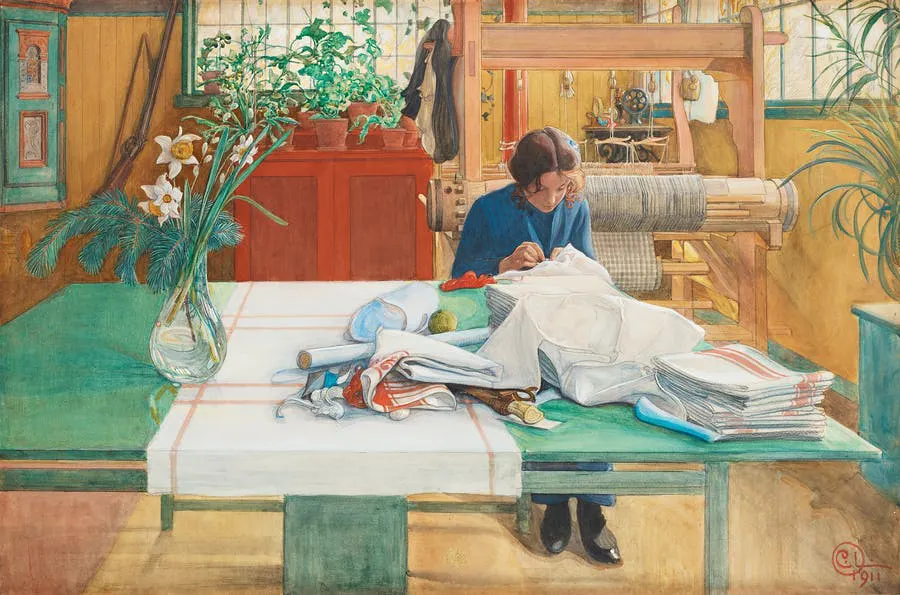
One of the highlights in the art catalogue is Carl Larsson's painting Sewing Girl. The work from 1911 depicts Anna Sjögren sitting in Larsson's workshop at his house Lilla Hyttnäs in Sundborn. Anna, whose sister Hilma Kvarnberg was married to Erik who ran the neighbouring farm Spadarvet, sits and sews. In the foreground is a flower arrangement with narcissus lilies and willow cushions, which shows that the motif was made in the spring, probably in May. This means that the painting had just been completed when Carl Larsson sent it to Düsseldorf, where it was part of his collection at the Internationale Aqvarellenausstellung in May of that year.
The watercolour has previously been in the chamberlain Harald Bildt's collections. According to notes in Carl Larsson's cash book, Bildt acquired the watercolour in June 1912 in connection with his return of Larsson's painting Sitting Naked Girl from 1906. But in order for the deal to go smoothly, Bildt had to pay SEK 800 as a difference. After that, Sewing Girl hung in Bildt's apartment on Strandvägen 7B in Stockholm, together with works by Egron Lundgren, Georg von Rosen and Oskar Bergman.
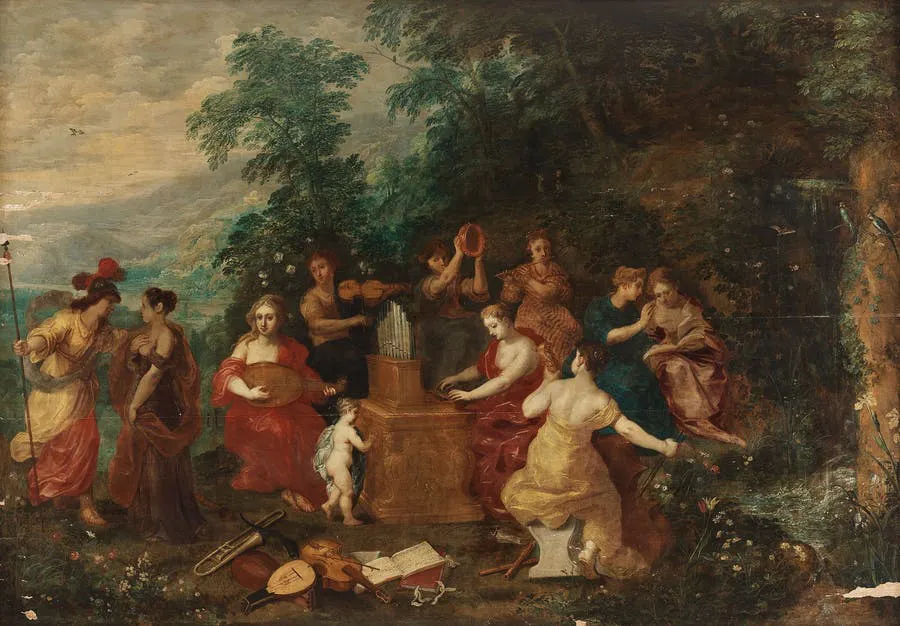
In 1592 the seventeen-year-old painter Hendrick van Balen became master of St. Luke's Guild in Antwerp and in 1609 he was appointed chairman. Van Balen often took motifs from mythological and biblical stories and then painted small, elegant figures and subtly executed nude pictures. He was a talented figure painter and worked with landscape painters such as Frans Francken II, Abel Grimmer and Frans Snyders. During the 17th century, Minerva and the muses were a popular theme among Flemish artists and, together with Jan Brueghel the Elder, van Balen painted Minerva Visits the Nine Muses.
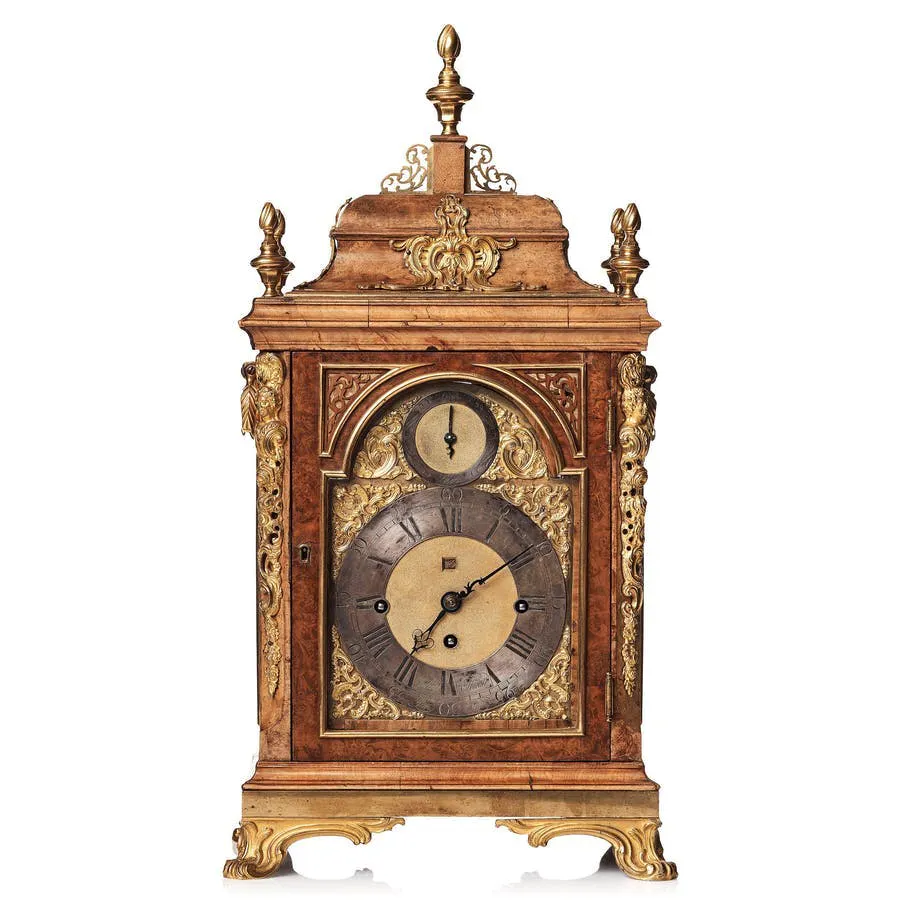
This table clock was manufactured by the 18th century's leading watchmaker John Ellicot. He had a keen interest in scientific matters and associated with astronomers John Hadley and James Ferguson, among others. In 1762, Ellicot was appointed courtier to George III of Great Britain, but he is best known for inventing temperature-compensated pendulum clocks. The auction's table clock is veneered with walnut root and has a beautifully engraved leaf decoration. The clock has previously been found at the manor Christineholm in Helgona parish, Södermanland.
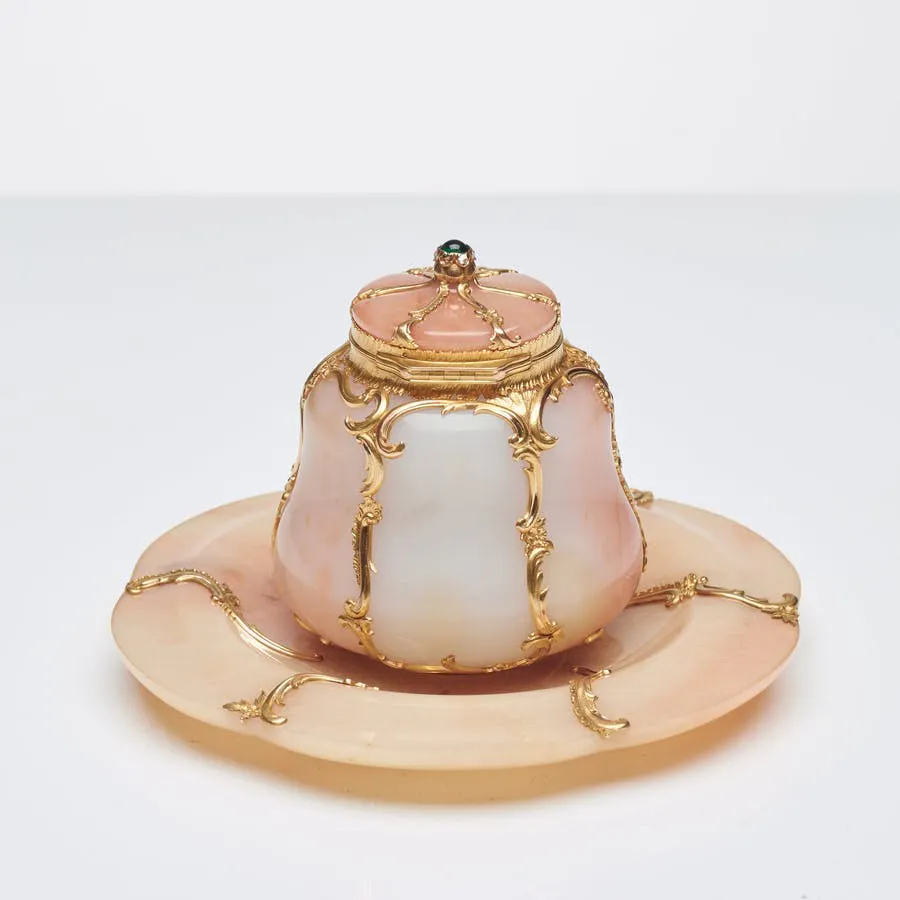
In 1885, Fabergé became the official goldsmith for the Tsarist crown in Russia. One year later, the Russian jeweller Michael Perchin started working for the company. He worked there until his death in 1903. During his years at Fabergé, Perchin created objects in both gold and enamel, in styles inspired by Neo-Rococo and the Renaissance. In addition to the famous Fabergé eggs, Perchin created this inkwell, shaped like a peach and made in the Rococo style.
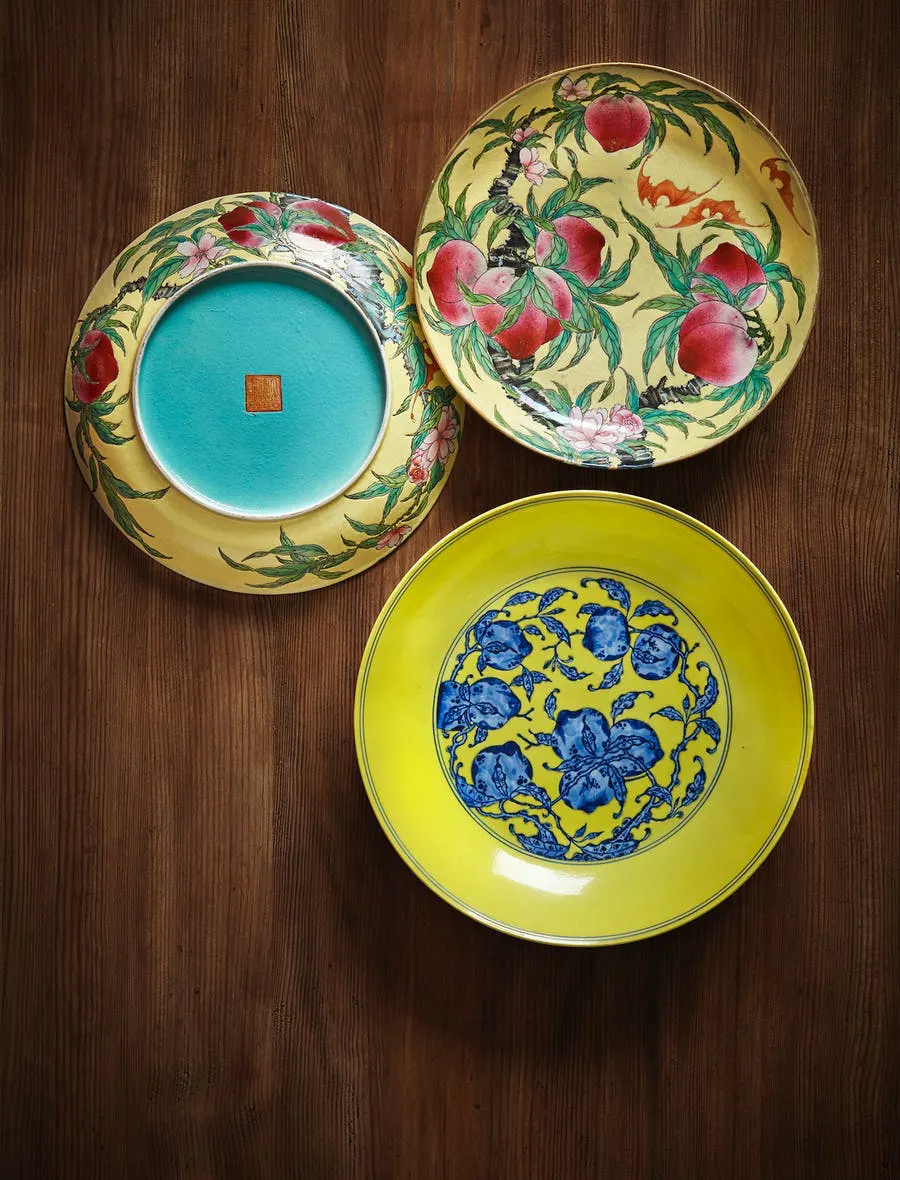
In the Asian Arts sale, there are three Chinese plates from the Erik Nordström collection. In 1910, at the suggestion of Gustav Oscar Wallenberg, the Swedish ambassador to Japan and China, Nordström was appointed head of the Royal Chinese Post in Shanghai, where he became interested in Chinese ceramics. Perhaps Nordström discovered the three Qing Dynasty plates while browsing the city's antique shops.
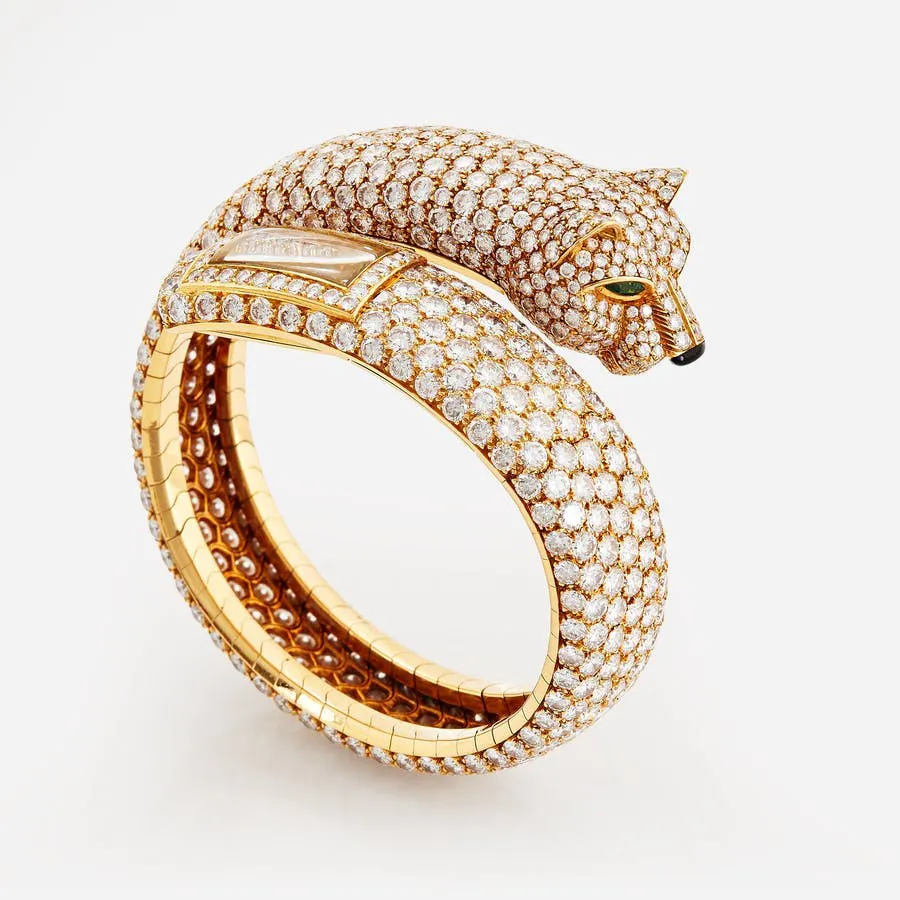
Bukowski's Important Winter Sale concludes on the afternoon of 11 December with an extensive collection of Cartier jewellery. The collection is the result of a long and happy marriage, in which the husband repeatedly surprised his wife with Cartier treasures. Many of the collection's jewellery is characterised by Cartier's most iconic motifs: the panther and the scarab beetle. The two animal motifs appeared in Cartier's in the 1920s. The panther motif was created by Jeanne Touissant, who was Cartier's creative director until the 1970s. The classic panther jewellery has been worn by style icons such as the Duchess of Windsor and Jay-Z.
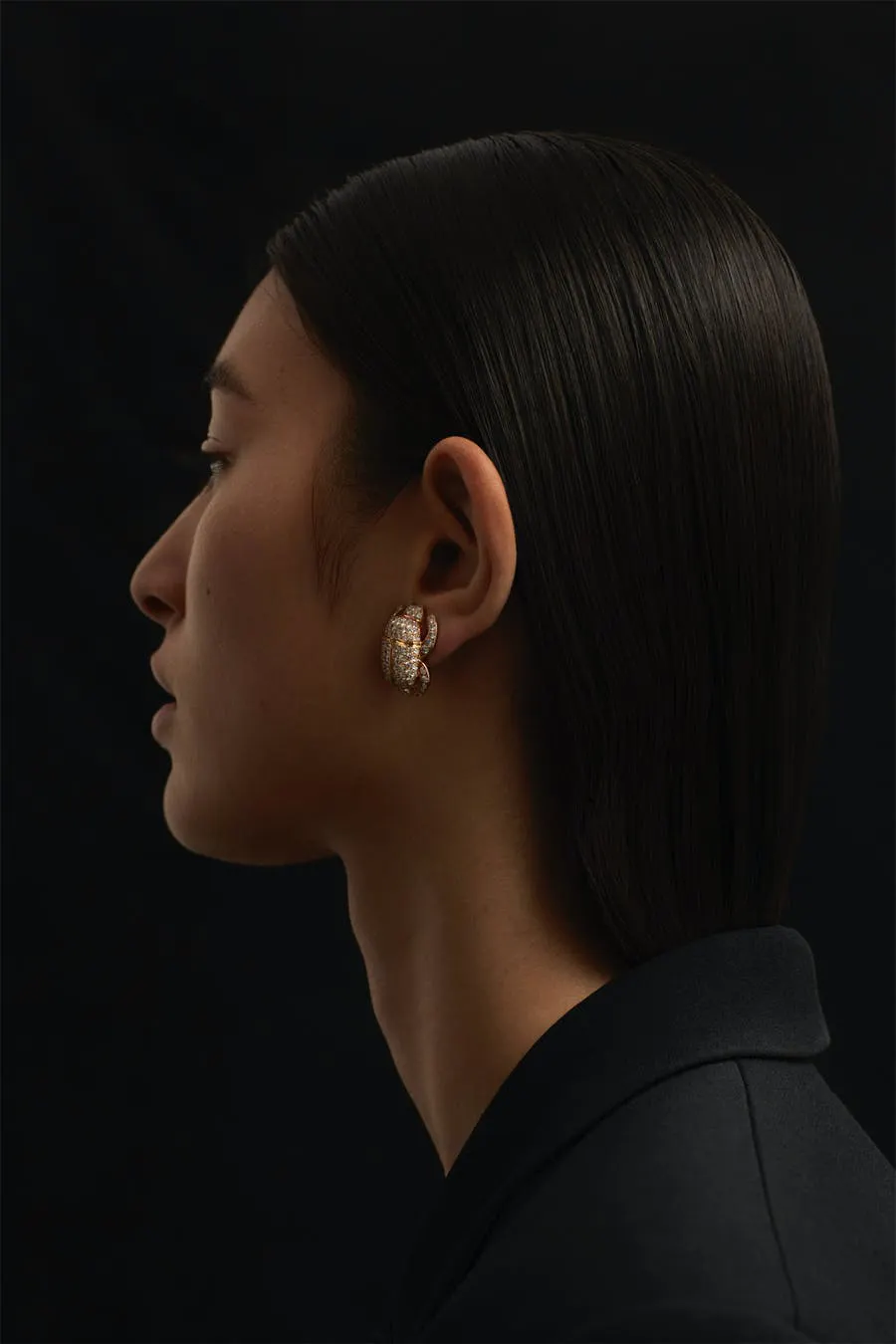
When the British Egyptologist Howard Carter discovered Tutankhamun's tomb in the Valley of the Kings in 1922, many people became obsessed with ancient Egypt. The Cartier brothers quickly built a collection of artefacts, and among hundreds of finds, the scarab became the big favourite. Cartier drew inspiration from the little beetle that in ancient Egyptian mythology represented the sun god Ra. The scarab became another popular animal symbol when it was launched at Cartier in the 1920s.