Since 1878, the conclave – that is, the election of a new pope – has taken place in the Sistine Chapel, a building renowned not only for its religious significance but also for its importance in art history. The chapel houses some of the most iconic frescoes in the world. In this article, we take a closer look at the chapel’s walls and ceiling.
During the 15th and 16th centuries, the Vatican underwent major architectural transformations that shaped the iconic appearance of the papal residence we recognize today. At the heart of these changes was the rebuilding of St. Peter’s Basilica, which replaced the original 4th-century church with the monumental structure crowned by its famous dome—a project that took more than 120 years to complete (from 1506 to 1626). Just north of St. Peter’s lie the Apostolic Palace, home to the Raphael Rooms, and the Vatican Museums. Nestled between them is the Sistine Chapel, dedicated to the Assumption of Mary, and serving as one of the private chapels within the palace.
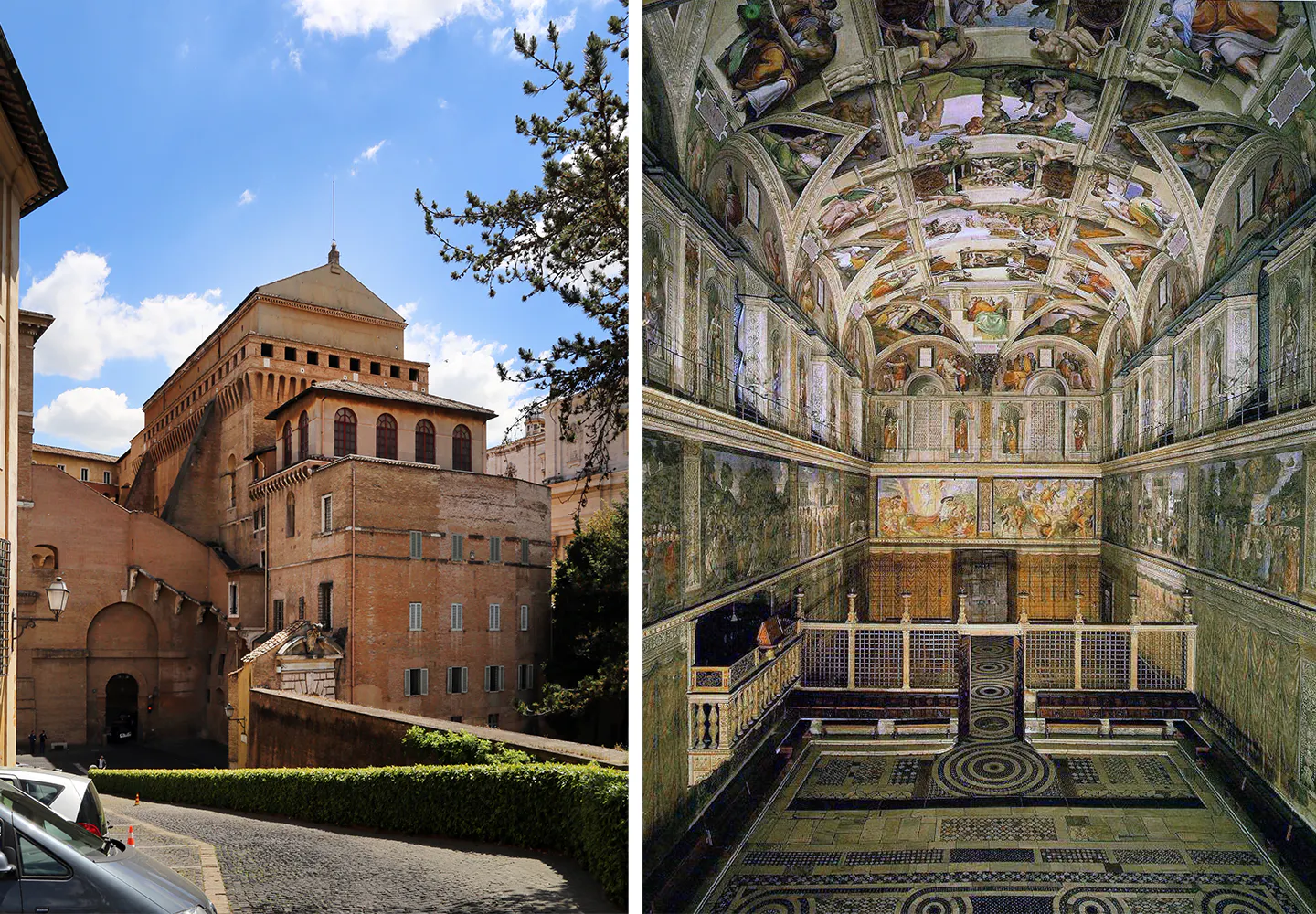
Before the construction of the current chapel, the site was occupied by an earlier structure known as the Cappella Magna. This older chapel was demolished to make way for the new building, which was begun in 1475 under the direction of architect Baccio Pontelli. The project was commissioned by Pope Sixtus IV, after whom the Sistine Chapel is named. The chapel measures 40.9 meters in length, 13.4 meters in width, and 20.7 meters in height.
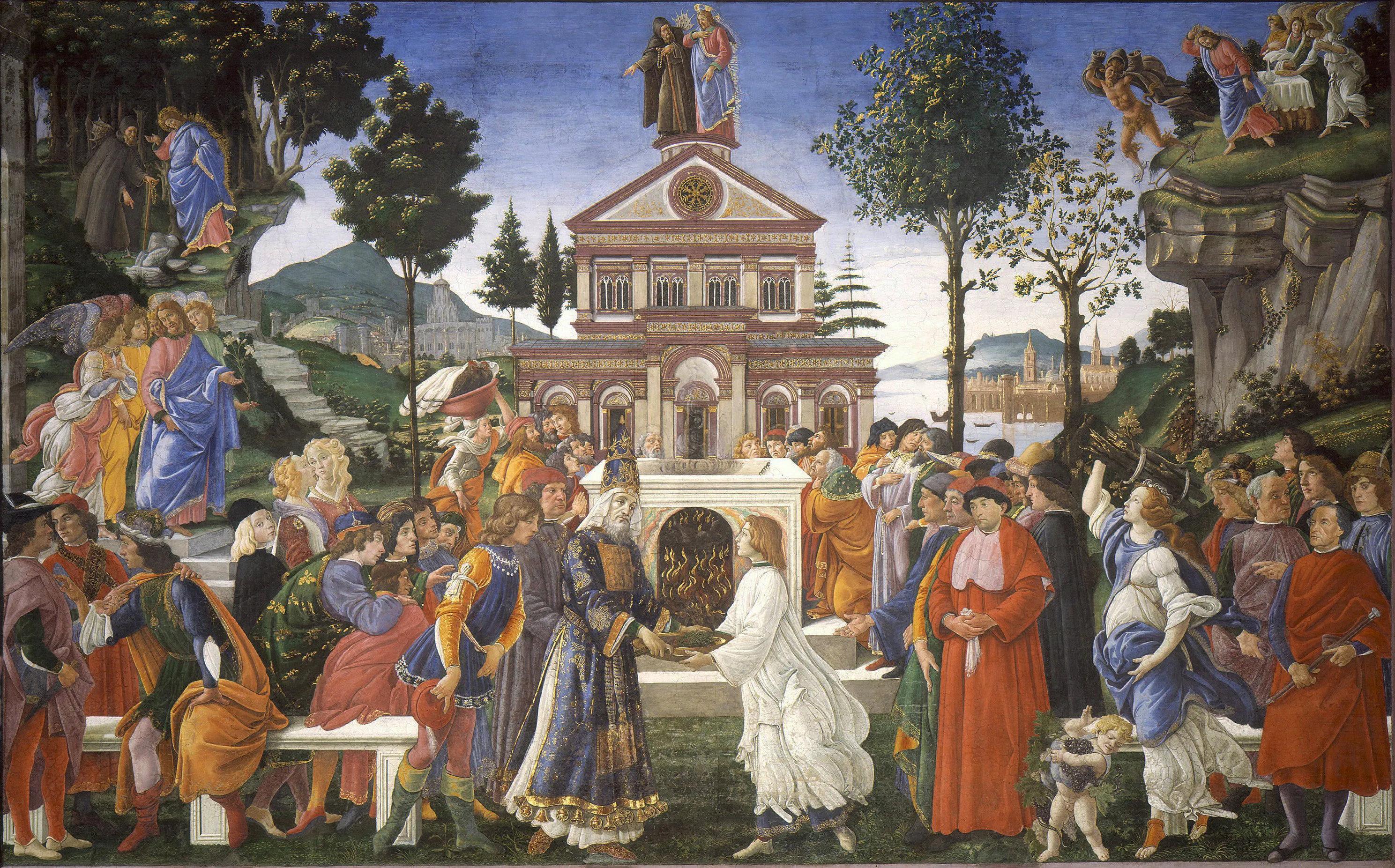
To adorn the walls of the new chapel, Pope Sixtus IV summoned some of the most renowned painters of his time to Rome. The frescoes were arranged thematically: the north wall features scenes from the life of Jesus Christ, while the opposite wall depicts events from the life of Moses. Among the artists contributing to this project were Sandro Botticelli (The Temptation of Christ, episodes from the life of Moses, The Punishment of Korah, Dathan, and Abiram), Pietro Perugino (The Baptism of Christ, Christ Handing the Keys to Peter, The Journey of Moses to Egypt), Domenico Ghirlandaio (The Calling of the First Apostles), Cosimo Rosselli (The Sermon on the Mount, The Last Supper, The Delivery of the Tablets of the Law), Luca Signorelli (The Testament and Death of Moses), and Biagio d’Antonio (The Crossing of the Red Sea).
See also: Sandro Botticelli: The Apelles of Florence
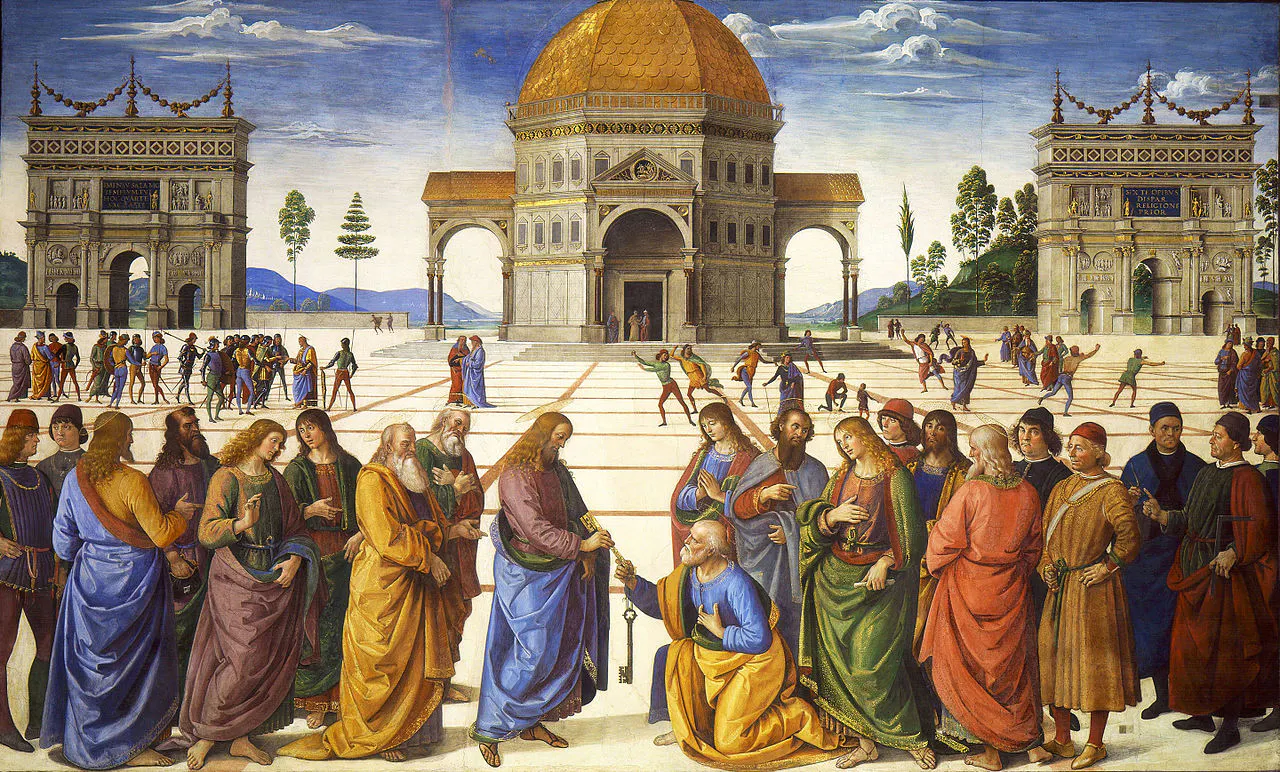
Originally, each narrative cycle—one for the life of Christ and one for the life of Moses—comprised eight frescoes. However, two scenes painted by Perugino on the west wall of the chapel, The Nativity of Christ and The Finding of Moses, were later removed to make way for a subsequent project. On the east wall, The Resurrection of Christ by Ghirlandaio and The Dispute over the Body of Moses by Signorelli were destroyed in 1522, but were replaced around sixty years later.
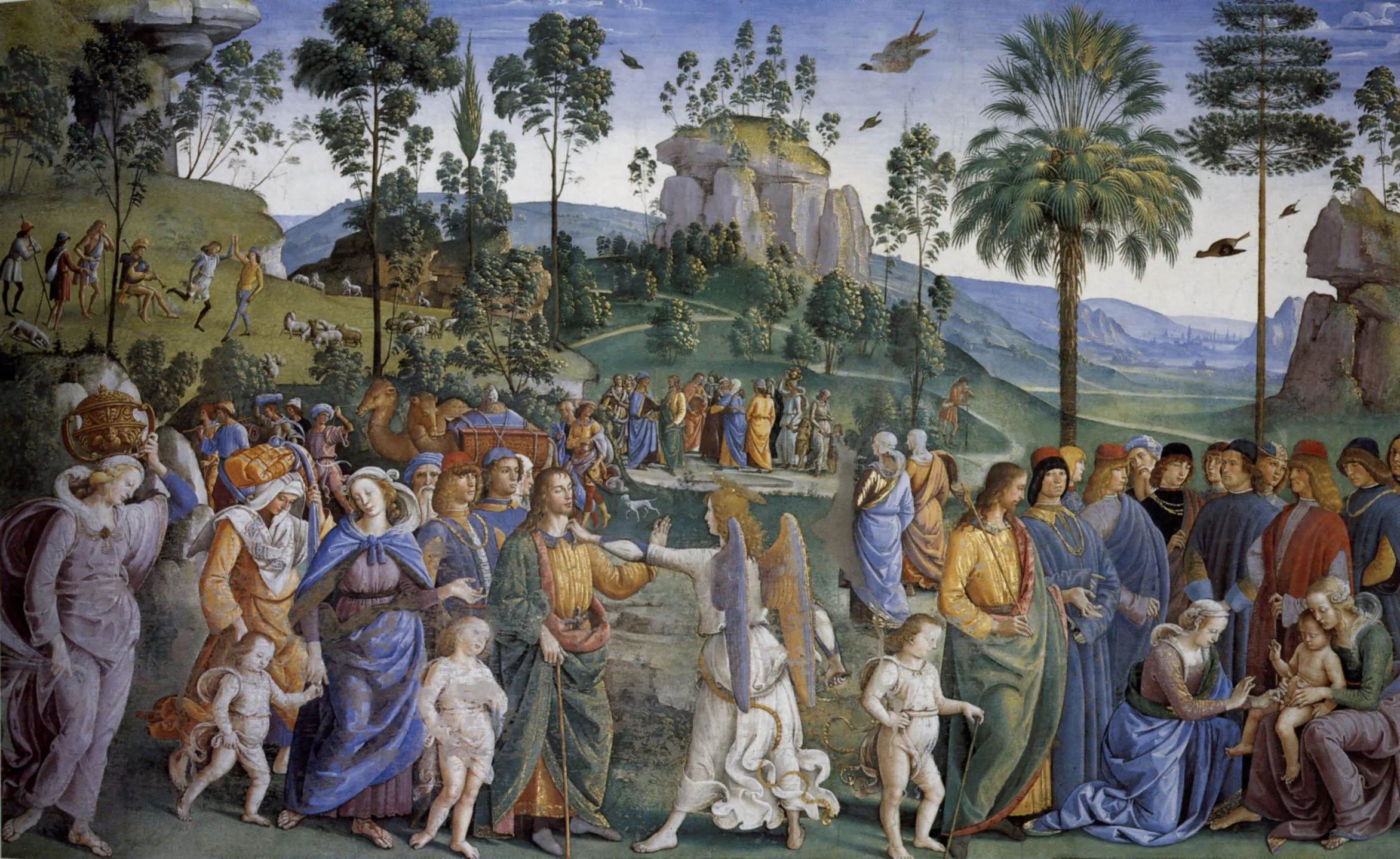
The layout of the individual frescoes suggests that the Sistine Chapel was originally intended to follow the traditional orientation, with the entrance on the west side and the altar in the east. In the end, however, the decision was made to preserve the reversed orientation of the earlier Cappella Magna, with the entrance in the east and the altar in the west.
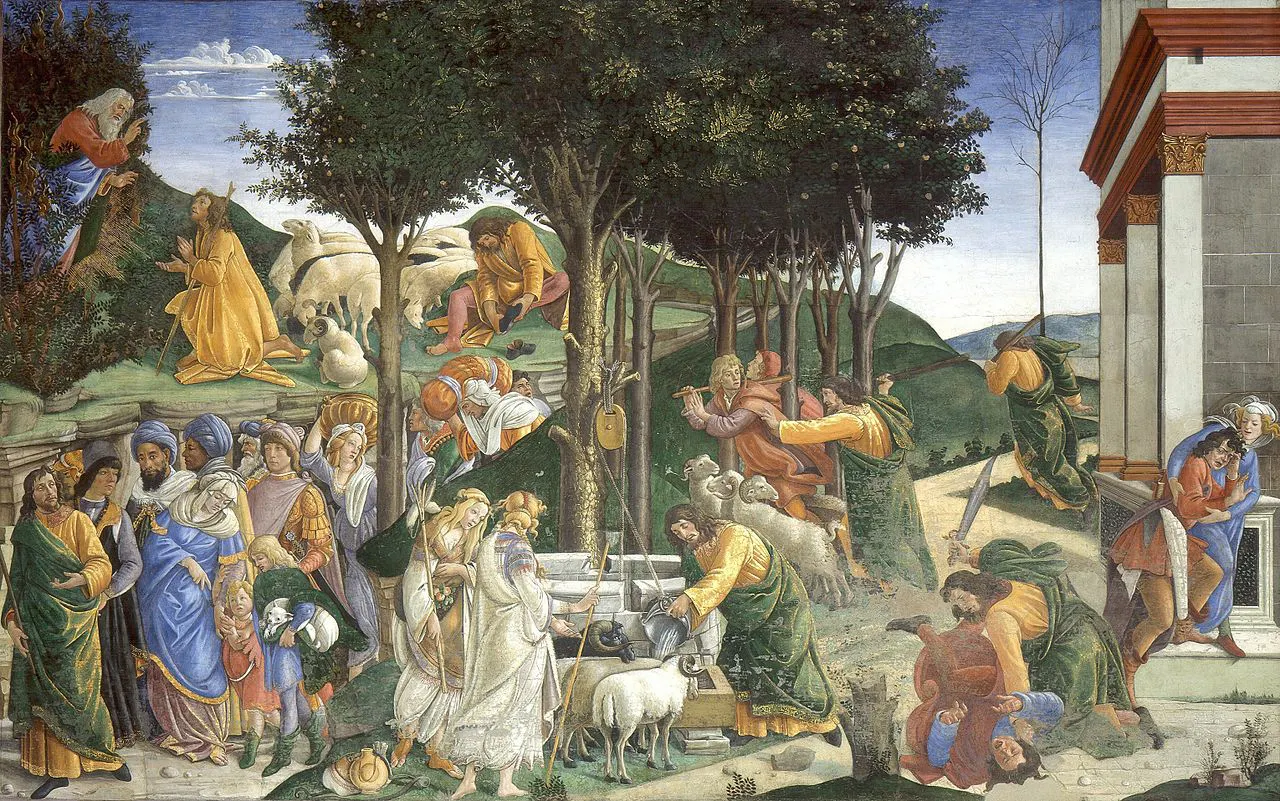
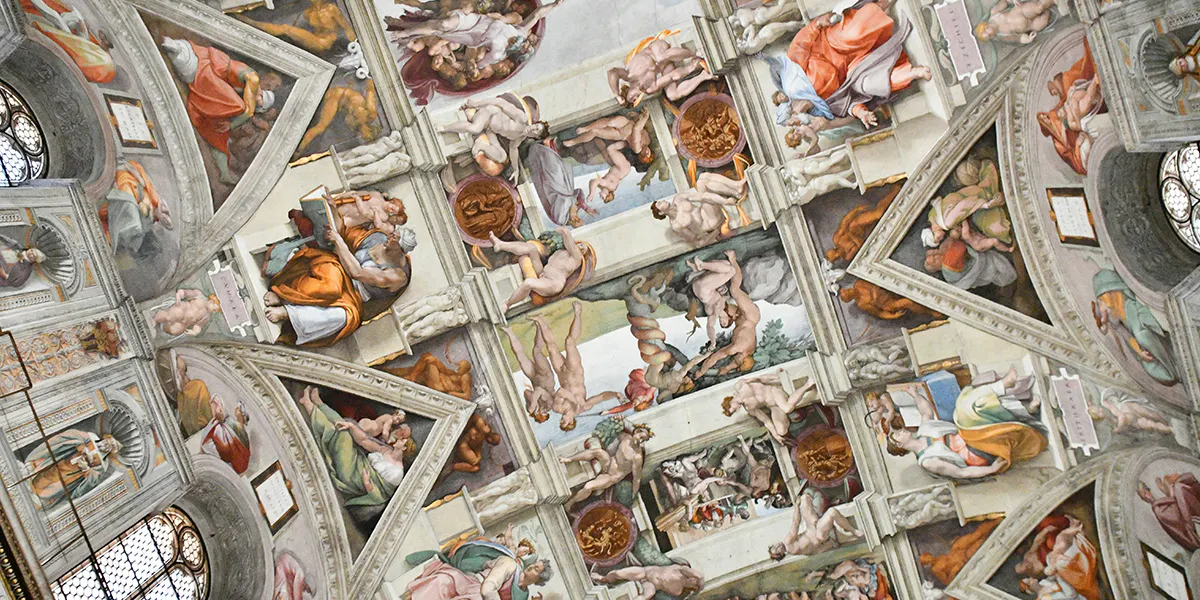
Pope Julius II played a key role in the transformation of the Vatican, demonstrating great ambition by commissioning not only the rebuilding of St. Peter’s Basilica but also the now-iconic ceiling frescoes of the Sistine Chapel. The task was assigned to Michelangelo Buonarroti, who, though renowned as a sculptor, was initially reluctant to take on the project, showing little enthusiasm for painting. Nevertheless, he accepted the commission, and after four years of intense work, the breathtaking ceiling—depicting scenes from the Book of Genesis and covering more than 520 square meters—was unveiled in 1512.
See also: Michelangelo: From Man to Genius
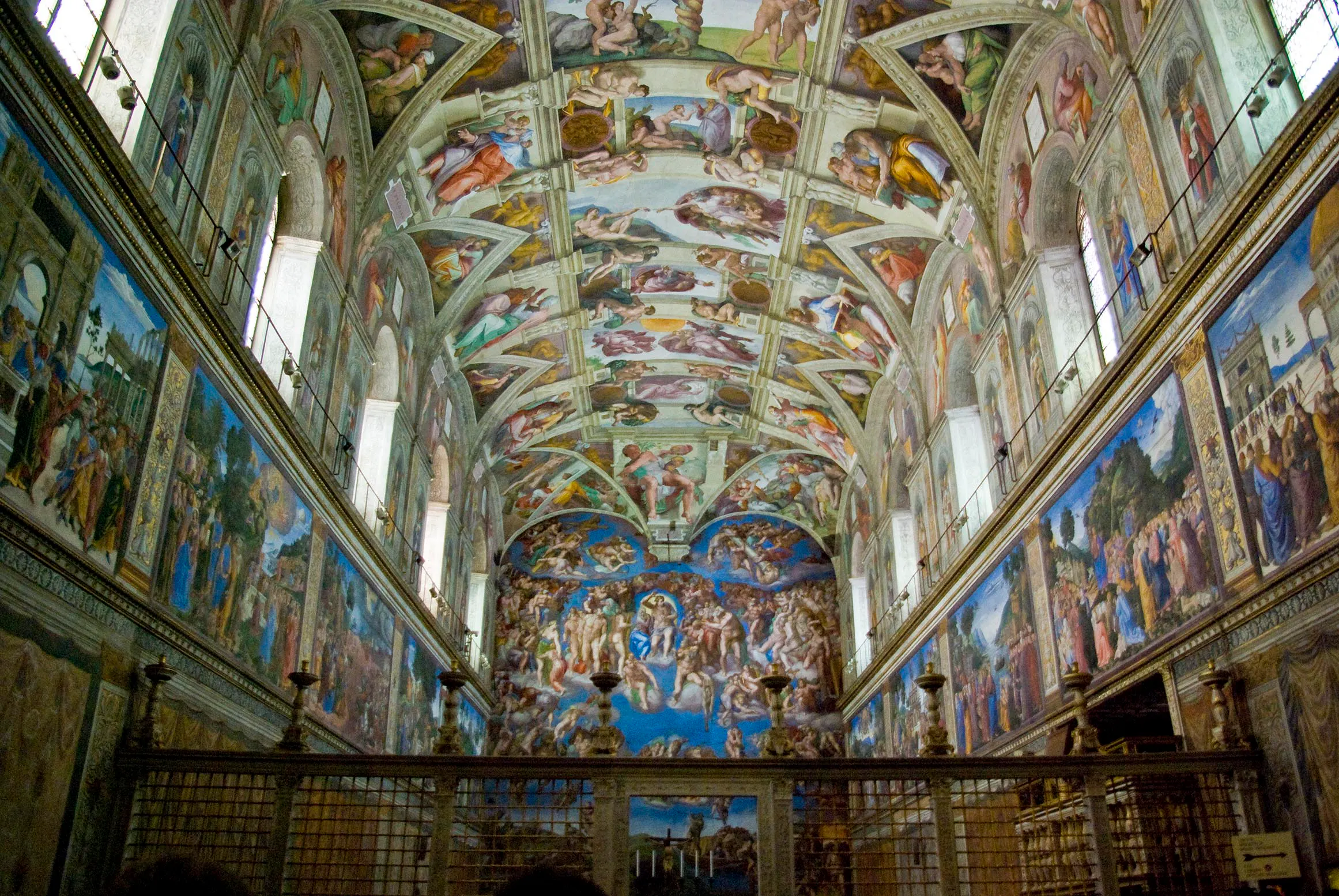
The central nine panels depict scenes from the creation of the world to the life of Noah, with the Creation of Adam not only being the most famous work of the cycle but also one of the most famous works in art history overall.
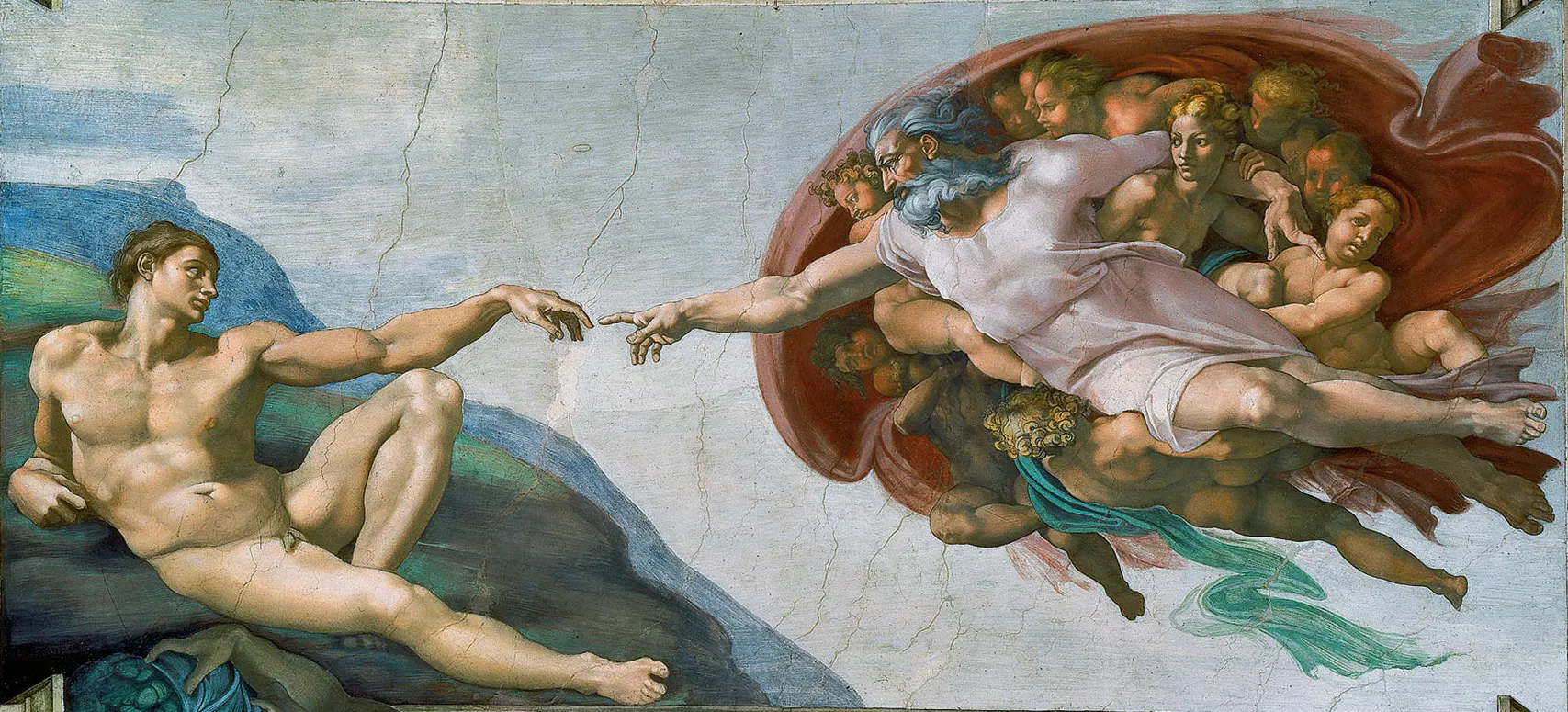
The central panels are surrounded by depictions of Old Testament prophets and prophetic Sibyls, while the four corner spandrels show heroes of the Old Testament, including Judith with Holofernes and David with Goliath. In the panels above the arched windows, the ancestors of Jesus are finally depicted.
See also: Weaponised Femininity: A History of Women Beheading Men in Art

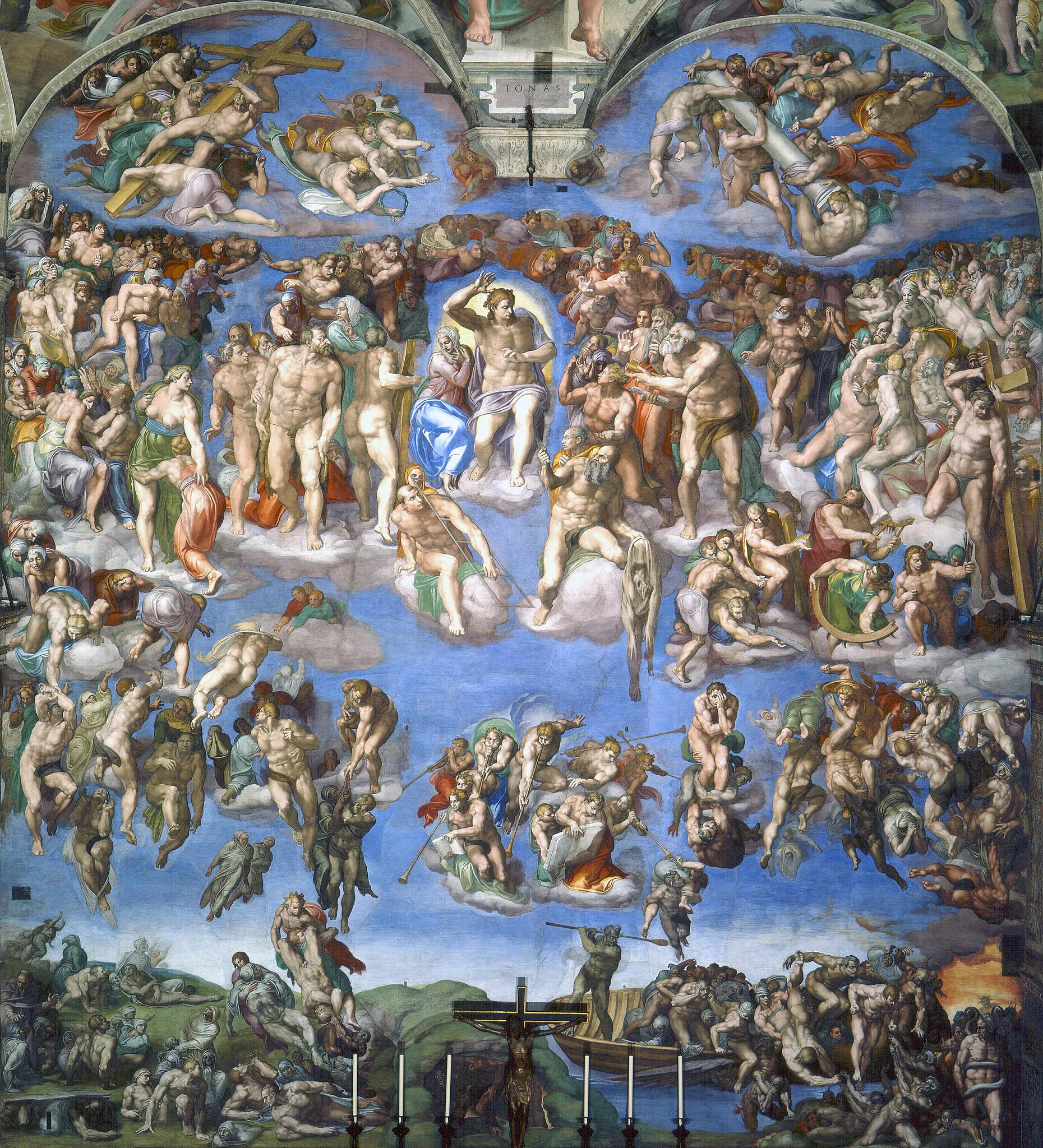
Michelangelo’s work in the Sistine Chapel was not yet finished with the painting of the ceiling. Twenty years after completing this monumental project, the then 57-year-old artist was commissioned to create another fresco, this one covering the entire west wall.
Want more news like this straight to your inbox? Subscribe to our free newsletter!
The chosen theme was the Last Judgment, intended to replace three earlier works—the two mentioned above and another by Perugino (the Assumption of Mary). Michelangelo spent five years on the fresco, from 1536 to 1541, likely working without assistance from pupils or assistants. Upon its unveiling, the fresco was met with mixed reactions, as many disapproved of the extensive nudity depicted. Consequently, the delicate parts of the fresco were censored—i.e., painted over—a measure that could not be reversed during restorations in the 20th century.
However, what has since re-emerged are the bright colours Michelangelo originally used, which had been obscured over the centuries by the effects of time. Thus, aside from the overpaintings, the masterpiece can now be admired once again in its original splendour.