
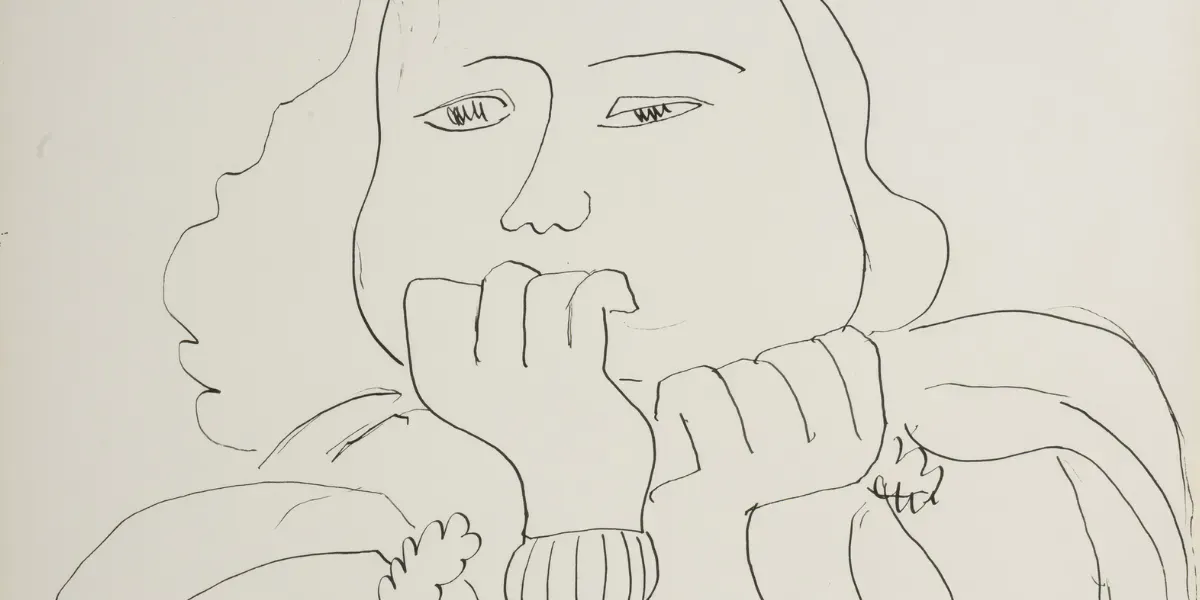
A drawing by Henri Matisse from 1942 is in the spotlight at Hallands Auktionsverk, where music professor Gottfrid Boon's art collection will be auctioned on 27 October. The newly discovered drawing was created in the year that came to change the artist's life forever – thanks to the woman in the portrait. We look back at the friendship between Henri Matisse and Monique Bourgeois.
In 1941, Henri Matisse was operated on for colon cancer and became wheelchair-bound. The following year he published an ad seeking a young and beautiful night nurse. Monique Bourgeois, at the time 21 years old, got the job. Five years later, the friendship that developed between Matisse and Bourgeois would culminate in the creation of what Matisse considered the greatest achievement of his life: the Rosary Chapel in Vence, France.
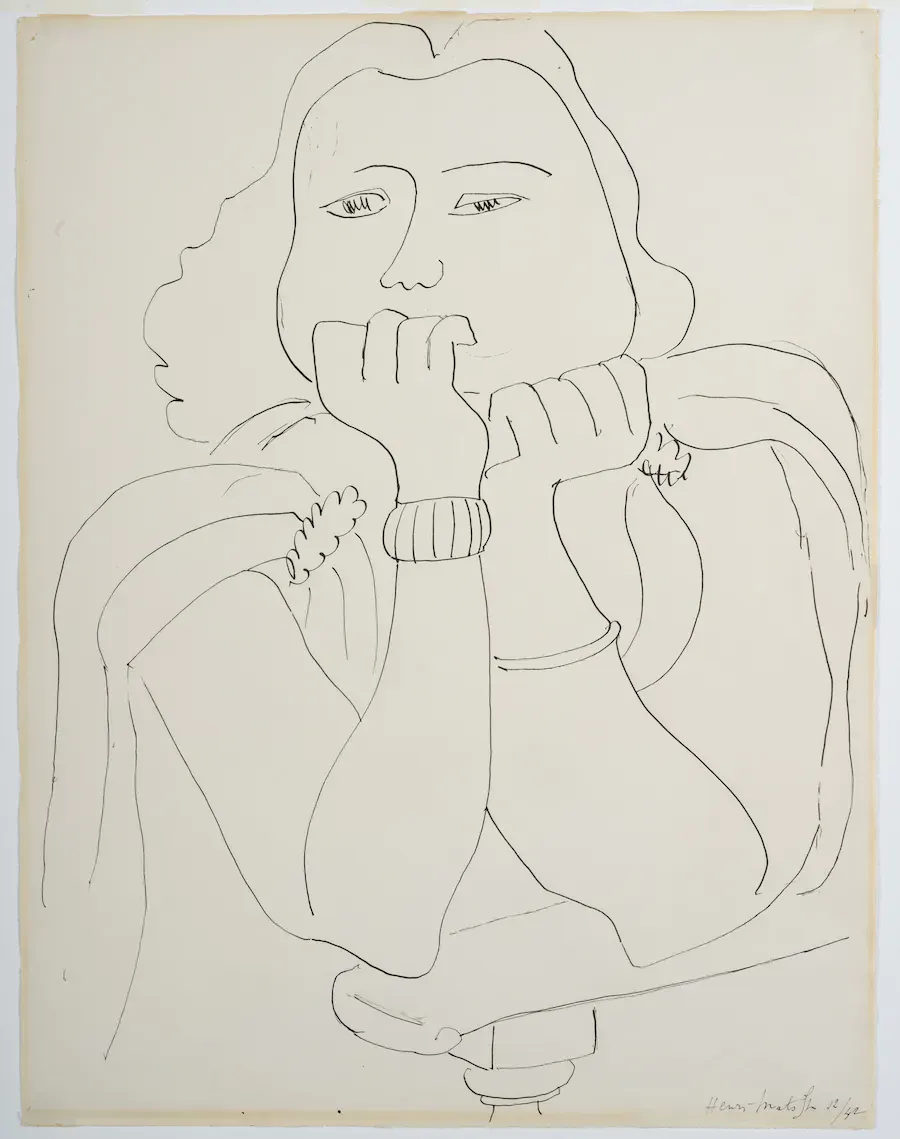
Bourgeois worked for Matisse for only a few months, but it wasn't long before he contacted her again and asked her to pose for him. Monique appears in several of Matisse's drawings, but only in four known paintings: Monique in Gray Dress (1942), Monique L'Idol (1942), La Robe Verte et les Oranges (1943) and Tabac Royal (1943). In the former, the artist dressed her in a sleeveless chiffon dress with a plunging neckline and a large bracelet.
Their paths diverged during World War II, but fate brought them together again in 1943. Matisse, refusing to leave France, moved to Vence, 12 kilometres north of Nice, and Bourgeois recovered from tuberculosis in a resting home run by Dominican nuns opposite Matisse's house. The artist and his muse reunited, and Matisse created several new portraits.
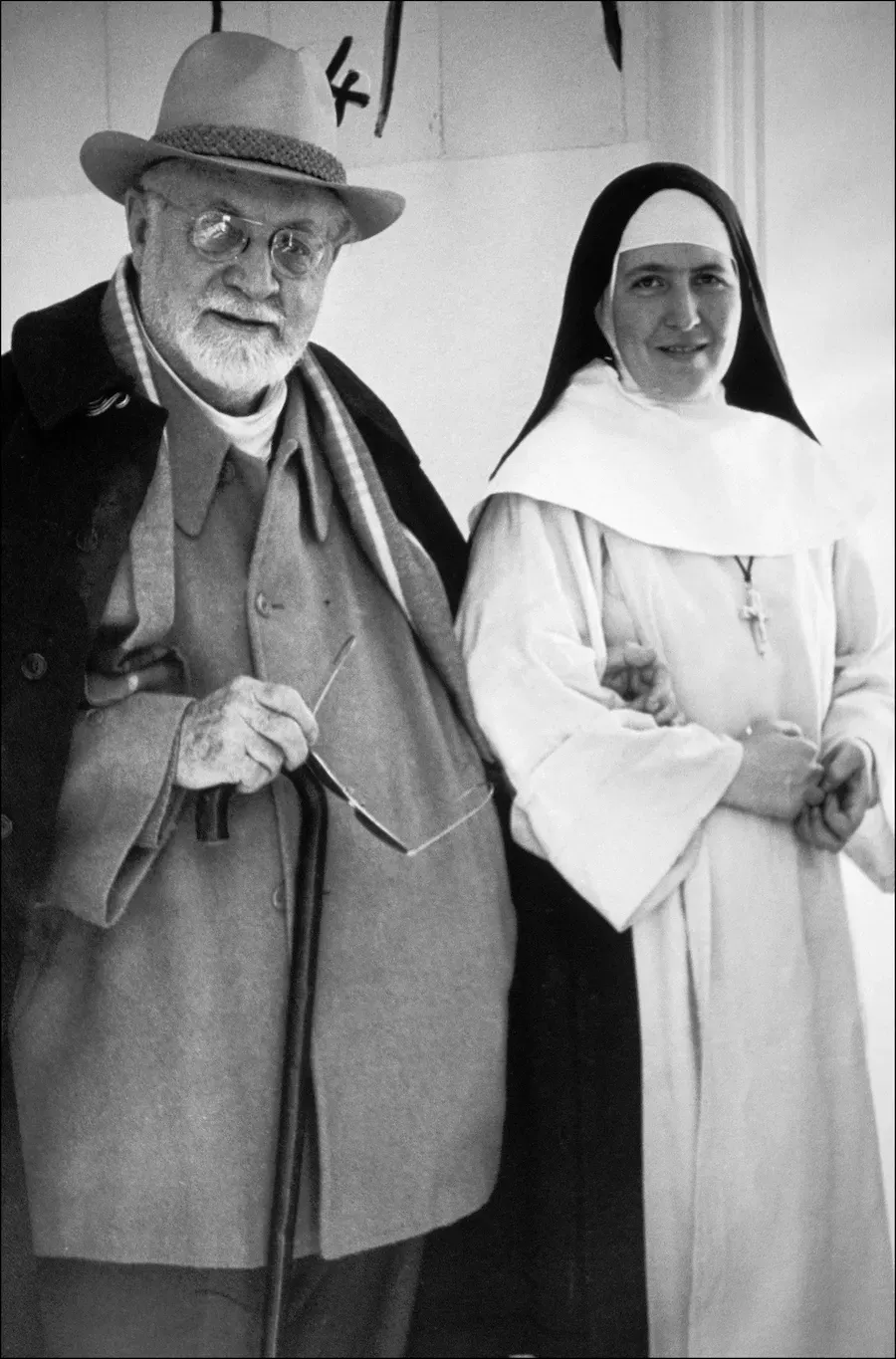
In 1946, Bourgeois took her monastic vows as a nun and assumed the name of Sister Jacques-Marie. At the time, the sisters at the resting home were using an old garage with a leaky roof as a chapel. A year later, Sister Jacques-Marie showed Matisse a sketch of a stained glass window. The rest is history: Matisse ended up not only decorating but designing the entire chapel. The artist designed everything from floors and walls to lamps and leaded glass windows, and even the clothing of the priests.
In addition to acting as a creative advisor, the young nun played the role of a diplomat. The sisters were appalled that a modern artist who painted nudes would design their chapel. But sister Jacques-Marie stood behind Matisse, who later described the Rosary Chapel as their 'joint project'. When the chapel opened in 1951, it caused a sensation in the French press. When a reporter from Paris Match asked if Sister Jacques-Marie had ever posed nude for Matisse, she explained that Matisse was like a grandfather to her. Sister Jacques-Marie, who had tried but failed to persuade the unbelieving Matisse to be buried in the Rosary Chapel, was forbidden by her superiors to attend his funeral in 1954.
In 1993, Sister Jacques-Marie wrote the book Henri Matisse, La Chapelle de Vence, and ten years later she appeared in Barbara Freed's documentary A Model for Matisse: The Story of the Vence Chapel. "It was a very tender, wonderful and special relationship," says Freed.
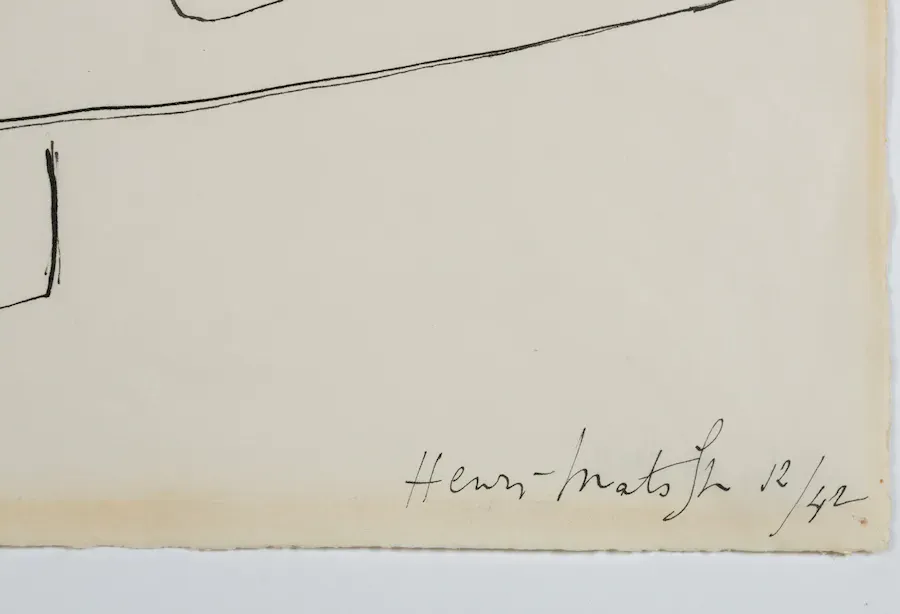
In the same year that Monique Bourgeois and Henri Matisse met, the artist drew the ink drawing that is now being sold at Hallands Auktionsverk. The newly discovered work depicts Bourgeois, before she became Sister Jacques-Marie, in a dress similar to the one in the oil painting Monique in Gray Dress from 1942.
"In the process of cataloguing the works, we have had enormous help from Henri Matisse's great-grandson Georges Matisse, at Archives Matisse, but also from my old friend and colleague Marc Maurie, one of Sweden's foremost art connoisseurs who, among other things, was head of the art department at Bukowski's and Stockholm's Auktionsverk", says Martin Laurell, CEO and owner of Hallands Auktionsverk AB.
On 27 October, music professor Gottfrid Boon's collection will be sold at Hallands Auktionsverk in Halmstad. The collection consists of 18 works, made by both Swedish and international artists of the 20th century. In addition to Matisse's drawing Portrait de Monique Bourgeois, newly discovered works by Helene Schjerfbeck and Pablo Picasso will be offered. Not to miss is also Ragnar Sandberg's oil painting It Blows Up, Georges Braque's colour etching Black Chariot (Chariot V), Marc Chagall's colour lithograph La Nymphe Bleue and dozens of other works that will soon pass under the hammer.