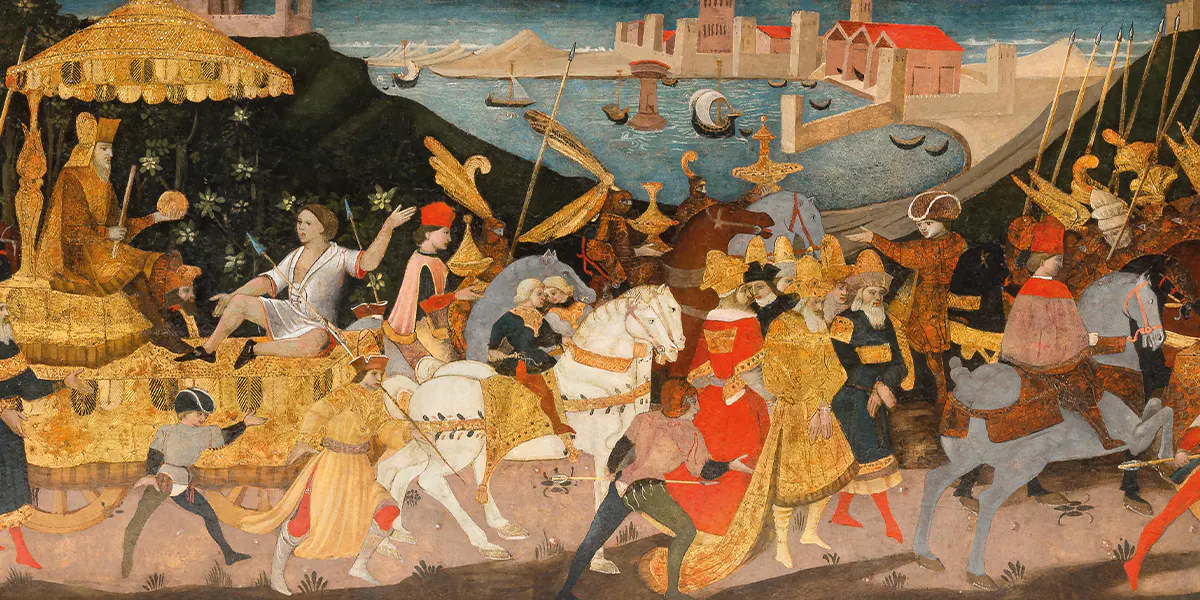
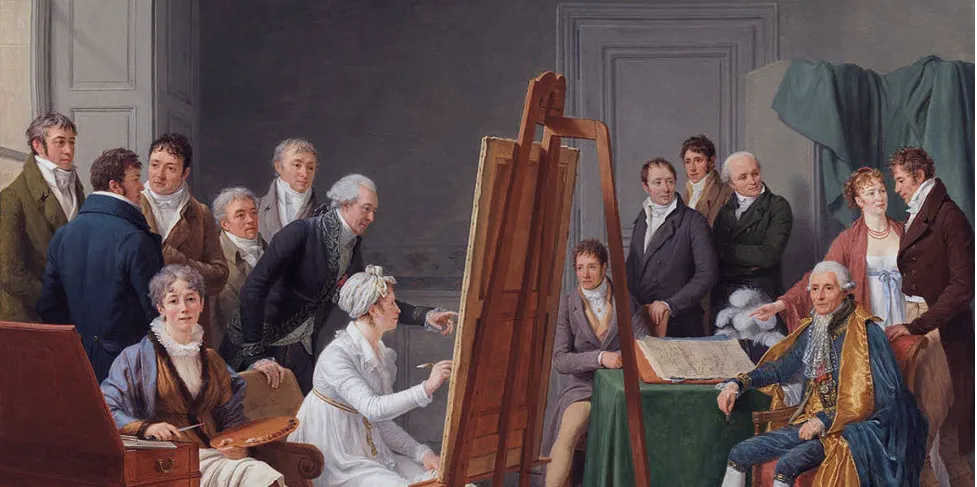
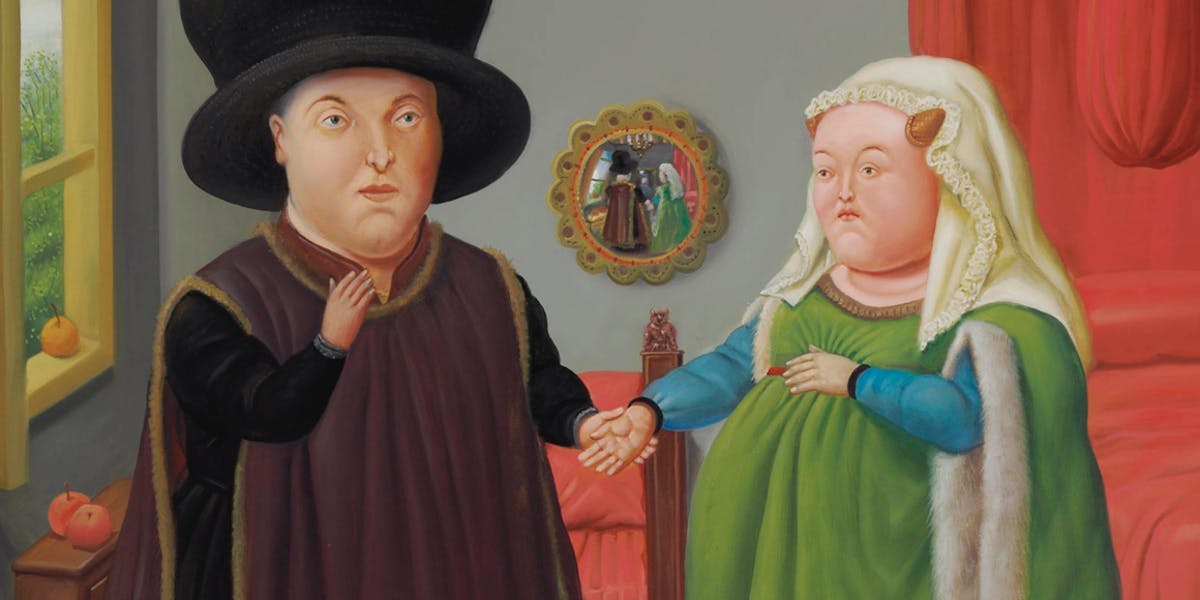
In the Middle Ages, tapestries were used as a form of insulation as well as to protect the cold stone walls of medieval buildings and castles from damp. The production of such big tapestries required the skills of many workers as well as a rather large loom. This lead to certain areas developing as a centre for weaving. By the 1500s, Flanders, in particular Brussels and Bruges, became the heart of tapestry production.
The most famous manufacturers hailed from France and Flanders, what is now the Flemish part of Belgium. Old Flanders is synonymous with one of its most famous exports: the Belgian tapestry.
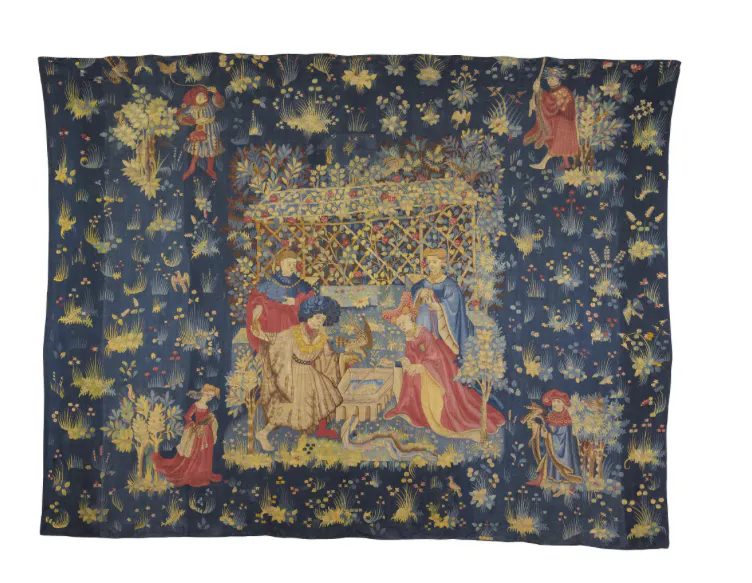
The millefleurs tapestries of the Gothic period were made famous by Flemish weavers in Brussels and Bruges.
One of the most famous 14th century tapestries is Angers Apocalypse, a piece by Nicolas Bataille (active circa 1363-1400) which was based on designs by Jean de Bandol of Bruges (active 1368-1381) a court painter to Charles V, King of France. Today, an example of the work hangs in Musee des Tapisseries, in Angers, France.
Today, the lost art form has been given a new lease of life by masters of modern tapestry Alighiero Boetti and Grayson Perry. Boetti (1940-1994) is best known for his series of embroidered maps of the world as well as his arazzi - wall hanging in Italian - which feature colored letters in the form of a grid. For these works, Boetti spent time with artisan embroiderers of Afghanistan and Pakistan. Boetti's most expensive work to ever be sold at auction was Mappa, circa 1988, which sold at Phillips in 2015 for £1 390 445.
[vimeo id="127622179"]
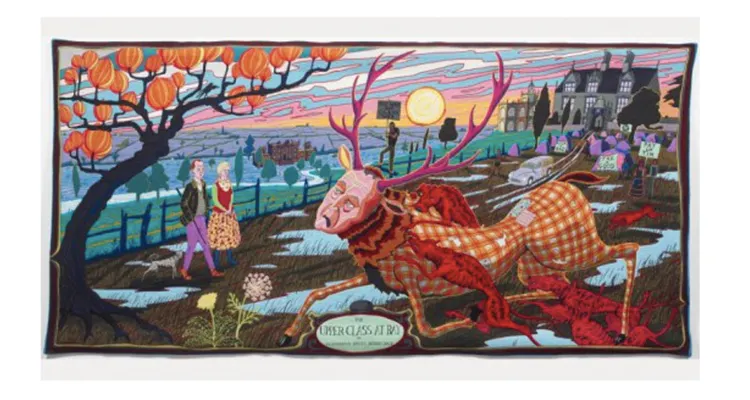
Grayson Perry, the first potter to be awarded the Turner Prize, created The Vanity of Small Differences, a series of six large-scale tapestries which explore the British fascination with taste and class.
The works were inspired by the 18th century painter William Hogarth’s moral tale, A Rake's Progress.
The "Édtions d'art de Rambouillet" featured was on sale at Catawiki. For works like this and more, check out Catawiki's catalogue here.