![Antonio VivariniI, called Antonio da Murano (Murano, c. 1415-1466/1484, Venice), and Giovanni D'Alemagna (Venice, 1411-1450), ‘The Annunciation’, tempera on wooden panel, c. 1443, 98 x 90 cm [detail]. Photo © Aguttes](https://images.prismic.io/barnebys/3b070e19-d45f-4016-a979-0876e86e2b7d_ba83a328-bb38-4445-b9e9-5dd7f74935c3_hero.jpg?auto=format,compress)
On 17 June, French auction house Aguttes will present their ‘Ancient Masters – Paintings and Drawings’ sale, whose star will undoubtedly be an exceptional masterpiece of the Venetian Quattrocento. Coming from a family collection in central France, this extraordinary Annunciation, with a fantastic quality of treatment and composition, is the work of Antonio Vivarini (aka Antonio da Murano), and Giovanni d’Alemagna.
Hailing from a family of glassmakers from the famous island of Murano, near Venice, Antonio Vivarini was born around 1415. His first work is traditionally recognised as the polyptych of the Euphrasian basilica of Poreč, signed and dated 1440. Shortly afterwards, in 1441, he began his collaboration with Giovanni d'Alemagna on an altarpiece representing St. Jerome for the Venetian church of Santo Stefano, now preserved in the Kunsthistorisches Museum in Vienna.
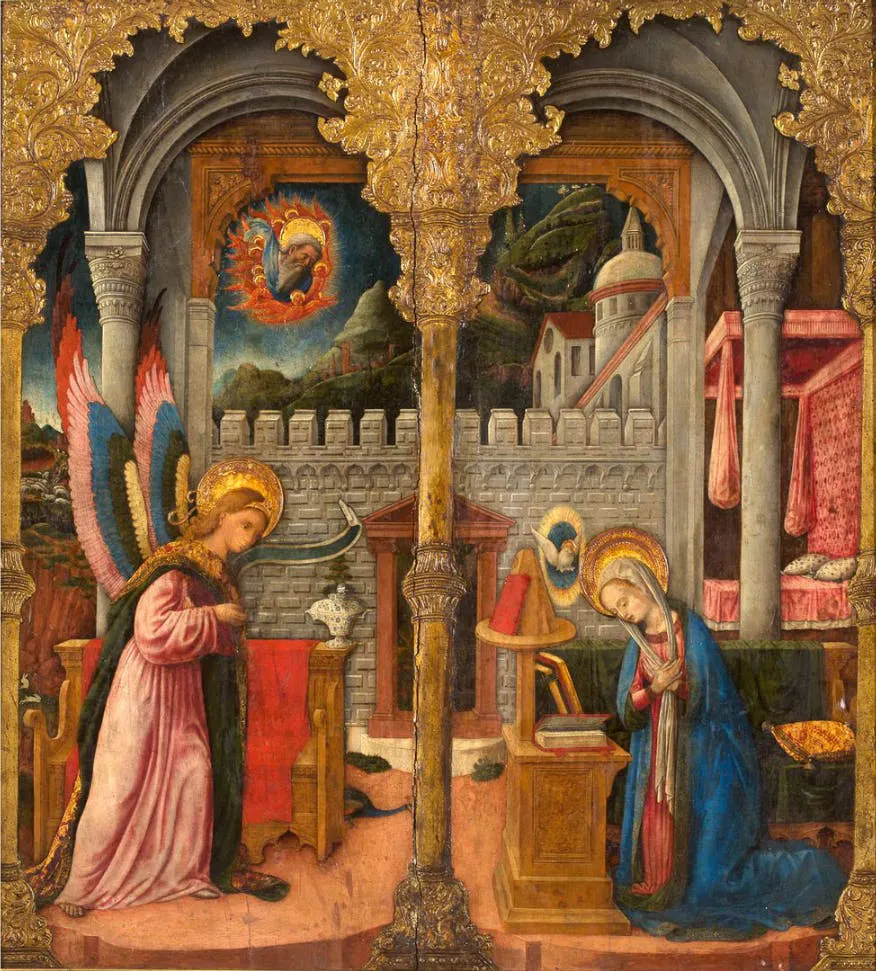
The painting proposed by Aguttes represents the Annunciation, a major religious subject throughout the history of art, in which the Virgin Mary is visited by the Archangel Gabriel, who announces to her the imminent coming of the child Jesus. The meticulous composition of the painting abounds in details and subtle symbols of religious iconography. The Holy Trinity is represented by the presence of God the Father in heaven, and the dove of the Holy Spirit at the right hand of Mary. In the centre of the composition, a closed door symbolises the Immaculate Conception, while the central column is the symbol of the Incarnation. Finally, the peacock behind the central column is an allusion to the Resurrection.
While it remains difficult to determine the exact share of responsibility of the two artists in their collaborative works, it is certain that each retains their own artistic style and identity. Both were influenced by the work and manner of Iacopo Bellini (active between 1424 and 1470), who was one of the first to drive the change from the Gothic style to the Renaissance, notably by developing the use of perspective. Despite this common influence, Giovanni d’Alemagna remained close to the Gothic style, while Antonio Vivarini continued towards the modernity of the early Renaissance.
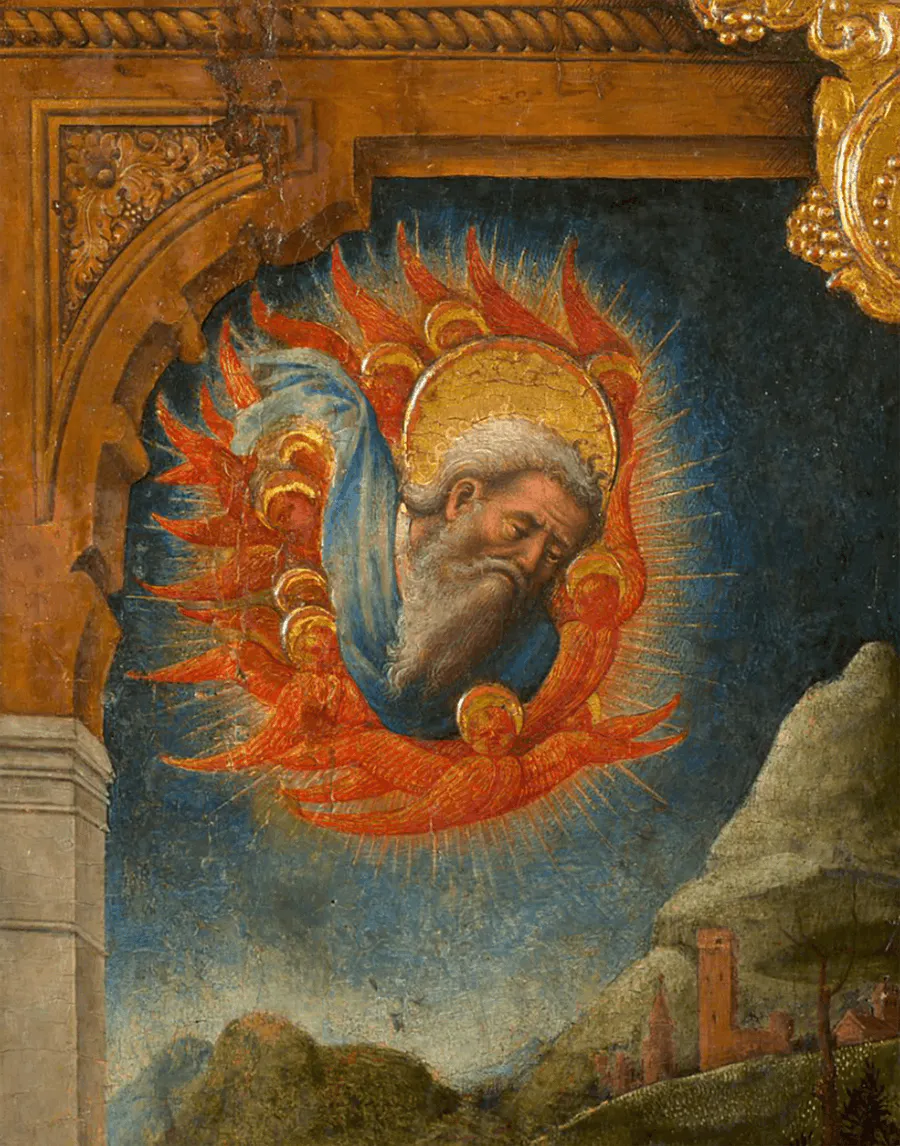
Antonio’s work is now often characterised by clear and unobtrusive compositions, while Giovanni had a predilection for elaborate interiors, enriched with decorations and architectural details. In this Annunciation, we find both artistic influences and sensibilities. The composition is dominated by the balance between the interior, richly decorated in the manner of a 15th-century Venetian dwelling, and the perspective of the landscape in the background, which opens the composition in depth.
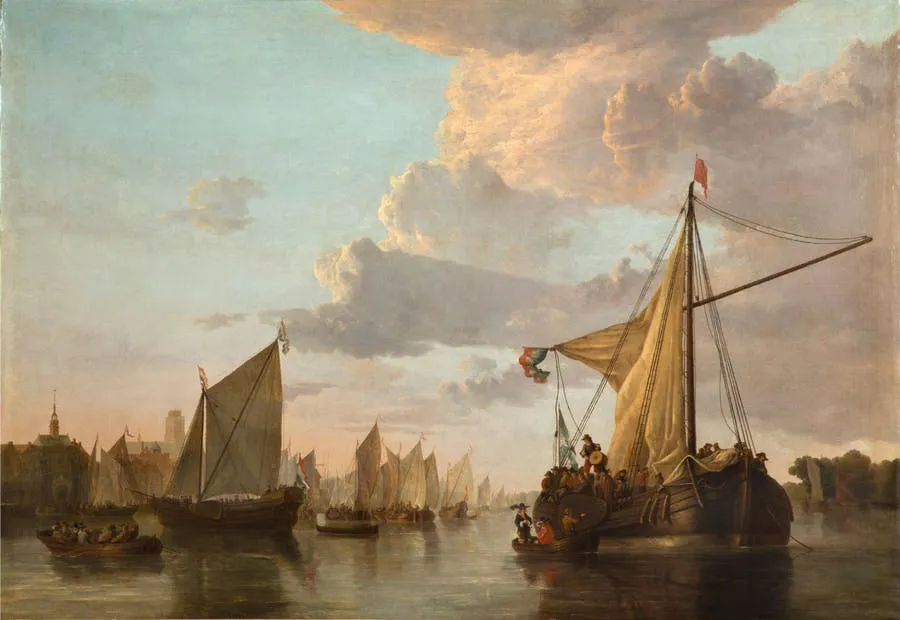
Not content with this great rediscovery alone, Aguttes will also be offering other remarkable works. Among them is a beautiful painting from the English school, dated around 1830 and done in the manner of Albrecht Jacobsz Cuyp, which represents the port of Dordrecht with admirable technique and style.
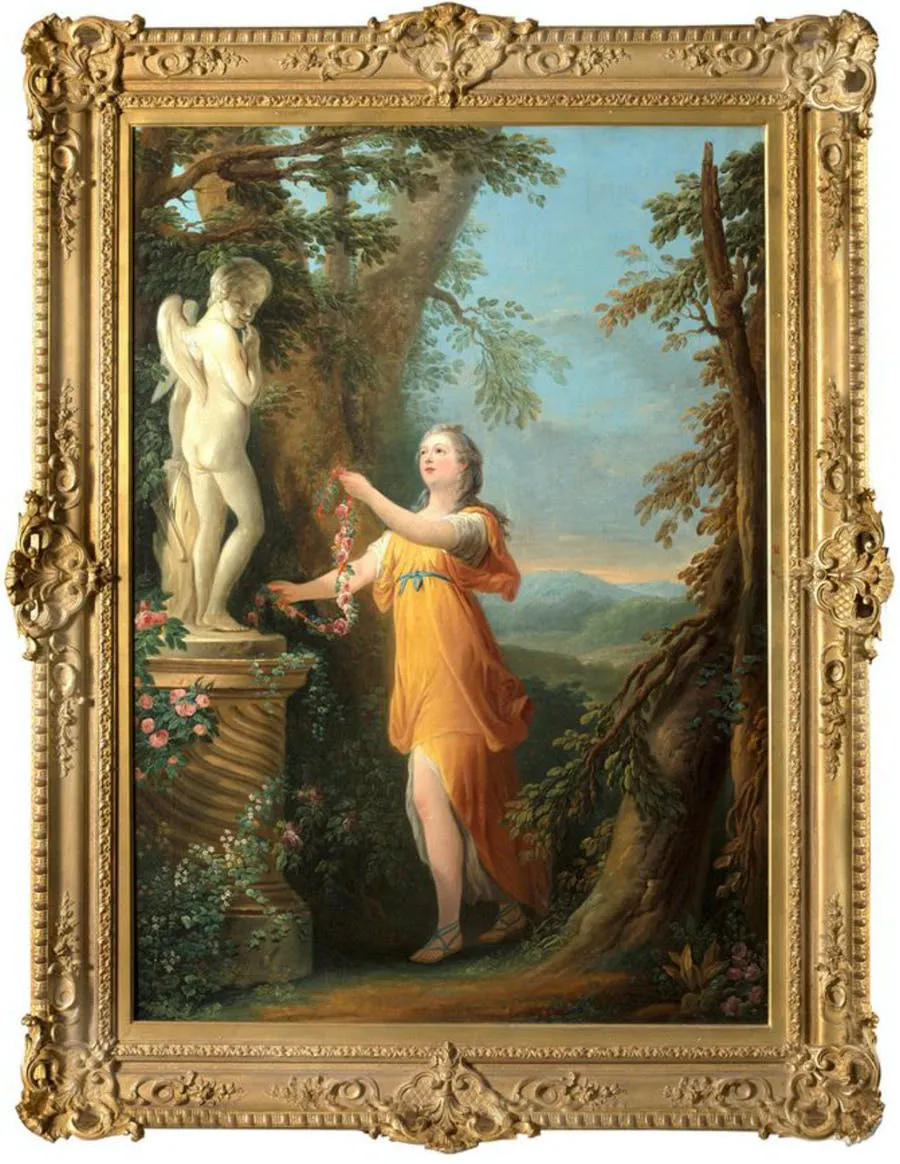
Another notable piece is an exceptional oil on canvas by Carle Vanloo, rediscovered by Aguttes and dated 1760. Vanloo had become first painter to King Louis XV in 1762, then director of the Academy in 1763, signs of a brilliant and exemplary career. The charm and elegance of Hommage à l'Amour perfectly embodies the 18th century’s renewed interest in Greco-Roman history and art. The work should also be compared to the painting Hommage à l'Amour that was acquired by Catherine II of Russia, but reported as lost since 1917: the painting proposed by Aguttes is of similar size and composition. Close to the painting acquired by Catherine II of Russia, it could possibly be the composition lost in 1917.
In total, some fifty lots will be auctioned on 17 June at Aguttes. This formidable selection proves that the discerning eye can still discover masterpieces, and, above all, confirms Paris' predilection for the market for old paintings and drawings. This sale promises to be memorable and once again confirms the dominance of the French art market. To see it, all you have to do is go to the auction exhibition, available on 15, 16 and 17 June.