Stay up-to-date with the antiques world

By subscribing, you are agreeing to the privacy policy. Unsubscribe anytime.

Barnebys

Barnebys HQ

Brahegatan 10
BOX 5038
114 37 Stockholm

Company

  • About Us
  • Join Barnebys
  • Our Partners
  • Press
  • Career

Explore More

  • Barnepedia
  • Buying / Selling at auction
  • Auction Houses / Dealers / Galleries

Support

  • FAQ
  • Terms of Use
  • Privacy and Cookies policy
  • Contact us
  • Barnebys Group AB
  • Barnebys.se
  • Barnebys.com
  • Barnebys.co.uk
  • Barnebys.de
  • Barnebys.fr
  • Barnebys.es
  • Barnebys.it
  • Barnebys.hk
  • All auction items
  • Categories
  • Auction results
  • Magazine
  • Ancient Art
  • Arts & Graphics
  • Asian Art
  • Books, Maps & Manuscripts
  • Carpets, Rugs & Textile
  • Coins & Banknotes
  • Contemporary Art
  • Ethnographical
  • Fashion & Vintage
  • Folk Art
  • Furniture, Design & Mirrors
  • Glass
  • Jewellery & Gems
  • Lighting
  • Medals, Arms & Armour
  • Miscellaneous
  • Music & Musical Instruments
  • Nautica, Technica & Optic
  • Photographs
  • Porcelain & Pottery
  • Postcards & Stamps
  • Sculptures
  • Silver & Gold
  • Sports & Leisure
  • Tin & Metals
  • Toys & Collectables
  • Vehicles
  • Watches & Clocks
  • Wine & Spirits
  • Works of art
  • All auction items
  • Auction results
  • Magazine
  • Get a valuation
  • Auction system

Barnebys Magazine

LatestEditor's picksTopics
Magazine/Works of Art/Romantic Ballet and the Tutus of Marie Taglioni

Romantic Ballet and the Tutus of Marie Taglioni

Swedish ballet dancer Marie Taglioni was one of the most celebrated ballerinas of the Romantic ballet era, in which the ideas of Romanticism in art and literature influenced ballet.

2 January 2023Harriet Sweet
Lithograph by Chalon and Lane of Marie Taglioni as Flora in Didelot's Zéphire et Flore. London, 1831 (Victoria and Albert Museum/Sergeyev Collection). Public domain image (detail)

Lithograph by Chalon and Lane of Marie Taglioni as Flora in Didelot's Zéphire et Flore. London, 1831 (Victoria and Albert Museum/Sergeyev Collection). Public domain image (detail)

Whereas men historically dominated ballet performances, the Romantic era (which occurred during the early to mid 19th century) saw the rise of the ballerina which called for a flowery, willowy look that was characterised by the ballet dancer Marie Taglioni (1804-1884).

See also: Collecting Opera and Ballet in Art

The real defining element of the Romantic ballet era was the tutu. This multi-layered skirt was made of tulle and allowed for more elaborate leg movements. The era also saw the rise in pointe shoes, which helped give the ballerina the effect of floating in these whimsical ballets where they were often playing spirits, fairies and princesses.

Marie Taglioni dancing the title role in “La Sylphide." By ​English Wikipedia user Mrlopez2681, CC BY-SA 3.0

Marie Taglioni made her debut in Paris in 1827 in the ballet La Sylphide, which was choreographed by her father Filippo Taglioni. In the performance, Marie embodied the ideal of Romantic ballet, wearing a white tulle dress accessorised with a floral headband and delicate fairy wings. Marie had actually shortened her skirts in the performance in order to show off her pointe work which probably would have been rather scandalous at the time.

Modern pointe shoes. Public domain photo

Taglioni made her London debut in 1830 and was popular across Europe in the part of Flora (a nymph of flowers) in the popular ballet Flore et Zephire. In this ballet, wires were used to create the illusion of dancers as spirits in the air. This added to the effect of the ballerinas being weightless, something the Romantic ballet era epitomised.

See also: The Scandal Behind Degas' Little Dancer
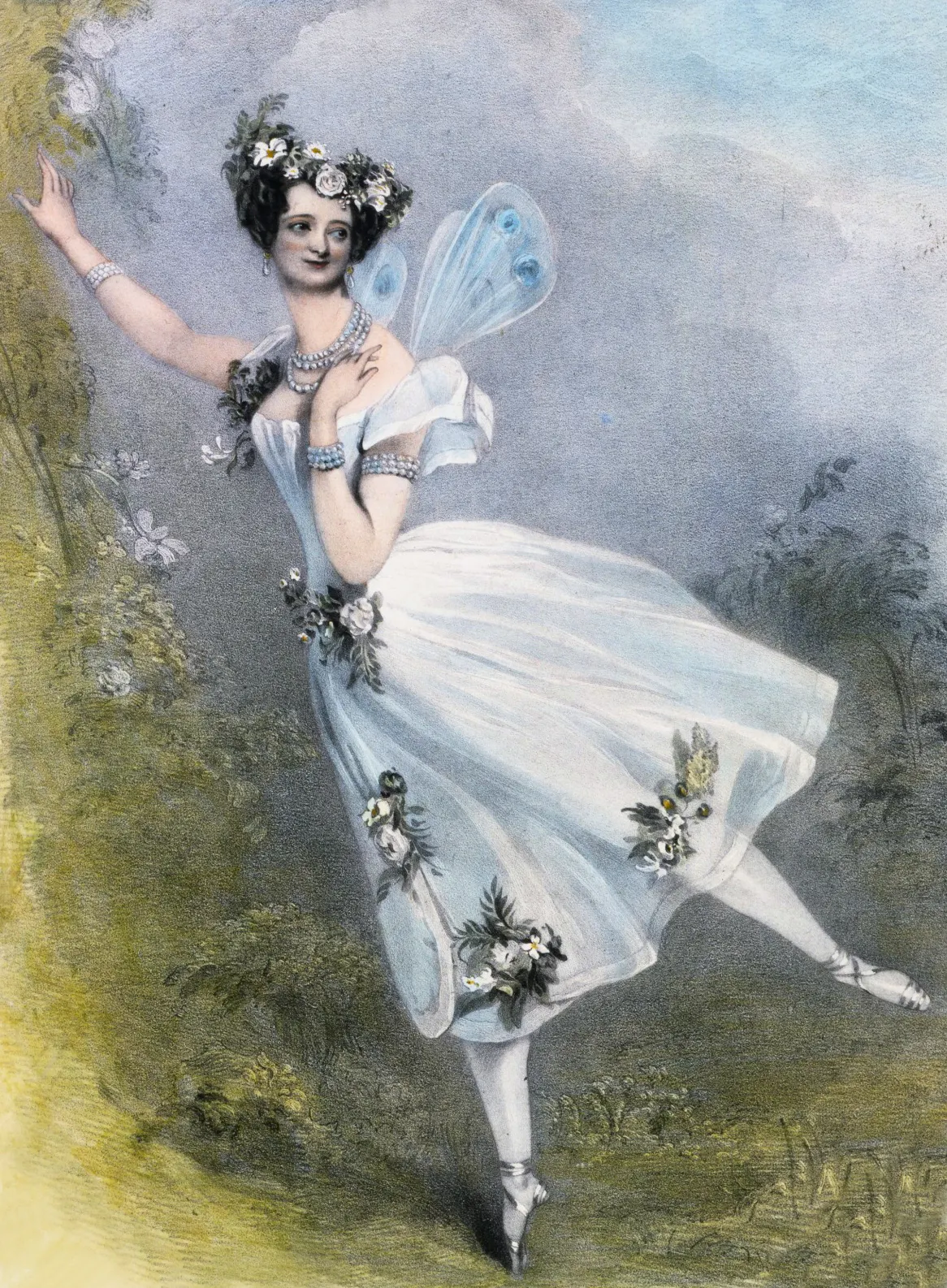
Lithograph by Chalon and Lane of Marie Taglioni as Flora in Didelot's Zéphire et Flore. London, 1831 (Victoria and Albert Museum/Sergeyev Collection). Public domain image

What is regarded as the pinnacle of the Romantic ballet style is the show Pas de Quatre, which caused a sensation when it premiered in 1845 as it brought together the four greatest ballerinas of the time, including Marie Taglioni. The ballerinas danced with delicacy and poise, enhanced by their matching whimsical costumes that again included the Romantic tutus accompanied by white bodices and floral headbands.

Want more articles like this straight to your inbox? Subscribe to our free newsletter!
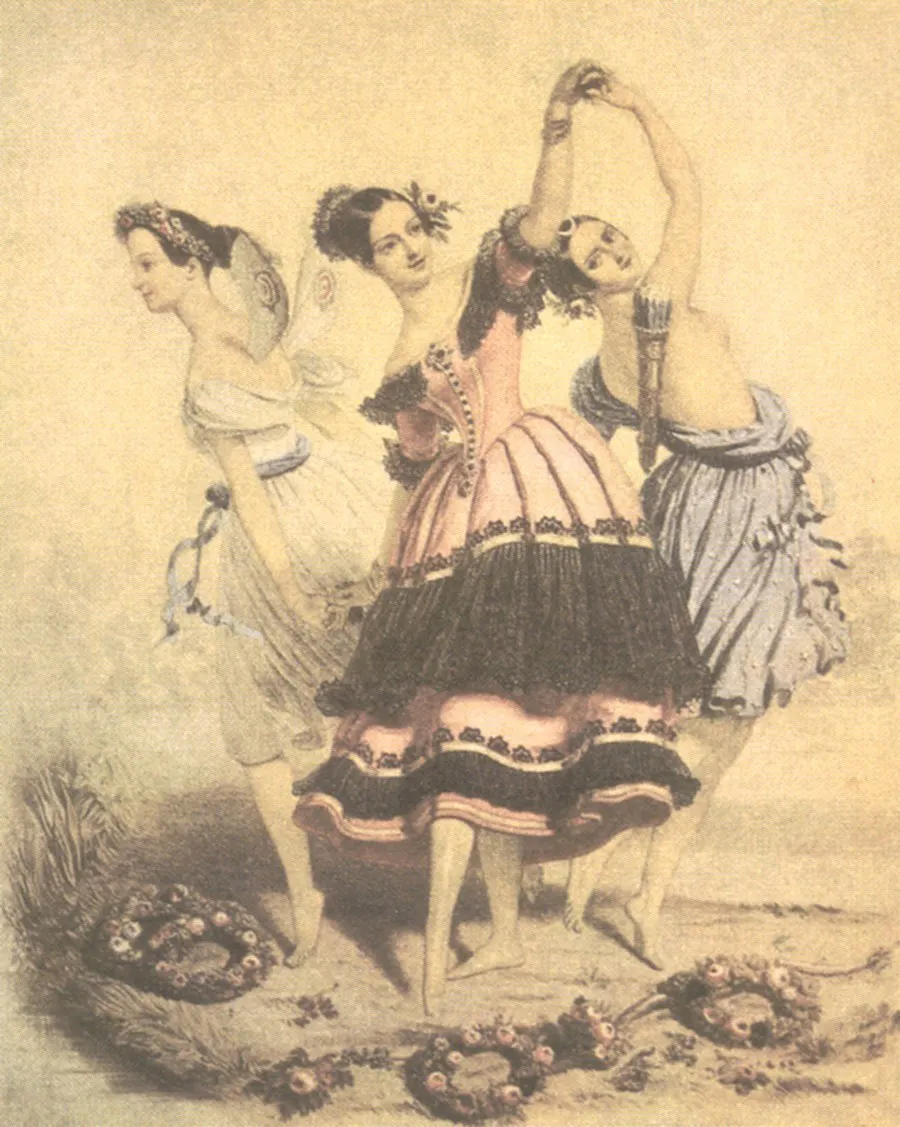
Alfred Edward Chalon (1780-1860) - Image scanned from the book "Ballet Art: From the Renaissance to the Present" by Mary Clarke and Clement Crisp. Published by Clarkson N Potter, Inc., 1978. Public domain image

Taglioni was so famous and well-regarded that after her last performance in Russia in 1842 a pair of her pointe shoes were sold to be reportedly cooked and eaten by a group of ballet fans. She continued to teach ballet throughout her life, before her death in 1884. The legacy of Romantic ballet has lived on from Taglioni's time to today, with the dance form being characterised as elegant, ethereal and acrobatic ever since.

Find more articles on Barnebys Magazine

This is an updated version of the article originally published on 3 February 2016.

ballettutumarie taglioniromanticism

Subscribe to Barnebys Magazine

By subscribing, you are agreeing to the privacy policy. Unsubscribe anytime.

Explore related articles

Khon performance celebrating the coronation of King Rama X (detail). Licence CC BY-SA 4.0 via Wikimedia Commons
Textile

The Art of Khon: Thailand’s Classic Royal Dance

Catherine Middleton arrives to attend the Royal Wedding of Prince William to Catherine Middleton at Westminster Abbey on April 29, 2011 in London, England. Photo
Jewellery

Not Just for Royals: A History of the Tiara

The hat of Emperor Napoleon I, early 19th century, imperial bicorn hat in black beaver felt and silk, probably worn during the battles of Jena and Auerstadt, in 1806, attributed to Poupart & Cie (detail). Photo © Bonhams
Memorabilia

Napoleon's Iconic Hat at Auction

Bring your auction to collectors worldwide!