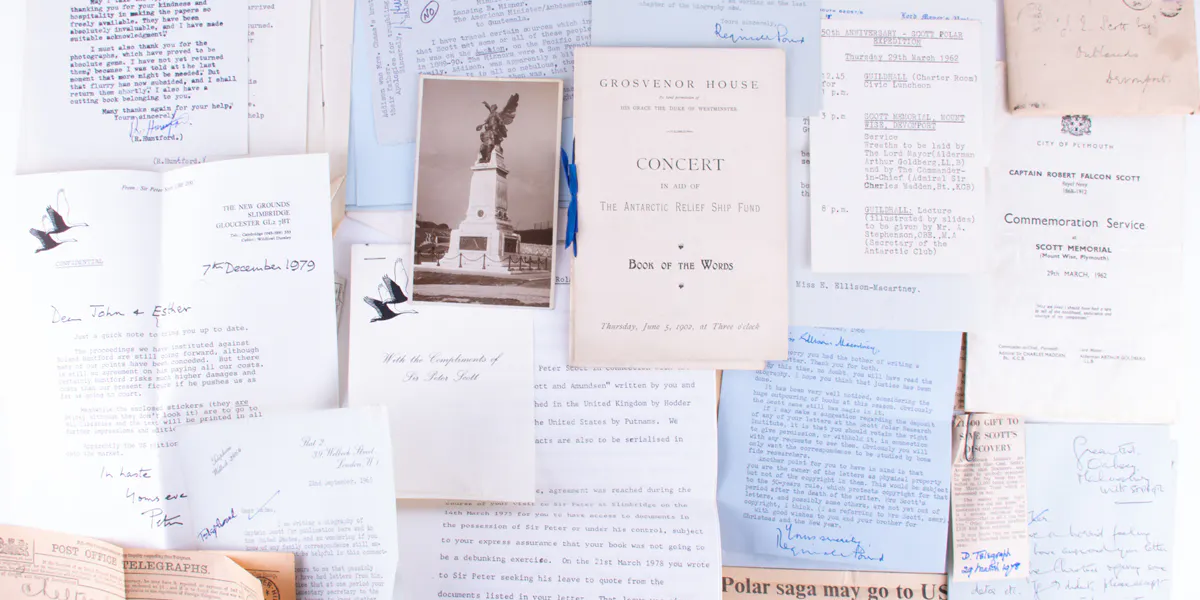
On 27 August, Dawsons Auctioneers is hosting ‘The August Sale’, which includes pieces of fine art, antique and jewellery. In amongst the some 820 items going under the hammer is a large and comprehensive archive of ephemera from, and relating to, Robert Falcon Scott CVO (1868-1913). ‘Scott of the Antarctic’ was a Royal Navy officer who led two expeditions to the Antarctic regions, the Discovery expedition of 1901-04 and the Terra Nova expedition of 1910-13, which cost him his life.
Spanning almost an entire century, the contents on offer include handwritten letters from Scott to his family, dating from 1896 and 1906, a bound set of condolence letters, and telegrams to his mother after his death. Later documents include letters from his son, Sir Peter Scott (1909-1989), and correspondence from Roland Huntford, author of a controversial 1979 book on Captain Scott titled Scott and Amundsen: Last Place on Earth.
It has been a fascinating journey...
The period of the 1906 letters are particularly interesting, as it covers the time in between Scott’s two infamous Antarctic expeditions, when he had become a ‘popular hero’ of the nation, in addition to having been promoted to Flag Captain in his naval career. There is a candid air to one of the letters written to his mother at this time, from his ship, H.M.S. Victorious, in which he discusses the changes taking place to the Atlantic Fleet, as well as the personality of Rear Admiral Sir George Egerton.
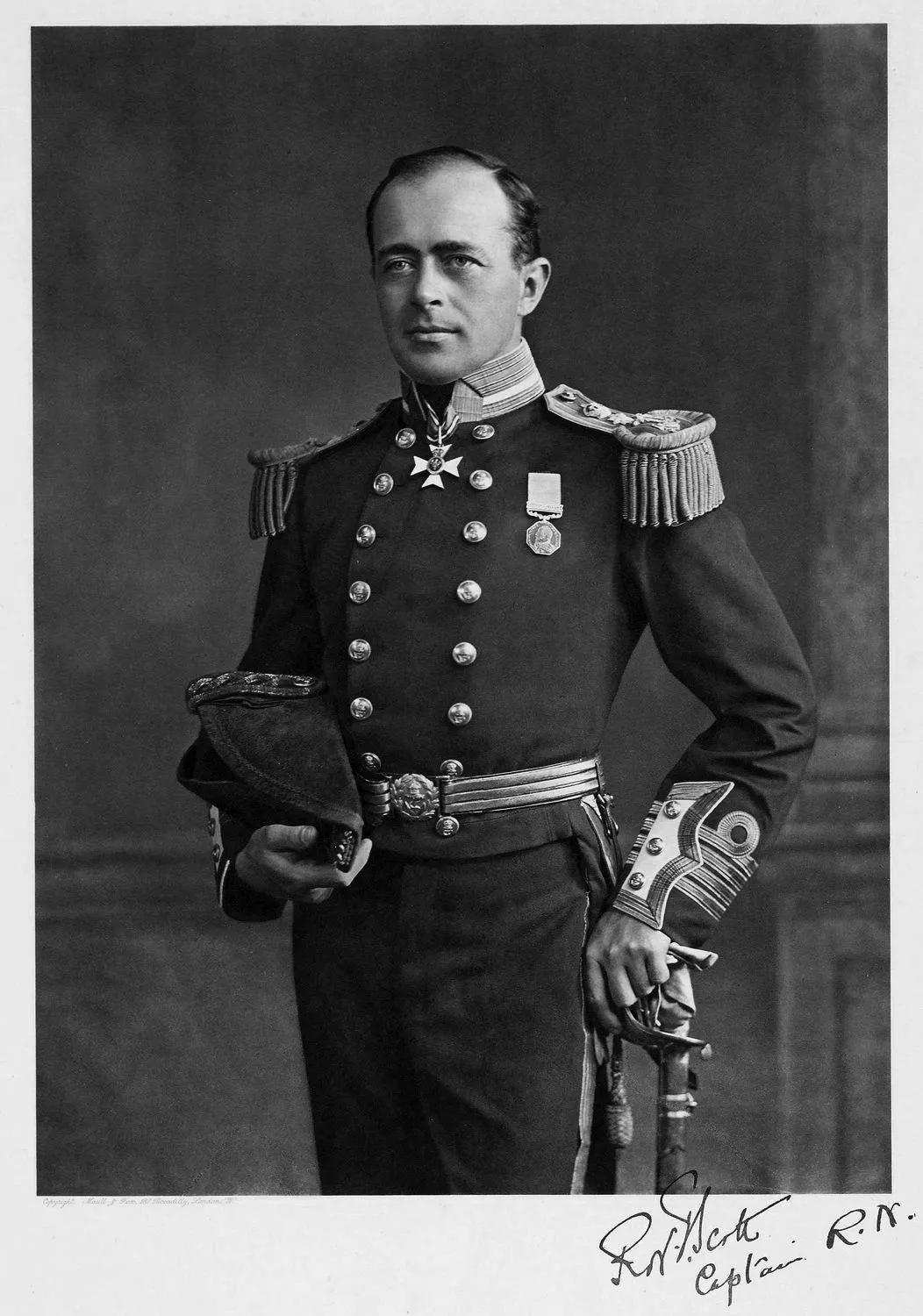
The collection was recently discovered as part of a London house clearance, and was held by the descendants of Scott’s sister, Ettie Myers Scott. She was the wife of William Ellison-Macartney (1852-1924), the Irish-born English politician and later Governor of the Australian States of Tasmania and Western Australia, and it was their family who retained the early items following the death of Robert and Ettie’s mother.
Some of the most intriguing of the items on offer are the letters from the aforementioned Huntford to the family, who had agreed to assist Huntford in the writing of his book – it is likely the family did not realise the finished book would be very critical, even disparaging, of Captain Scott’s personality and capabilities. The family had loaned, on Huntford’s request, numerous items relating to Scott’s career, some of which is likely to be included in this collection going under the hammer. Later letters from Sir Peter Scott and others, included in the offered collection, make clear the family’s displeasure with the final book.
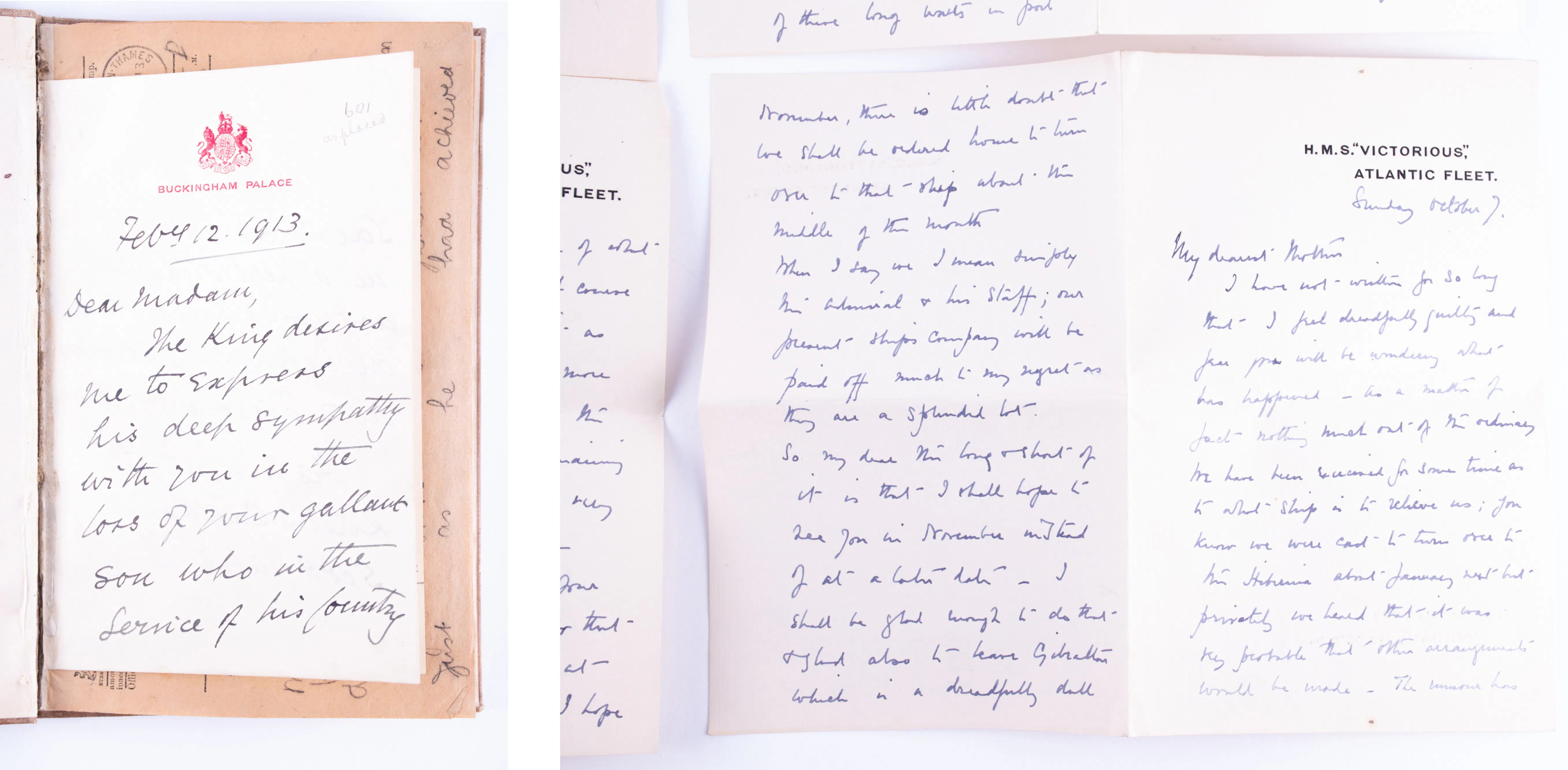
Many of the letters and telegrams include condolences to the family after Scott’s death from some of the luminaries of society at the time, including Arthur Bigge, 1st Baron of Stamfordham, who had served as private secretary to Queen Victoria, Edward VII and George V; Sir Clements Markham, who had publicly championed Scott for many years; and J.M. Barrie, author of Peter Pan and a close friend of Scott (Scott’s son was named after the book’s main character).
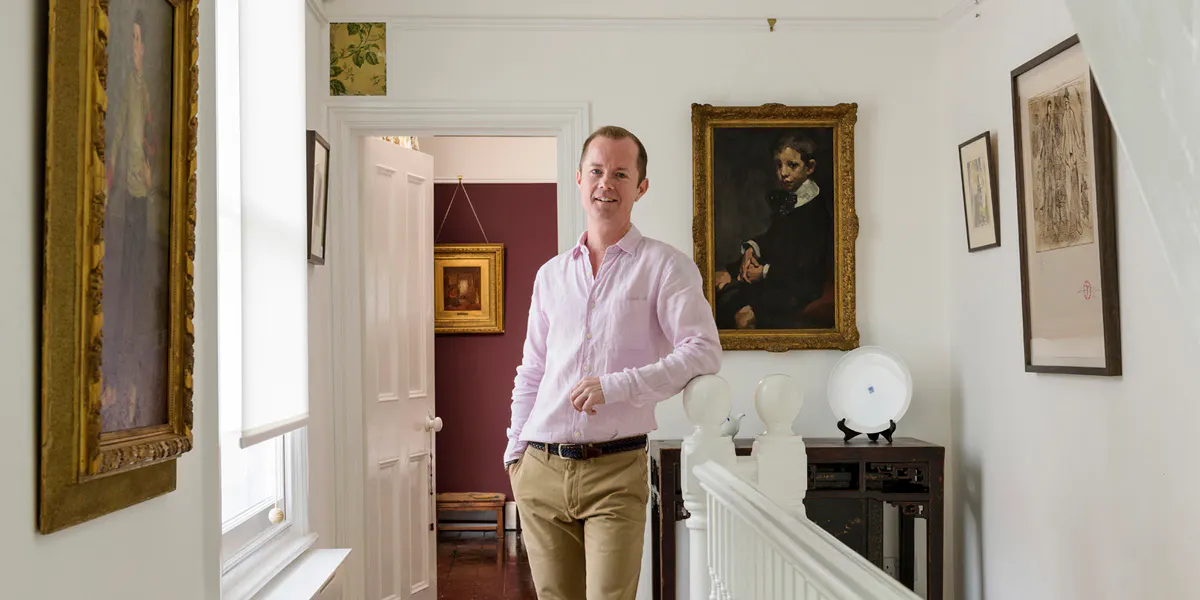
Peter Mason, saleroom manager, auctioneer and valuer at Dawsons, says “it has been a fascinating journey to read through all of the items in this collection, as well as related published material and piece together a snapshot of not just Captain Scott himself, but his family and the circles he was moving in”.