When Dorotheum held an auction of Austrian imperial memorabilia nearly a year ago, we were delighted to report on the great results achieved for several items once owned by the imperial couple, Franz Joseph and Elisabeth.
See also: A Real Portrait of Empress Elisabeth of Austria
Now, the time has come again for Dorotheum to hold the 'Imperial House & Historica' auction on 11 June.
One of the top lots on offer is a black velvet jacket in the Hungarian style, which reflects Empress Elisabeth's love of Hungary. Although she never really felt at home at the rigid Viennese court after her marriage to Emperor Franz Joseph I in April 1854, Elisabeth quickly developed a strong affinity for Hungary, which was part of the Habsburg Monarchy. The Hungarians were rather unpopular at the Viennese court (a sentiment Elisabeth shared) after they fought for their independence during the revolutionary year of 1848. Elisabeth campaigned for an equalisation, which led to the creation of the Austro-Hungarian Dual Monarchy with two equal countries in 1867.
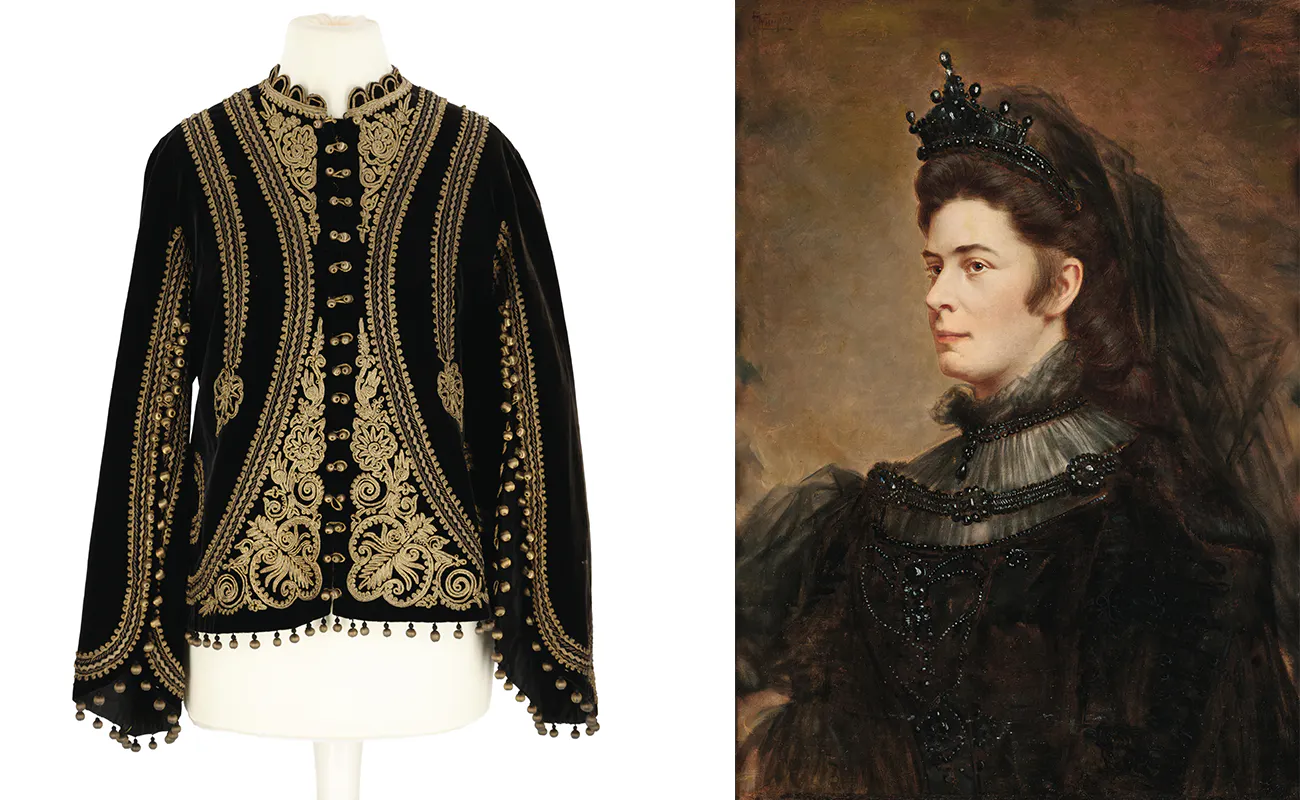
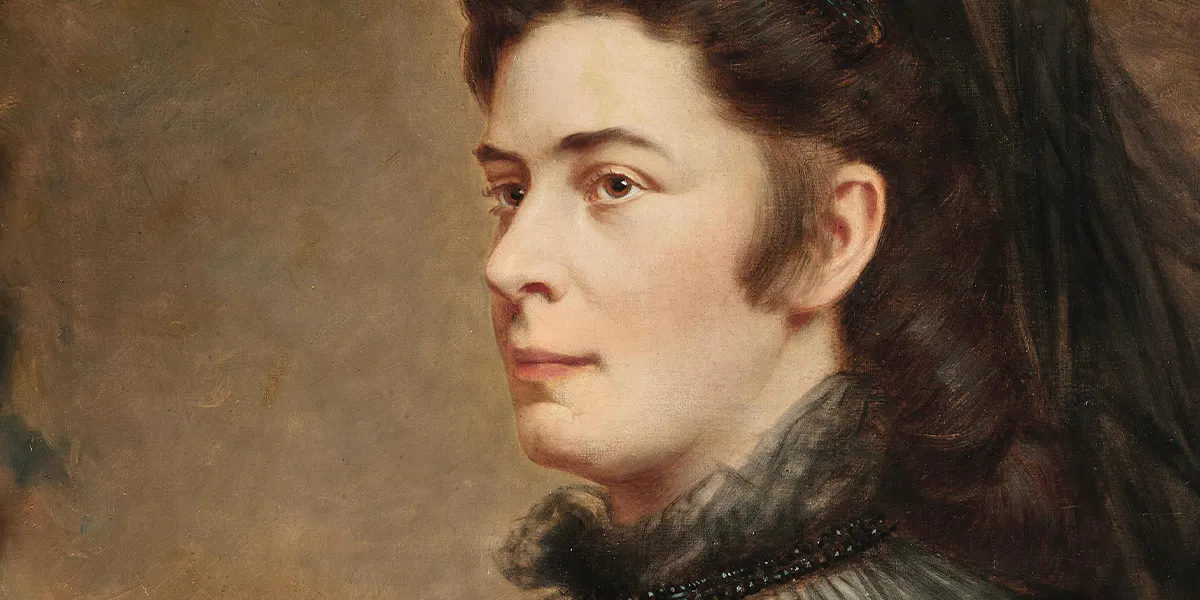
The Compromise was the only occasion on which Elisabeth became politically active. Otherwise, she often withdrew into private life, travelled extensively, and cultivated her legendary beauty. She contributed to this legend early on by no longer allowing herself to be photographed from around 1870 and soon stopped posing for painted portraits. Another top lot in the auction is a painting from around 1890 depicting Elisabeth dressed in black, mourning her son Rudolf. This painting was likely based on a photo portrait from the 1860s, with the unknown painter subtly adapting the empress's face to reflect her advanced age.
See also: Empress Elisabeth's Shirt Goes to Auction
Another portrait in the auction, painted by Edmond Georges Grandjean in 1884, shows Elisabeth on horseback. A personal riding crop, also available for bidding, attests to the empress's passion for riding. Another beautiful collector's item for 'Sisi fans' is a fan made of mother-of-pearl and lace. A travel thermometer and a photo album with pictures of Tangier, Oran, and Algiers, which she visited privately in 1890, serve as reminders of Elisabeth's love of travel.
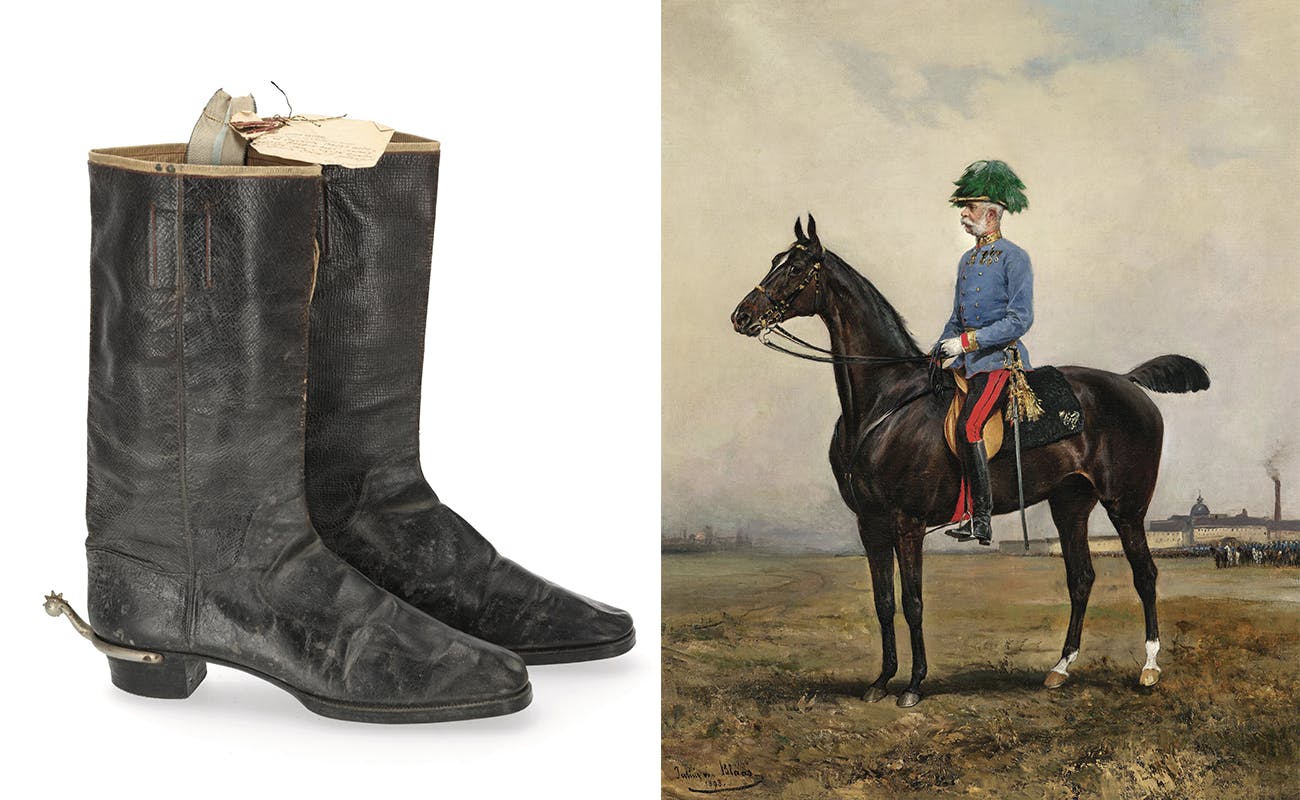
A number of personal mementos from Sisi's husband, Franz Joseph I, are also up for auction, including a pair of spectacles with a case and a pair of leather half-boots with spurs. The authenticity of these items is confirmed by Eugen Ketterl, the emperor's personal valet for many years, whose business card is enclosed. Ketterl served in his capacity from 1894 until Franz Joseph's death in 1916, and an extensive collection of postcards that Ketterl sent home while traveling with the Emperor also dates from around this period.
Another standout lot in the auction is an equestrian portrait of Franz Joseph from 1898 by Julius von Blaas, who created several portraits of the emperor.