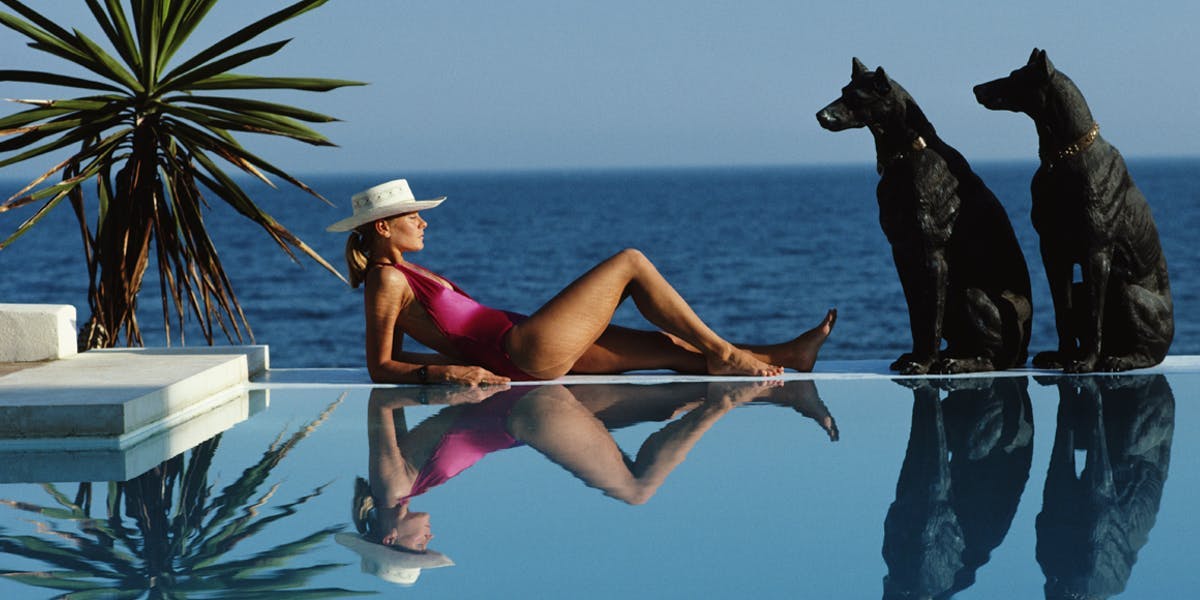
Sometimes, looking at Slim Aarons' shots, it feels like scrolling through an Instagram feed: vintage images of wonderful places, with beautiful, rich and famous people doing cool things. Or better still, as Aarons himself liked to describe his photographs, “Attractive People Doing Attractive Things in Attractive Places”.
To think that his career as a photographer began in a completely different way, in war. In fact, at the age of 18, in 1934, he enlisted in the American army and took up service as a photographer at the West Point Military Academy. There, he met director Frank Capra who at the time was making a film about war exploits and through which Aarons was sent by Yank magazine to Europe.
See also: On and Off the Canvas: Art's Most Famous Muses
With his Leica in hand (he flatly refused the Speed Graphic that was delivered to him upon his arrival, too cumbersome to use), the young photojournalist documented drama and fights, particularly that of Montecassino. It was during the war that he met George Silk and Carl Mydans, photographers of Life magazine and whom Aarons had worshiped since he was a young boy. The three remained together throughout the Italian campaign, and after an injury during the invasion of Anzio, which also earned him a Purple Heart, Aarons arrived with his companions in Rome, just in time to witness freedom and to document that which would become the cover of Yank in July 1944: an American soldier holds a child in his arms in the middle of the joyful crowd.
After you've seen a concentration camp, you really don't want to see any more bad things.
After the war, Aarons opened an office in Rome and started working for Life. When the famous magazine proposed he return to the front in Korea, he refused and moved to Los Angeles. He later said: “After you've seen a concentration camp, you really don't want to see any more bad things.” It was from combat that he discovered, “The only beach worth landing on is decorated with beautiful, semi-nude girls tanning in a tranquil sun”.
Thereafter his life changed. He married Rita Dewart, whom he had met in the editorial office of Life, and began collaborating with Holiday magazine, which at the time was in a moment of revolution following the arrival of the new artistic director Frank Zachary, who enlisted some of the hottest photographers on the international scene: Henri Cartier-Bresson, Arnold Newman, Tom Hollyman, Fred Maroon, John Lewis Stage – and Aarons, who soon became the backbone of the magazine.
See also: The 11 Most Expensive Photographers
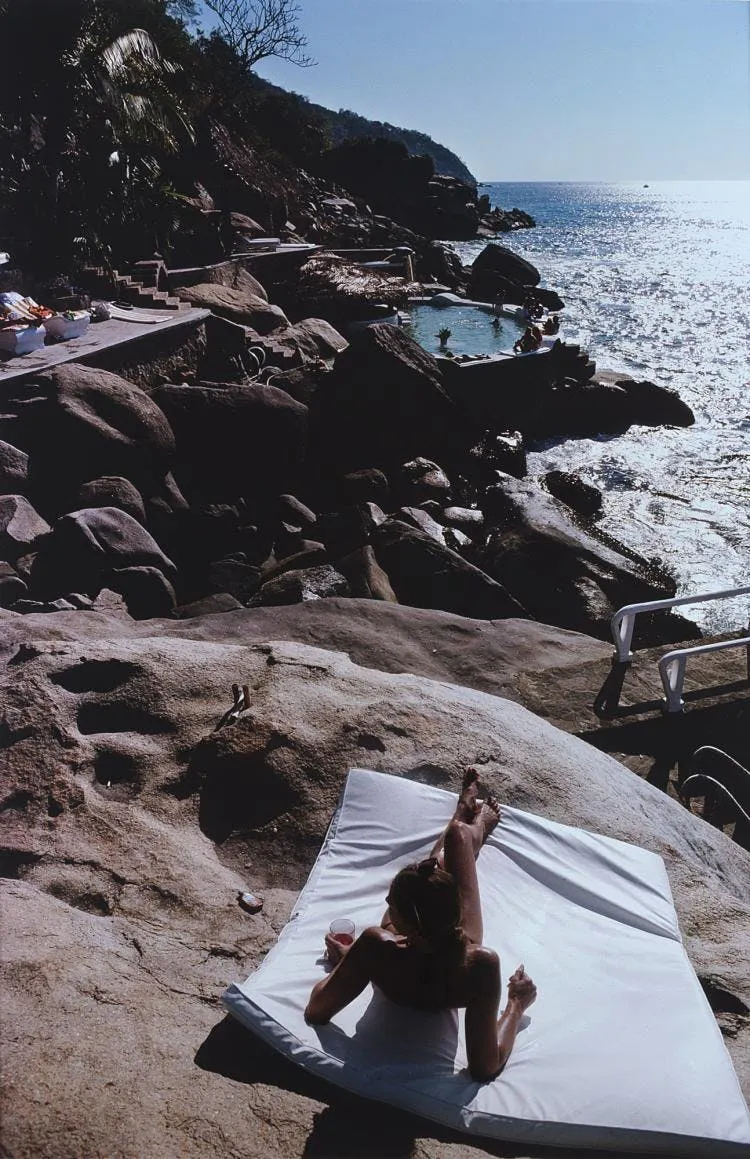
Aarons thus passed from war photographs to glossy shots of the Hollywood jet-set, of the sumptuous pool parties between Palm Springs and Acapulco, of the beaches of St. Tropez and the Amalfi Coast, and all of the glittering world that made him one of the most loved photographers ever.
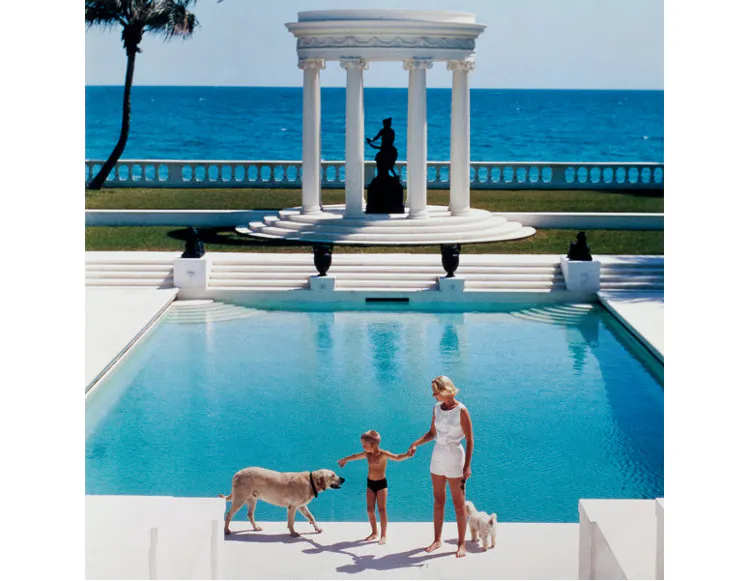
In 2002, Aarons told The Independent: "They would invite me to one of their parties because they knew I wouldn't hurt them. I was one of them." The peculiarity of Aarons was precisely that of having represented a part of the society of the time in its daily normality, made up of celebrities, wealth and good life, but without any kind of artificiality. Aarons’ photos “made the modern rich sexy”, who were happy to welcome him into the high society.
They would invite me to one of their parties because they knew I wouldn't hurt them. I was one of them.
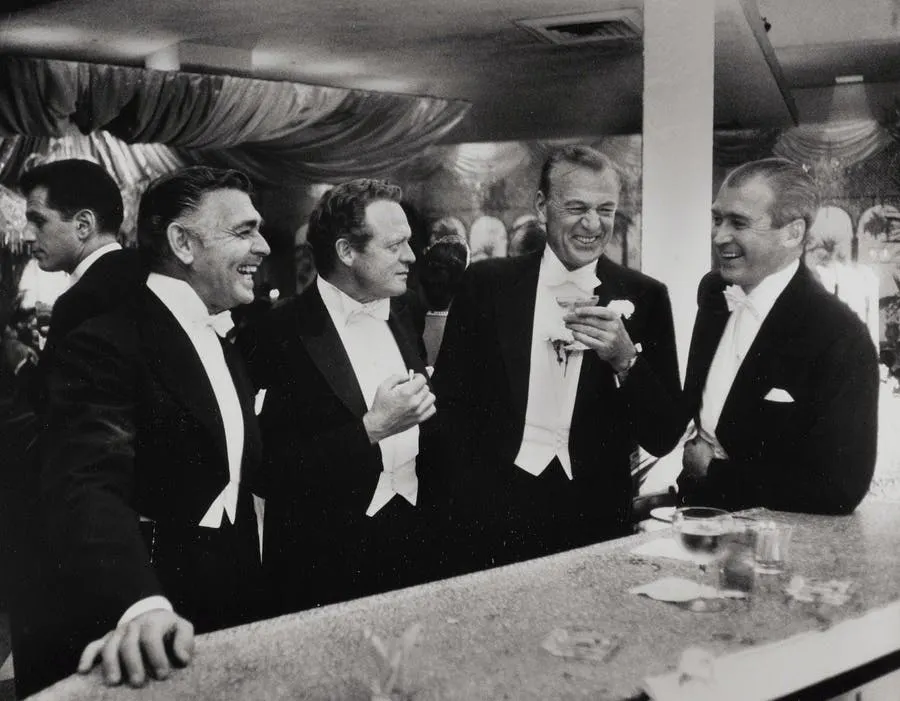
Among his most famous shots is Kings of Hollywood: New Year's Eve 1957, Crown Room of the Romanoff restaurant in Hollywood, starring Clark Gable, Van Heflin, Gary Cooper and James Stewart. Aarons loved the world of cinema and the world of cinema loved him. Directors, in particular, seemed interested in his above-average height (1.95m), but his diminished skills as an actor were often the subject of mockery and amusement. It seems that behind that famous shot at Romanoff there is just a moment of hilarity linked to his limited acting skills. Alfred Hitchcock, however, so fascinated by Aarons, became inspired by him for the protagonist of Rear Window, a photojournalist played by Jimmy Stewart.
See also: Cindy Sherman: An Overexposed Psyche
I don't do fashion. I take photos of people in their own clothes and that becomes fashion.
In those years, Aarons' photos were changing the fashion world. What he clicked automatically became a trend. In 1968, he portrayed Peter Pulitzer in khakis and fashion magazines suddenly went crazy for the garment. Aarons declared: "I don't do fashion. I take photos of people in their own clothes and that becomes fashion" – a testimony to how widespread and (perhaps) unintentionally powerful his photos were in the collective imagination.
See also: The 8 Most Popular Fashion Brands
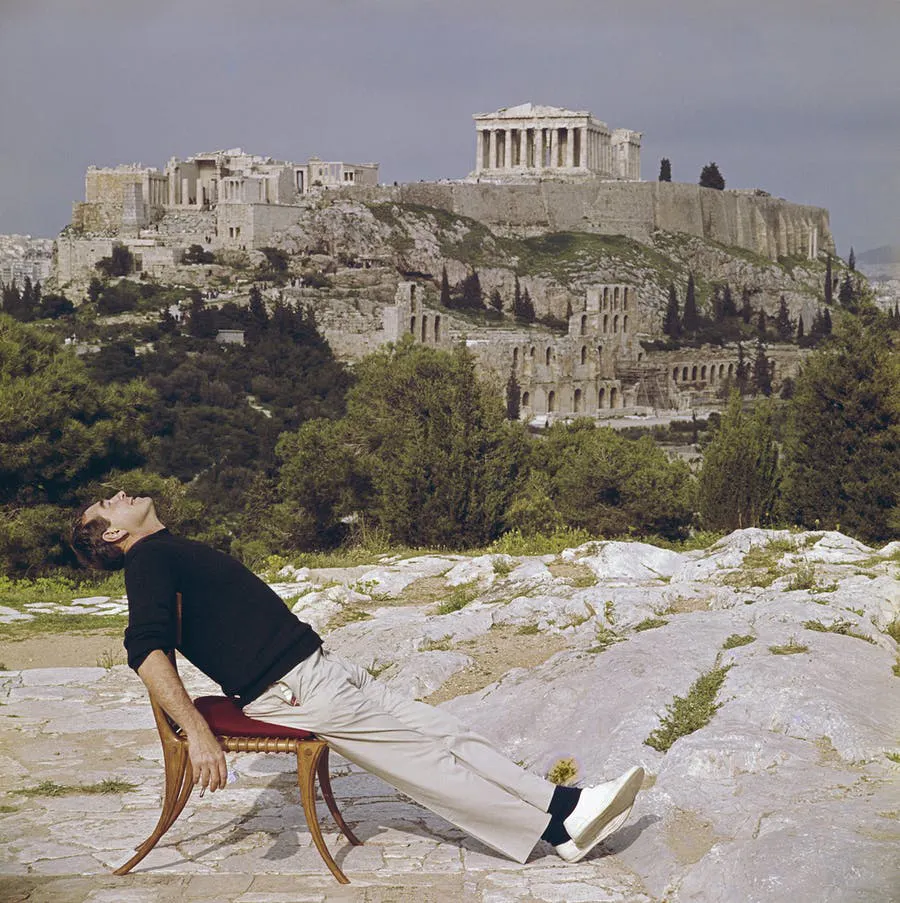
In 1974, Aarons published his first book of his first collection of photographs, Wonderful Time: An Intimate Portrait of the Good Life, now considered the ‘Bible’ of lifestyle. At the time, however, it did not have its expected success: with a cover price of $35 it only sold about 20,000 copies, also not helped by an unpleasant review by the critic Christopher Lehmann-Haupt of The New York Times who called it "repelling".
Aarons continued to work with Holiday's Frank Zachary, who meanwhile became the Editor-in-chief of Town & Country. In 1990, they both retired and Aarons went on to sell his photographs to various magazines around the world. In 1997, Mark Getty, who had just launched the Getty Images photographic archive, came to his door with an offer to buy his entire archive. Aarons agreed, later recounting that he made that decision as the company he had documented for decades no longer existed and that the public would appreciate the idea of being able to access those images of luxury and success.
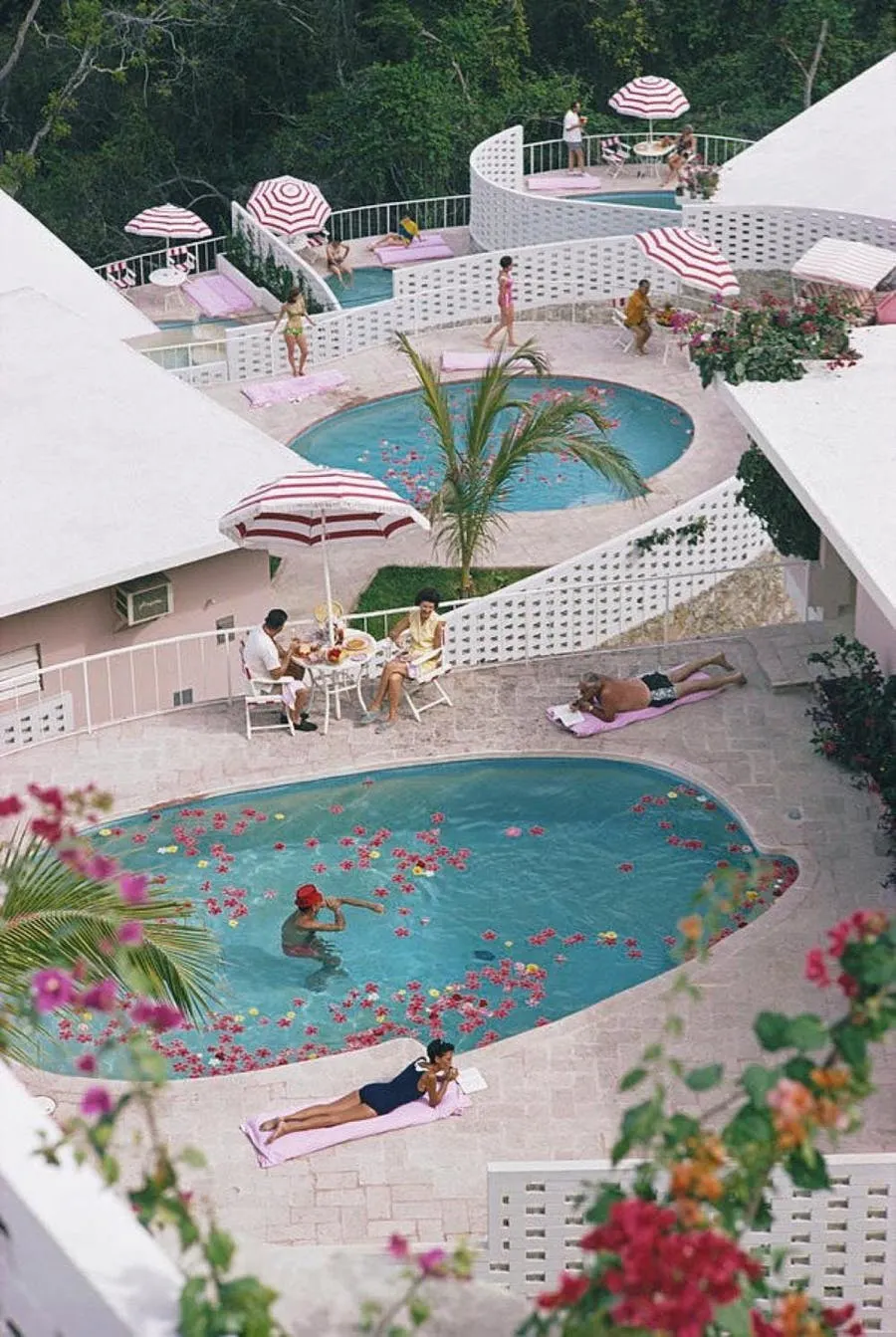
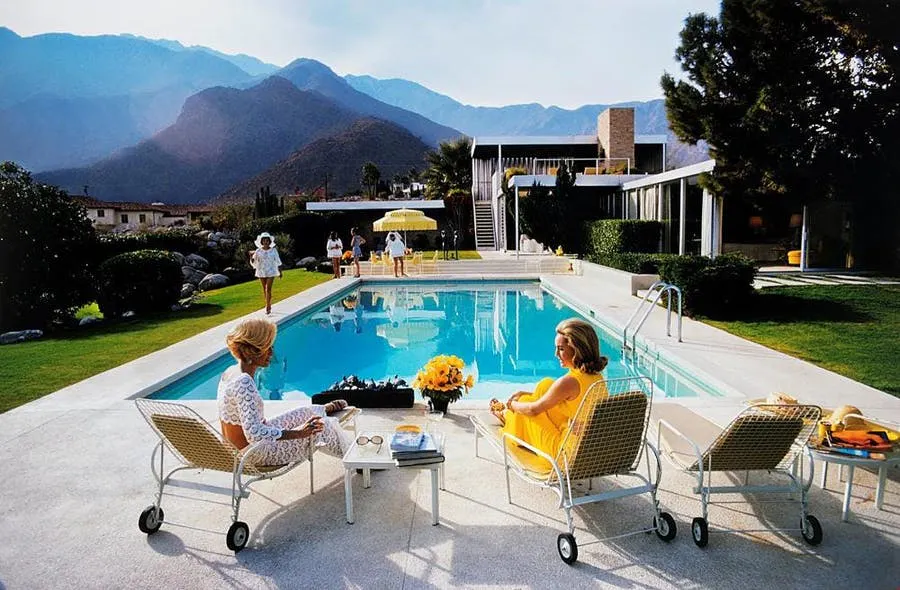
Certainly, the wide availability of Aarons’ images online has affected his auction results. When his iconic shots are featured in photography catalogues, they sometimes reach over £10,000, others under £1,000. His Poolside Gossip, circa 1970, managed to achieve €15,600 (£12,199) at the French auction house Artcurial in 2014.
Through his images, Aarons was able to tell a piece of society history of the second half of the twentieth century. He saw himself as a “photojournalist” and a “storyteller,” his daughter Mary declared in an interview with Vanity Fair, and, above all, she added, “Every picture told a story.” His books have now become an anthem of good taste and there is virtually no designer who doesn’t have a copy of one of his famous collections of photographs ready to leaf through (he published two other volumes: Once Upon a Time and A Place in the Sun).
We like to think of Aarons as a forerunner of social media. His shots, which tell a glossy world of "Attractive People Doing Attractive Things in Attractive Places" have completely rewritten the rules of photography and communication. Today, his iconic images are more current and sought after than ever.