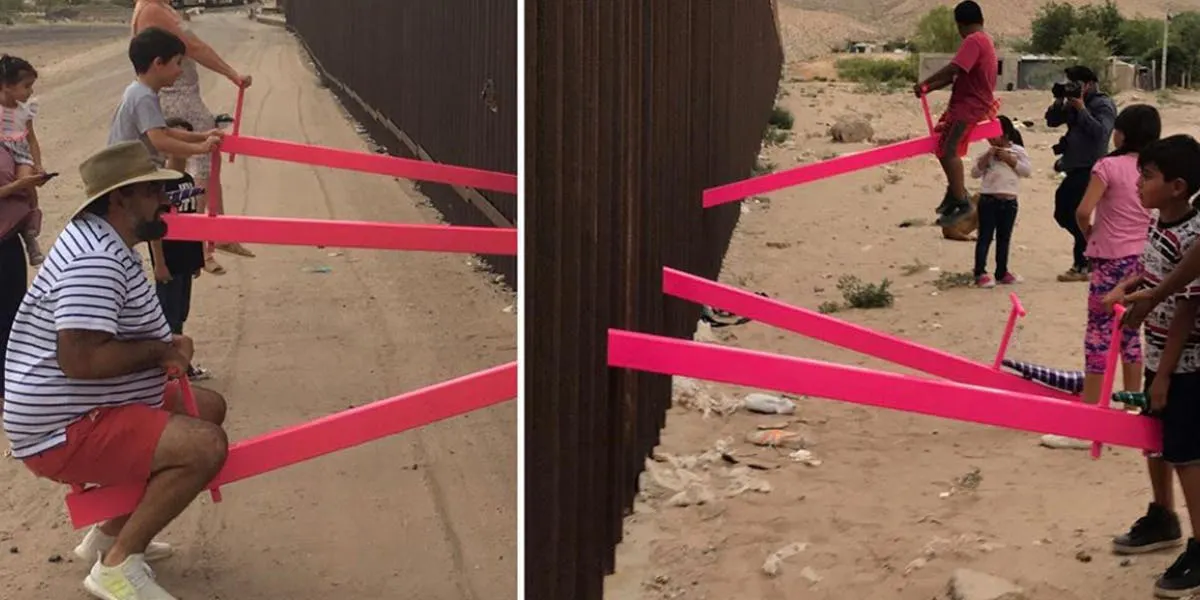
Teeter-Totter Wall, an installation of three bright pink seesaws spanning the US-Mexico wall, allowed children of the two countries to play in tandem with each other, despite the wall that divides them. The project was the brainchild of architectural studio Rael San Frantello, the collaboration of an interior design professor and an architecture professor at San Jose State and UC Berkeley respectively. It had been in the works for 10 years, but due to the recent climate, now seemed the best time to realise the project.
“The border is a literal fulcrum for US-Mexico Relations, and building walls severs those relationships,” Virginia San Fratello told Artnet News. “The wall, and the unfortunate politics of the wall, not only separate countries, but regions, cities, neighbourhoods, families, and more recently, a separation of children from their parents.”
The three seesaws were installed at the border of El Paso, Texas and Juarez, Mexico for half an hour and created a brief aura of happiness in an otherwise desolate and sobering situation. The bright neon pink of the see saw was chosen in a deliberate contrast with the austerity of the metal wall of Sunland Park.
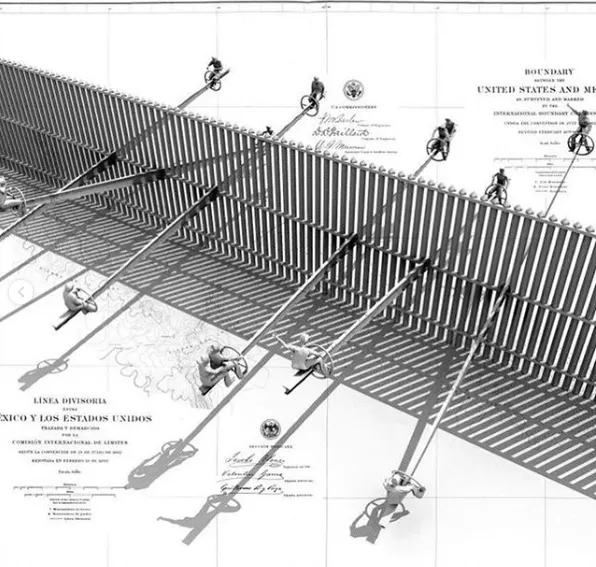
The symbol of unity of these seesaws has drawn praise and considerable media attention.
"Art is such a powerful vehicle for change," announced The Refugee and Immigrant Center for Education and Legal Services (RAICES) on Twitter. "A beautiful installation at our southern border that reminds us that: “Actions that take place on one side have direct consequences on the other.” We are all connected. We are all one."