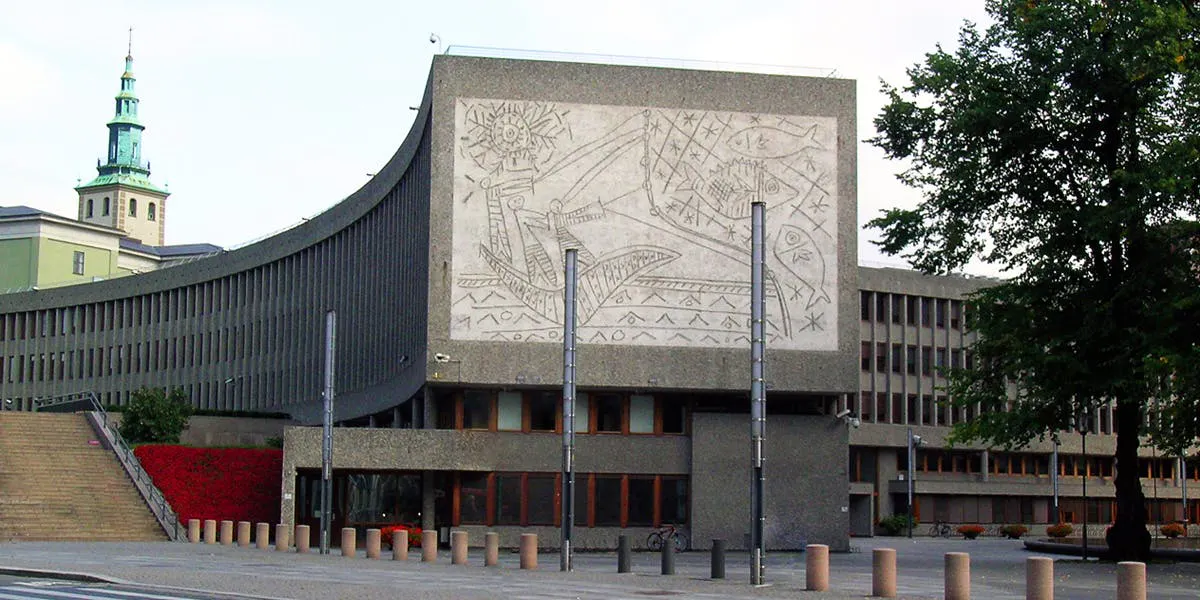
The 'Block Y', a complex of government offices designed by Erling Viksjø in 1969, is at the heart of a battle between the Norwegian government and cultural organisations, including MoMA. Named for its shape, the Block Y includes frescoes on concrete produced in collaboration with Norwegian artist Carl Nesjar based on drawings by Pablo Picasso. On one of the façades is the fresco Les Pêcheurs, which depicts three sailors trying to hoist an enormous net of fish in their boat, and in the hall is, La Mouette, which illustrates a seagull gobbling a fish.
The building survived the sinister bombing of far-right terrorist Anders Breivik in 2011, which killed eight people and damaged the neighbouring building, Block H (which also features works by the Cubist artist). Empty since the tragic event, the premises of Bloc Y are today the subject of a demolition plan introduced by the government in 2014, stating that maintenance is not "economically viable".
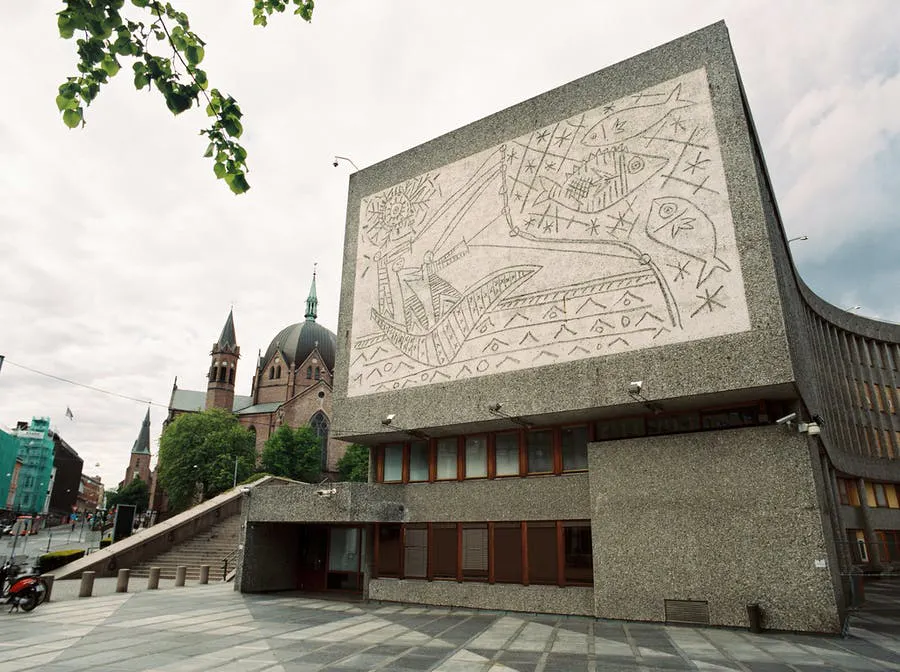
Politicians have ensured the preservation of the murals, which will be dismantled and transferred to two new structures in the government district of the capital, but the idea is controversial. Several heritage organisations have expressed that the transfer could weaken the works, even damage them. According to The Art Newspaper, work to dismantle The Fishermen began two weeks ago. “Site workers have started drilling, but this is worrying because when they start moving the mural, it will crack," said Gro Nesjar Greve, daughter of artist Carl Nesjar. "No one explained how they were going to do it. The wall is the work."
See also: How Cubism Changed the World
In a letter sent to the country's Prime Minister, Erna Solberg, and to the Minister of the Environment, Sveinung Rotevatn, New York's MoMA expressed its concerns: "The demolition of the building complex would not only constitute a significant loss of the Norwegian architectural heritage, but would also make any attempt to recover or rehabilitate Picasso's frescoes regrettable." The institution is also said to have asked politicians to "reconsider the authorisation for the demolition permit".
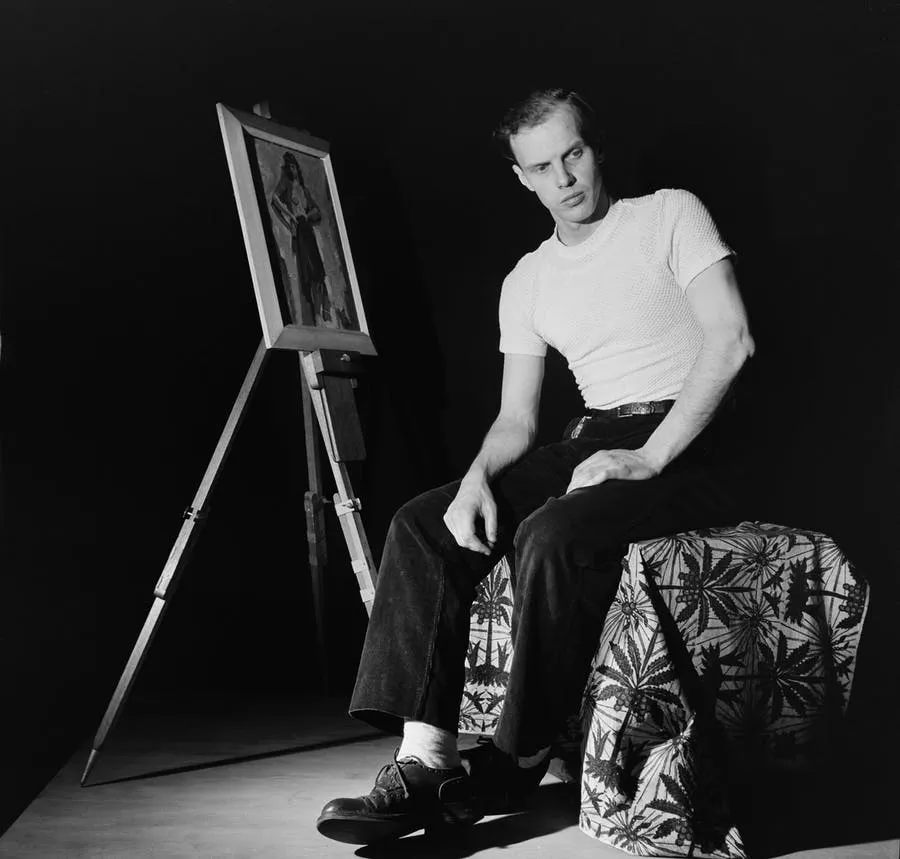
The controversy surrounding the frescoes was joined by protests from residents of Oslo, who also wanted to keep the building, and were seen demonstrating in the deserted streets of the neighbourhood. For them, the Y block is a "monument illustrating the reconstruction of Norway after the war" and one of the symbols of the development of modern society. "Block Y is an emblematic building that survived a terrorist attack and now we want to demolish it without anyone really knowing why," said Tone Dalen, one of the leading figures of citizen resistance. The government has said that while the decision has been difficult to make, it remains essential. According to the Minister of Modernisation, Nikolai Astrup, the demolition of the site “will improve safety and accessibility for cyclists and pedestrians, will lead to a more open and greener space as well as offices adapted for future ministries."
The three works in Block H are not threatened and will be restored at the same time as the building. Buildings Y and H were erected in the capital's Regjeringskvartalet district in 1969 and 1958 respectively, and are emblematic of Norwegian modernist architecture. One month before the 2011 terrorist attack, the two structures were on the verge of being classified as historic monuments.
See also: 19,000 Stolen Artefacts Recovered by Interpol
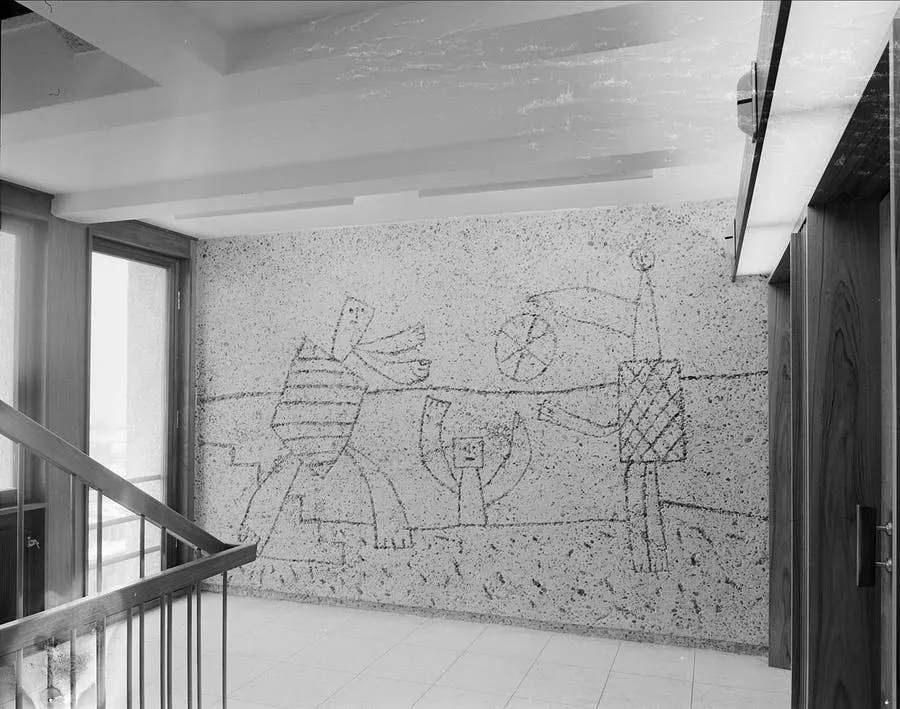
After several years of experimentation, the architect Erling Viksjø and engineer Sverre Jystad patented 'naturbetong' in 1955, a method of pouring and treating concrete that allows art to be carved in its façades. With the collaboration of artist Carl Nesjar, Viksjø had given birth to a new art form, according to which decorations are not added to a building, but engraved directly in its structure.
Nesjar visited Picasso for the first time in France in 1957, and showed him the photos of his work with Viksjø. Enthusiastic about the prospects for this new technique, Picasso took part in the project and produced all his sketches for free.