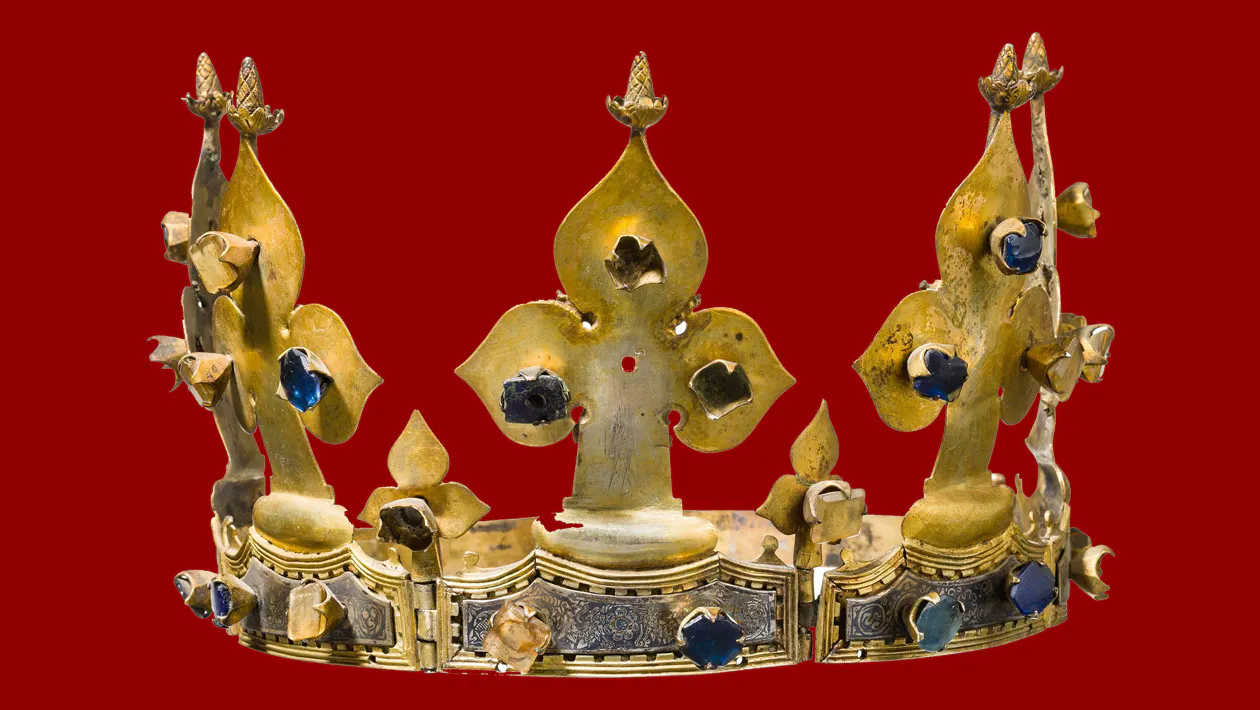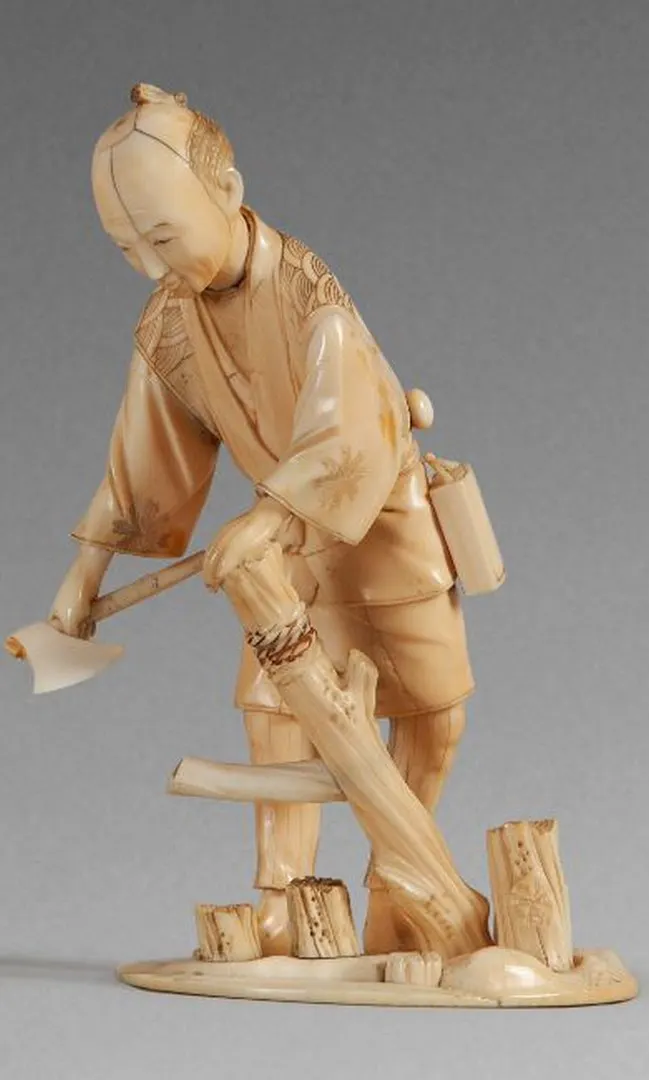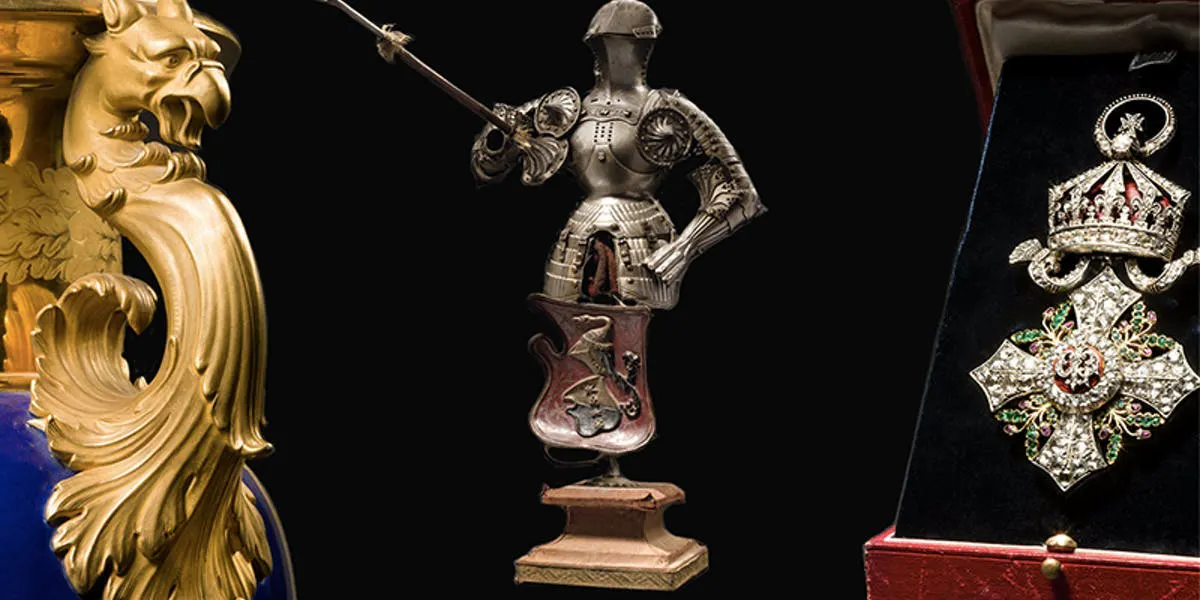
Nearly 9,000 objects will be shown at Hermann Historica next month. Several auction sessions will be held in theaters and online on 11 and 12 November with ten hours of sales per day and will begin with a firearms session. The selection covers five centuries of history and includes 1,530 lots of both ancient and modern weapons.

Lot 21, a luxurious and ornately gilded Teschinke, was made around 1650 in the Bohemian town of Cieszyn (known as Teschen in Germany), which gave its name to this type of long shotgun.

On 13 and 14 November, 1,050 lots with similar levels of craftsmanship and antiquity will be put up for sale. One of the highlights of the session will be a pointed Assyrian bronze helmet dating from 8th-7th century BC. The object was designed in Mesopotamia, and according to the auction house has survived the test of time to an incredible degree.

Borobudur, located on the Indonesian island of Java, is home to one of the largest Buddhist temples in the world. The larger-than-life andesite head that will be on sale hails from this site and was acquired by Joseph Maximilian Hartl, the future consul of Germany, on a trip to China in 1912.

Lot 2435 has a prestigious heritage, as this style of vase was produced on behalf of Emperor Wilhelm I by the Berlin Royal Porcelain Manufactory starting around 1833. From a private French collection, the vessel, about 69 cm high, depicts the Kronprinz Palace in Berlin and the Babelsberg castle in Potsdam set off on a royal blue background.

Over 14, 15, and 19 November, the 417 lots of the "Cabinet of Curiosities" catalog will be sold. Lot 2835 is one of many objects that reflects the enthusiasm of 19th-century artisans for referencing the aesthetics of bygone eras–although it was produced in the 19th century, this enameled and gilded champlevé copper plate was designed in a typical 12th-13th century style. The champlevé is popular decorative technique, in which hollows are cut into the surface of metal and filled with coloured enamel.

A similar revival piece is the miniature model of armor in Lot 3649, which will be up for auction alongside more than 700 other lots during the "Ancient Weapons of the Whole World" sale, to be held on 15 November. The miniature, although modeled after a Nuremberg suit of armor dating from around 1500, was manufactured before 1923 by the Munich blacksmith Schneider.

The imposing halberd of lot number 3665 was designed in 1571 in Augsburg for the guard of Emperor Maximilian II. The model is etched with fine ornamentation on the upper part, namely the spearhead, axe iron and beak.

The Kilij, a one-handed sword of Turkish origin, was standard equipment for the Ottoman army from the 15th century. The present copy in Lot 3304 dates from the second half of the 17th century and features a nephrite neck and ornaments affixed by the gunsmith Hajji Sunqur.

Another highlight of the sale is a set of Japanese tsubas, to be sold individually, 70 of which date from the early 17th century to the early 20th century. A tsuba is the hand guard of a Japanese sword, preventing the bearer’s hand from slipping from the handle to the cutting edge of the blade while also acting as a counterweight to balance the weapon.

Moving on to the "International Orders and Historical Military Collectibles" to be held on 18 and 19 November, there are are 1157 lots with a wide range and variety. One notable piece is lot 4392, a sumptuous ceremonial sword from 1808 that was given to Major David Ogilvy by the Brechin Volunteer Corps.

A historical object as rare as it is precious is Lot 3853, the badge of the Grand Cross. This order of civil merit was instituted by Prince Ferdinand I of Bulgaria on August 2, 1891, and was only rarely awarded with diamond-encrusted badge. This badge is made of partially enamelled silver, and set with diamonds, emeralds and rubies.
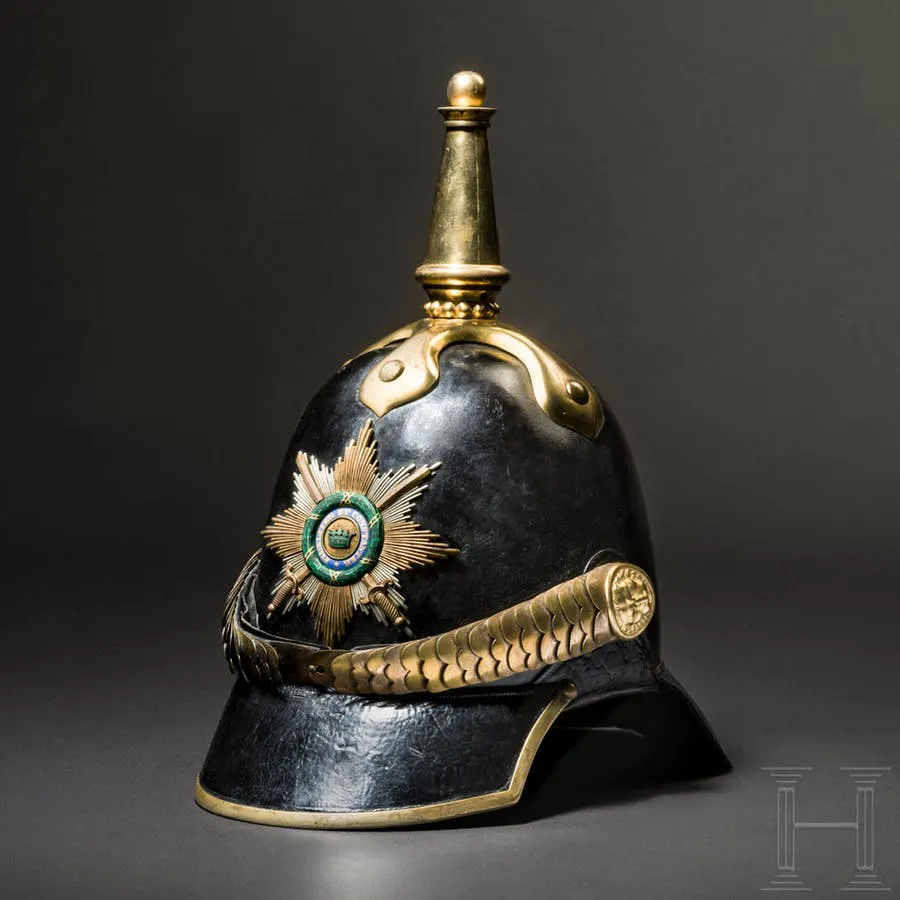
The Pickelhaube was the helmet worn by the infantry officers of the Prussian and German armies in the nineteenth century. The model represented in Lot 5178 was manufactured in 1853, and has the traditional Prussian pointed form that was later adopted by Germany as well as many other countries until the beginning of the twentieth century.
The sales marathon will end with the sessions "The Imperial Army at Feldgrau - Lacey Collection", and "Contemporary German History - Orders and Military Objects of 1919" on 19 and 20 November. If you are not able to make it to Germany, several online auctions will occur in addition to the live auctions.
The auctions will be held at the premises of Hermann Historica: Bretonischer Ring 3 in Grasbrunn near Munich, Germany.