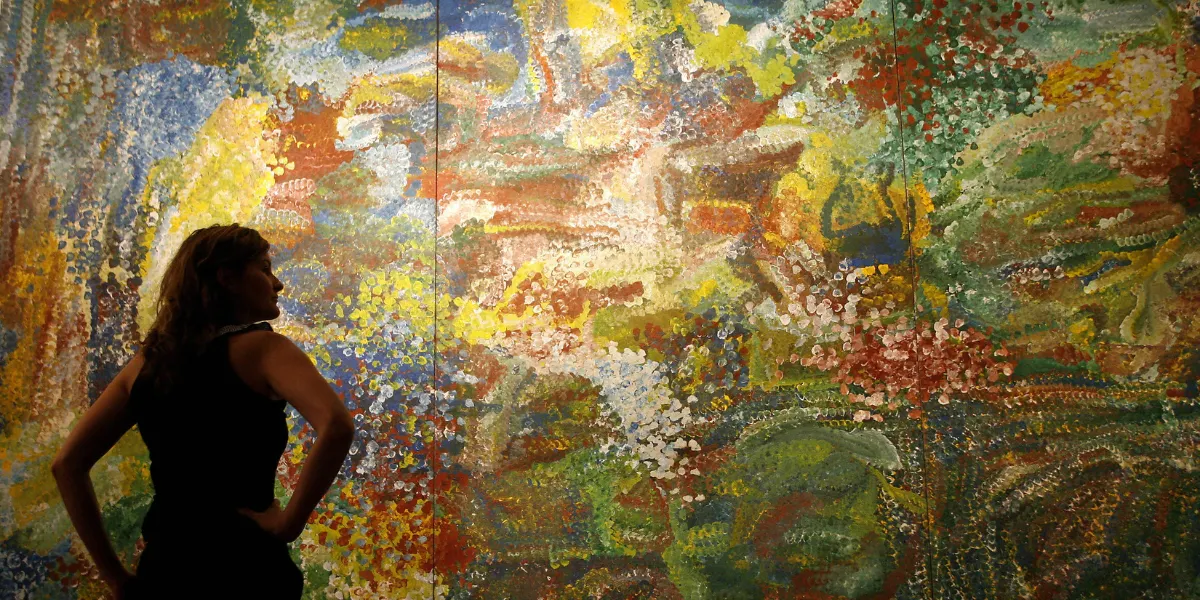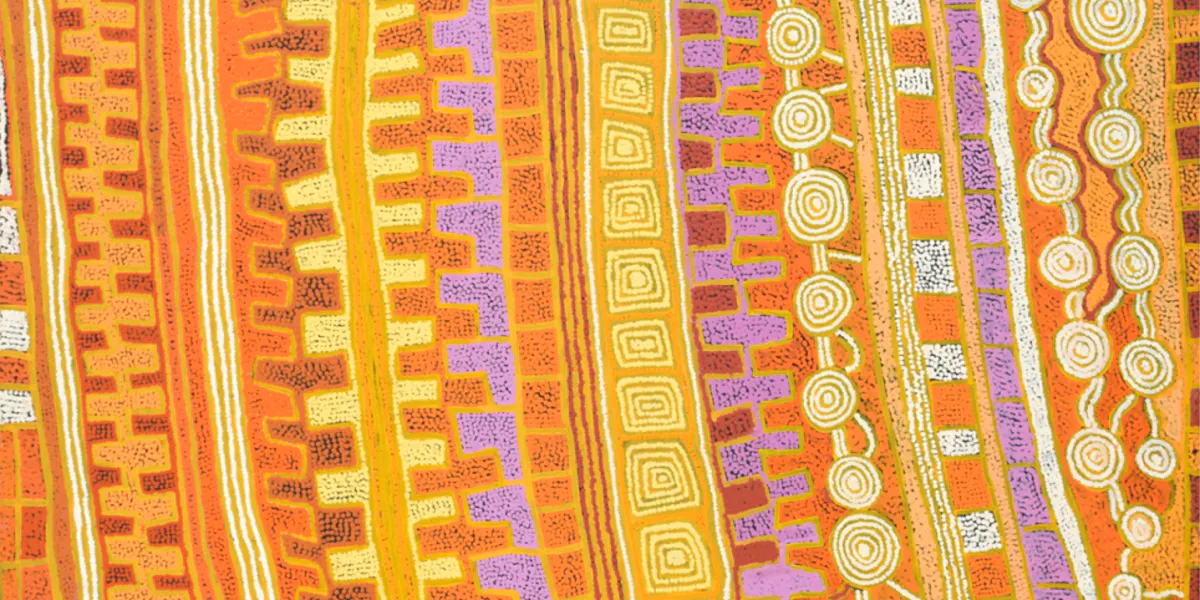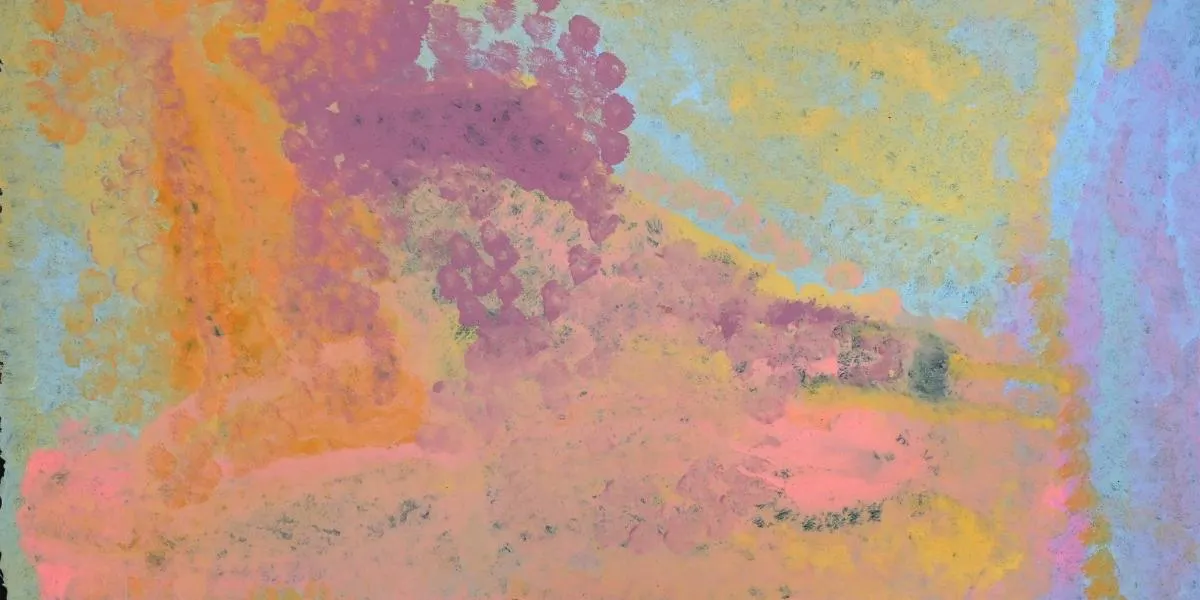
Cooee Art, the oldest Aboriginal art gallery in Sydney, Australia, will host its Indigenous Fine Art Auction on 8 March. Featuring over a hundred lots, the sale boasts mostly traditional paintings, but also painted totem poles, spears, boomerangs and figurines. Aboriginal art is known for its deep spiritual meanings, with iconography and symbols dating from 60,000 years ago, reimagined in modern compositions. Within the last century, artists began preserving these symbols and landscapes in paintings and watercolours. Each Aboriginal community has a unique history that has been recorded in these artworks and the sales of their artworks has provided for their communities in turn. Aboriginal art often focuses on Dreamings, a system of symbols that correspond to their ancestry and religion.

The top lot is Emily Kngwarreye’s Bush Potato, which reflects a stage in the growth cycle of the wild yam, an important food source for the Aboriginal desert people. The motif of the yam can be found in all her work, though it is not always obvious. The yam cycle is a representation of fertility and the life source of future generations. The beautiful tones of pumpkin, coral, yellow and ochre are warm and inviting, ensuring a relationship with nature and the harvest. Her work is currently on view at Gagosian in Paris and her paintings can be found at the Tate Gallery in London.
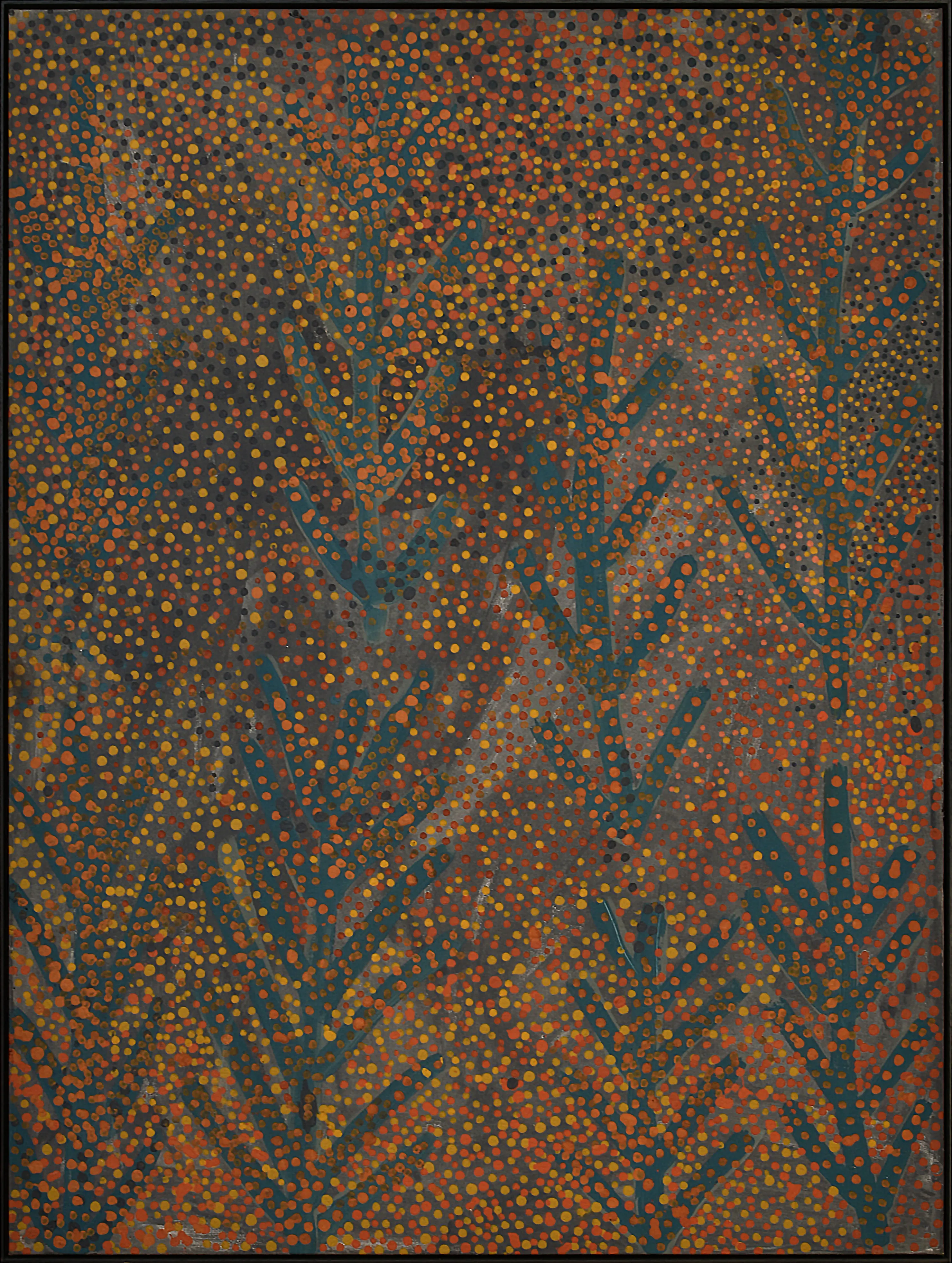
Another important work also by Emily Kngwarreye is Women's Dreaming. The work also has a food theme: the arrow shapes are representative of Nrange, a sacred grass seed, food for the ancestral Emu which, along with the yam dreaming, belonged to Emily and informed much of the iconography of her oeuvre. As Kngwarreye's career evolved, she moved from textile art into painting, and her work became increasingly abstract. Towards the end of her life, in the 1990s, she began to revive the use of shapes, figures and icons.
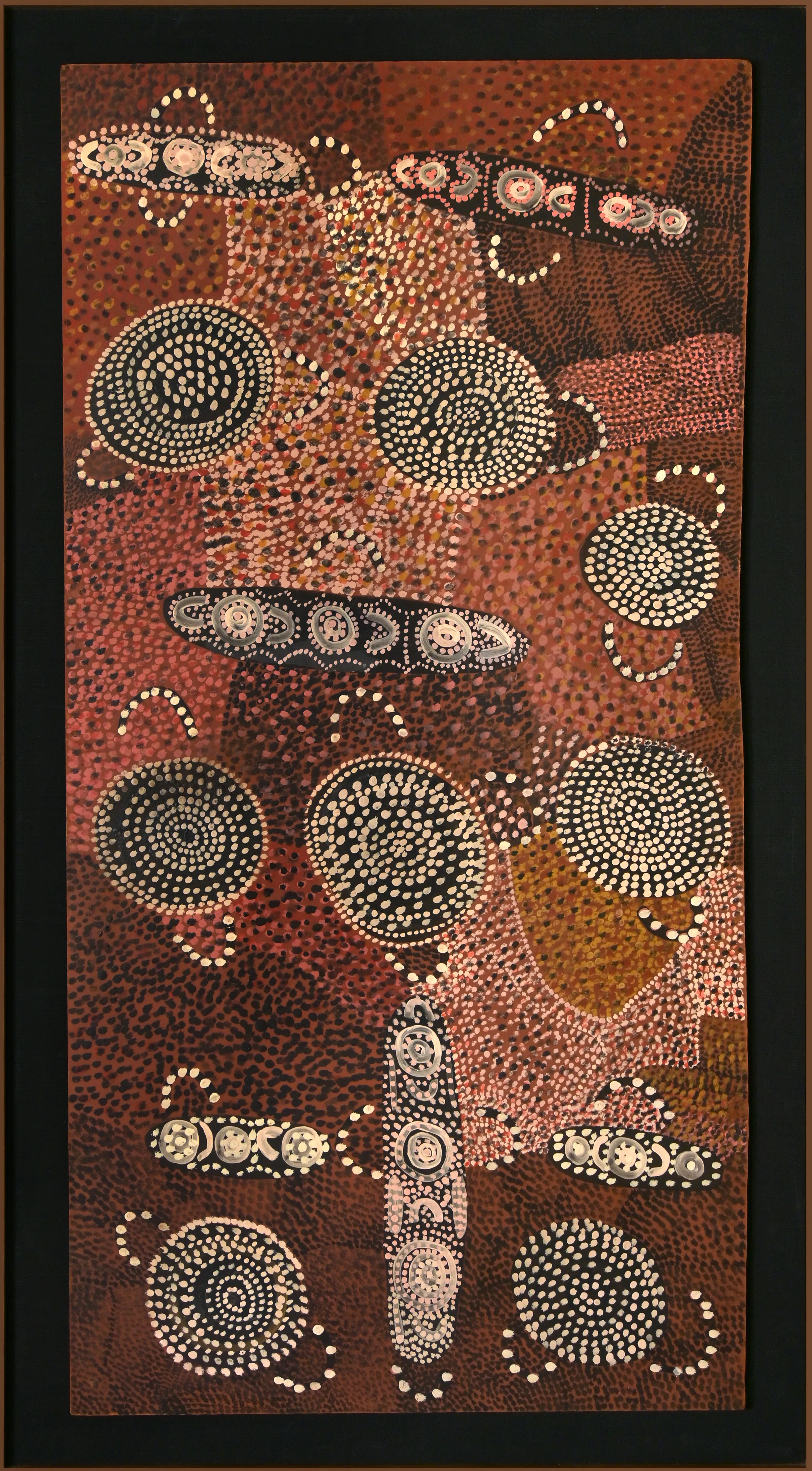
Charlie Tawara (Tararu) was a founding member of Papunya Tula, an Aboriginal artist cooperative begun in 1972 that spurred on the Western Desert art movement, which was known for their 'dot paintings'. The dots were meant to obscure the sacred meanings hidden in these artworks. In early works such as this, he depicted sacred elements and objects which, due to controversy at the time, were later eliminated from Pintupi men's paintings in favour of more secular and decorative iconography. This detailed Cave Dreaming is made of natural earth pigments on composition board.

Long Jack Phillipus was an instrumental member of the Western Desert art movement in Papunya and part of the group there that in 1971 was behind the Honey Ant Dreaming mural, a work that was the impetus for contemporary Aboriginal art. It was later removed by the European-Australian authorities in an act referred to as "cultural vandalism." In rebellion to this, Aboriginal art flourished with artists dedicated to preserving their culture and artistic traditions. His work leaned towards a softer, slightly more decorative approach, by using the traditional earth colours in harmonious ways. In this very early Possum Dreaming work, the curving line with tracks are the long journeys of the possum spirit men, the oval shapes are shields decorated with possum markings, and the oblique bands represent body paint on the corroboree performers.
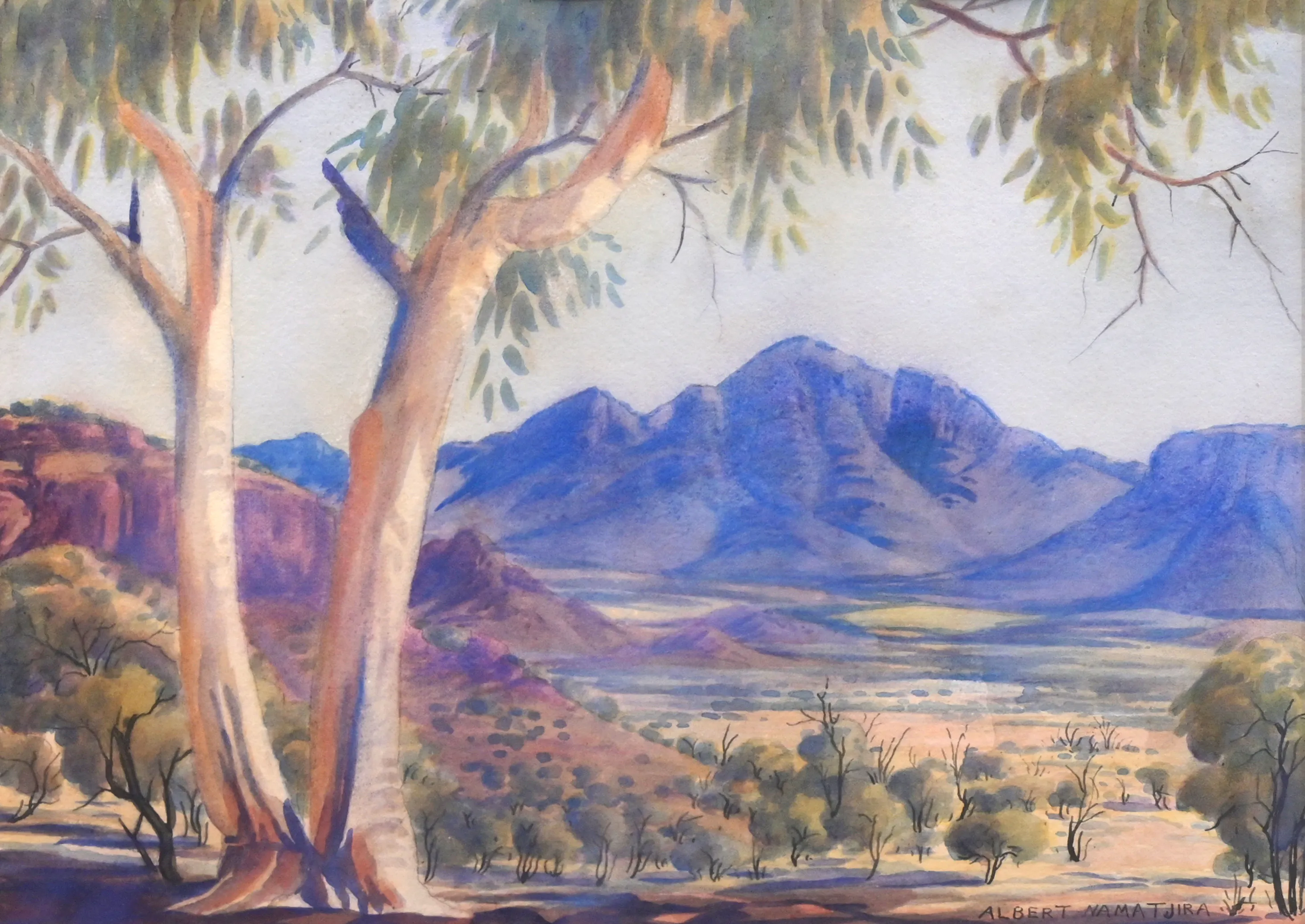
An early pioneer of contemporary Aboriginal art and considered one of the most famous Australian artists, Albert Namatjira's watercolours typically capture the high colouring of the desert landscape, the gorges and valleys of the country of his birth, and his Dreaming. His work combined compositional inspiration from Western art with traditional Aboriginal subjects and settings. This painting was purchased directly from Albert Namatjira during one of the many trips made by Terry Southwell-Keely, the instigator of the Ampol Redex Trials (car rallies) in the early 1950s. Southwell-Keely fought in New Guinea, Palestine and El Alamein during WWII, before becoming a BBC war correspondent reporting from behind enemy lines in German occupied France and Greece. This beautiful capture of the landscape in the mid-twentieth century depicts Namatjira's command of perspective and colour.