
Jean-Pierre Vasarely, known as Yvaral, was born in Paris in 1934 to the illustrious Victor Vasarely, the Franco-Hungarian painter and founder of optical art, and Claire Spinner. From the beginning he worked alongside his father, who had a major influence on his work and allowed him to explore and push the boundaries of op art. In 1960, Yvaral created the Visual Art Research Group (GRAV) with Francois Morellet, Joel Stein, Fransisco Sobrino, Horacio Garcia Rossi and Julio Le Parc.
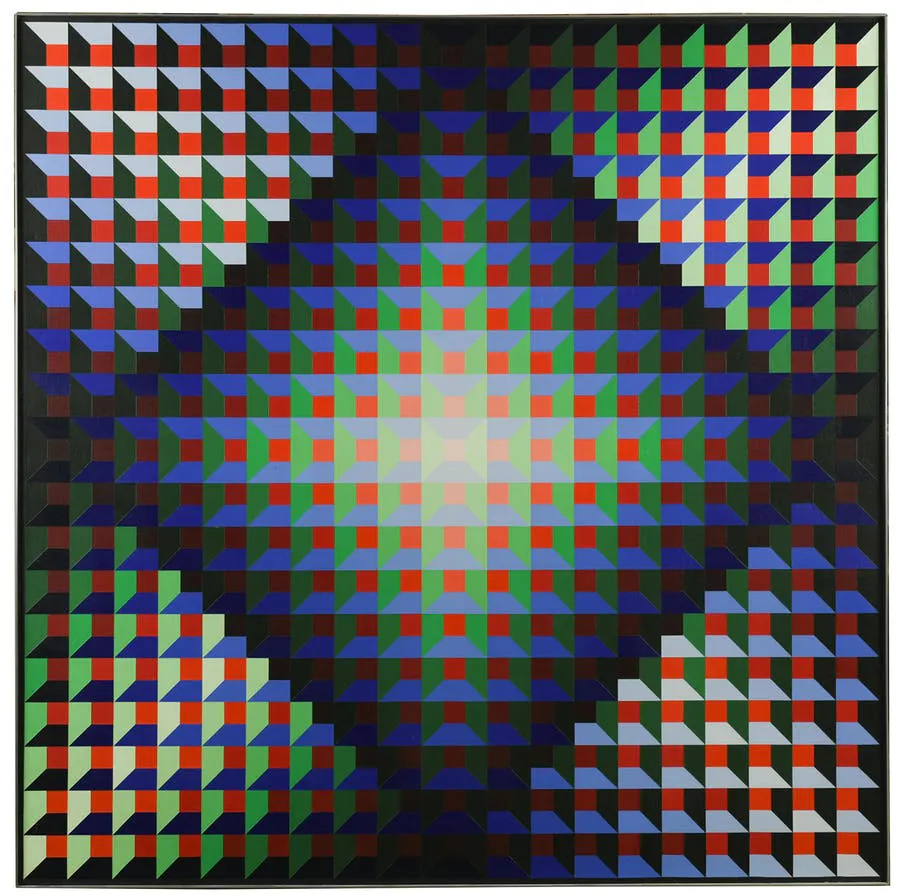
In 1972 Yvaral and his father built the façade of the building housing the headquarters and studios of RTL at 22 rue de Bayard in Paris. This was also the year that the Renault brand commissioned the duo to create their new logo, which lasted until 1992 and will forever be associated with the visual identity of the brand. The work presented for sale is a 150 x 150 cm acrylic on canvas from 1972, which has a geometric composition that is undeniably similar to works by Victor Vasarely.
Yvaral’s pieces mark the inception of’"digital art’, a term he used to define his work since 1975. Here ‘digital’ means ‘governed by numbers’ rather than ‘computer’, since Yvaral’s art predates that technology by nearly a decade.
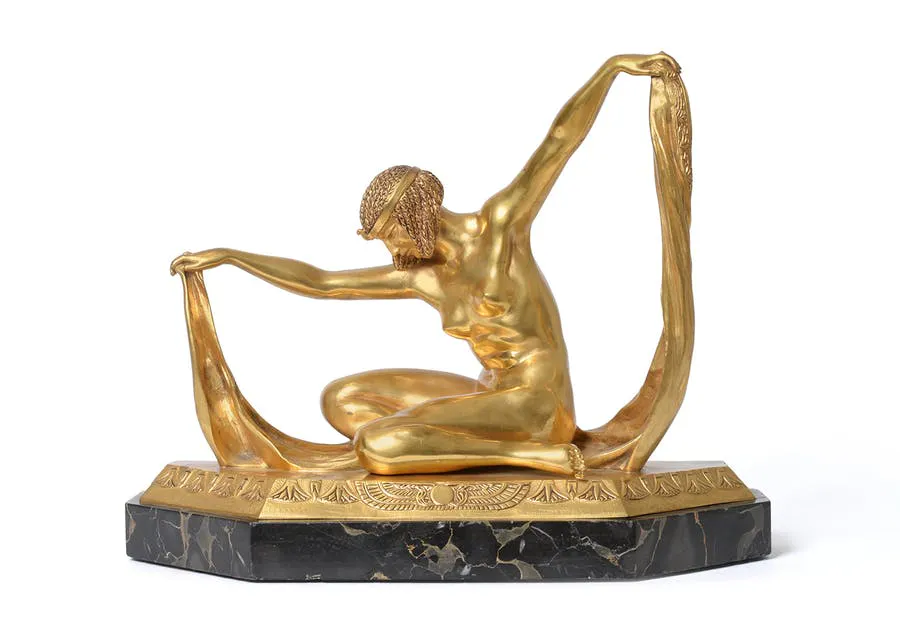
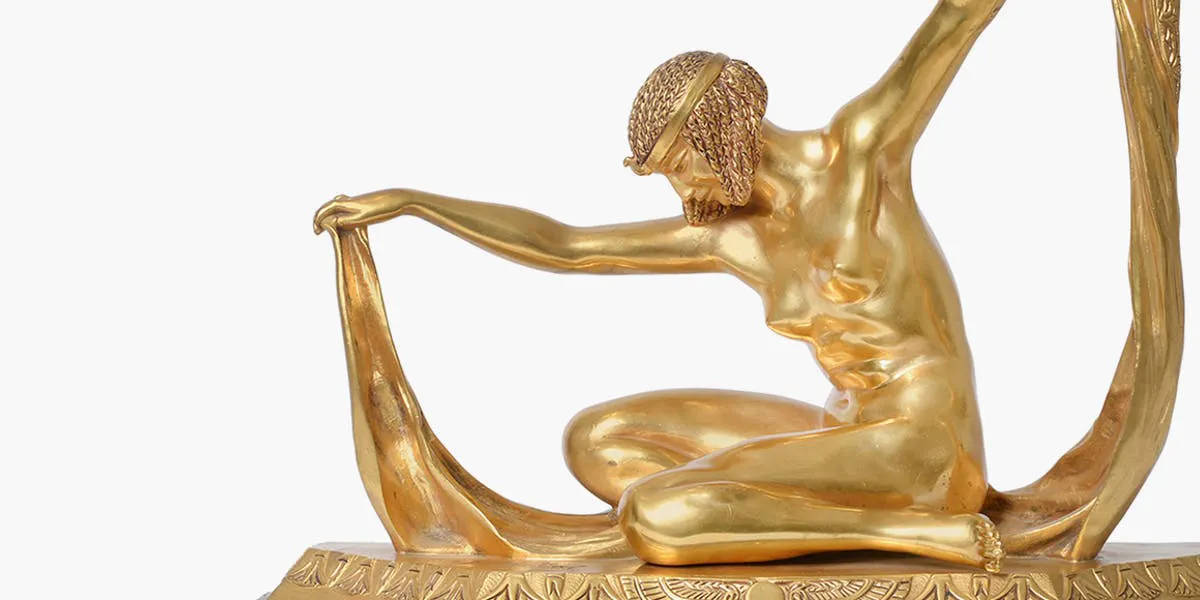
Claire Jeanne Roberte Colinet was a French sculptor active at the beginning of the 20th century, known for her Art Deco works, particularly her bronzes of exotic dancers. She received the ‘honorable’ medal at the Salon des Artistes Français in 1913, alongside Demeter Chiparus and Louis Comfort Tiffany, and afterwards she was regularly exhibited. She was fond of odalisques, dancers, entertainers, and jugglers as subjects, and she represented them in action. Isis is a nude study in gilded bronze which, like most of her works, is marked by a strong dramatic intensity.
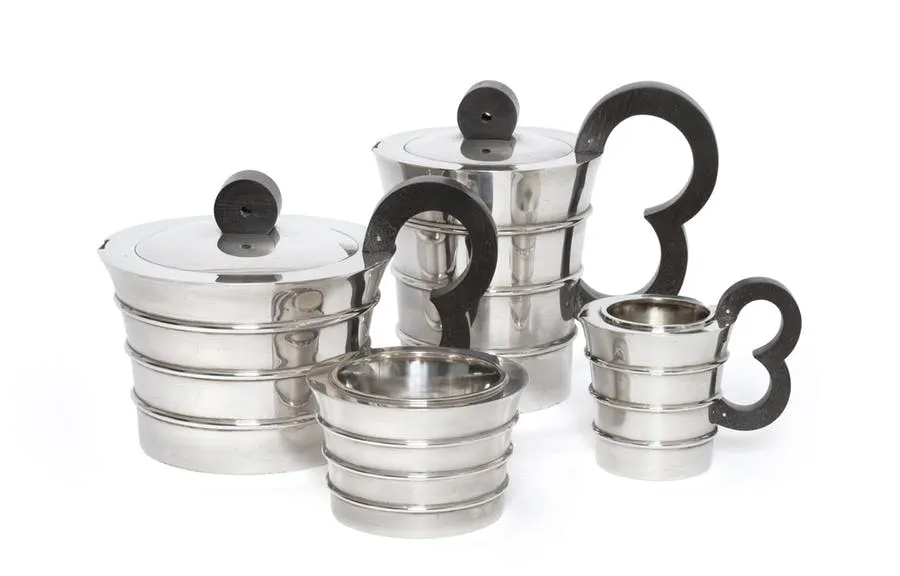
Also in the Art Deco style, this silver service was designed by Jean Élisée Puiforcat in 1936 for the British brand Elkington & Co. Puiforcat had joined the family goldsmith company owned by his father Louis-Victor in 1918, which is where he learned the craft. His artistry and avant-garde conceptions revolutionized cutlery and tableware in the inter-war period. His style is immediately identifiable, with a minimal aesthetic that highlights the metal as a material.
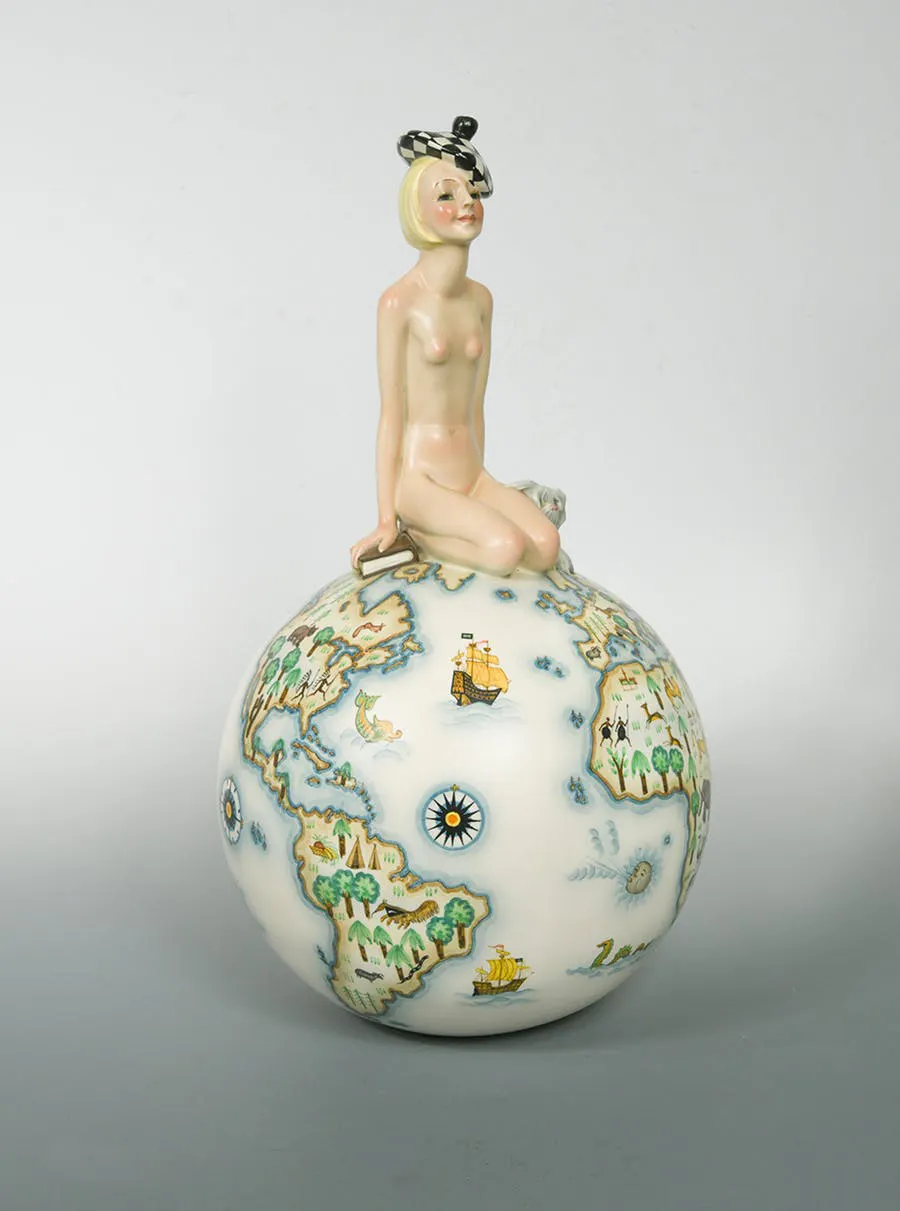
It isn’t just French artists at the sale however – on the side of international artists, there is a faience work by Helen König Scavini and Mario Sturani for the Italian brand Lenci. Founded in Turin in 1919 by Enrico Scavini and Helen König herself, the brand originally manufactured felt dolls before diversifying into ceramics and showing at the Turin International Exhibition in 1928. The Lenci workshop then began to collaborate with renowned artists and sculptors such as Sandro Vecchietti, Giovanni Grande, and Mario Sturani.
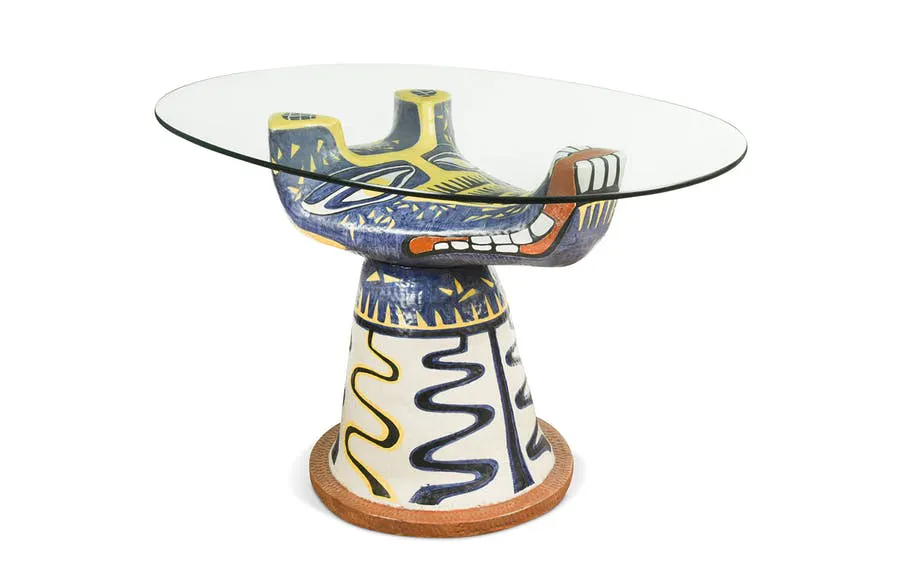
Salvatore Meli, born in 1929 in Ragusa, Sicily, was an important figure in post-war Italian design. He mainly made plates, vases and pitchers, but his technique allowed him to make much larger objects as well. A beautiful example of this is an earthenware table from 1953, which is topped with a glass plate, revealing the figure of a mythical dog in the base.
This art and design sale is being held at Cambridge auction house Cheffins on 10 October.
![Antoniucci Volti, ‘Les Parisiennes’ [detail], 1962, bronze proof with blue-black patina, height 146cm. Photo © HVMC](https://images.prismic.io/barnebys/8edc2a1c-0b58-48ed-95d6-6192c140c702_Cover.jpg?auto=format,compress)