
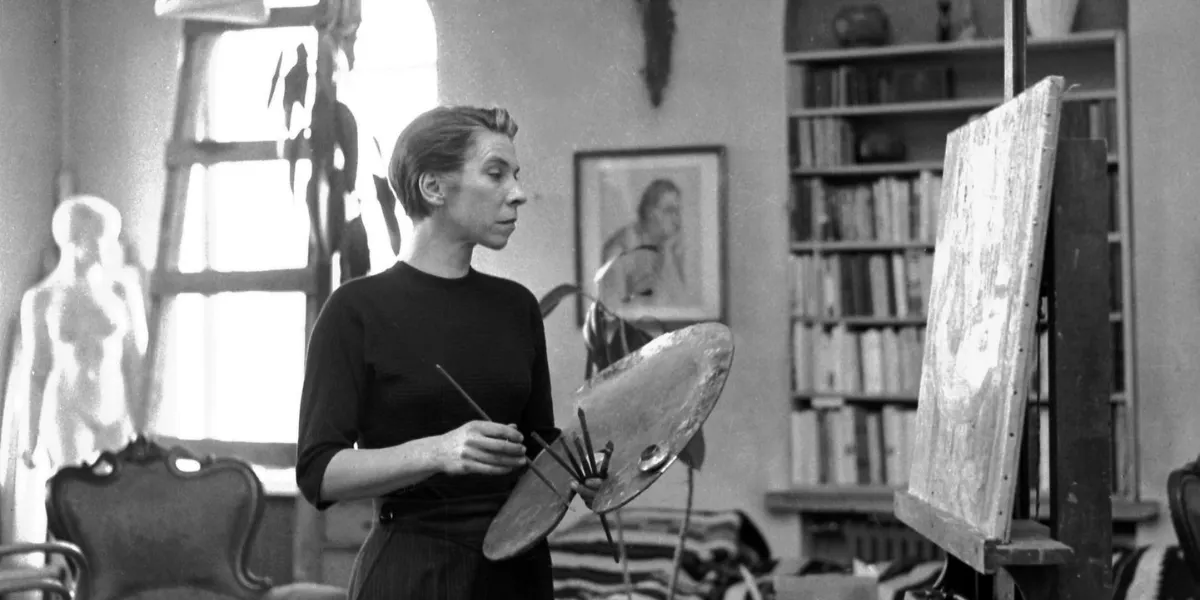
Tove Jansson was born in Helsinki in 1914 into a family of artists: her mother was a designer and illustrator and her father a sculptor. She devoted herself to drawing and writing from an early age, and at 14 began work on her first illustrated novel, Sara and Pelle and the Water Sprite's Octopuses ('Sara och Pelle och näckens bläckfiskar'), which was finally published in 1933.
In 1930, she began studying art, first at the Academy of Fine Arts in Helsinki and then at the Beaux-Arts in Paris. During her formative years, Jansson published a number of illustrations and columns in various European newspapers.
See also: Moomin Mugs: 30 Years of Collectables
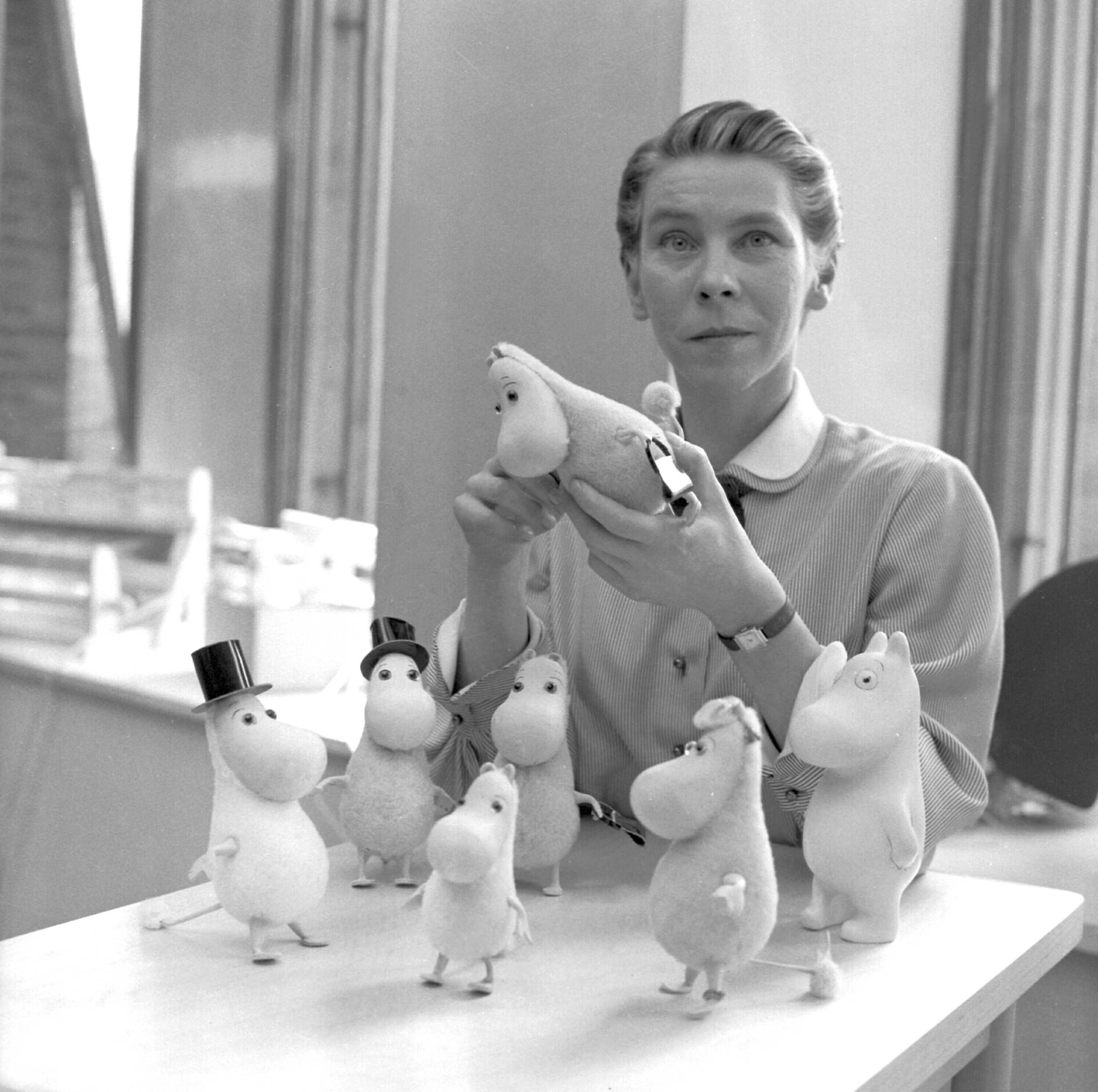
While studying in Paris, she came up against the cultural conformism of the Belle Époque and left the Beaux-Arts to take refuge in a small studio run by a Swiss artist, who later took her under her wing. Although the Moomins had been with her since childhood, it was from this point on that Tove Jansson devoted herself to their creation. The world of the Moomins became an escape from the war and what she saw as a personal failure in Paris.
Want more articles like this delivered straight to your inbox? Subscribe to our free newsletter!
It was after the Second World War that Jansson wrote and illustrated her first book about the Moomins, The Moomins and the Great Flood ('Småtrollen och den stora översvämningen'). The artist wanted to create something naive and innocent as a reaction to the atrocity of war. This first volume was not as successful as she had hoped, but the second, Comet in Moominland (Kometjakten/Kometen kommer), catapulted her to the forefront. She went on to publish six other books, either alone or in collaboration with her brother Lars Jansson. In 1966, she was awarded the Hans-Christian-Andersen prize for her contribution to children's literature. However, she gradually stopped writing the Moomins stories from the 1970s onwards, concentrating on other works until the end of her life.
See also: This Moomin Mug Set a New Record
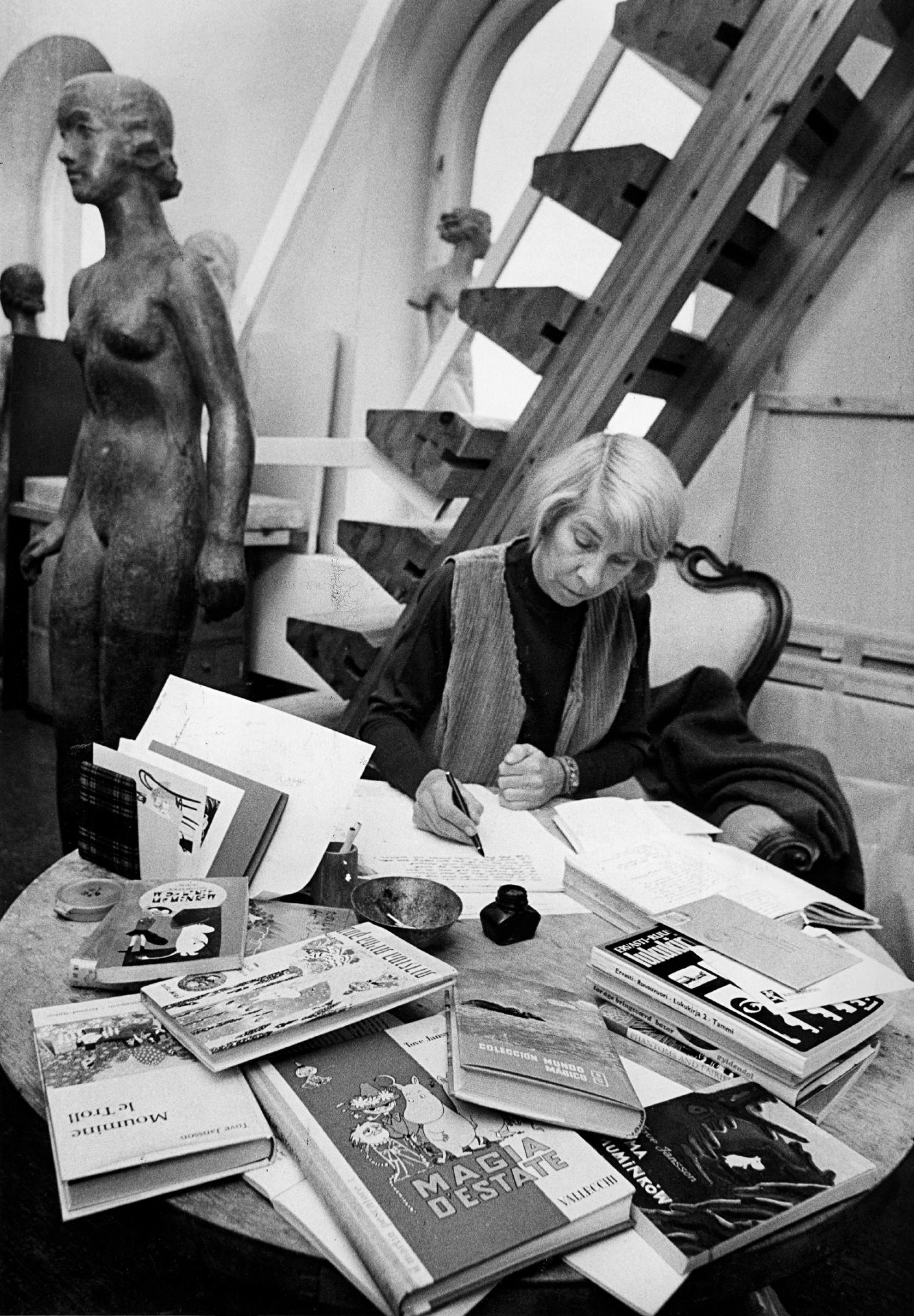
In addition to the Moomins, Tove Jansson devoted herself to writing, publishing several novels in the 1970s. She also continued to illustrate book covers, magazines and articles. It is this multi-faceted artist that the 'Houses of Tove Jansson' exhibition promises to showcase. On the five floors of 16 avenue Foch, in the 16th arrondissement of Paris, Tove Jansson will be celebrated for all her accomplishments: her impressionist and abstract tendencies, her novels, her poems, her plays and above all her personality. Tove Jansson, openly queer and homosexual, broke with the 'norms' of the time, living her life as she saw fit. The exhibition will therefore retrace her life, which will obviously include the Moomins, but will also highlight the archipelago in Finland where she spent most of her time. In other words: it's hard to separate life from work.
See also: The Woman Behind One of the World's Most Famous Patterns
This exhibition marks a welcome return to Paris for the work of Tove Jansson, who has always had a special relationship with the city, which she has often visited throughout her life, together with her partner Tuulikki Pietiä.
The 'Houses of Tove Jansson' exhibition opens in Paris on 29 September during Fashion Week and runs until 28 October as part of Art Basel's Paris+ programme. It is organised by The Community, a Paris-based art institution, in collaboration with the artist's estate and Moomin Characters.