Stay up-to-date with the antiques world

By subscribing, you are agreeing to the privacy policy. Unsubscribe anytime.

Barnebys

Barnebys HQ

Brahegatan 10
BOX 5038
114 37 Stockholm

Company

  • About Us
  • Join Barnebys
  • Our Partners
  • Press
  • Career

Explore More

  • Barnepedia
  • Buying / Selling at auction
  • Auction Houses / Dealers / Galleries

Support

  • FAQ
  • Terms of Use
  • Privacy and Cookies policy
  • Contact us
  • Barnebys Group AB
  • Barnebys.se
  • Barnebys.com
  • Barnebys.co.uk
  • Barnebys.de
  • Barnebys.fr
  • Barnebys.es
  • Barnebys.it
  • Barnebys.hk
  • All auction items
  • Categories
  • Auction results
  • Magazine
  • Ancient Art
  • Arts & Graphics
  • Asian Art
  • Books, Maps & Manuscripts
  • Carpets, Rugs & Textile
  • Coins & Banknotes
  • Contemporary Art
  • Ethnographical
  • Fashion & Vintage
  • Folk Art
  • Furniture, Design & Mirrors
  • Glass
  • Jewellery & Gems
  • Lighting
  • Medals, Arms & Armour
  • Miscellaneous
  • Music & Musical Instruments
  • Nautica, Technica & Optic
  • Photographs
  • Porcelain & Pottery
  • Postcards & Stamps
  • Sculptures
  • Silver & Gold
  • Sports & Leisure
  • Tin & Metals
  • Toys & Collectables
  • Vehicles
  • Watches & Clocks
  • Wine & Spirits
  • Works of art
  • All auction items
  • Auction results
  • Magazine
  • Get a valuation
  • Auction system

Barnebys Magazine

LatestEditor's picksTopics
Magazine/Jewellery & Gems/The Lover’s Knot Tiaras: A Knot Still to Be Untangled

The Lover’s Knot Tiaras: A Knot Still to Be Untangled

A tiara set with pearls and diamonds ranks among the most recognisable pieces of jewellery in the British royal family. But it is neither one of a kind, nor based on an original design.

18 July 2025Gritta von Toll
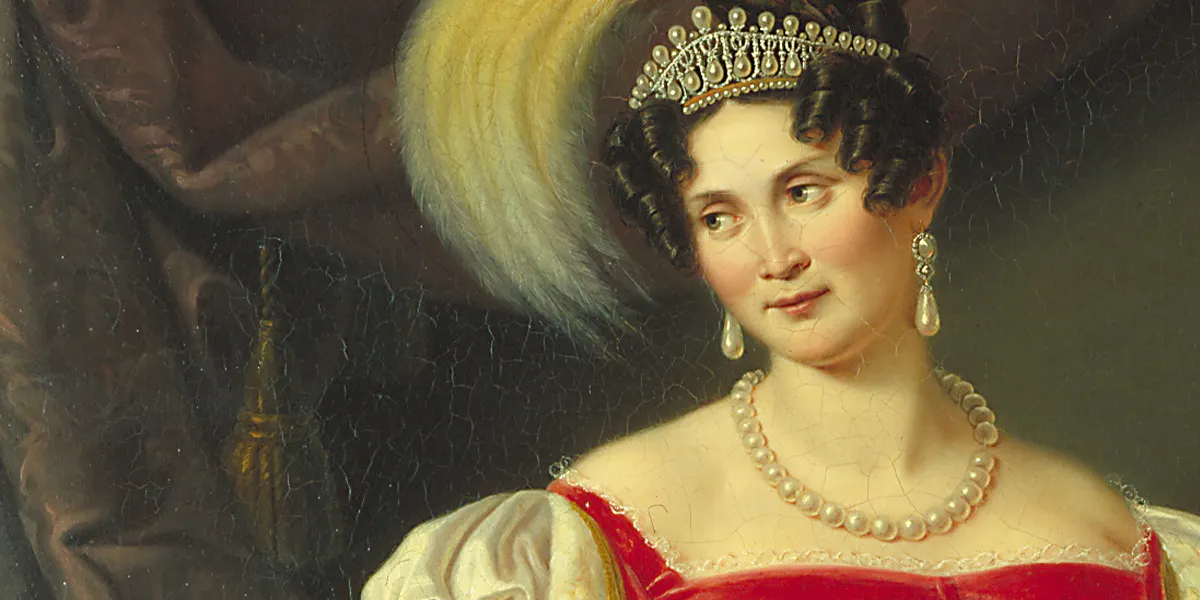
Julie von Egloffstein (1792-1869), Queen Therese of Bavaria, 1836, Wittelsbach Equalization Fund. Photo in the public domain (detail)

Julie von Egloffstein (1792-1869), Queen Therese of Bavaria, 1836, Wittelsbach Equalization Fund. Photo in the public domain (detail)

In 2015, the then-Duchess of Cambridge drew attention at a diplomatic reception when she appeared wearing a distinctive tiara not seen on a member of the royal family for nearly two decades: the Lover’s Knot Tiara. The piece had previously been worn by Diana, Princess of Wales, on numerous occasions before it was returned to Queen Elizabeth II following Diana’s death in 1997.
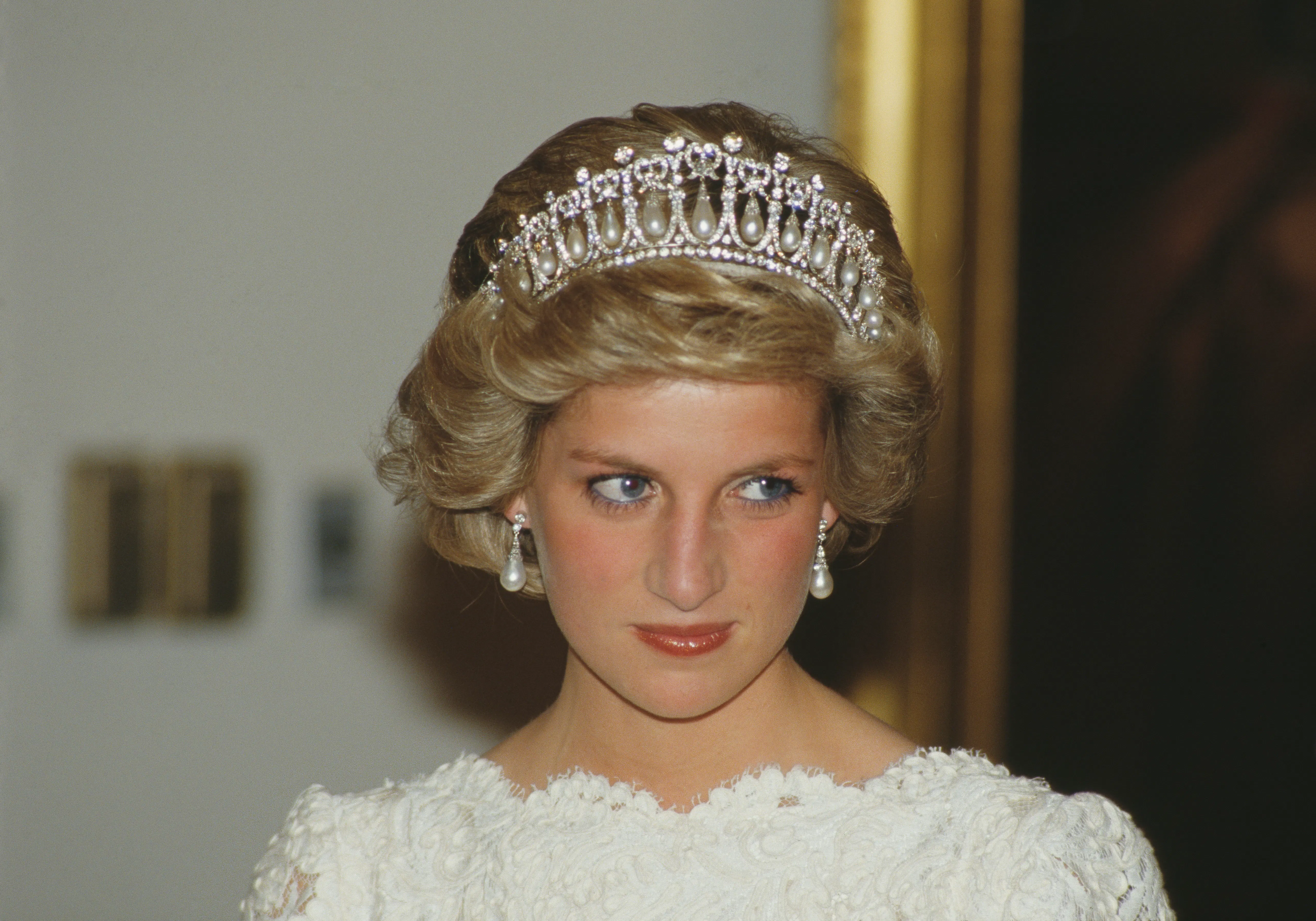
Diana, Princess of Wales (1961–1997), attends a dinner at the British Embassy in Washington, D.C., in November 1985. She is wearing an evening gown by Murray Arbeid and the Queen Mary Tiara. (Photo by Terry Fincher/Princess Diana Archive/Getty Images)

The tiara is often referred to as the Cambridge Lover’s Knot Tiara, but this is incorrect. While it is indeed a Lover’s Knot tiara, it is not the one originally associated with the Cambridge name.

See also: Crown Jewels: 5 Times Royal Jewellery Made Auction Headlines
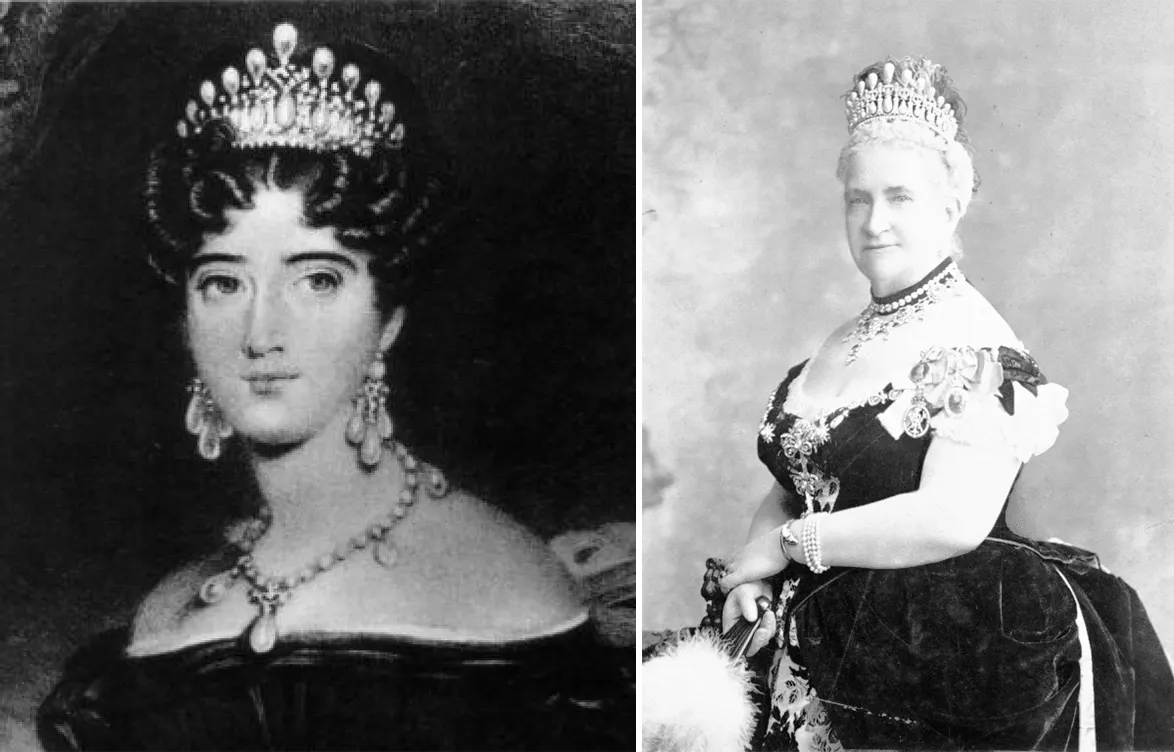
Left: Augusta of Hesse, Duchess of Cambridge. Photo in the public domain. Right: Augusta Caroline of Cambridge, Grand Duchess of Mecklenburg-Strelitz. Photo by Alfred Ellis: 51 Baker Street, London (License CC BY-SA 4.0) via Wikimedia Commons.

The Cambridge Lover’s Knot Tiara was likely created around 1818 by a German jeweller as a wedding gift for Augusta of Hesse (1797–1889), who married Prince Adolphus Frederick, 1st Duke of Cambridge, seventh son of King George III and Queen Charlotte. Augusta wore the tiara frequently, including at the coronation of Queen Victoria in 1838 and at the wedding of Victoria’s eldest daughter in 1858, as shown in contemporary portraits.
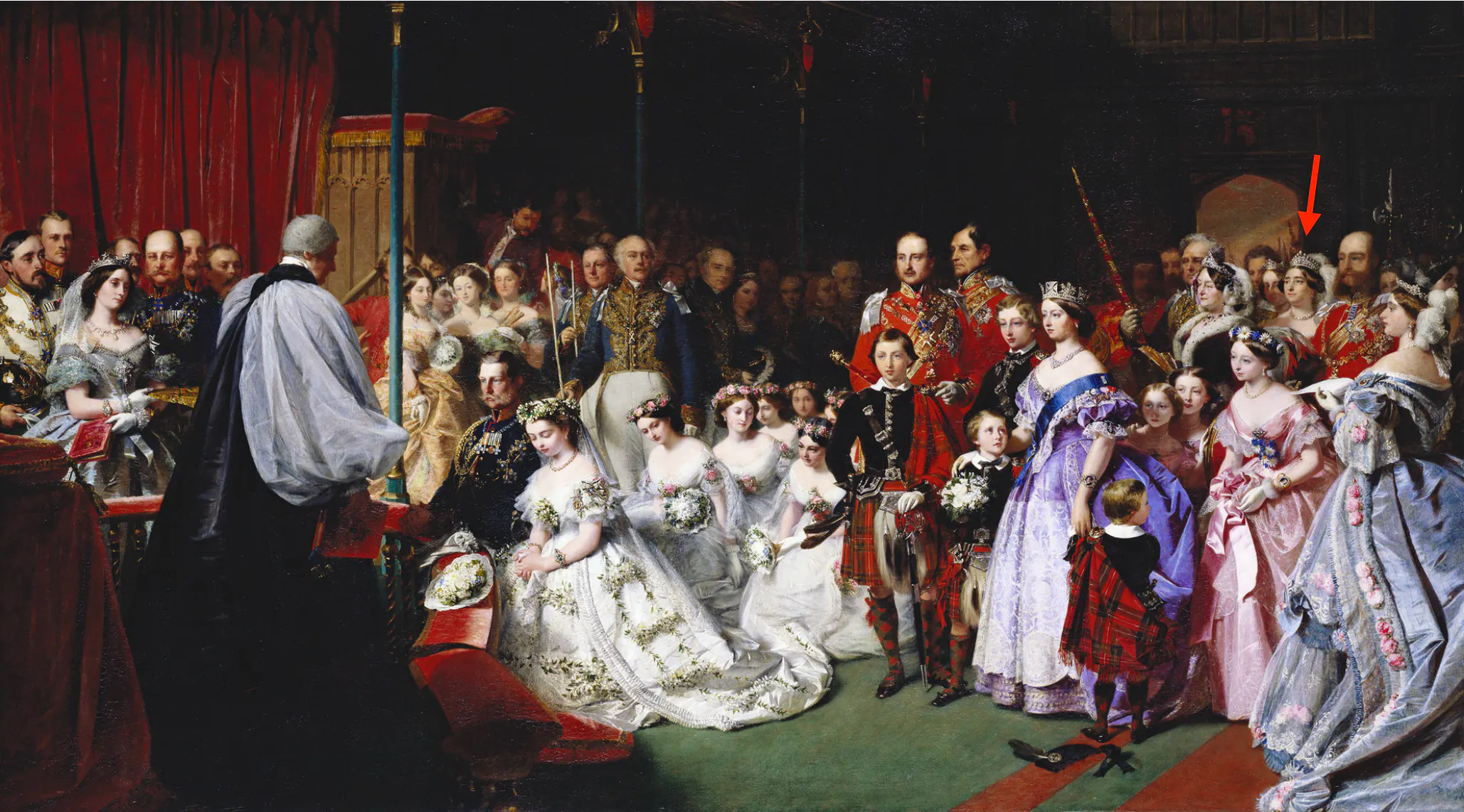
John Phillip (1817-1867), The Wedding of Victoria, Princess Royal, with Friedrich Wilhelm, Crown Prince of Prussia, 1860, oil on canvas, 103.2 x 184 cm, Royal Collection. Photo in the public domain (arrow added).

Upon Augusta’s death in 1889, the tiara passed to her daughter, Augusta Caroline, Grand Duchess of Mecklenburg-Strelitz (1822–1916), who wore it at the coronation of Edward VII in 1902. Her granddaughter, Mary of Teck (1867–1953), had long admired the tiara. Raised at the British court, Mary had known it since childhood and eventually commissioned an almost identical version after becoming Queen Consort to George V in 1914. The jeweller Garrard was tasked with its creation.

See also: History's Most Famous Engagement Rings

Queen Elizabeth II and the Mayor of Brisbane at the Royal Ball, Brisbane, 1954. Photo in the public domain.

This tiara, correctly named Queen Mary’s Lover’s Knot Tiara, was left by Mary to her granddaughter Elizabeth in 1953, the year after Elizabeth became queen. The tiara featured prominently in the early years of her reign, although photographs show that the upper row of pearls was later removed. Elizabeth eventually stopped wearing the piece and passed it to her daughter-in-law Diana, and later to Catherine, Princess of Wales.
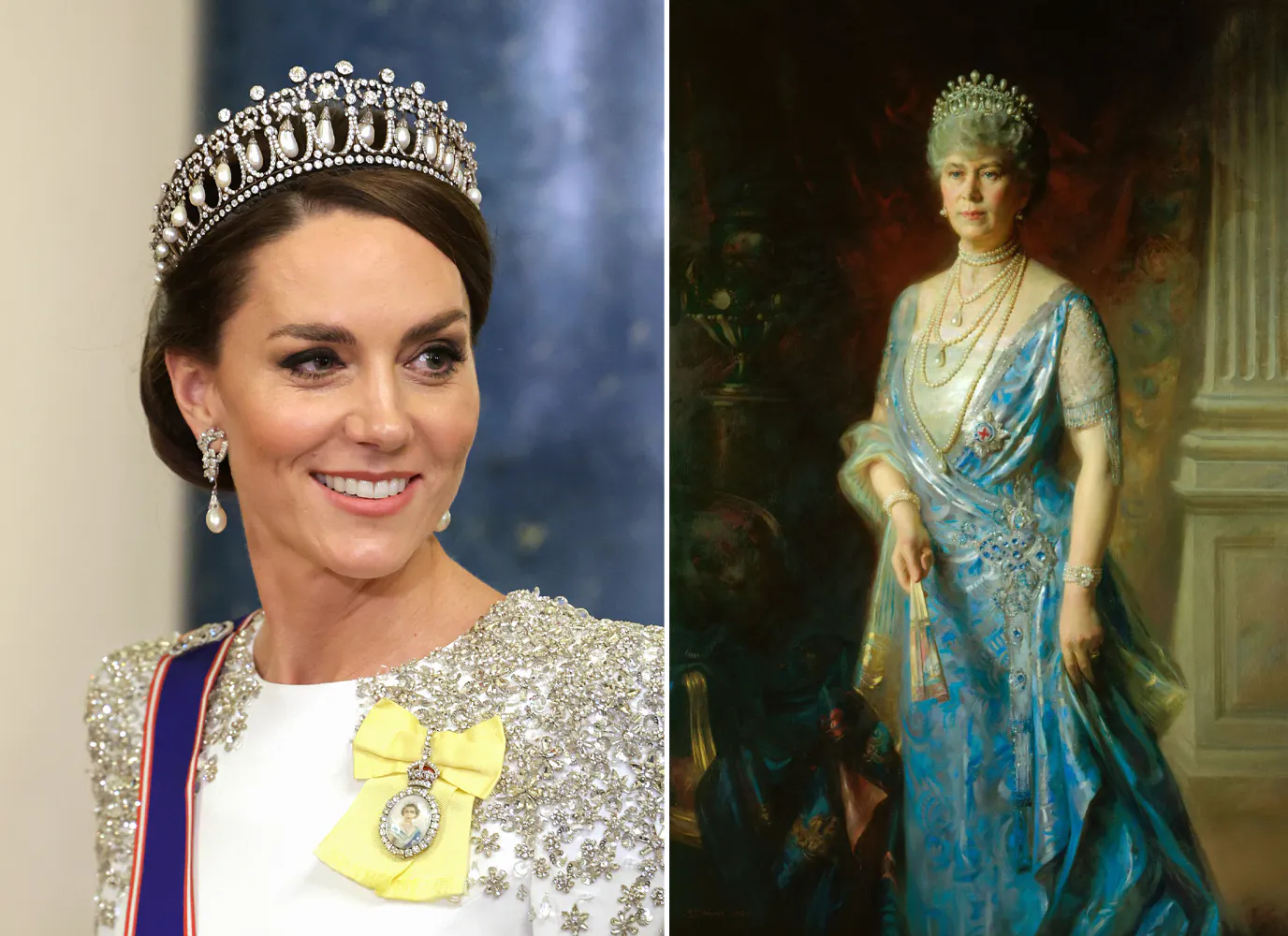
Left: LONDON, ENGLAND - NOVEMBER 22: Catherine, Princess of Wales, during the State Banquet at Buckingham Palace on November 22, 2022, in London, England. It is the first state visit hosted by the United Kingdom with King Charles III as monarch, and the first state visit by a South African head of government since 2010. (Photo by Chris Jackson/Getty Images). Right: Arthur Trevethin Nowell (1862–1940), Queen Mary.

What became of the original Cambridge Lover’s Knot Tiara? In 1916, Augusta of Mecklenburg-Strelitz gave it to her granddaughter Jutta (1880–1946), who briefly held the title of Queen of Montenegro in 1921. Jutta later sold the tiara to an unknown buyer. It resurfaced at a Christie’s auction in Geneva in 1981 and was purchased by Georg, Prince of Waldburg zu Zeil und Trauchburg. His wife, Marie Gabrielle of Bavaria, has worn it on several occasions since.

Want more articles like this delivered straight to your inbox? Subscribe to our free newsletter!

Then, in 1985, another Lover’s Knot tiara appeared at auction – this one with pearl drops shaped differently from those on the Cambridge original. Its origins remain unclear. To complicate matters further, multiple Lover’s Knot Tiaras were created beyond the original and Queen Mary’s copy.
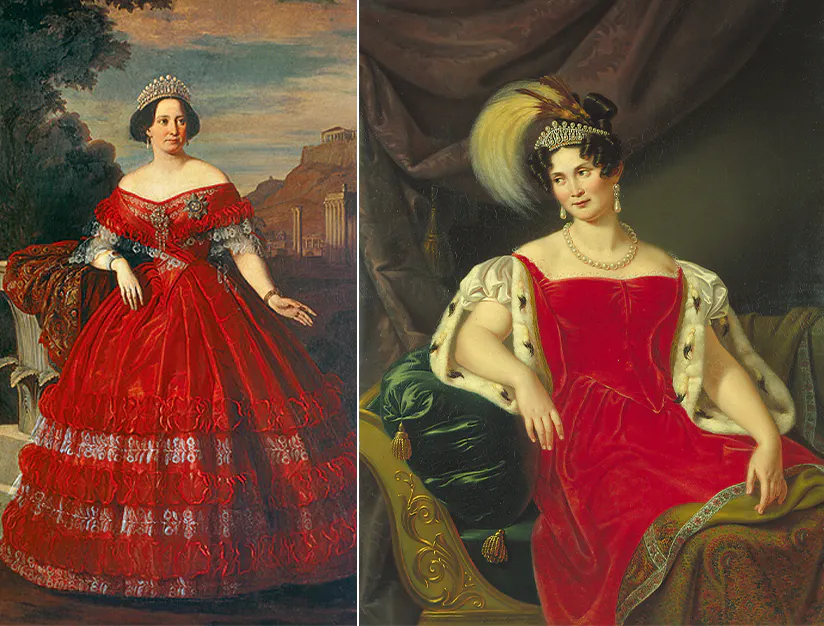
Left: Carl Rahl (1812-1865), Amalie of Oldenburg, Queen of Greece (married to Otto of Bavaria), 1860, Neue Residenz, Bamberg. Public domain photo. Right: Julie von Egloffstein (1792-1869), Queen Therese of Bavaria, 1836, Wittelsbacher Ausgleichsfonds. Photo in the public domain.

Around the same period as the original, a similar tiara was commissioned by King Ludwig I of Bavaria for his wife, Therese of Saxony-Hildburghausen (1792–1854). However, this one remains in the Bavarian royal collection and is now displayed in the Treasury at the Munich Residenz.

See also: Not Just for Royals: A History of the Tiara
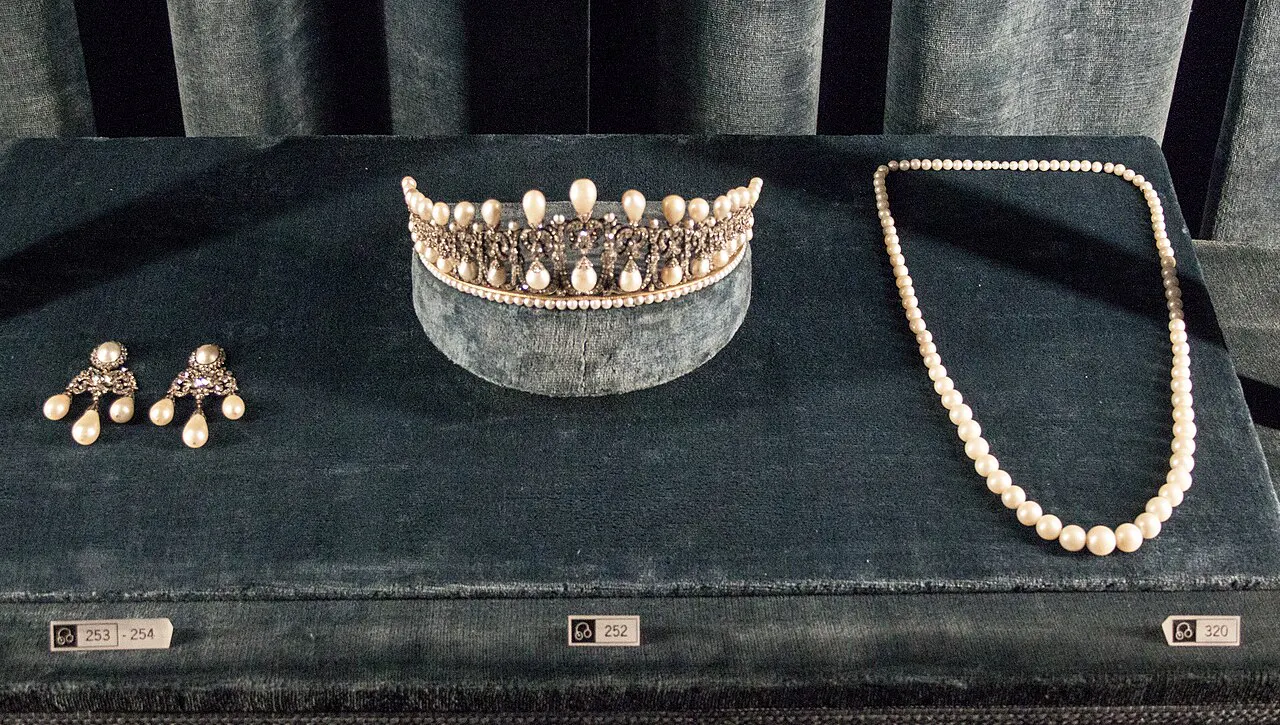
The Bavarian Lover’s Knot Tiara and other pearl jewelry in the Munich Treasury. Photo in the public domain.

A photograph from the early 20th century shows Princess Maria Immacolata of Bourbon-Two Sicilies (1874–1947) wearing a Lover’s Knot Tiara without the top row of pearls, similar to Queen Mary’s version. This tiara, too, can likely be ruled out.

Another version was made for the Yusupov family in Russia, but its fate is unknown. It may have been lost or destroyed during the 1917 revolution, but if it survived, it remains a potential candidate for the 1985 auction piece, or even the Cambridge original.

See also: La Peregrina and La Pelegrina: The World's Most Famous Pearls
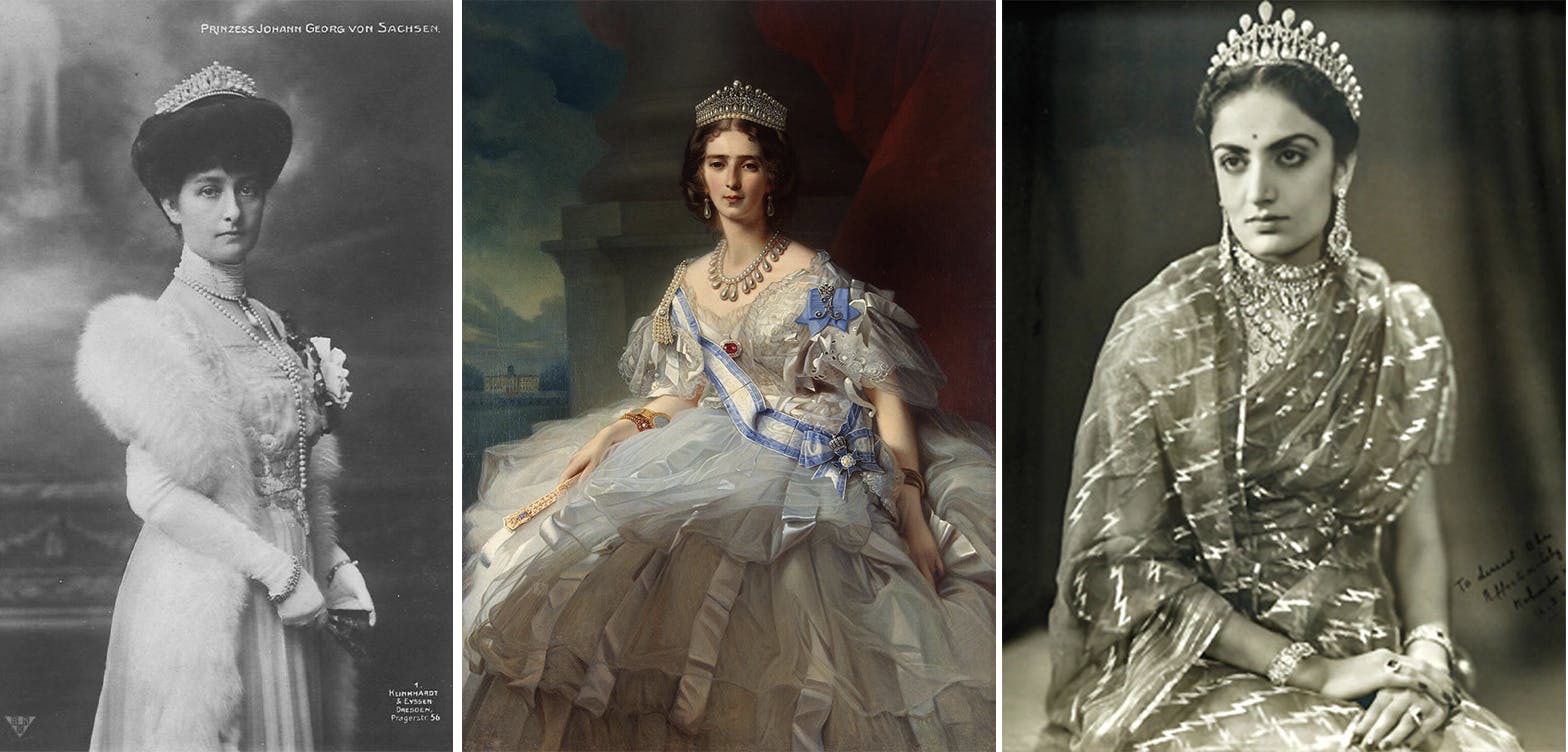
Left: Maria Immaculata, Princess of Saxony. Photo in the public domain. Center: Franz Xaver Winterhalter (1805–1873), Princess Tatiana Alexandrovna Yusupova, 1858, oil on canvas, 148.5 x 104.8 cm, Hermitage Museum, St. Petersburg. Photo in the public domain. Right: Maharani Mehtab Kaur Sahiba of Patiala, circa 1940s. Photo in the public domain.

A further possibility appears in a 1940s photograph of Maharani Mehtab Kaur (1922–2017), second wife of Yadavindra Singh, the last ruling Maharaja of Patiala. She is shown wearing a Lover’s Knot Tiara. Could her husband have acquired it during his European travels in the 1920s? Was this the tiara sold at auction in 1985, or perhaps even the long-lost Cambridge Lover’s Knot?

For now, the mystery remains unresolved. The knot surrounding the many Lover’s Knot Tiaras is still waiting to be untied. But one never knows – perhaps a new clue, or another tiara, will appear before long.

Find more articles in Barnebys Magazine

tiarascrown jewelsroyal jewellerylover's knot tiarajewellery

Subscribe to Barnebys Magazine

By subscribing, you are agreeing to the privacy policy. Unsubscribe anytime.

About the author

Gritta von Toll

Gritta von Toll is the German Editor at Barnebys Magazine. She completed studies in pre- and early history and archaeology, and since 2015, after a short detour into the world of advertising, she has worked at Barnebys, where she immerses herself in art history in order to bring bygone epochs closer to today's readers.

Read more from this author
Gritta von Toll

Discover similar items at auction

Pearl - Necklace - Pearl of Sweet Water

Pearl - Necklace - Pearl of Sweet Water

IT
Catawiki

€240

Details
Pearl - Silver - Earrings - Baroque pearls

Pearl - Silver - Earrings - Baroque pearls

IT
Catawiki

€4

Details
Pearl - Silver - Necklace - Akoya pearls, garnet

Pearl - Silver - Necklace - Akoya pearls, garnet

NL
Catawiki

€1

Details
Pearl - Silver - Necklace - Akoya pearls, apatite

Pearl - Silver - Necklace - Akoya pearls, apatite

NL
Catawiki

€1

Details
CHANEL Choker "BIG PEARL", Früjhar/Sommer-Kollektion 2014.

CHANEL Choker "BIG PEARL", Früjhar/Sommer-Kollektion 2014.

DE
Eppli

€380

Details
Pearl - Silver - Bracelet - Akoya pearls, turquoise

Pearl - Silver - Bracelet - Akoya pearls, turquoise

NL
Catawiki

€150

Details

Bring your auction to collectors worldwide!