
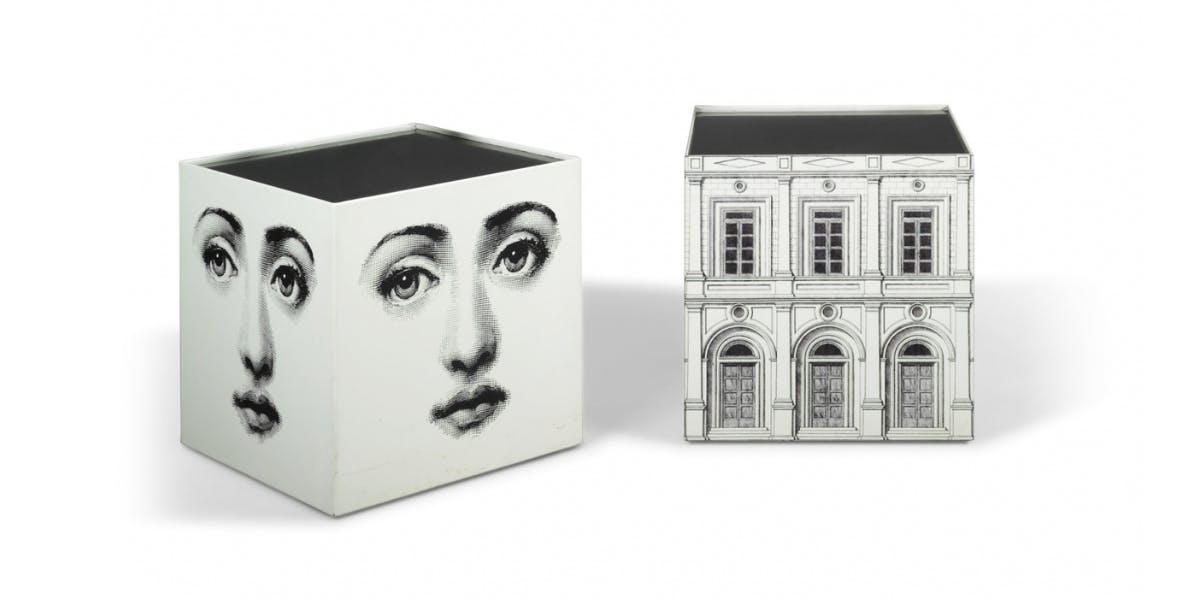
Piero Fornasetti (1913-1988) is best remembered by art historians for his stroke of genius in 1958, when he came up with his idea of a ‘Stanza Metafisica’ (‘Metaphysical Chamber’): a black-and-white room covered in graphics that surround the viewer with 32 monochrome lithographically-printed trompe l'oeil panels, depicting doors, windows, ladders and steps.

See also: Marco Zanuso: From the Navy to the Compasso d’Oro
Fornasetti began as a painter in the 1930s, but it was in his lithography and graphics that he excelled, placing him among the most iconic designers of the twentieth century. Italian designer and architect Gio Ponti was one of the first to spot his potential in the 1940s after seeing his work transposed onto silk headscarves at the Milan Triennale in 1933, an encounter that began a collaboration between the two designers transposing his graphics onto furniture.
Check out our podcast episode Quirky Italian Design
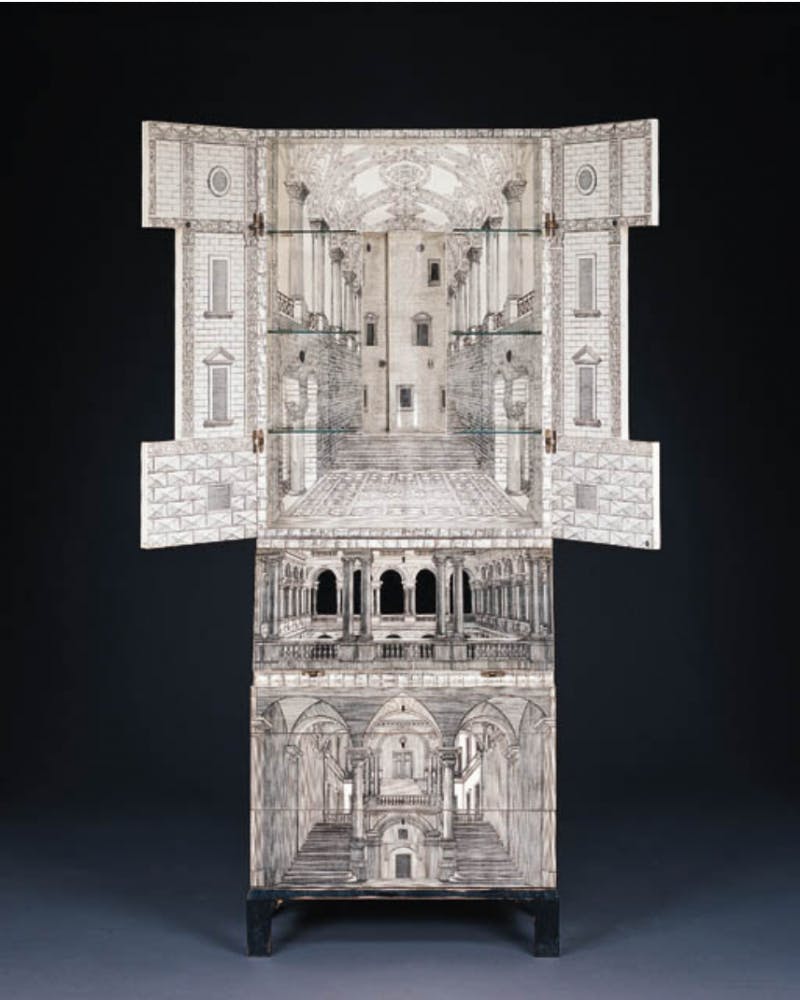
One of the best examples of this collaboration was the ‘Architettura' cabinet, originally conceived around 1951. The wooden chassis was designed by Gio Ponti combining the designs of a bureau bookcase, a bar and a credenza. The lithographic covering the cabinets is prints after the designs of Fornasetti. As one opens the classical facade doors, the viewer descends into a classically columned hallway disappearing into the distance. It is a pure piece of theatrical design: the epitome of Fornasetti's and Italian design of the period, in its combination of handcrafted processes and mechanical methods.
Want more articles like this straight to your inbox? Subscribe to our free newsletter
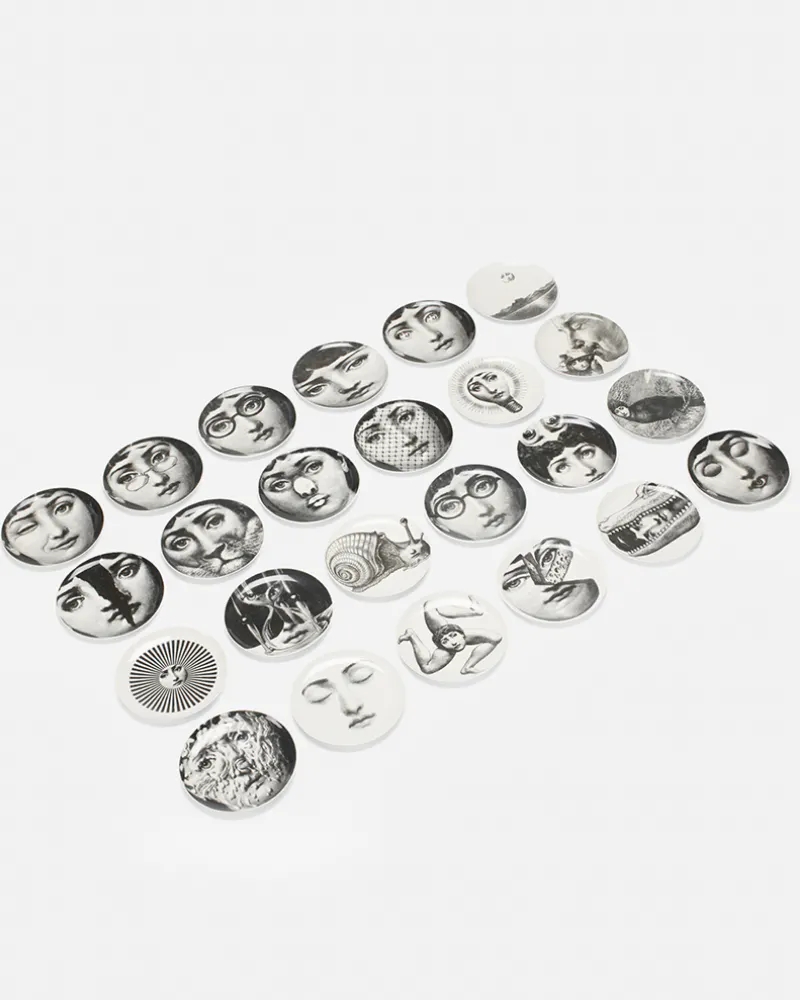
The most recurrent theme in his work is his depiction of the Italian opera singer Lina Cavalieri. After discovering her image from an old nineteenth- century French magazine, he became enchanted, and again and again, he used her face in his graphics, including on his most prolific series ‘Tema e Variazioni’ (‘Themes and Variations’), with no less than 350 versions on plates, paperweights and candlesticks. Beginning in 1952, he transposed her profile at his whim, creating Lina with a moustache, Lina as a hot air balloon, Lina winking, Lina broken in half, Lina as an hourglass and Lina deep-sea diving – amongst many other variations playing with his wit and imagination.
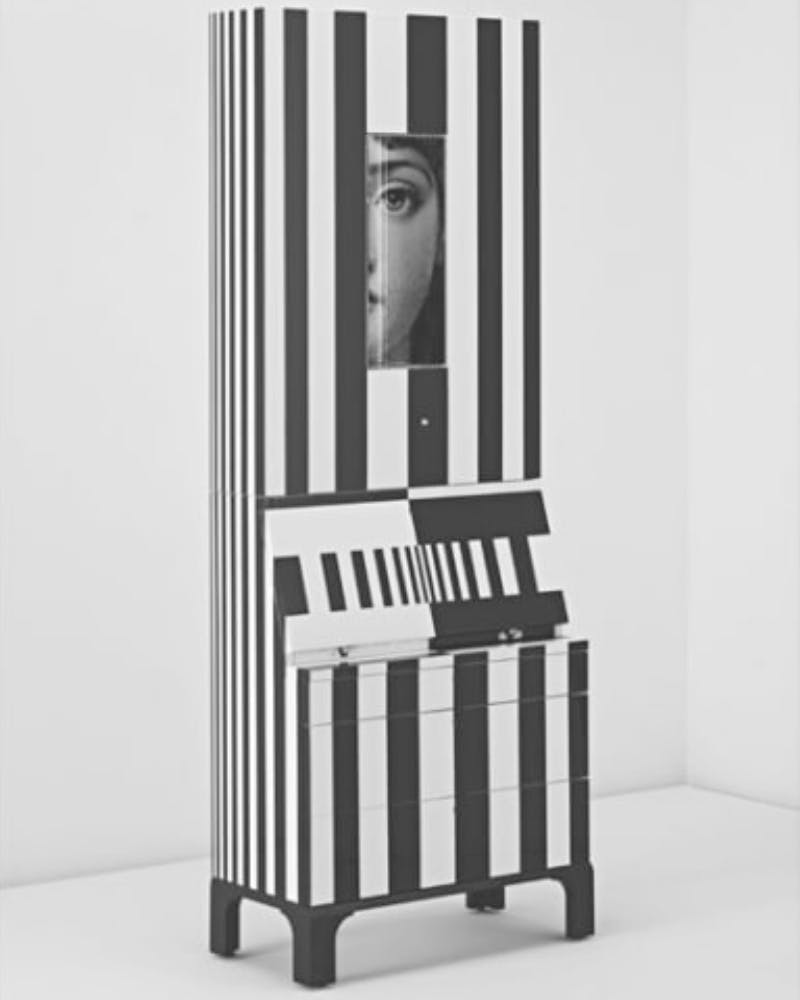
Piero Fornasetti's work nowadays has changed from being a whimsical chapter of Italian design to an incredibly commercial international brand. His Surrealist concoctions transposed onto trays, chairs, tables and ceramics, produced not in a factory but by an artisan workshop, are instantly recognisable as objects of the mid-twentieth century period, offering a desirable counterpoint to the ultra-sleek lines of modernism. They still astonish, amuse and allure our sensibilities, influencing contemporary designers such as Philippe Starck.
Read more articles on Design in Barnebys Magazine
This is an updated version of an article originally published on 1 April 2015


