![Alessandro Milesi, 'La nidiata', Venice, 1856 - 1945, oil on canvas, 49 x 73 cm [detail], signed Venezia A Milesi and dated 1886 at the bottom right. Photo © Wannenes](https://images.prismic.io/barnebys/bc24baf2-9634-48cb-a1d3-7ece447a8536_w8.jpg?auto=format,compress)
On 18-19 March, the baroque spaces of Palazzo del Melograno in Genoa, home to Wannenes auction house, will host an exceptional sale of Old Master and 19th-century paintings. This auction offers the pleasure of discovering lesser-known but high-quality artists, as well as the opportunity to collect works from illustrious collections established over centuries.
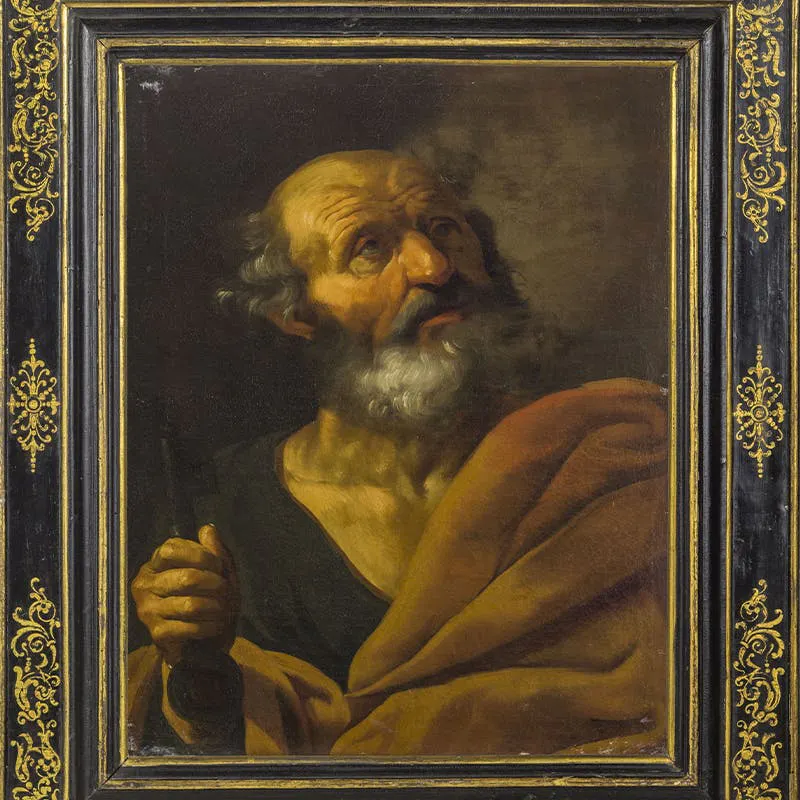
One of the top lots is a series of portraits of San Tommaso, San Mattia, San Giacomo by Alfeo and San Pietro by a Caravaggesque painter active in Rome in the 17th century, which comes from the Florentine collection of Cristina Malvezzi Campeggi. The works presumably date from the second or third decade of the 17th century. It is worth mentioning the similarity of the St James (San Giacomo by Alfeo) and St Peter (San PIetro) with the St Simon of the Nantes Museum of Fine Arts, attributed to Simon Vouet (Paris, 1590-1649). The ancient black and gold cassette frames are of considerable value, almost a work of art themselves.
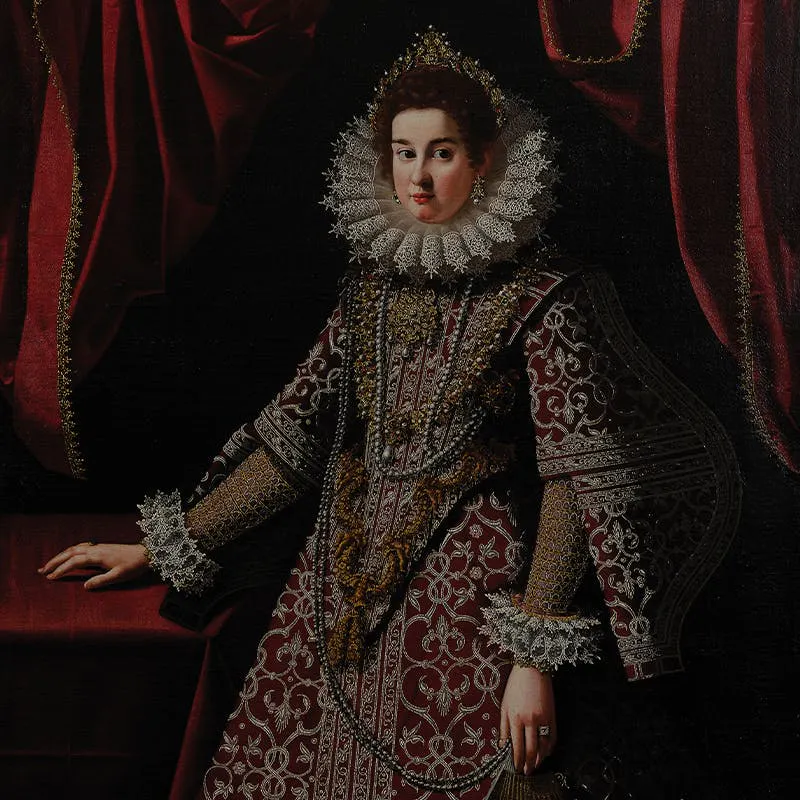
Two portraits of ladies stand out in this rich catalogue. The first woman, superbly dressed, is featured in this Portrait of a Lady by a 16th-century painter from the Zabert Gallery (attributed to Scipione Pulzone or Rodrigo de Villandrando). The painting is part of the international style of portraiture in vogue at the end of the 16th century as marked by the careful depiction of the fabrics and ornamentation. A similar taste is found – in in Florence in particular – in the Medici portraits by Tiberio Titi.
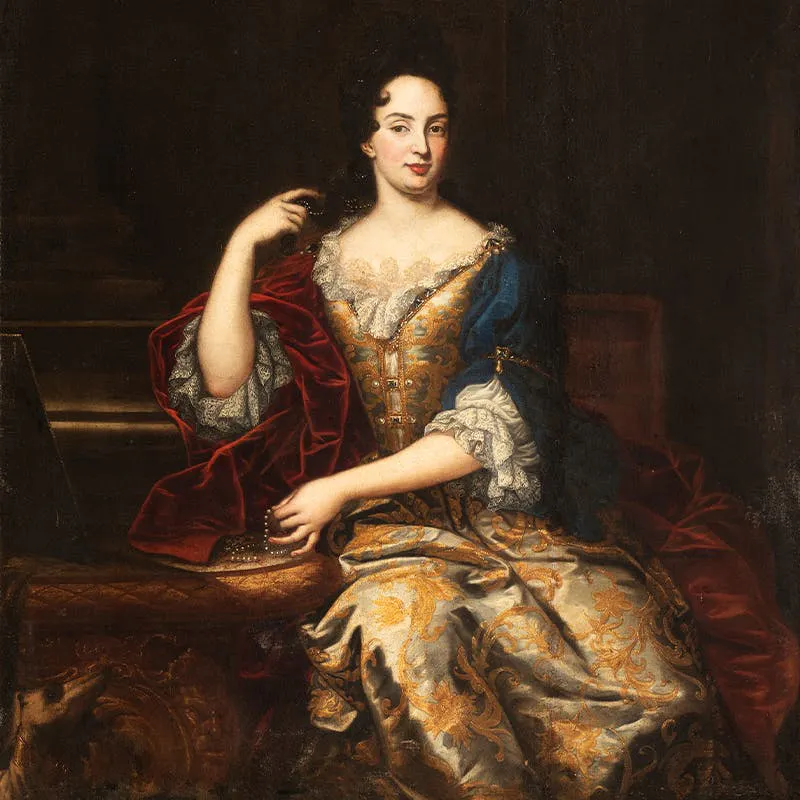
The second Portrait of a Lady is signed by Giovanni Maria Delle Piane, who was known as il Mulinaretto (Genoa, 1660-Monticelli d'Ongina, 1745). The artist, a pupil of Giovanni Battista Gaulli in Rome, became the most popular painter on his native soil. He painted for the Bourbons and was in great demand by the Genoese noble patrons (especially female) who, enthusiastic about the sensibilities derived from the examples of Rigaud and Nicolas de Largillierre, elected him as the director of the city's dynastic iconographies. This painting shows his ability to illuminate the clothing and render the face particularly smooth.
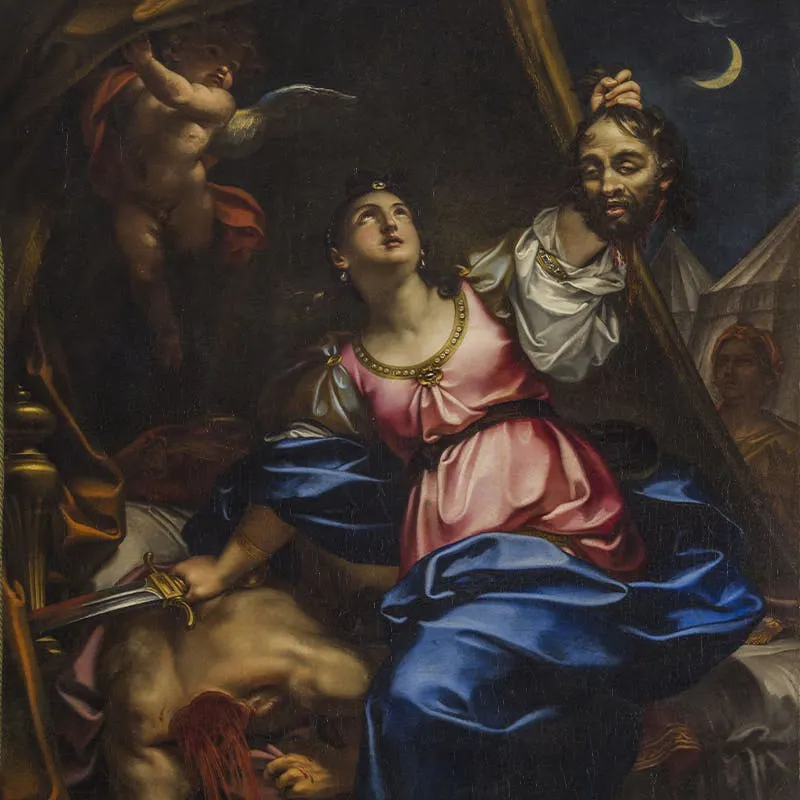
The marvellous canvas titled Judith and Holofernes also stands out (it was formerly in the Zebone collection in Genoa), and was possibly commissioned by the Prince of Liechtenstein Johann Adam Andreas to Paolo Gerolamo Piola (Genoa, 1666-1724). The image depicts the culminating and highly dramatic moment of the biblical episode, in the moment when Judith raises the macabre trophy with an intense gaze in which we can read all the pride of the heroine. The theatrical and elegant effect, of baroque taste, is also heightened by the chiaroscuro of the work.
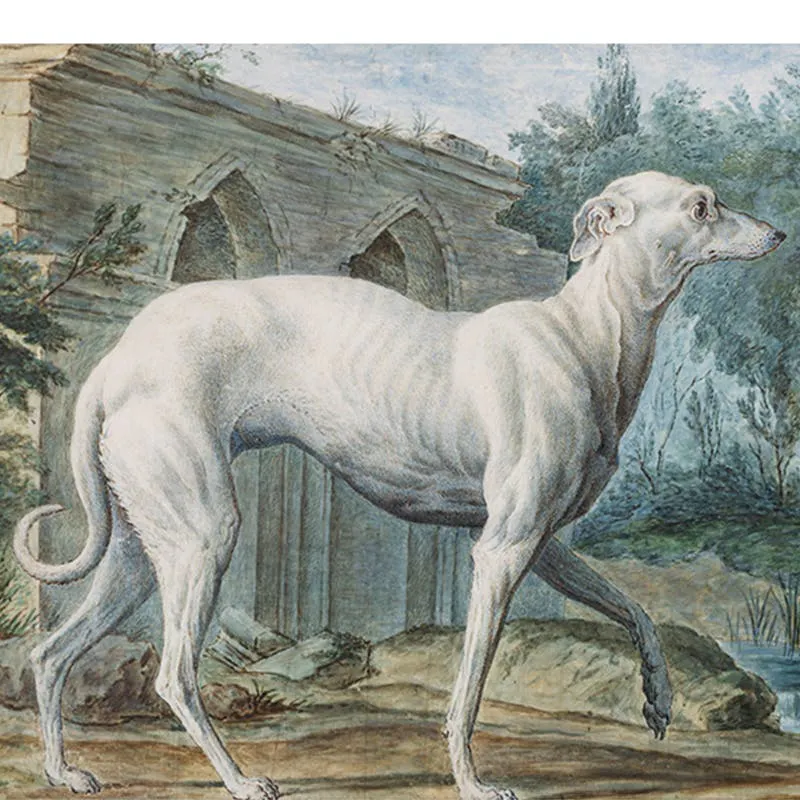
A separate mention should be made for the painting by Nicolas Marechal (Paris, 1753-1803), titled Greyhound. This delicate pencil and watercolour on parchment is a sheet that belonged to a group of works commissioned by the Count de Lacépède (1756-1825) and Baron Cuvier (1769-1832) to illustrate La Ménagerie du Museum d'histoire Naturelle ou Description et histoire des Animaux. First printed in 1801, this French publication is considered one of the most important in the field of 18th-century natural history. Nicolas Marechal, together with Nicolas Huet (1770-1830) and Léon de Wailly (1801-1824), was considered among the most famous artists for his drawing of animals .The painting in question, in which the delicacy of the stroke goes perfectly with the gracefulness of the animal portrayed, is a clear example of this.
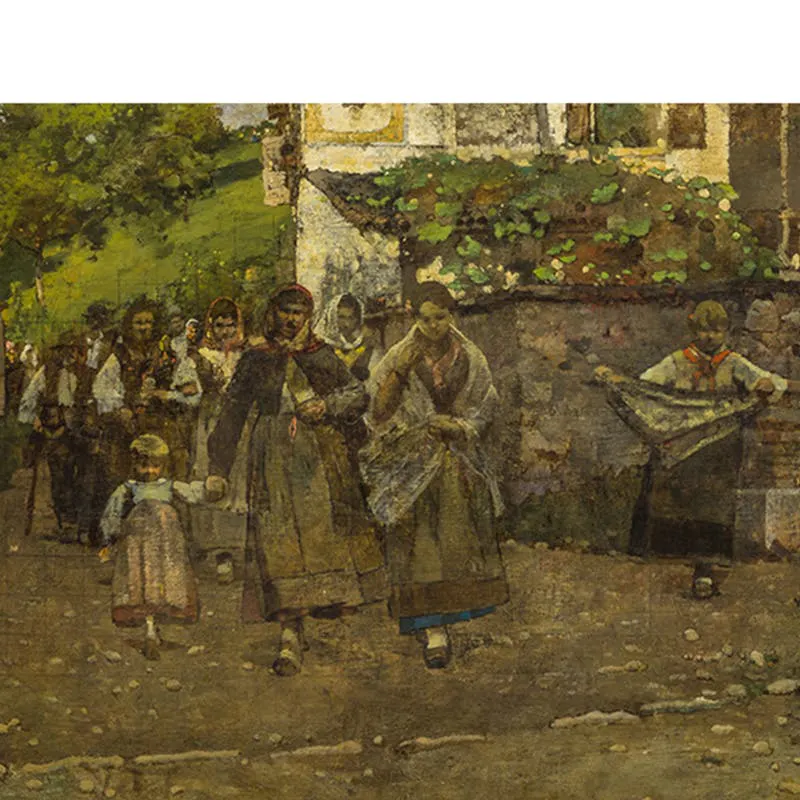
Note the tenderness that also exudes from this painting by Luigi Nono (Fusina, 1850-Venice, 1918), Return from the mass, which is part of the section of the catalogue dedicated to 19th-century painting, full of examples of remarkable creative quality. With a lyrical realism reminiscent of Guglielmo Ciardi and a gaze turned to nature, Luigi Nono portrays this moment of sociality so important for the country people in a bright and balanced composition. Sunday mass, in fact, was experienced with joy and solemnity by young and old alike. The figures, although made with quick touches and brushstrokes, are expressive and endowed with a poetic melancholy.
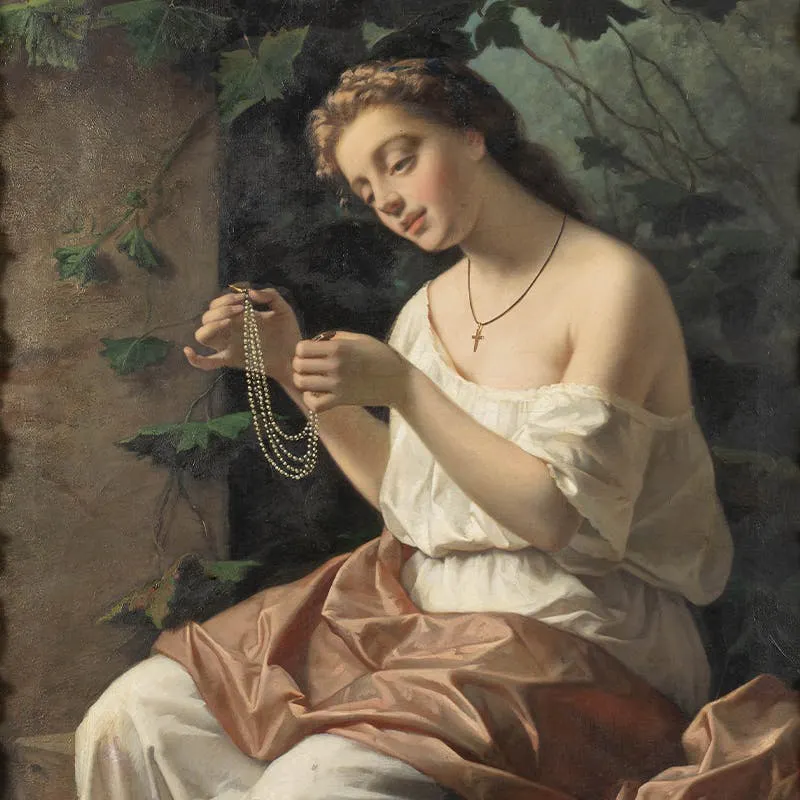
The last (but not least) painting worthy of note is this work by Leonardo Gasser (Florence 1831-after 1892). Entitled Figure of a Woman, the painting shows a graceful beauty. A pupil of Michele Gordigiani, Leonardo Gasser was among the most assiduous frequenters of the well-known Caffè Michelangiolo, together with the most important artists of the time. He successfully dedicated himself to the female portrait, paying close attention to the chromatic and tonal range of his colours and portraying everyday life with elegance.