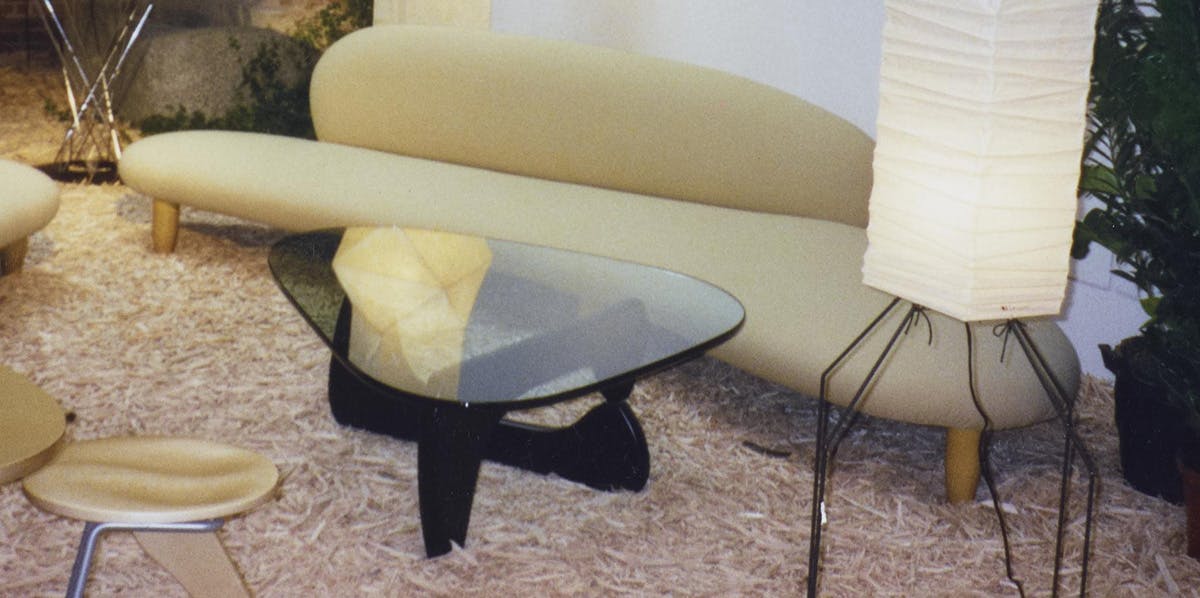
Since 1948, Isamu Noguchi's IN-50 coffee table, better known as the Noguchi Table, has been a design classic with an iconic status. Noguchi managed to create the perfect balance between function and art with just two components: wood and glass.
A 19-mm thick glass top with rounded edges and two identical wooden parts, symmetrically placed against each other, is what comprises Isamu Noguchi's masterpiece. Despite the simple design, the Noguchi Table has ended up at the top of the list of 20th century's most coveted piece of furniture. He himself said that it is the best piece of furniture he ever designed and the work that best represents his success.
Isamu Noguchi was one of the most important and acclaimed sculptors of the 20th century. Through a lifetime of artistic experiments, he created sculptures, furniture, lighting, ceramics and was also active as an architect and landscaper. His works are subtle and daring as well as traditional and modern.
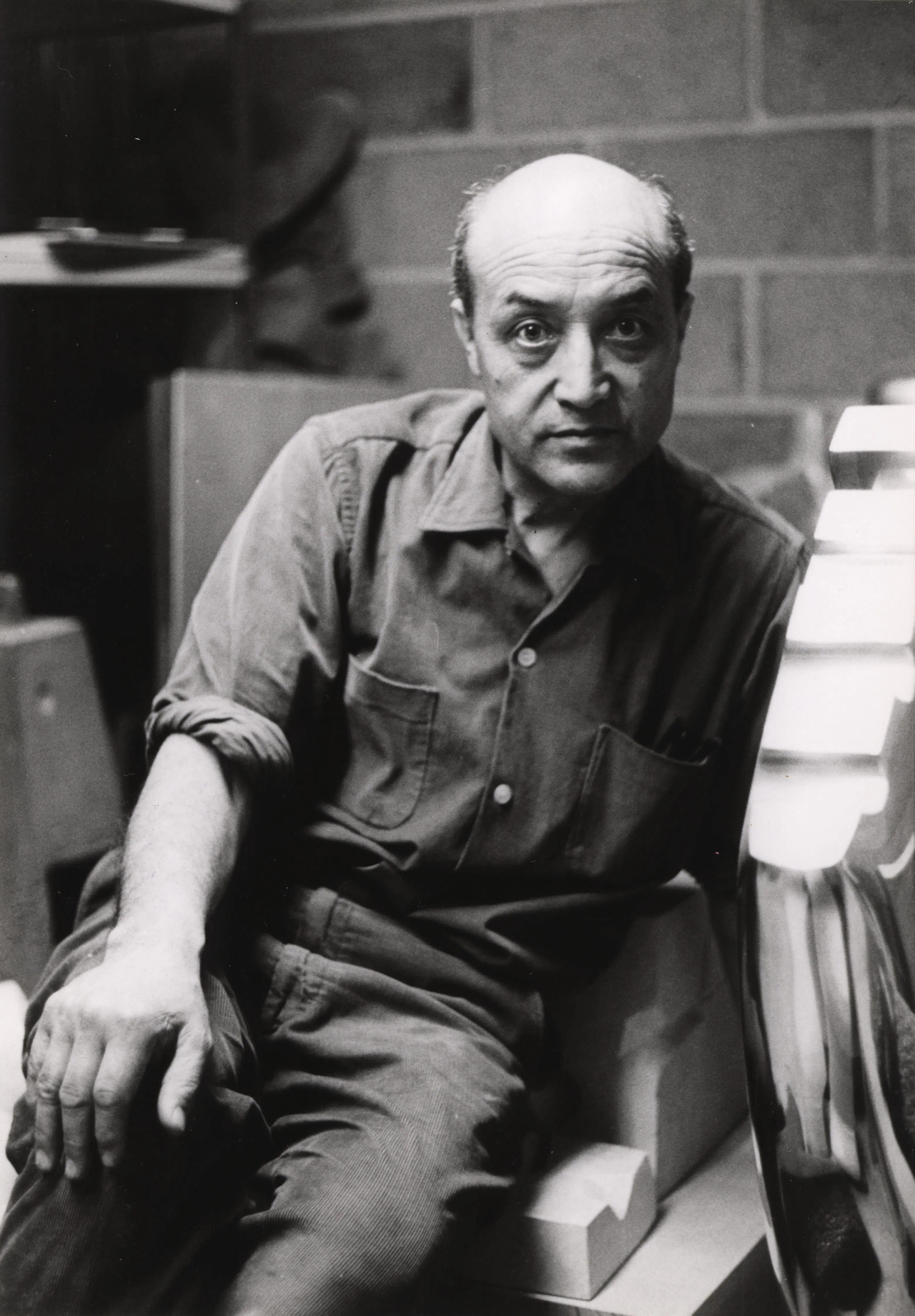
Isamu Noguchi was born in 1904 in Los Angeles, the son of a Japanese poet and an American writer. At the age of 22, Noguchi visited an exhibition in New York where the work of the Romanian sculptor Constantin Brâncuși was displayed. After graduating from the Leonardo da Vinci Art School in New York, Noguchi took a job as an assistant to Brâncuși in Paris in 1927. Noguchi then continued to travel, drawing inspiration from all corners of the world: ink drawing in China, ceramics in Japan and murals in Mexico. He incorporated all these impressions into his works and used materials such as stone, metal, wood, clay and paper.
See also: The 10 Most Popular Furniture Designers
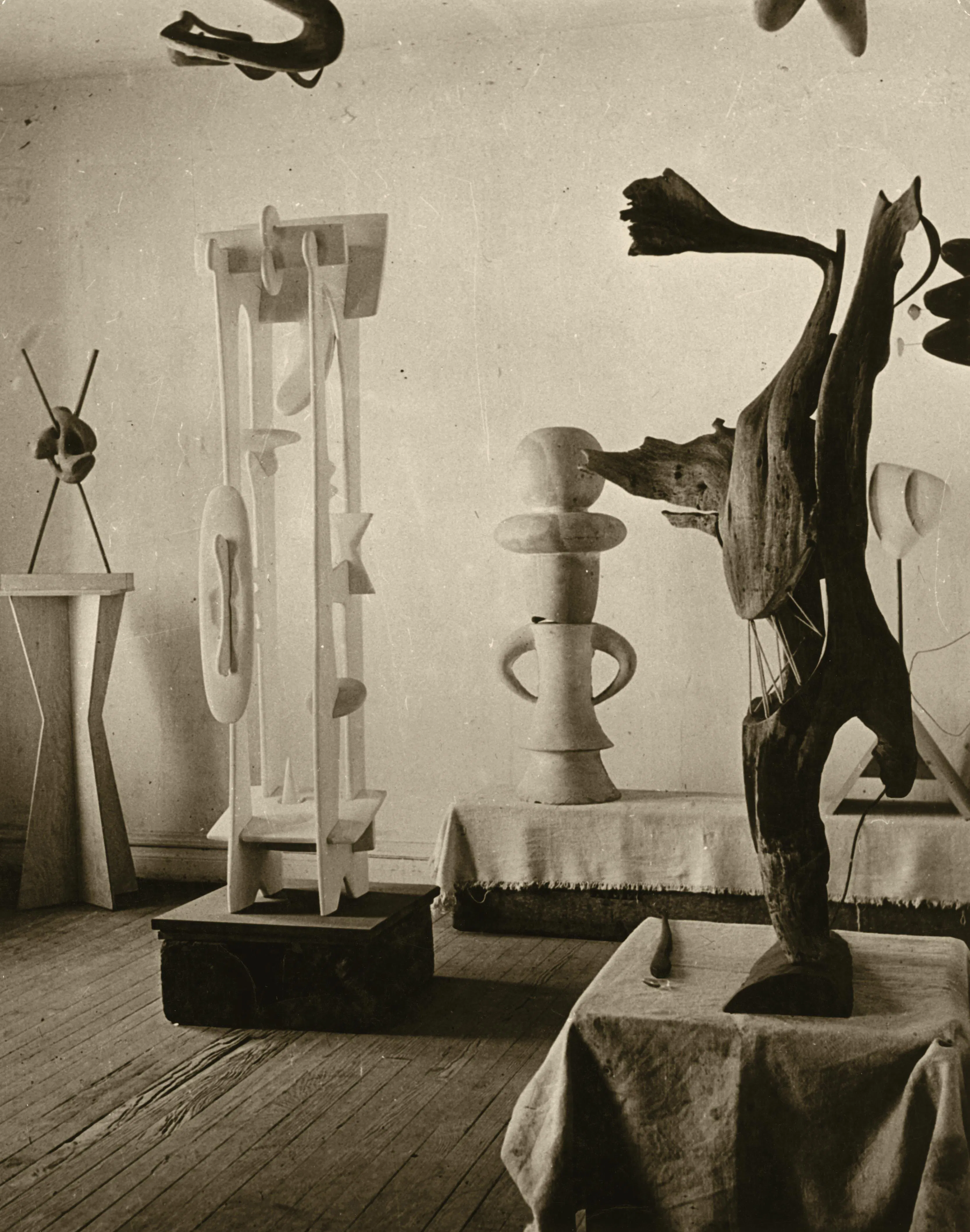
Noguchi never limited himself to a particular style, but created sculptures as abstract as Henry Moore's and as realistic as Leonardo da Vinci's. Noguchi explained that: “Everything is sculpture. I consider every material, every free idea created in the room, as a sculpture.”
See also: 7 Facts To Know About Cini Boeri
He was a key figure in the development of organic modernism, which is characterised by abstraction and balance. But it was not only exclusive sculptures that were designed in Noguchi's studio, but also mass-produced furniture. The Noguchi Table is one of the latter, and without a doubt the most acclaimed.
For over seventy years, the Noguchi Table has been a design favourite because of its timeless shape and choice of materials. It all started in 1939 when Noguchi went to Hawaii with artist Georgia O'Keeffe to photograph an advertising campaign. On the trip, he met the British furniture designer TH Robsjohn-Gibbings who asked Noguchi to create a coffee table for his home. He designed a miniature table but then heard nothing more from Robsjohn-Gibbings. Shortly afterwards, Noguchi saw a variation of his table in a furniture ad. "In revenge, I made my own version of my own table," Noguchi said.
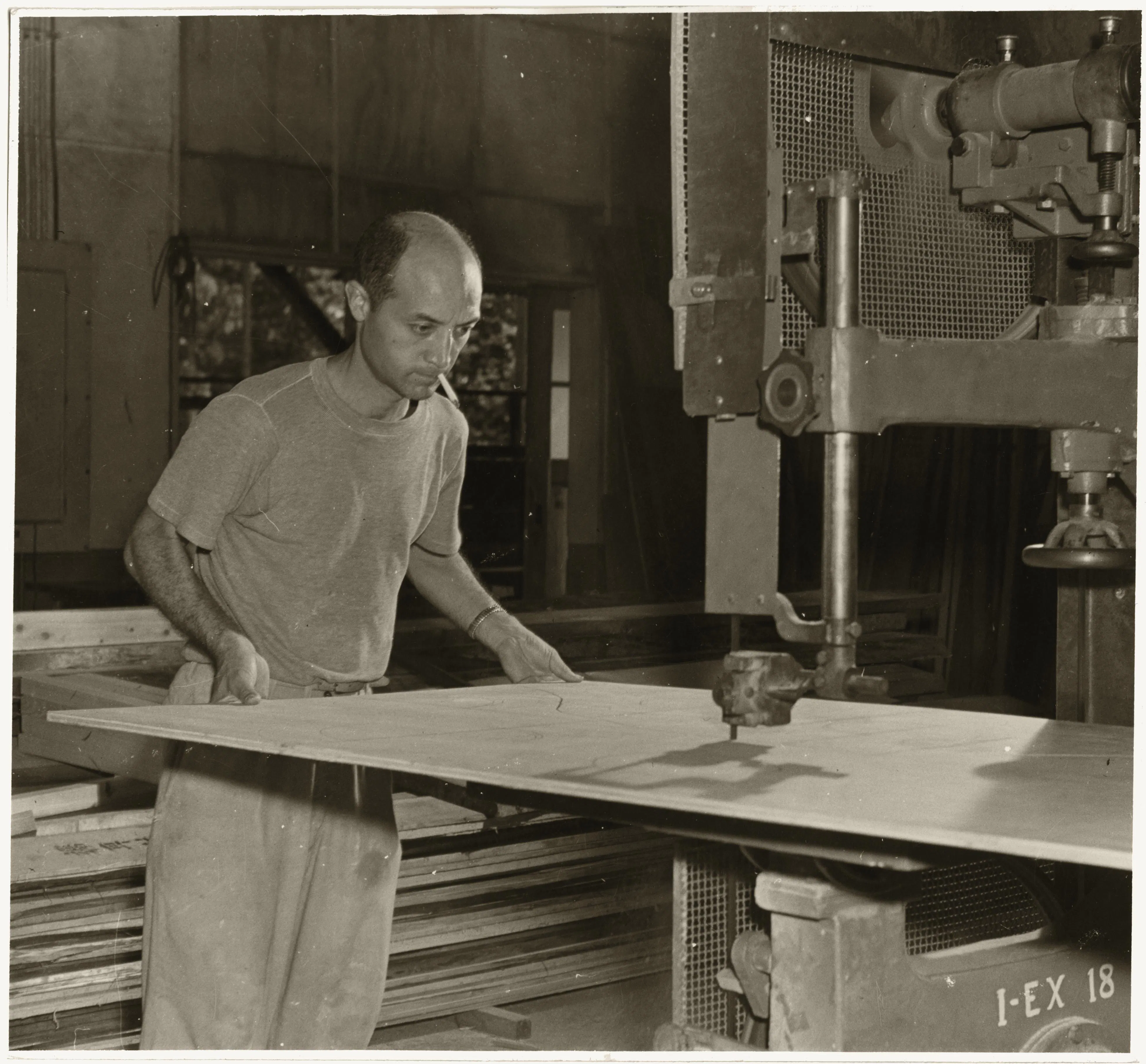
Designer George Nelson, who worked for furniture manufacturer Herman Miller, heard about Noguchi's table and used his drawing to illustrate the article 'How to Make a Table'. The team at Herman Miller was impressed by the organic and abstract shape of the table and recruited Noguchi to make the table.
See also: Abstract Art: From Genre to Movement
George Nelson also wrote Herman Miller's first hardcover catalogue (1948). The catalogue, which today has become a collector's item, is believed to be the first commissioned furniture catalogue. In it, Noguchi's coffee table was introduced for the first time and was described as "sculpture for use" and "design for production".

Although the table looks fragile, it has perfect balance. The base, with an even floating shape, consists of two curved and solid wooden legs. The identical legs have been placed on top of each other and fastened together with a swivel rod. The structural legs provide a self-supporting and stable base for the heavy glass plate placed on top. When the table was launched in 1948, it was made of walnut, birch and cherry wood. The latter type of wood was only used during the first years that the table was on the market and has therefore been sought after on the secondary market.
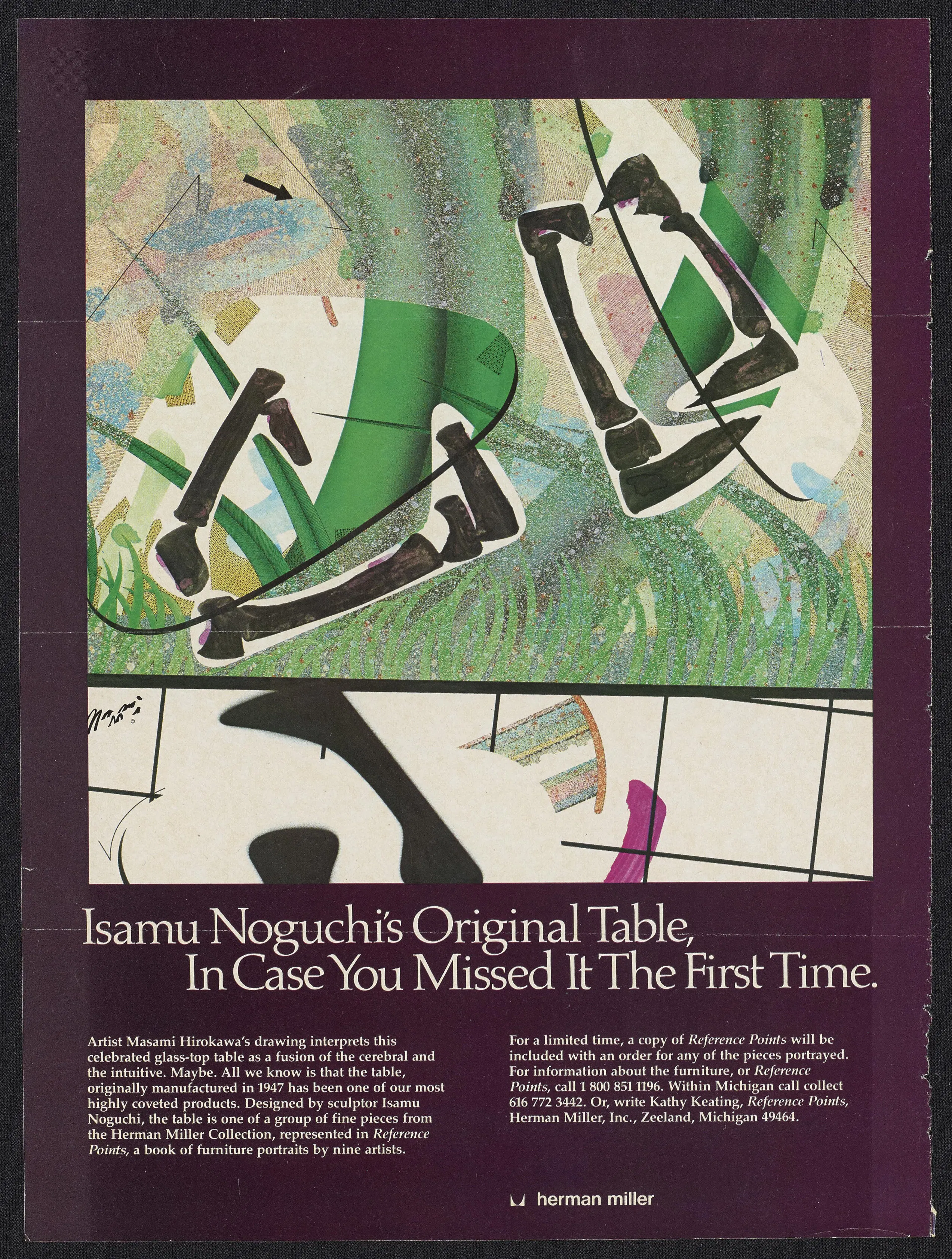
The Noguchi Table quickly became one of Herman Miller's most iconic and successful designs. Production ceased in 1973 and the coffee table immediately became a collector's item. Seven years later, Herman Miller began producing the table again, but only in a limited edition. In 1984, it was reintroduced to the market and has since been in production. Since 2002, the Swiss furniture company Vitra manufactured several of Herman Miller's products, including the Noguchi Table.
When Isamu Noguchi's works are sold at auction, they can reach millions of dollars for both his sculptures and furniture. However, the Noguchi Table typically sells for less than $10,000 (£7,500).