The name Speedster identifies a particular model of Porsche that has its origins in the early 1950s and goes up to 2019 – a 68-year evolution. On the occasion of Finarte’s October auction dedicated to automotives, here we retrace the history of the fabulous Speedster model, one of the most iconic of the German car manufacturer.
American origins
The 356 Speedster derives from the Porsche 356, presented in 1949 as coupé and convertible with 4-cylinder engine. In 1950, USA Porsche importer Max Hoffman recommended the creation of a light and fast car. The following year the ‘America Roadster’ was born, the progenitor of the 356 Speedster. It was a success for sales, but a failure from an economic point of view. It was therefore decided to create a more spartan version derived from the 356 cabriolet. To lower costs, Porsche opted for a steel body, removable acetate windows with fabric frames, a canvas hood without interior upholstery and two simple and lightweight seats.
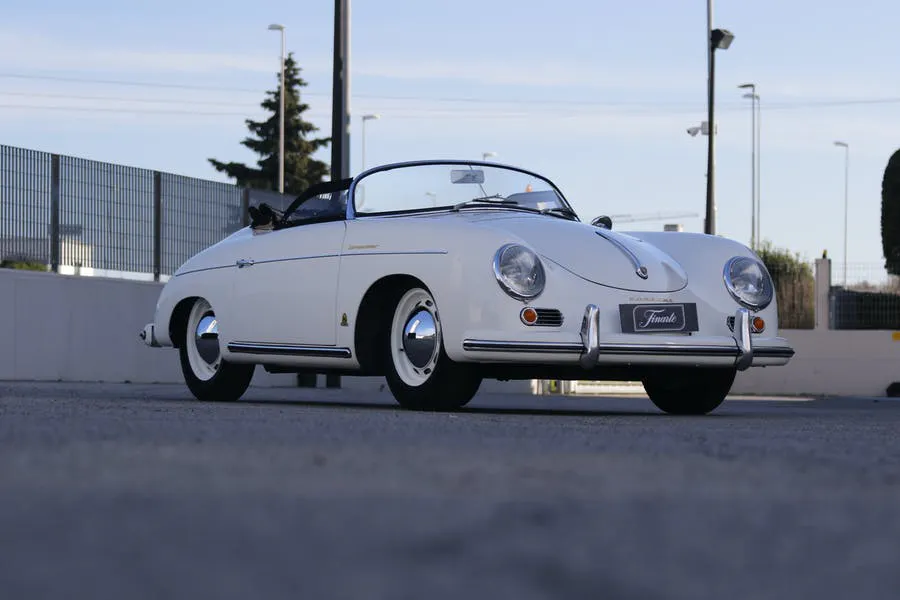
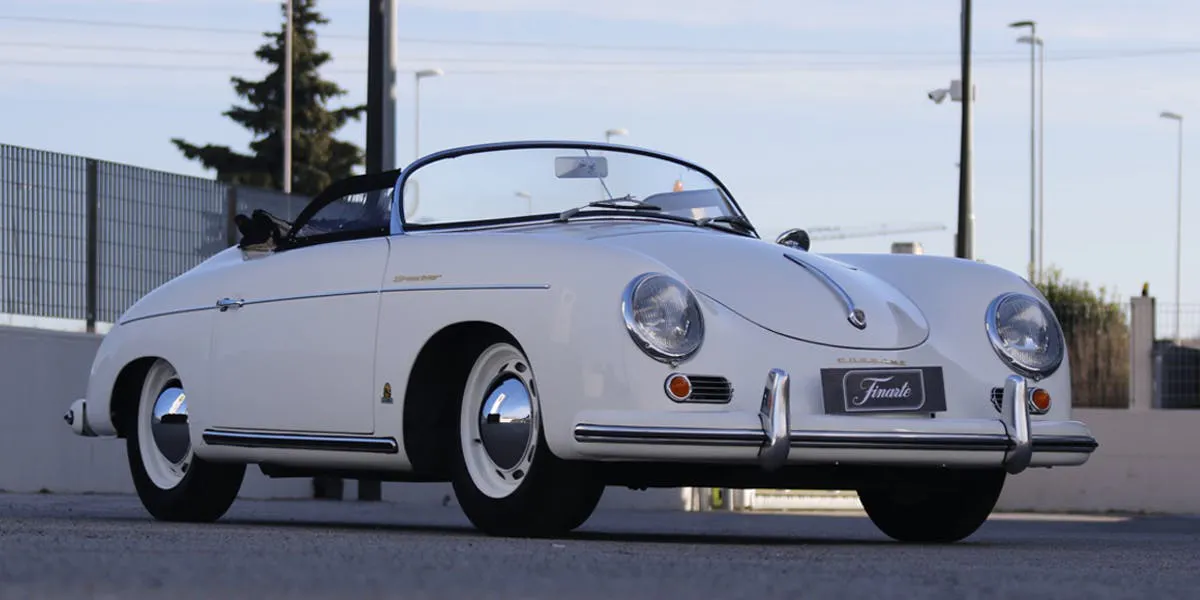
The 356 Speedster was presented in the US in September 1954. It debuted in Europe in the summer of 1955 and remained in production until 1958, when it was replaced by the 356 convertible D, a cross between the Speedster and the 356 convertible. A total of 4,722 Speedsters were produced, including 200 pre-series. Now, Finarte offers a rare white pre-series model from 1952 with a 70 hp Super engine.
1958-1983: the great oblivion
During the 25-year-span of 1958-1983, Porsche no longer offered the Speedster in its catalogue, as customers were looking for a sports car that was reliable and comfortable. During the 1980s, the designers created two prototypes based on the 911 SC: one in 1983 red and another in 1984 white, but there was no sequel with a production model.
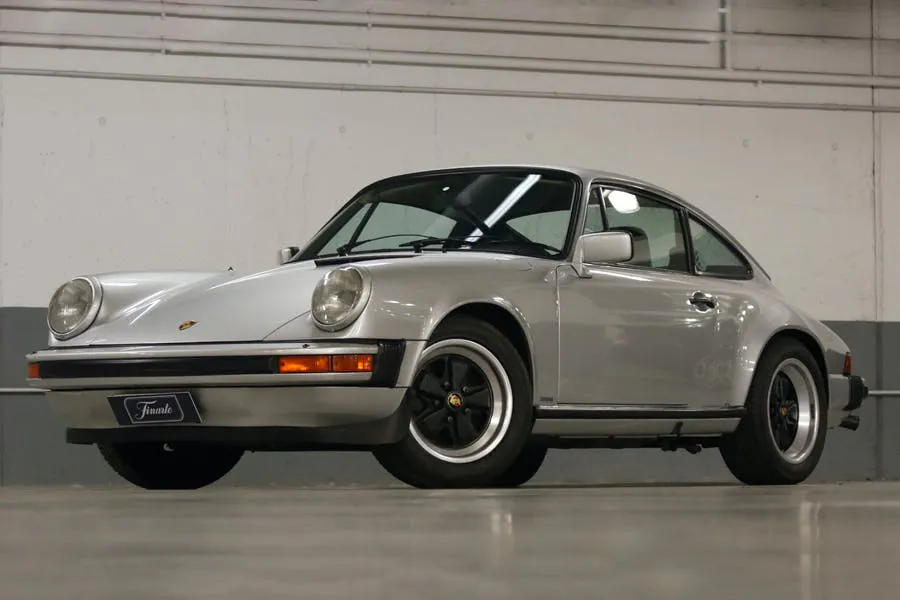
1987: the return
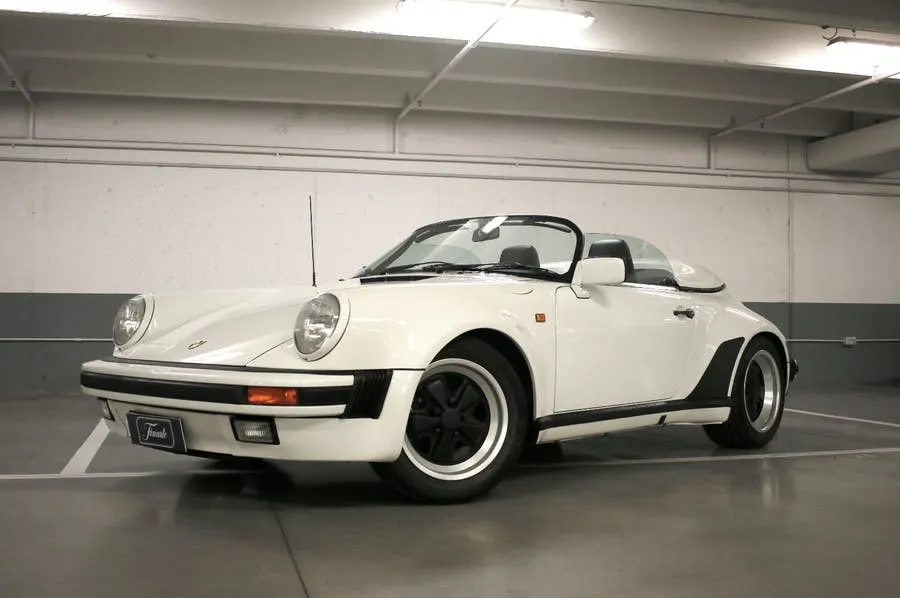
The study and construction of the new Speedster took place in 1987 when Porsche presented the prototype based on the Carrera 3.2 at the Frankfurt Motor Show. The Speedster philosophy of a Spartan car was abandoned, however, as Porsche moved on to the concept of a more unique and particular model. Mechanically identical to the production version, the 911 Speedster 3.2 is distinguished by its lower windscreen (compared to the convertible), and by the rigid cover of the rear seats that creates a ‘double hump’. On request came the ‘Turbolook’ line, with the rear wheel arches widened. In Italy, the ‘Turbolook’ arrived in only 100 specimens; the ‘Slim’ versions (with normal wheel arches) were sold through importers. Finarte offers a 1989 model with the Turbolook line, with the provenance of one owner and 24,918 km.
1992: the second Speedster, only with slimmer bodywork
Marketed in 1992, based on the 964 Carrera 2 with 250 hp engine, and by choice of the manufacturer, the second Speedster arrived with ‘narrow’ bodywork with ‘Slim’ rear wheel arches. Unlike the first version of 1987, the 964 had a cheaper set-up, returning to a more spartan and sporty version. Porsche's choice not to make the version with the enlarged ‘Turbolook’ wheel arches led some customers to modify their 964, and they did it directly to Porsche's exclusive Speedster department, which was set up with 15 units.
1995: two Speedsters, one for Ferdinand Porsche and the other for Jerry Seinfeld
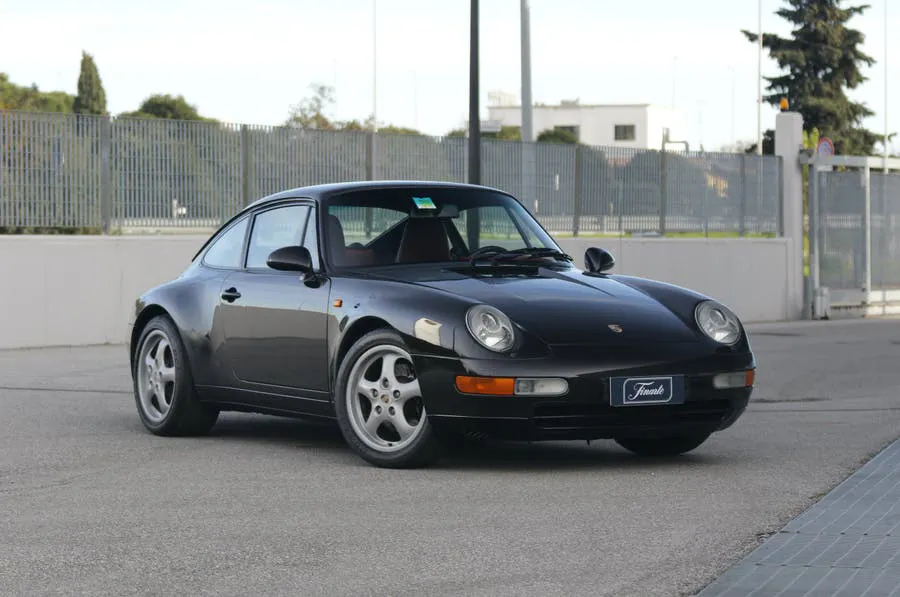
In the early 1990s, Porsche had to bring the brand back into vogue and needed a whole range of models. They couldn't afford a limited edition production. In spite of everything, however, two Speedster models were prepared by the department on a 993 base. One in green made for Ferdinand Butzi Porsche, the Porsche family's favourite shade for their cars, to celebrate Ferdinand’s 60th birthday. The other, a grey specimen, was made for American comedian Jerry Seinfeld, who sent his 993 Carrera 2 convertible to Porsche to be made into a Speedster.
2010: the first Speedster of the 2000s
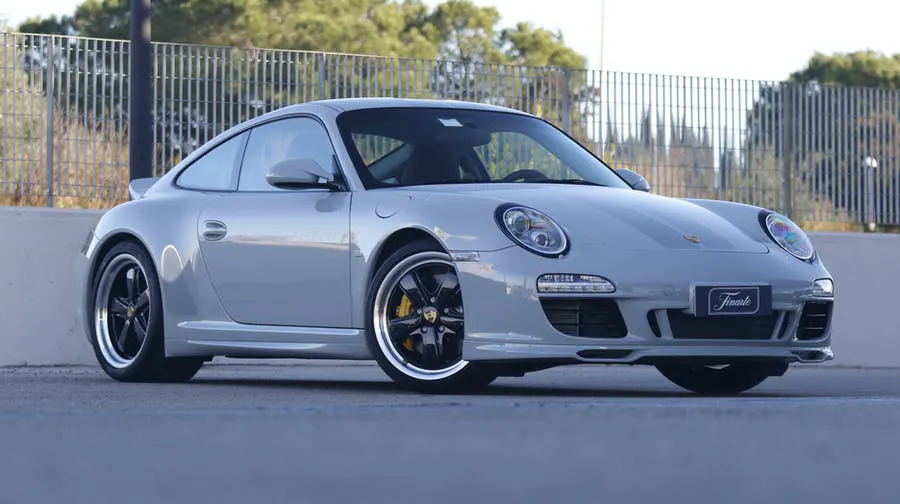
In 2010, to celebrate 25 years of the Speedster department, Porsche built the 997 Speedster, based on the production model 997 Carrera S convertible. There are 356 models built and in just two colours: Pure Blue, made specifically for this model, and Carrara white.
2019: the Porsche 991 Speedster, the last of the line
The Speedster was created on the occasion of the 70th year of the Stuttgart brand and has become quickly coveted by collectors. Produced in a total of 1,948 units, the Speedster 991 reaches 310 km/h and is equipped with an adaptive suspension lowered by 25 mm with steering rear axle and mechanical self-locking differential. Aesthetically, it inherits some body parts from other models already on the market, all made of ultralight materials.
Finearte’s automotive auction is an unmissable event. Although its format is an online auction, it is still a unique event with a double soul: Finarte will present, thanks to the collaboration with AUTOMOTIVE MASTERPIECES, a selection of 15 Mille Miglia eligible cars for all tastes and availability, with a top lot of the caliber of large Alfa Romeo 6C 2500 Sport Berlinetta (Carrozzeria Turinga). The other 48 lots revolve around the great brands of Porsche, Volkswagen and some interesting Skoda proposals from an entire and prestigious collection of the Saottini family. One particular gem is a rare Dallara Stradale, a model that has never been auctioned before now.
Viewing for the auction is available by appointment from Wednesday 28 to Friday 30 October 2020. For all information on how to participate or view the cars, please visit the Finarte website.
Discover all of Finarte’s automotives from the catalogue on Barnebys
Article by Edoardo Baj Macario, Assistant to the Automotive Department at Finarte