
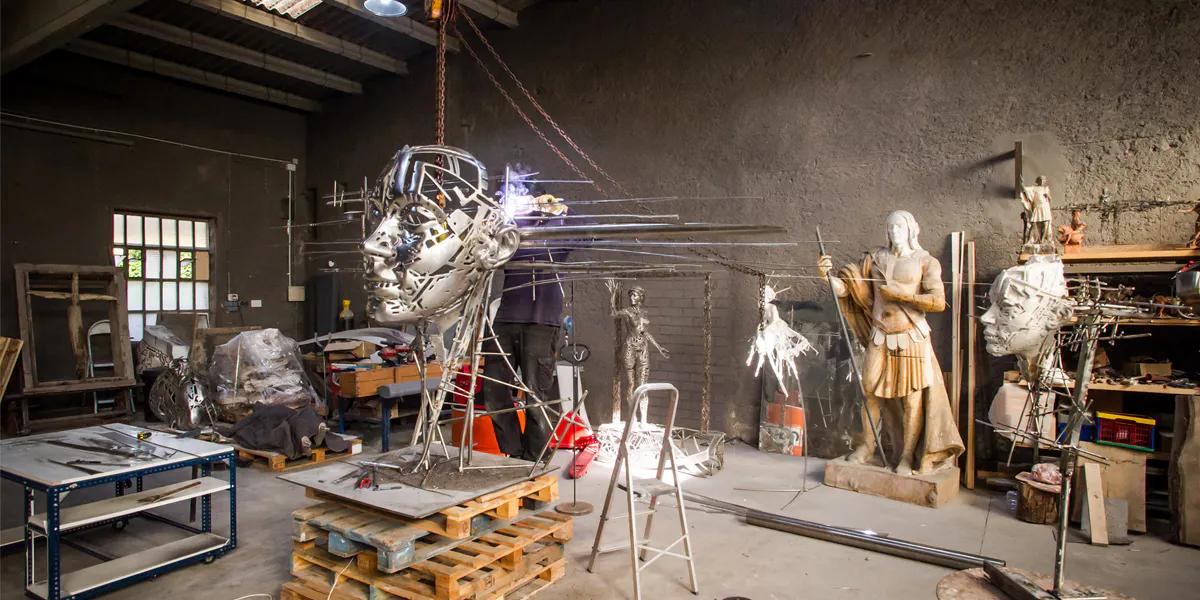
I have been told that I model with air...
Jordi Díez Fernández (b. 1966) is a Spanish artist who aims to build a bridge between current art forms and its predecessors. His work encompasses many themes, ranging from religious art in stone, wood, terracotta and iron, to specific commissions for special projects.
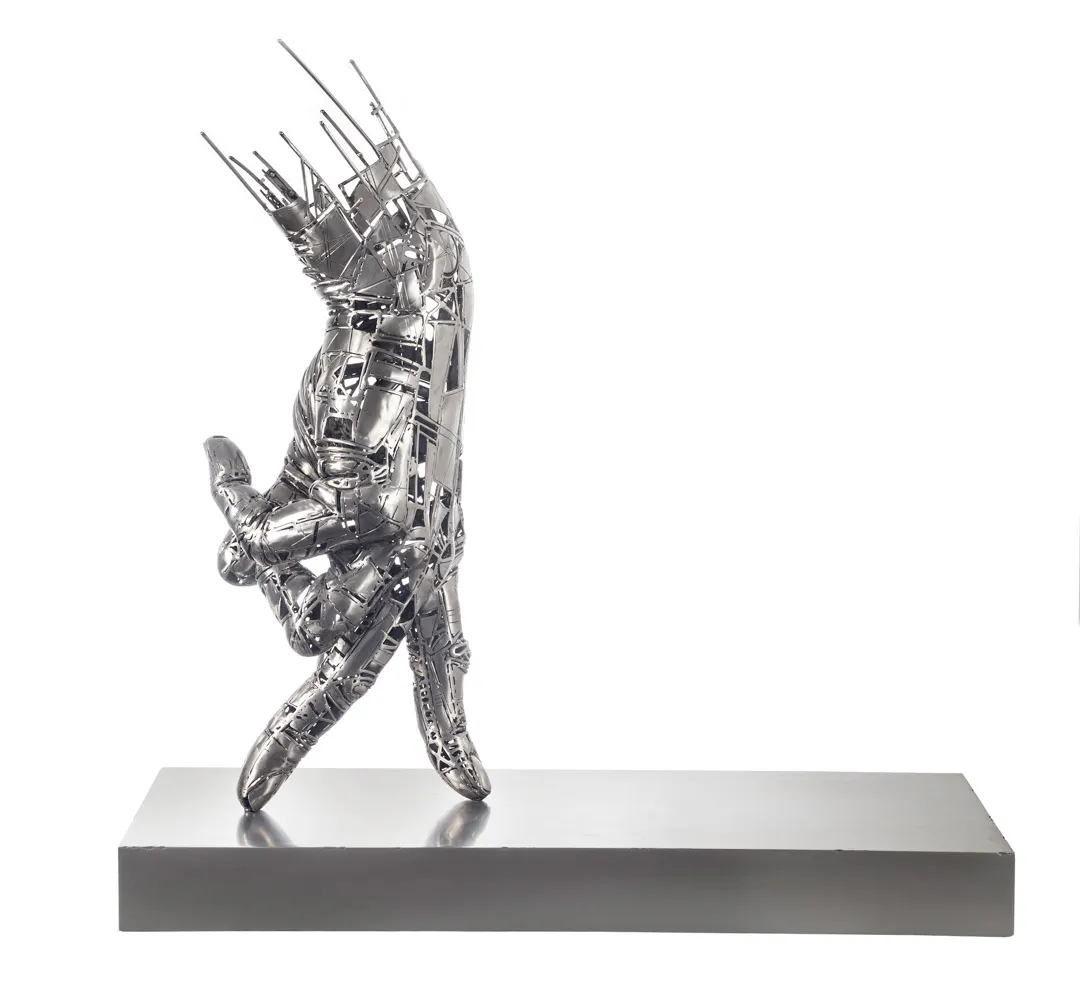
More recently, Fernández has developed a technique using stainless steel electro-welding elements, which gives a uniquely characteristic style to his work. The result, a highly expressive form of figurative art, uses modern technology to establish a defined balance between old and new: a bridge, if you like.
To describe the physical characteristics of Fernández’s method, some call it ‘modelling with air’, for others it is ‘steel transparency’. Ultimately, it is about the presence of absence – negative space or the interior of a work. It’s not just about the surface, but about the representation of energy.
Intrigued? So were we, which is why we sat down with the artist, represented by Villa del Arte Galleries, to find out more. Read on to uncover our interview with the sculptor.
Barnebys: What are your influences when it comes to creating?
Jordi Díez Fernández: When I think about this, the first name that comes to mind is Michelangelo. There are other influences, sculptors above all from the classical world, such as Phidias, or ancient ones, such as Thutmose, the author of the portentous bust of Nefertiti, and more contemporary concepts, deconstruction, the ‘less is more’ minimalist... But Michelangelo continues to have such a powerful presence in my work that I consider him a pillar of the two or three influences that I have.
What is it that inspires you?
Us. The human being possesses everything. Through their representation, we can get to know about many aspects of reality. It is a path like any other in which one's growth is parallel to the capacity of representation. For me, it is an infinite subject.
What can we find if we visit your studio?
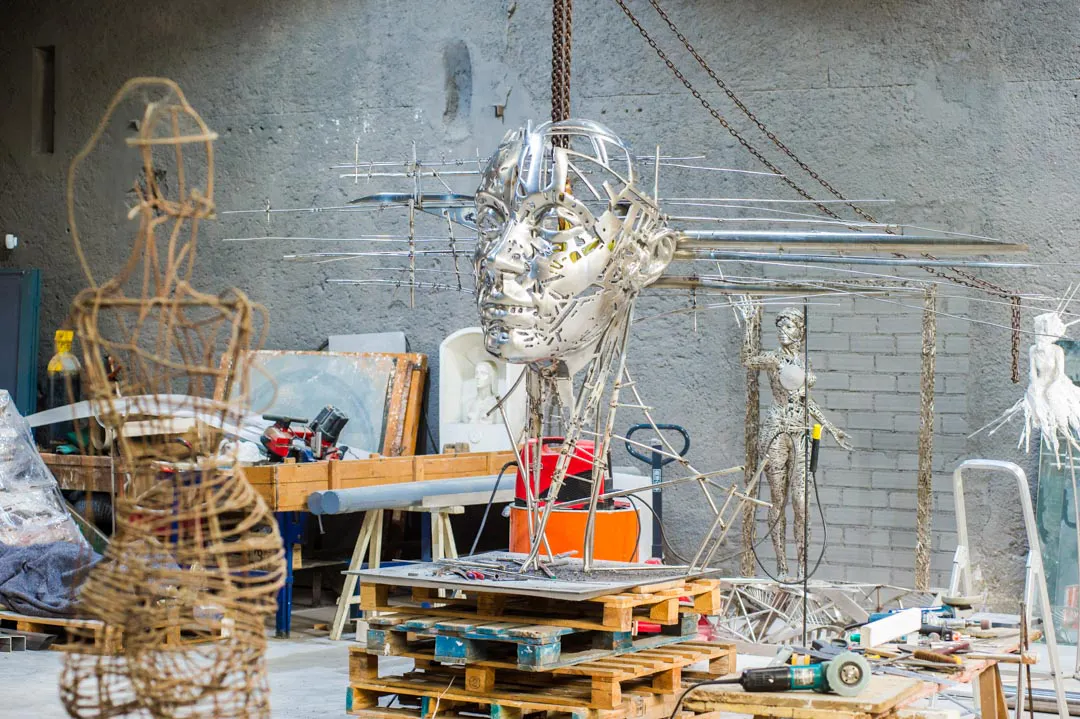
Normally just what I’m working on. But also sketches of works from a short time ago and small pieces from many previous periods references that, for me, are personal findings that I leave there to work with later. I like having them around, and not standardising them. I always count on the fact that anyone of them can suddenly impose itself and propose its development.
What is sculpture for you, what does it mean?
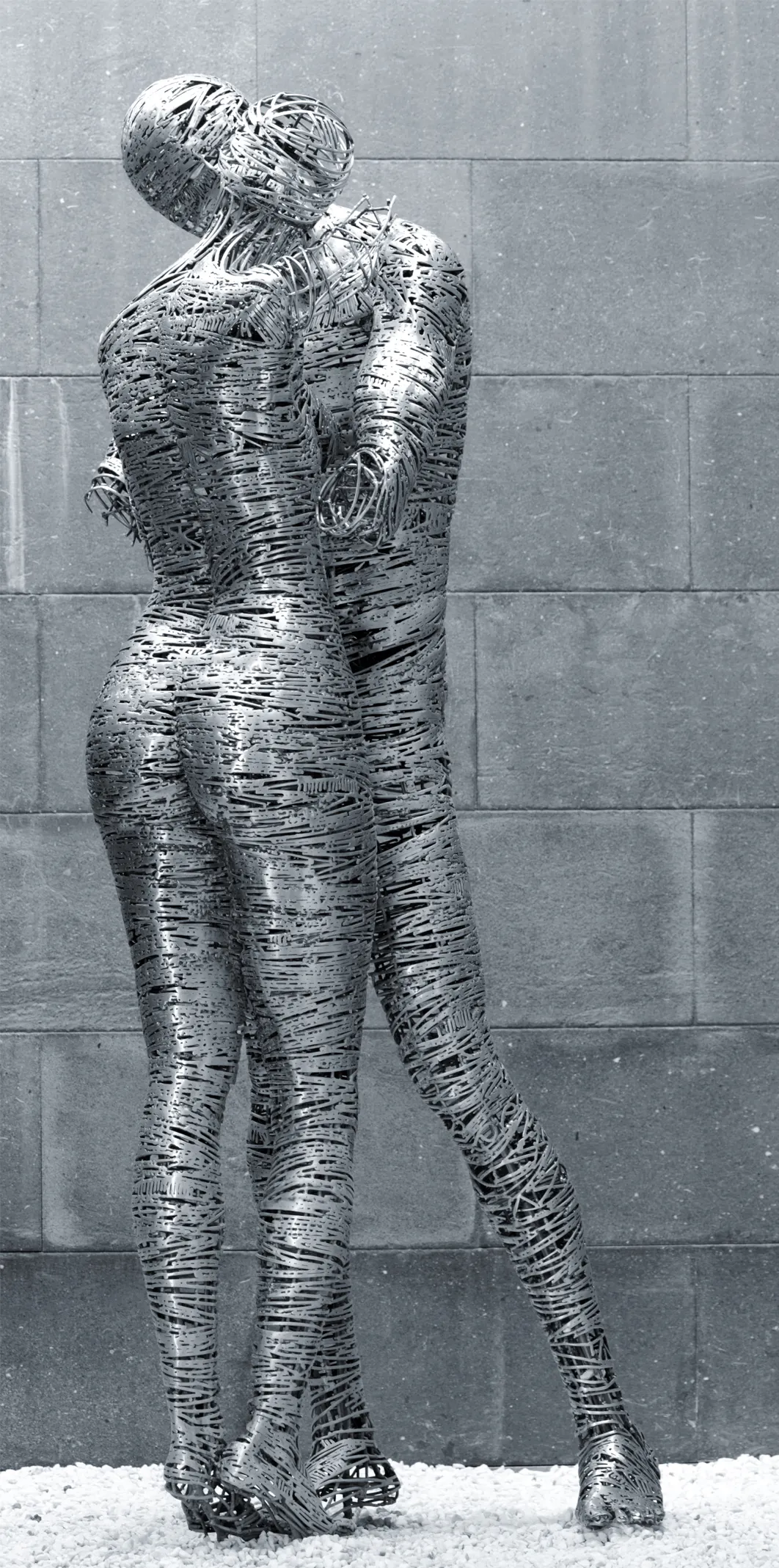
Sculpture, like so many other human activities that are not only artistic, is the transmission. Transmission of thought. Then there is the intrinsic condition of each activity. In the case of sculpture, we could say that it is the roughest activity within fine arts, the one that is seen head-on with the harshness of the material. Given that matter is the densest and most primary level of our reality, and that in the case of sculpture it is used to express more subtle levels, we could say that in general sculpture is the art of the spiritualising matter.
How can your work be defined?
My work is eminently figurative, but really only in some aspects. I work with true proportions because, long ago, I detected that any relationship of proportions that a human body establishes, in reality, is far superior in power and beauty to any subjective interpretation we can make. In the end, we are faced with laws that are the result of aeons of evolution, superior to our intelligence. But it is also true that in other aspects my work is not realistic. I don't look for the anatomical detail, the skin. I'm looking for the energy that animates a human being, his inner appearance.
Why the theme of heads, of faces?
A head portrait says almost everything about the person being portrayed. The rest of the body also provides a lot of information, but not on the same level. Steel, due to its absence of colour, and how I work it seems to appeal to the world of archetypes, to ideal perfection. I combined these two concepts, the search for the maximum information united with the maximum ideal perfection. The result is archetypal, ideal heads.
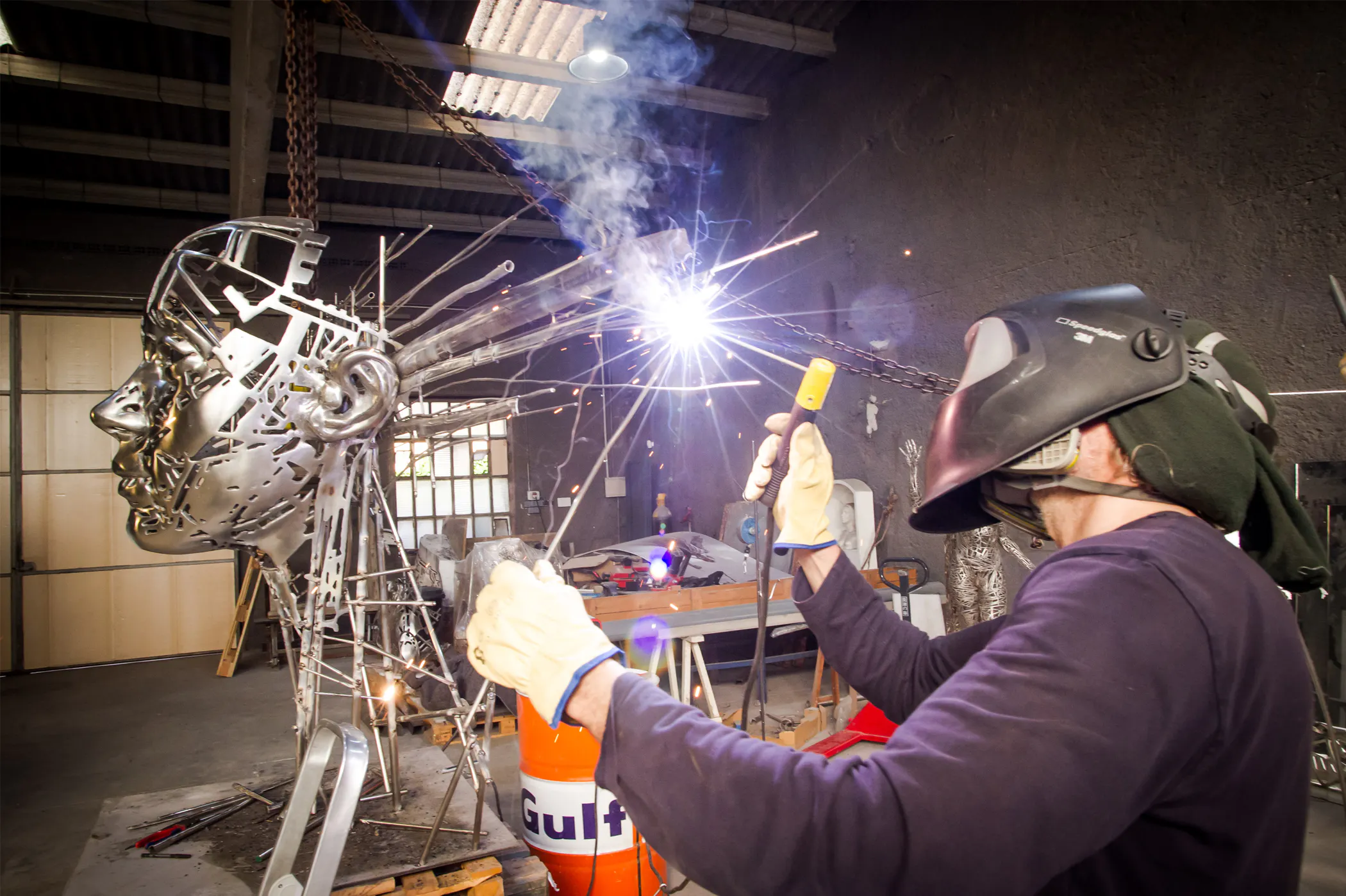
Can you tell us more about the concept of ‘steel transparency’ in your work?
When I started with steel, I was looking for a material whose hardness would force me to synthesise. I wasn’t satisfied with the path of increasing virtuosity that I was on. I was moving away from the inner energy. With steel, I looked for a resistant and beautiful material that would endure the passing of centuries. Already in my earlier works, the presence of the hole became very important, from the interior of the sculpture. The concept of lightness appeared, of immateriality, which together with the absence of colour reinforced the concept of representing energy rather than surface. Sometimes, I have been told that I model with air, that is, I use the rods and pieces of steel strictly necessary to imprison the air that contains the form I express.
Several of your sculptures are becoming reference points in some large cities. Do you prefer your works to be placed in public spaces?
Public works are very important, it is the way to communicate with a large number of people. I always think in this sense – of Michelangelo's David, installed at a time when Florence was threatened by Rome, a superior power. I think of the morning after it was installed, of the baker who passed by, the laundress, the cart driver and the student. I imagine them looking up and thinking "I am David". Michelangelo raised the spiritual tone of an entire people, inspired them. That is the power of public art.
But I also think about the importance of the work that a person acquires, and with which he creates an intimate dialogue, a place where he is exactly where he wants to be and with whom he wants to be. I couldn't say what I think is more important.
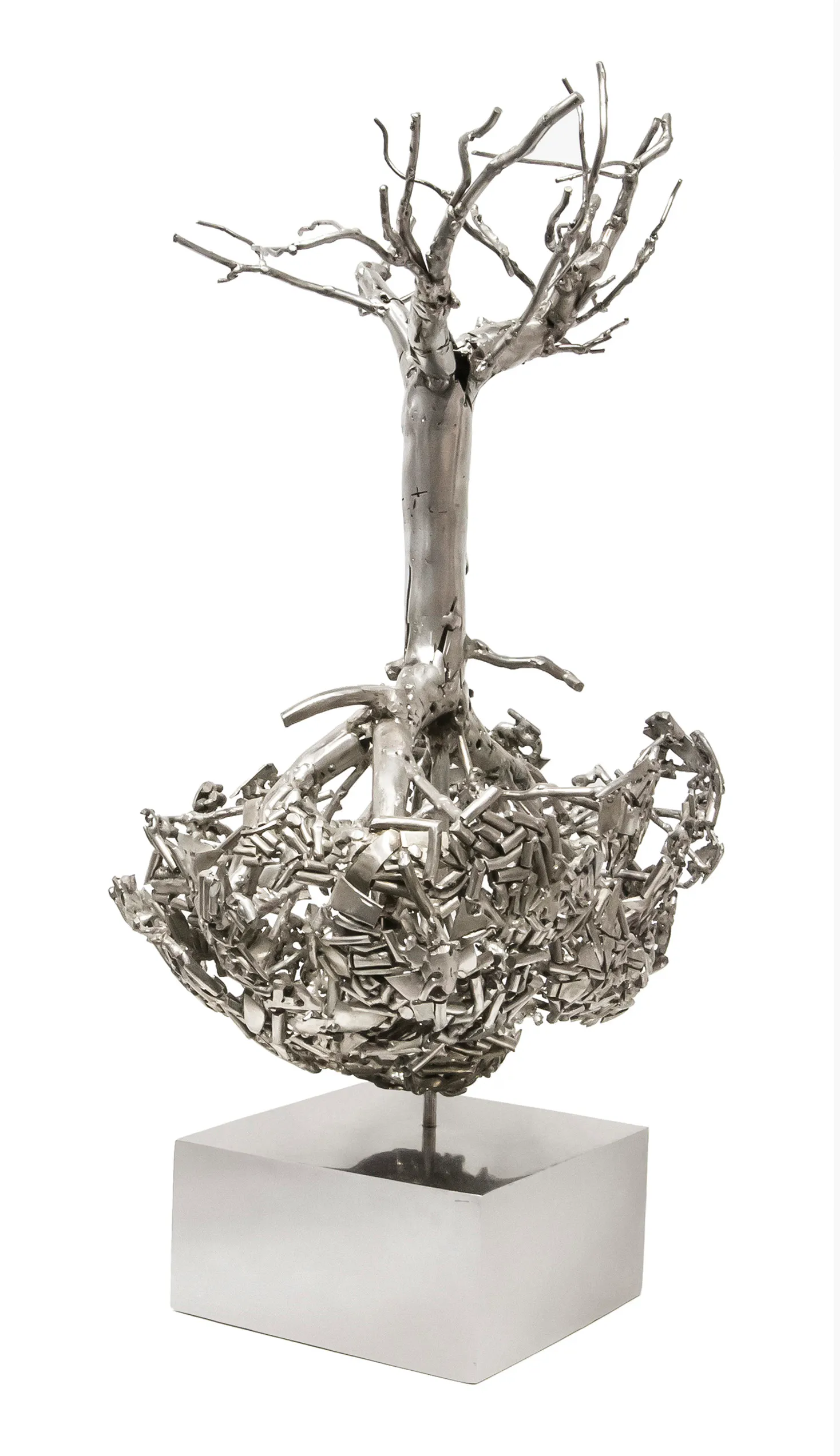
Do you have a favourite piece in your oeuvre?
I'm fortunate in that way. The favourite is usually the last one I've done because, in one way or another, there is something new in it that the others don't have, it goes further. But I still can't talk about my last piece. Until it’s become inaugurated publicly, it’s confidential.
Where do you think contemporary art is going?
I think that art is dusting off some of the values of the past, such as craftsmanship, good work, the prodigious, work that requires deep training and technical mastery to be executed. These values are the ones that manage to bring to fruition the challenge of putting technology, a magnificent ally, in its exact place, that is, as a tool, not as an end in itself. I believe we have entered a stage of a historical-artistic blossoming.
What are some of your projects for the future?
I have to undertake another international public project soon, which, as is proper in these cases, is confidential until the date of its inauguration. Also a few private and institutional commissions, plus a couple of pending pieces with myself.