
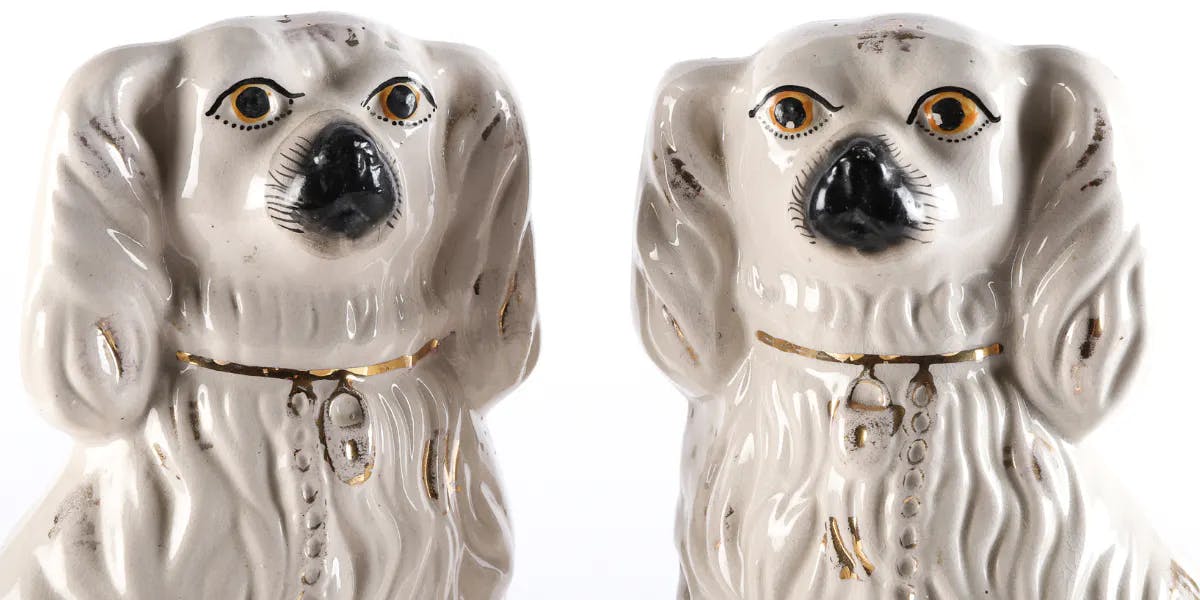
Staffordshire has been the centre of ceramic production in Great Britain since the early 17th century and its porcelain has reached popularity on the global stage and market. The county has made a historical mark for itself within the pottery industry because of its prolific production.
See also: Staffordshire Pottery: Britain's Ceramic Centre
Besides being home to famous ceramic companies such as Spode and Wedgwood, Staffordshire is also known for its charming figurines which come in various different sorts and types, of which the favourite are the 'Staffordshire dogs'.
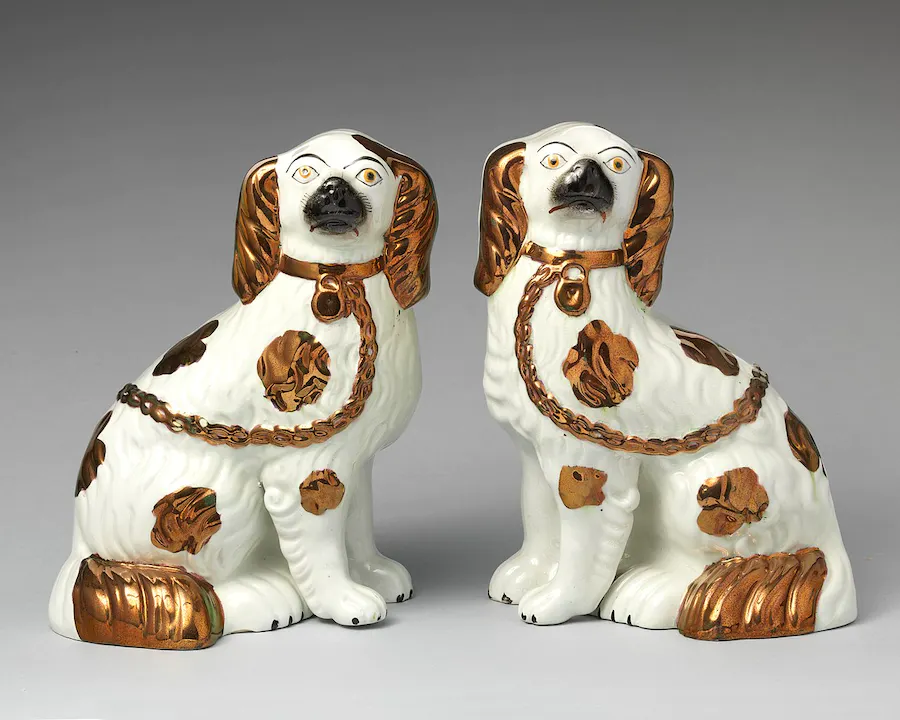
These wonderful ceramic hounds most commonly come in a pair of two and were produced in many different dog breeds, such as Pugs, Greyhounds, Collies and the Cavalier King Charles Spaniel. The dog has always been man's best friend, which is probably why these charming mantelpieces are so beloved.
The Staffordshire dogs started as silly gifts and could be easily purchased in baskets on the street from local potters in the villages around Staffordshire. They also were rumoured to be part of a secret lovers' language, where the dogs would be placed in the window and depending on how the dogs were facing each other, this would send the message to the lover outside.
It is quite rare to come across an intact pair from the 18th century, the earliest production of the Staffordshire dog figurines.
The Staffordshire dogs were decorative interior items in most English homes during the Victorian era, placed on the shelf of fireplaces or on tables.
See also: Ceramics 101: British Studio Pottery
"It is quite rare to come across an intact pair from the 18th century, the earliest production of the Staffordshire dog figurines," explains Cecilia Nordström, specialist in Asian ceramics and works of art, European ceramics and glass at Bukowskis auction house in Stockholm, Sweden. "Usually those pieces are very unusual."
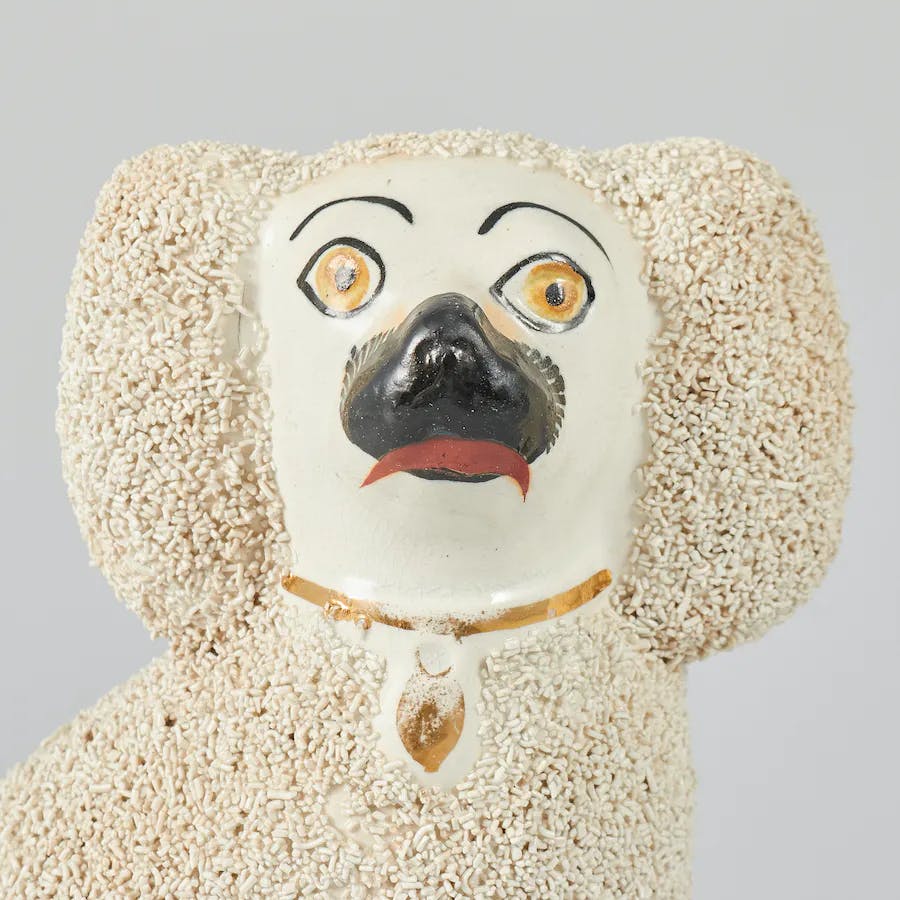
The earliest production of Staffordshire dogs are the ones most valuable on the market today, especially if they come as an intact matching pair. However, this is extremely rare nowadays, which is why the Staffordshire dogs are not often found at auction houses.
See also: Snuff Bottles: Still Up to Snuff
There are also unique pieces which were produced very early in the 18th century, of which special dog breeds can reach quite extraordinary sums at auction. The dog figurines have long been a collectors' item, but with each generation tastes and trends change, which also influences the demand for them. In Great Britain, the Staffordshire dogs are still decorative and beloved items in most English homes, symbolising the English countryside life. Staffordshire dogs are in fact bearers of great British craftsmanship and part of their cultural history. The Spaniels are especially popular, perhaps because of their connection to the royal family who favoured this dog breed.
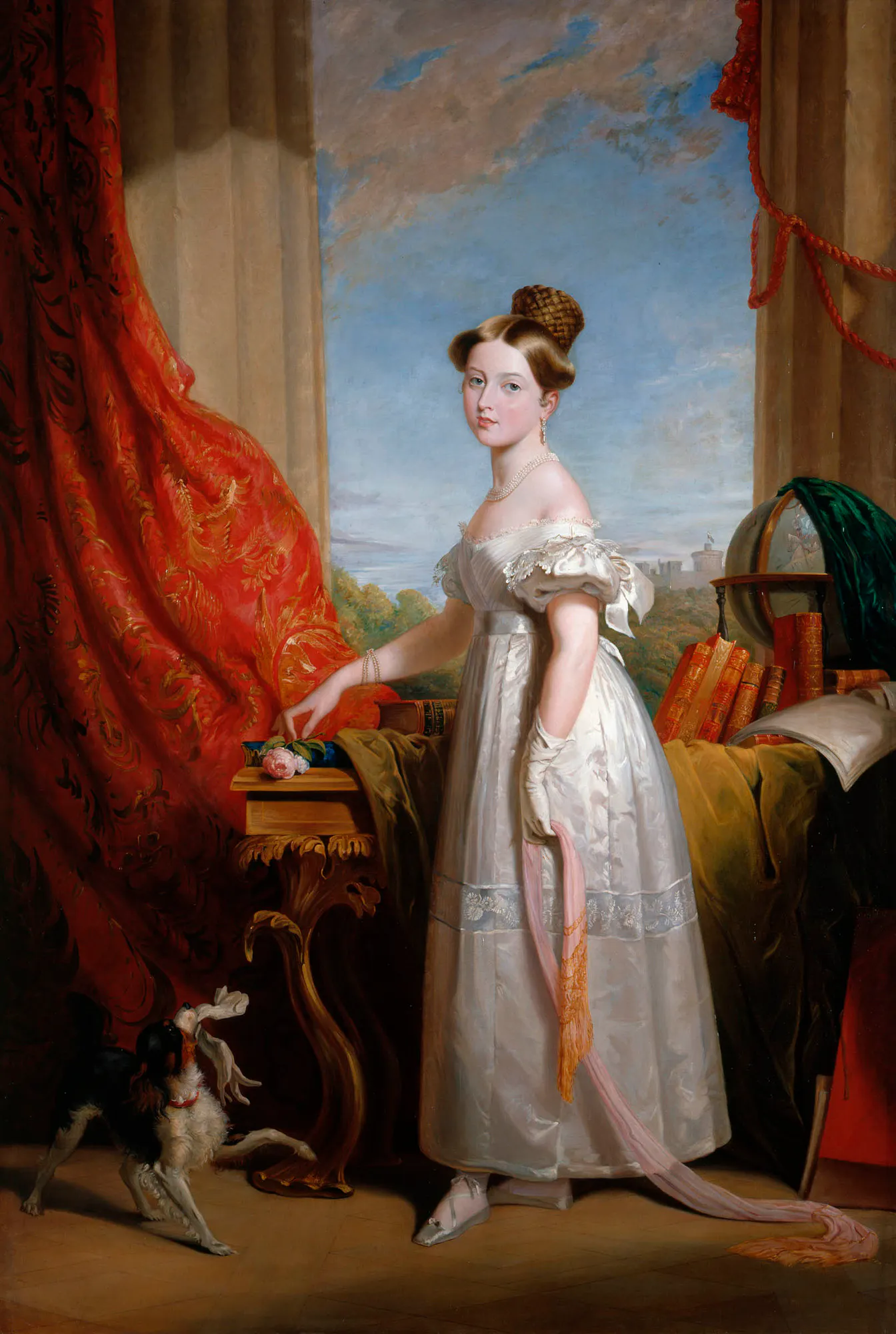
Queen Victoria, for example, had her spaniel 'Darling Dashy' Dash who she writes about warmly in her journals. Royals have always been style icons throughout time so since the Staffordshire figurines would reflect life in England during this period, perhaps this is why the spaniel became so popular.
Since the Staffordshire dogs are some of the worlds most reproduced pieces, with time it has been harder to separate the old from the new. There are however a few guidelines in how you spot out the oldies. Give great attention to the whole piece, make sure to investigate the bottom part properly, drips and drops of old paint are good signs. If you find larger holes in the bottom, use a coin to compare the size, if they are similar or larger than the coin, you can be sure that it is a reproduction, since the old antique ones usually only have small fire holes. The bottom is never perfectly smooth and it could have a 'dramatic' structure if it is old.
Want to receive articles like this to your inbox? Subscribe to our free newsletter!
The reproductions are in general too perfect, something you also can see if you find a matching pair of two dogs and stand them next to one another. If they are too similar and 'perfect' this is not an antique, since all of the old ones have a charming unique look with small brush strokes and painting on the backside. If the glaze is too shiny this also gives away a reproduced figurine. Today, you can find Staffordshire dogs at auction for a few hundred pounds, or larger collections of them for a few thousand.
Find more articles in Barnebys Magazine
Article by Kristina Gyllenberg Holst
This is an updated version of an article originally published on 7 April 2020


