
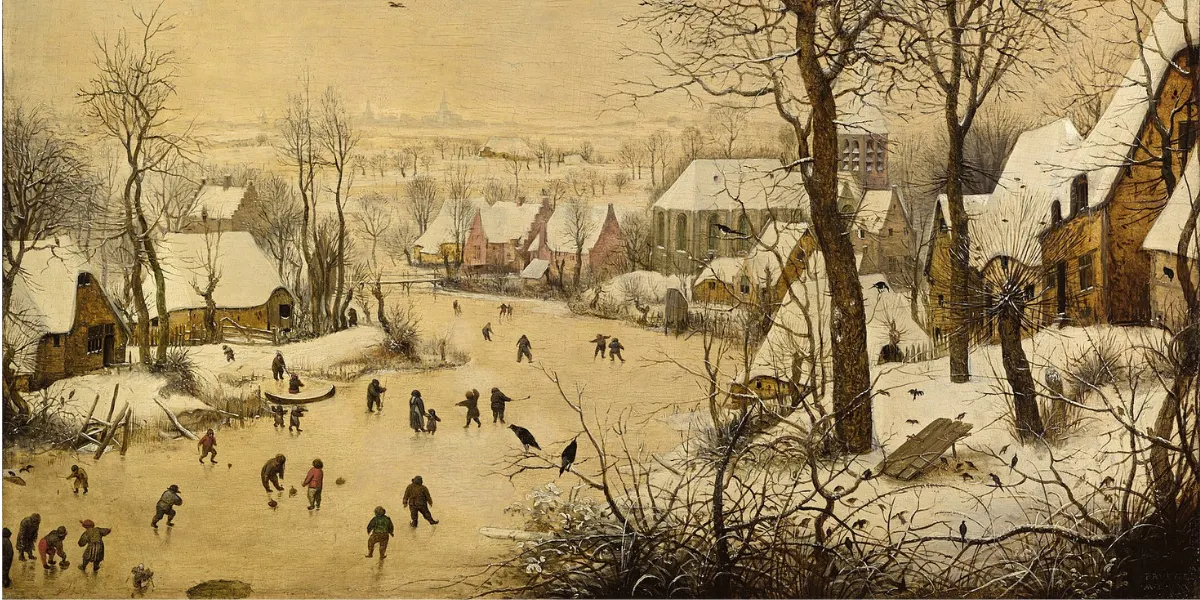
Pieter Brueghel the Elder, a Renaissance artist, earned the nickname 'Peasant Brueghel' due to his fondness for portraying the everyday life of rural scenes in his native Dutch surroundings. He enjoyed crafting compositions by combining various smaller scenes, creating a sort of 'hidden object picture.' In these works, viewers could spot individual characters, often with distinctive and grotesque features.
Winter landscapes were a recurring theme in his body of work. His creation, 'Winter Landscape with Ice Skaters and Bird Trap,' dates back to 1565. Executed on an oak panel using oil paint, the artwork captures individuals gracefully skating on a frozen river, set against the backdrop of a quaint village. In the distance, a larger cityscape unfolds. Positioned on the right in the foreground is the eponymous bird trap, accompanied by its potential victims.
See also: Winter in 10 Artworks
The painting refers, literally, to the winter of 1564-1565, described as very harsh. Figuratively speaking, the work, as we expect from Brueghel, contains a host of symbols.
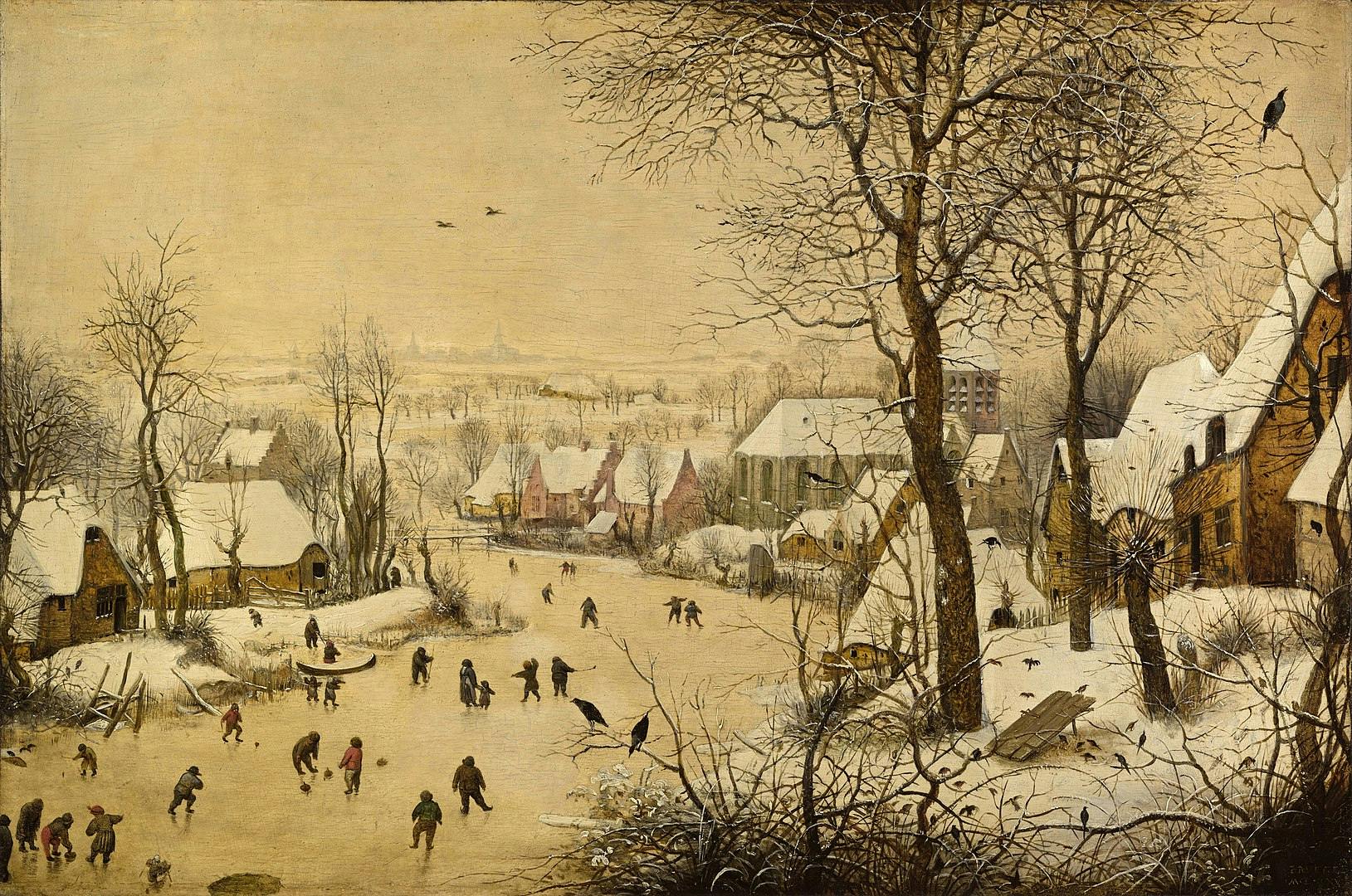
The river's layer of ice, which can break at any time, symbolises the dangers that the Christian believer may face on his way to the kingdom of heaven, from nature and the devil. The bird trap represents Satan seizing the souls of men (the soul has often been represented in the form of a bird).
Want articles like this straight to your inbox? Subscribe to our free newsletter here!
Pieter Brueghel the Younger, who was born shortly before the painting was created, often copied his father's works, but not without giving them his personal style. Of the numerous copies that exist of The Bird Trap, at least 45 are considered to be the younger Pieter's own copy. The oldest of these signed copies dates to 1601 and is exhibited in the Kunsthistorisches Museum in Vienna.
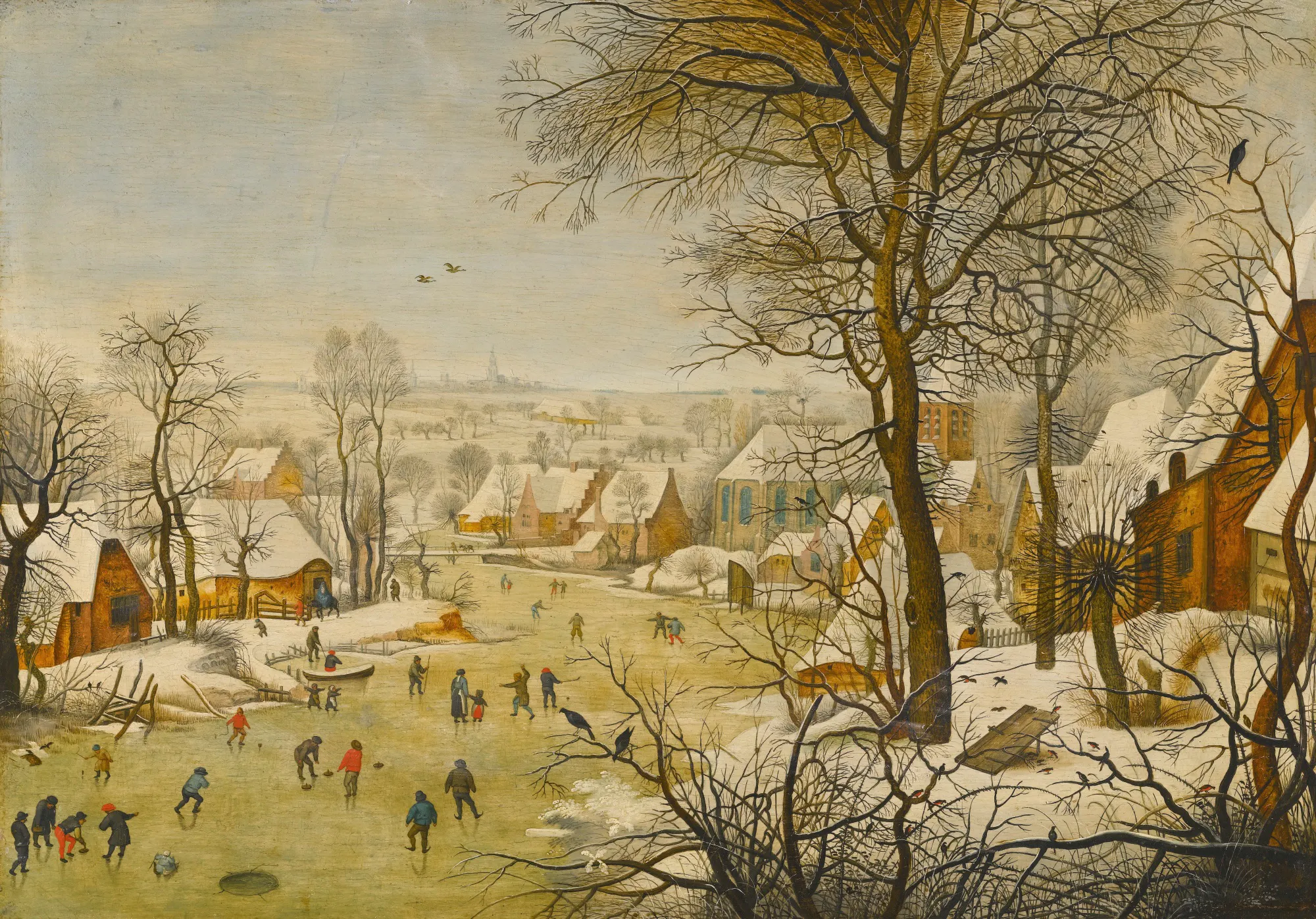
The painting's combination of an idyllic winter scene with lurking symbolism about mortality has made it popular for centuries. Bird Trap copies by Pieter Brueghel the Younger are highly sought after at auction today. The record was last set in July 2014 when a copy sold at Sotheby's London for £3.4 million.