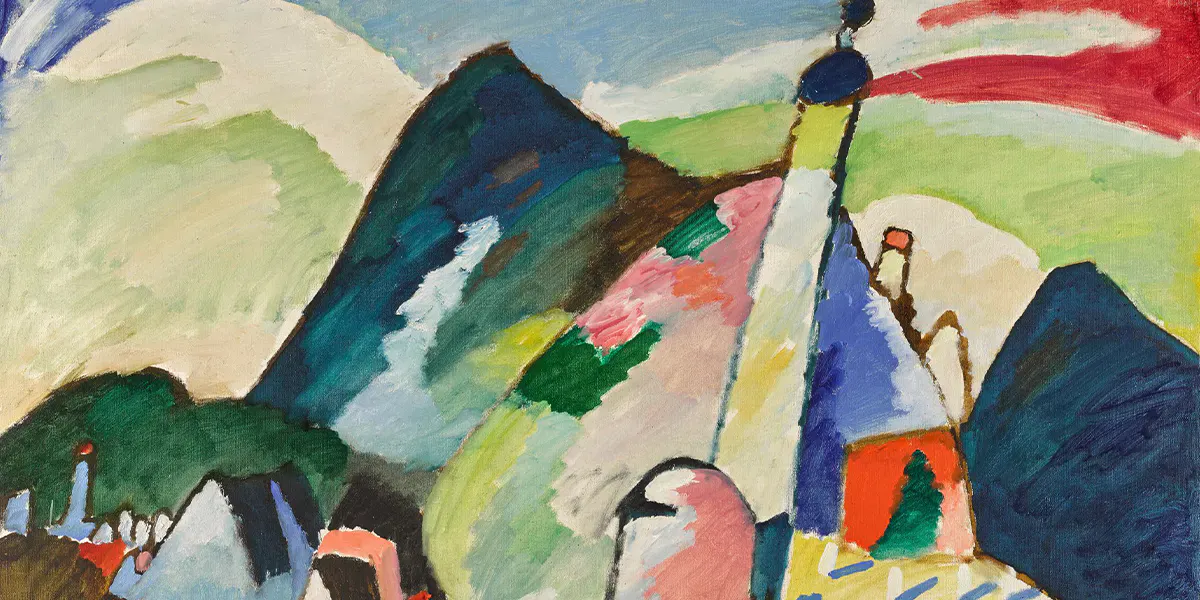
Although there are many highlights at Sotheby's Modern & Contemporary Evening Auction in London on 1 March, including Edvard Munch's Dans på stranden ('Dance on the Beach', from the Reinhardt Frieze), Gerhard Richter's Abstraktes Bild, Robert Delaunay's Rythme circulaire and Picasso's Fillette au bateau (Maya), all eyes will certainly be on Wassily Kandinsky's masterpiece Murnau with Church II from 1910.
See also: Wassily Kandinsky: 10 Facts to Know
The painting is expected to fetch around $45 million (around £36.4 million), which would beat the current record for a work by Kandinsky: $41.6 million for White Line (1913), sold at Sotheby's in 2017. Murnau with Church II was created three years earlier in the rural idyll of Murnau on Lake Staffelsee in Germany, where Kandinsky and his partner Gabriele Münter first spent the summer in 1908. The beautiful environment inspired the artist couple, who returned there again and again over the next few years. Münter even bought a house there, which she – long separated from Kandinsky – lived in until her death.
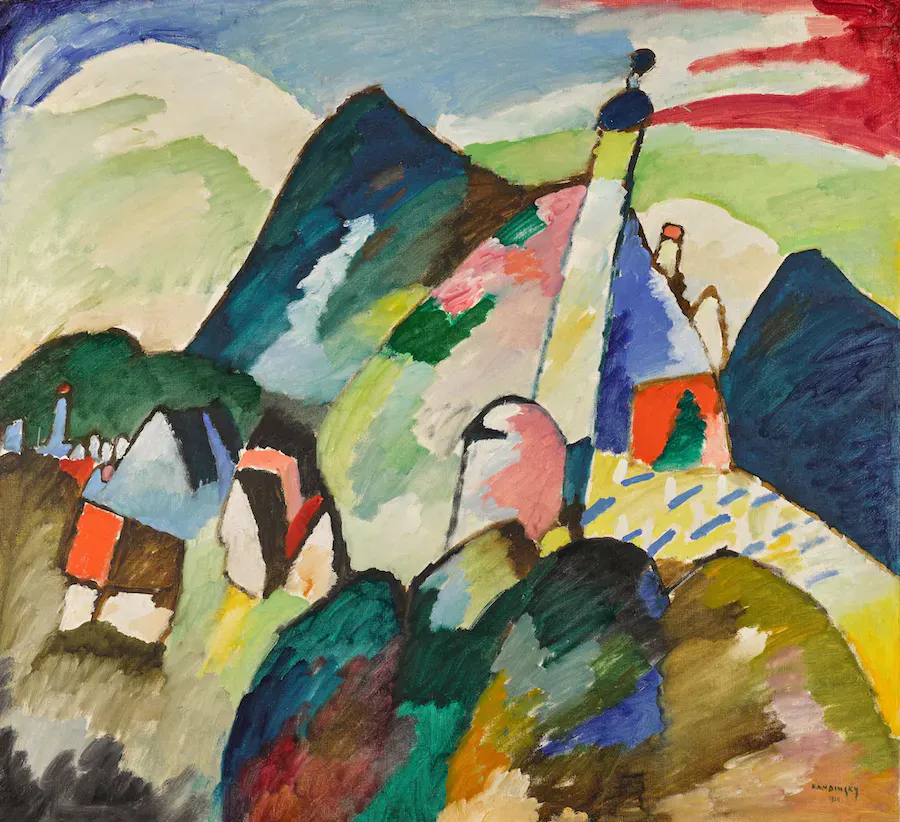
The stays in Murnau until 1914 were crucial for Kandinsky's artistic development. There, he invented a completely new style, which was to develop in the direction of abstraction. Murnau with Church II is a rare example from this phase to reach the auction market.
Want to discover more articles like this straight to your inbox? Sign up to our free newsletter!
Shortly after its creation, the painting was acquired by the Jewish-German couple Johanna Margarete and Siegbert Samuel Stern from Berlin, who owned a collection of Old Masters and Modern Art. Siegbert Samuel died in 1935, and Johanna Margarethe fled to the Netherlands two years later after being forced to sell her beloved art collection. However, she was not safe in exile, but was deported to Auschwitz by the German occupiers, where she died in 1944. A total of nine close family members died during World War II.
See also: Amsterdam Returns Kandinsky Painting to Heirs
Murnau with Church II was owned by the Van Abbemuseum in Eindhoven from 1951, but after a long-standing legal dispute with the heirs of the Sterns, it was restituted to them in 2018. The sum that the painting will raise on 1 March will be divided among the 13 living descendants of Johanna Margarete Stern and used for research into the whereabouts of the other paintings in the Stern collection.