Considered one of the greatest artists of the Rococo movement, Giovanni Battista Tiepolo (1696-1770) distinguished himself for his paintings and frescoes, but also for his engravings and his contribution to numerous European courts.
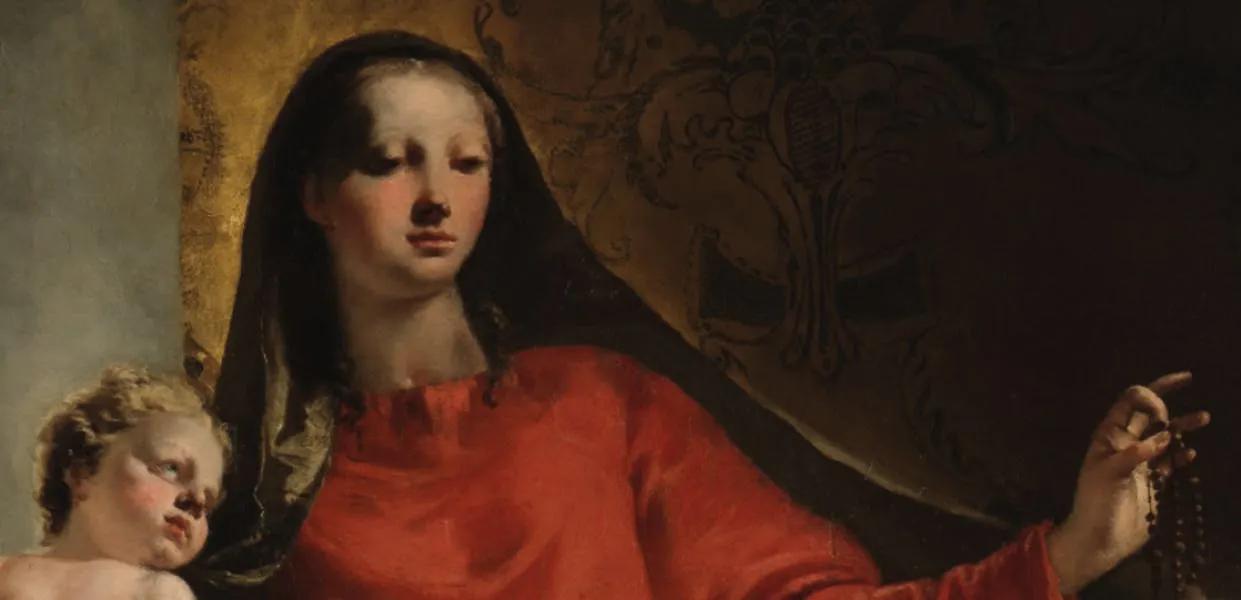
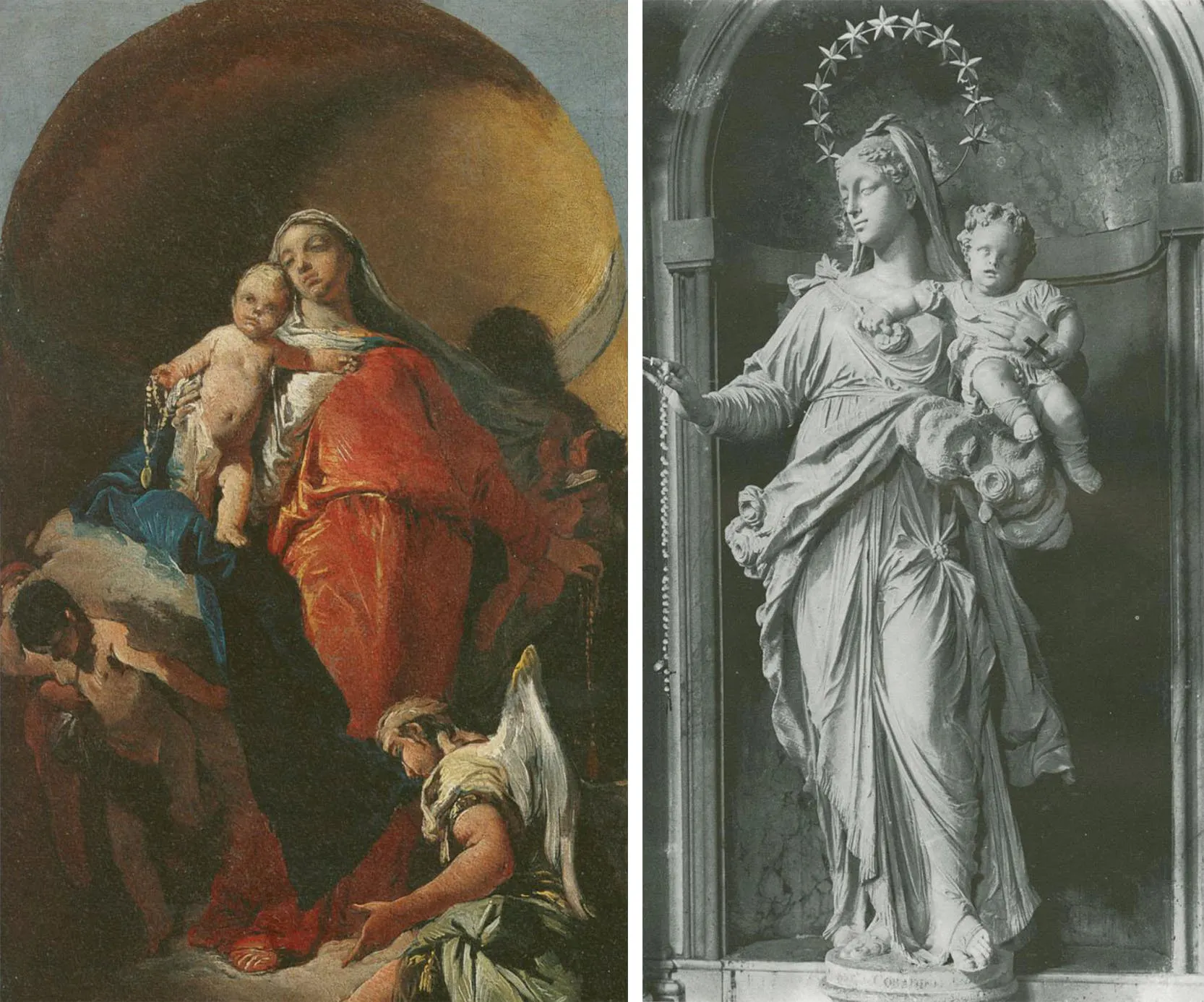
This Madonna of the Rosary, signed and dated 1735, was produced during his early career. The composition, the impressive scale (8 x 5 feet) and the palette testify to the influence of Italian Renaissance religious art on the artist. The monumental stature of the Madonna, as well as her elegant pose, recall the fantastic and theatrical elements of the Grande maniera (or Grand style, an aesthetic term associated with Nicolas Poussin), specific to Tiepolo's painting.
See also: The Top 10 Stolen Masterpieces
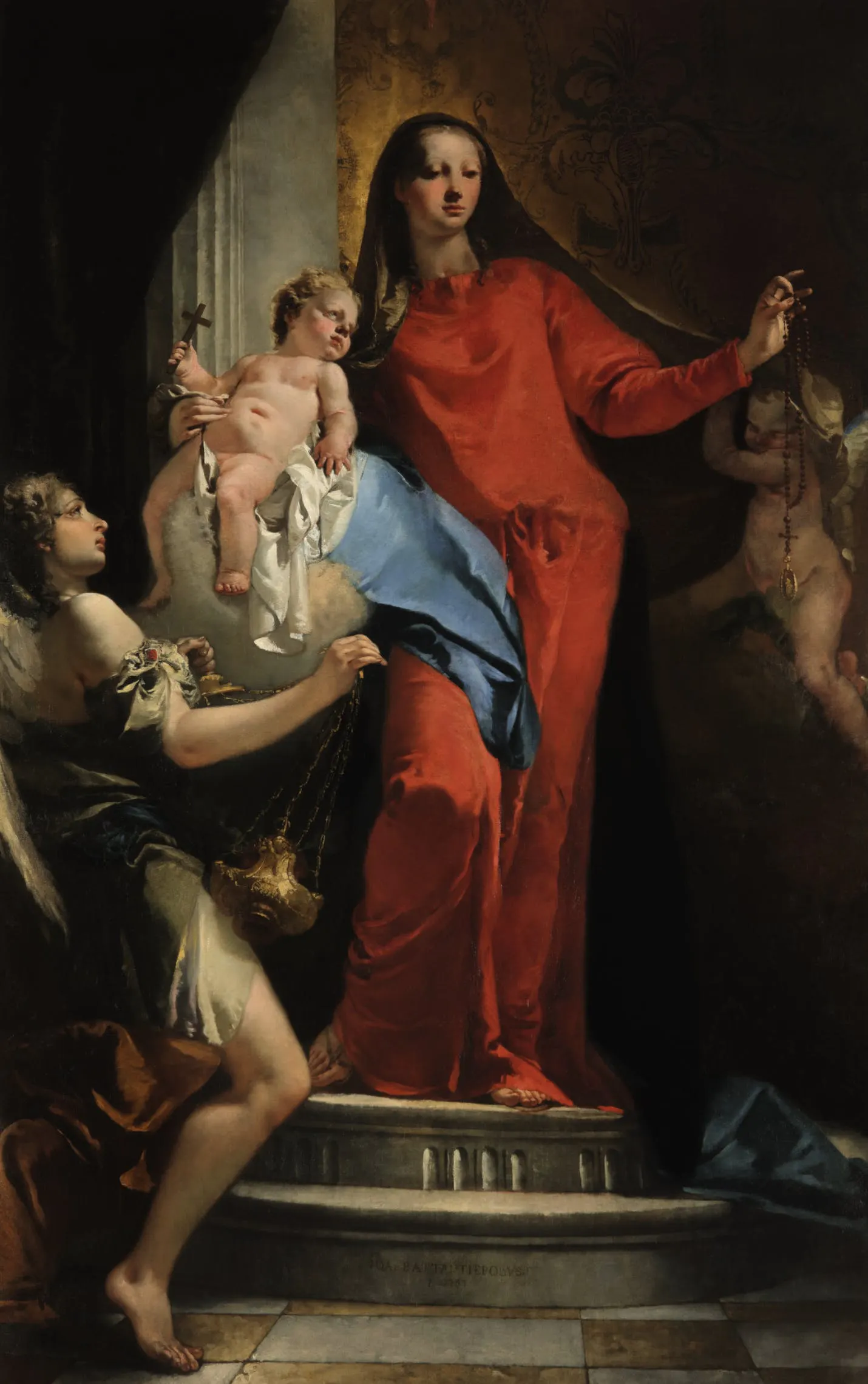
Since most works of this scale are in museums, this Madonna is the only large format altarpiece still in private hands. The provenance of this painting was not properly documented until the 1820s, and includes collector Hugh Andrew Johnstone Munro de Novar, South African diamond magnate Sir Joseph Benjamin Robinson and his daughter Princess Ida Louise Labia.
Despite the presence of a signature and a date, the original commissioner for the work remains to be determined. Historians suggest that it would have been painted for a Dominican church or the Order that promoted the cult of the Rosary throughout Europe.
By 1735, the demand for large altarpieces in Venetian churches had greatly decreased and Tiepolo had not yet received a major religious commission there. He is known, however, to have a job in Udine in the same year: the altarpiece could have been intended for one of the churches in the city.
See also: The Rediscovered Stolen Klimt is Authenticated
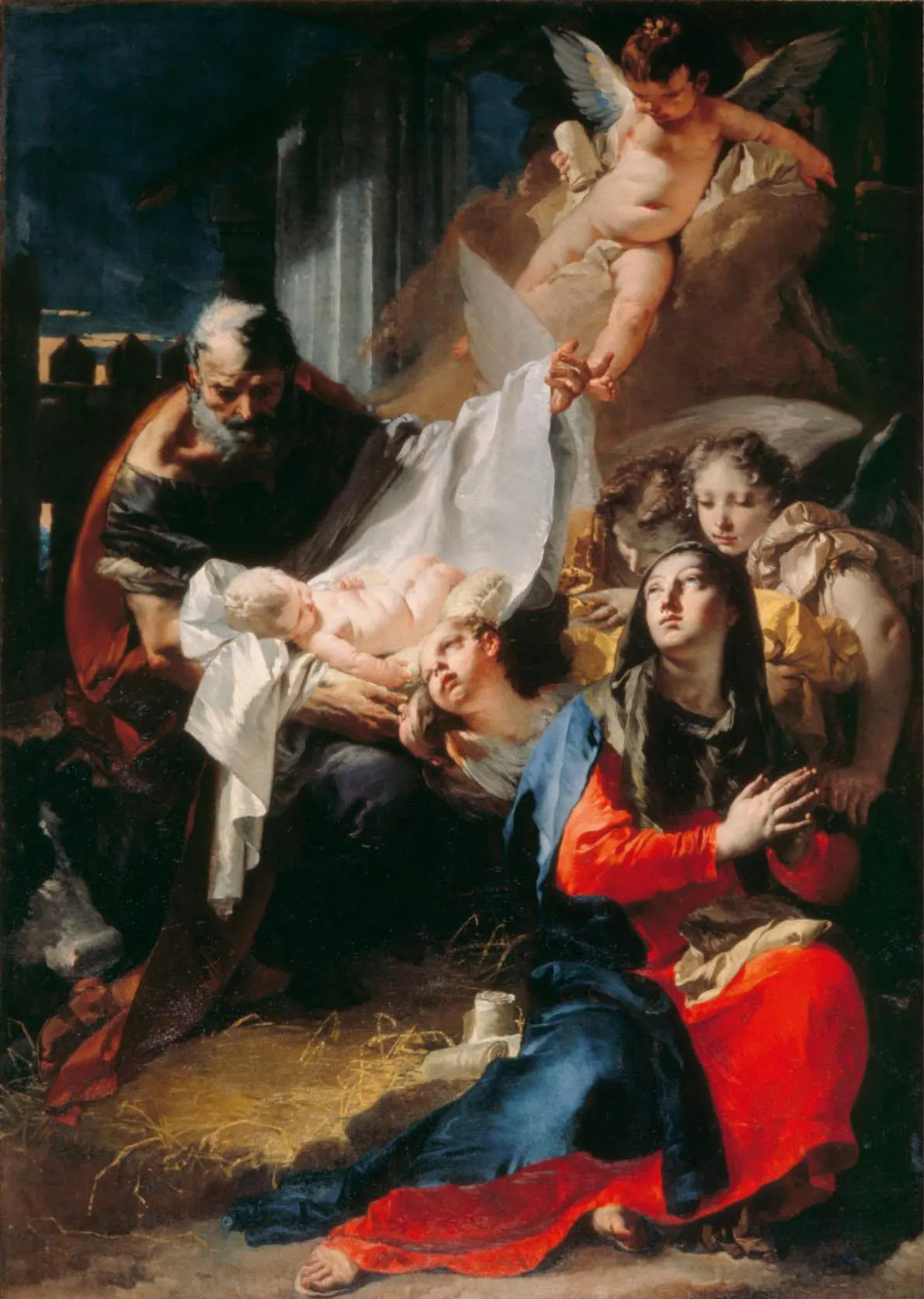
British art historian Catherine Whistler also assumed that this painting was intended for a church in Vicenza, where Tiepolo was said to been in 1734, while decorating Villa Loschi. At the same time, the painter was invited to decorate the Royal Palace in Stockholm, but with the high demand for his works in Italy, he had to refuse the mission.
In addition to his own preparatory sketch in oil, Tiepolo has ingeniously brought together several sources of stylistic inspiration to produce this altarpiece. Indeed, the Virgin has a pose almost identical to that of the sculpture by Antonio Corradini, a Madonna of the Rosary from 1720 kept in the Church of the Hermits in Venice. Evidence suggests that Tiepolo staged the model for his Madonna on a stone pedestal, in front of a column and a curtain, inspired by Corradini. In addition, the divine figures of Tiepolo and Corradini extend their hand and raise their fingers in the same way to offer the rosary to a supplicant.
In his frescoes at Villa Loschi in Vicenza, Tiepolo had reproduced allegorical female figures with the appearance of statues which probably inspired his treatment of the Virgin in this painting.
The first confirmed owner of this Madonna was John Webb, a great collector of old paintings who owned altarpieces of Italian churches and works by Raphael, Giulio Romano, David, Greuze, Rembrandt, Velazquez and Caravaggio. He sold, on 11 June 1829, his entire collection to Harry Phillips.
The work then came into the possession of Hugh Andrew Johnstone Munro, called Munro de Novar, who also acquired the Tiepolo's Martyrdom of Saint Agatha (around 1755). The two Tiepolos were sold by the heirs of Munro in 1878 and bought by the Galerie Sedelmeyer, before joining the collection of Sir Joseph Robinson, a diamond magnate and South African politician. Much of Robinson's collection was inherited by his daughter, Ida Louise, wife of Count Natale Labia, including the Tiepolo, which remained in the family until 1989.
The Madonna of the Rosary will be sold on January 29 at Sotheby's, during the Masters Week 2020, with an estimate on request.