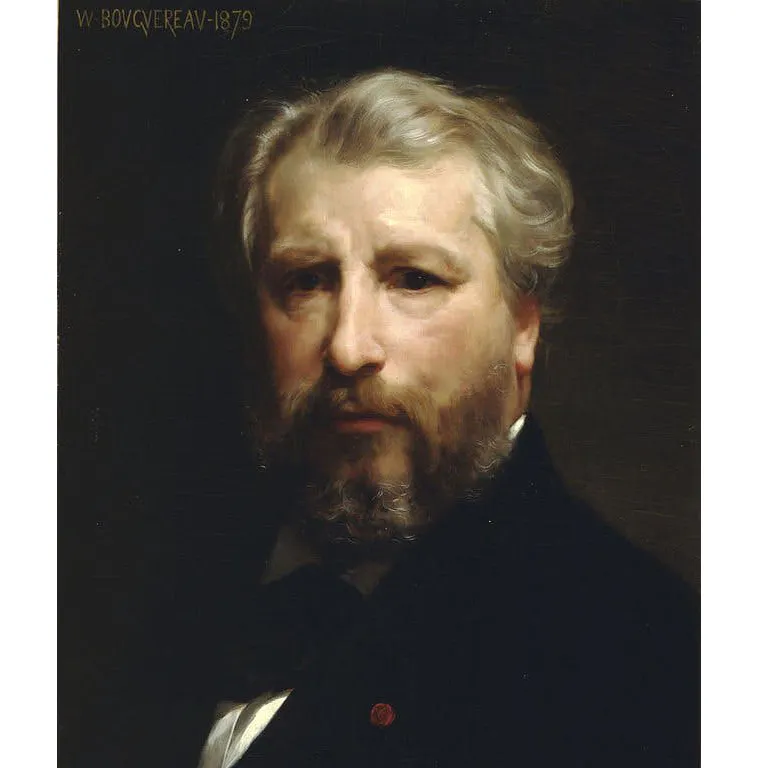
An established artist of the Paris Salon, William-Adolphe Bouguereau (1825-1905) was one of the most celebrated painters of the 19th century. He was born in La Rochelle, France in 1825 and displayed great talent in drawing and painting from a young age. In 1846, when he was twenty, he moved to Paris to study at the École des Beaux Arts, where he learned to master the style of academic painting, focusing on detailed historical or mythological scenes with great attention to beautified human anatomy (based on classical sculpture), geometric perspective and the balance of colour and line.
His extraordinary talent did not go unnoticed and he was awarded the prestigious Prix de Rome in 1850, a three-year residency at Villa Medici in Rome where he was exposed to Renaissance masterpieces, classical styles and antiquities. He once said, "There's only one kind of painting. It's the painting that presents the eye with perfection, the kind of beautiful and impeccable enamel you find in Veronese and Titian," his greatest inspirations.
See also: The 10 Most Famous Works of Art and Where to Find Them
After his residency finished, he returned to France and his career took off. He was awarded several commissions, from allegorical scenes of the Four Seasons to grand battle scenes of Napoleon III, the emperor at the time. In 1863, his painting The Holy Family, on exhibition at the Paris Salon, was sold to Napoleon III and his wife Eugenie and hung in their Paris apartment. Imperial favour magnified Bouguereau's spotlight and commissions arrived from European royalty and wealthy Americans.
See also: Elisabeth Vigée Le Brun: The Royal Favourite
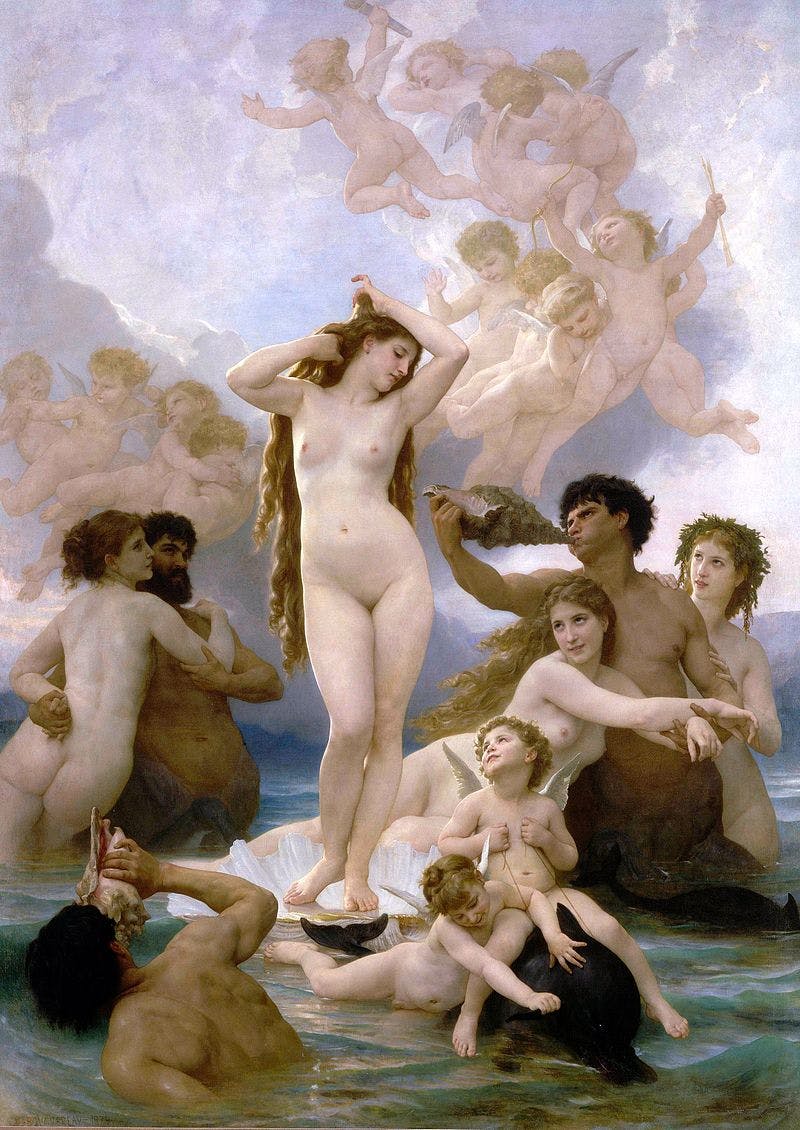
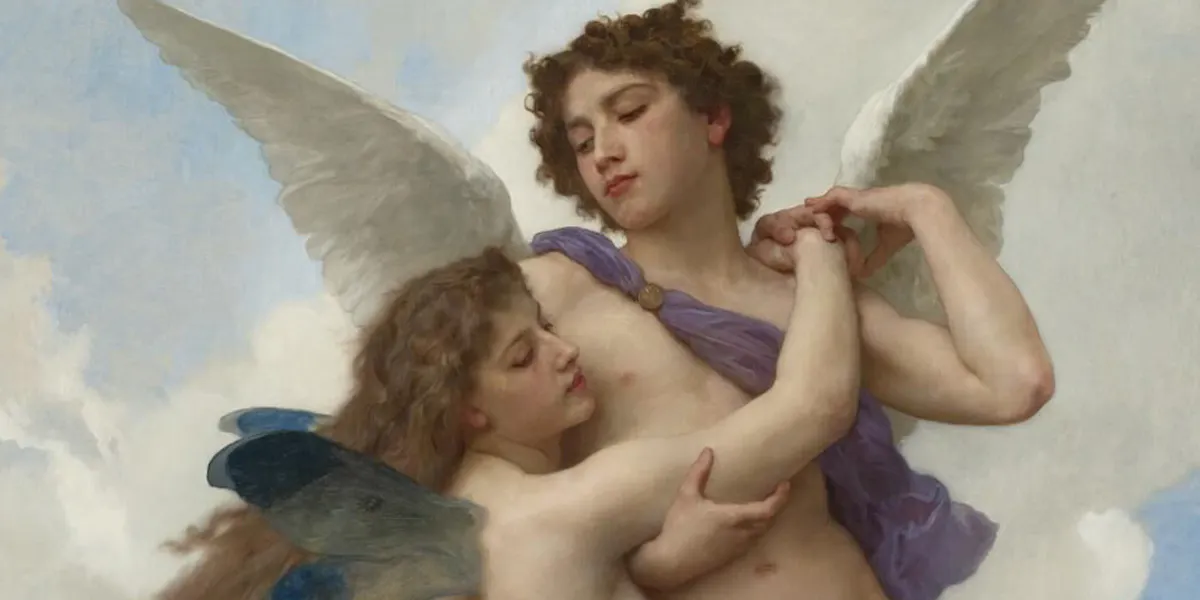
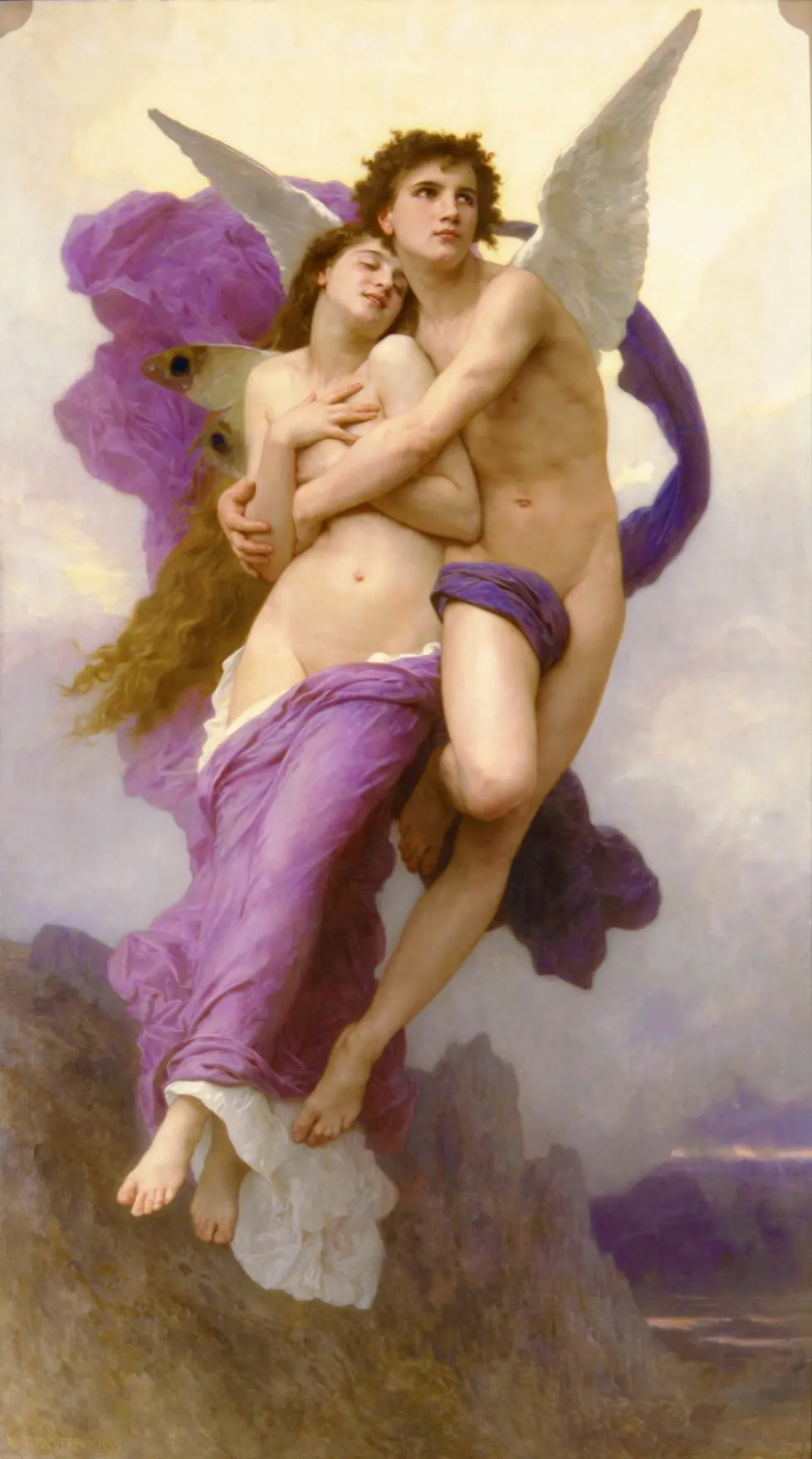
He was renowned for his precise yet idealised renderings of the human form, created in adherence to his academic studies. His most famous works were often of classical or mythological women, such as the goddesses Aurora, Psyche or Venus, that were often detailed scenes of beautiful bodies in motion, a soft colour palette and ethereal backgrounds. He always sketched his subjects before painting them, a lesson inculcated from years at École des Beaux Arts.
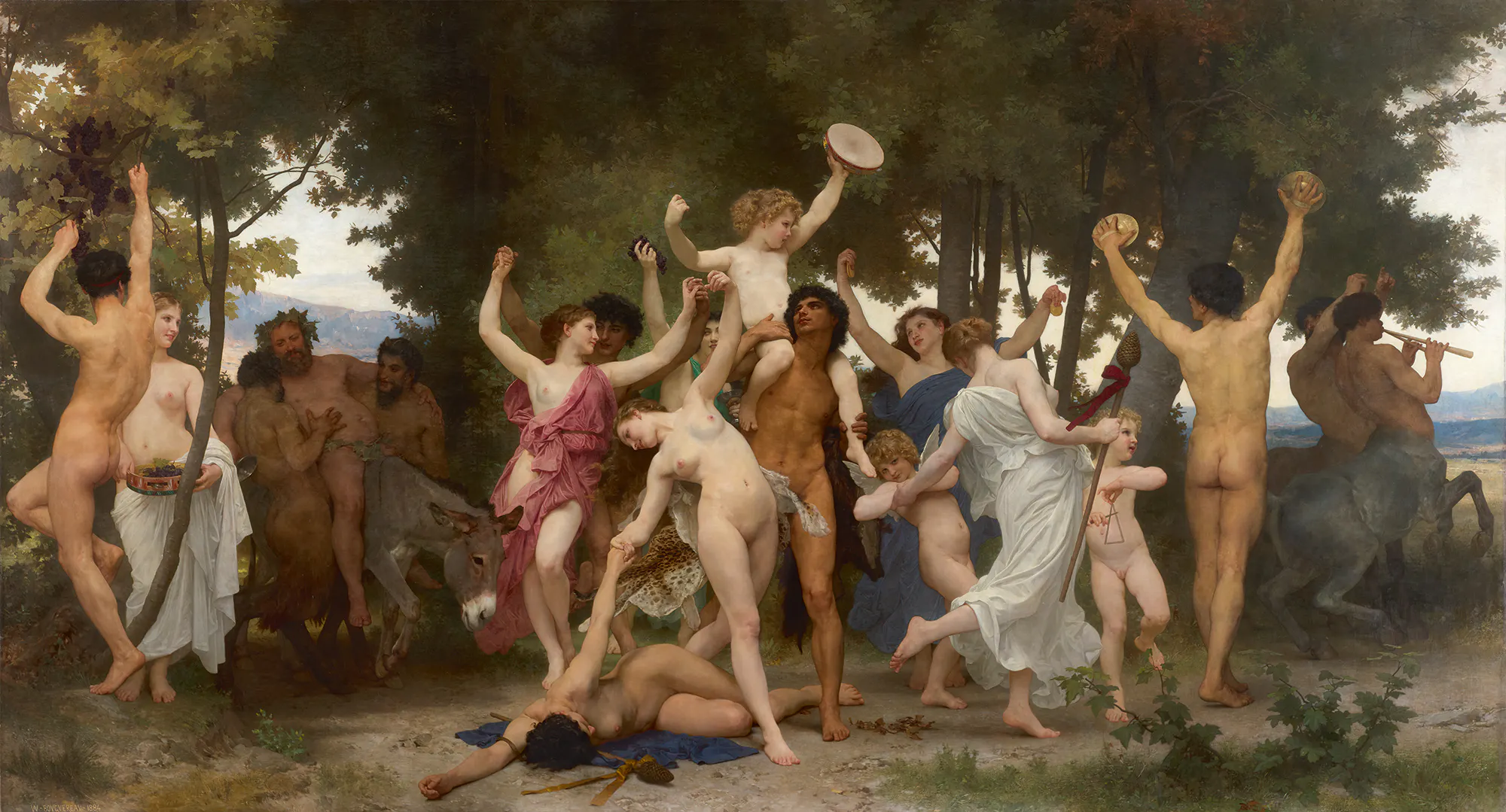
Although he was very popular in his time, he was spurned by the Impressionists, like Edgar Degas and Paul Gauguin, who believed his work was too slick and polished and tethered to tradition. After his death in 1905, his work was largely ignored as modern art eclipsed traditional academic painting. He left behind over 820 paintings, which hang in museums worldwide, with his most famous works at the Musée d'Orsay.
See also: A New Renaissance for Old Masters
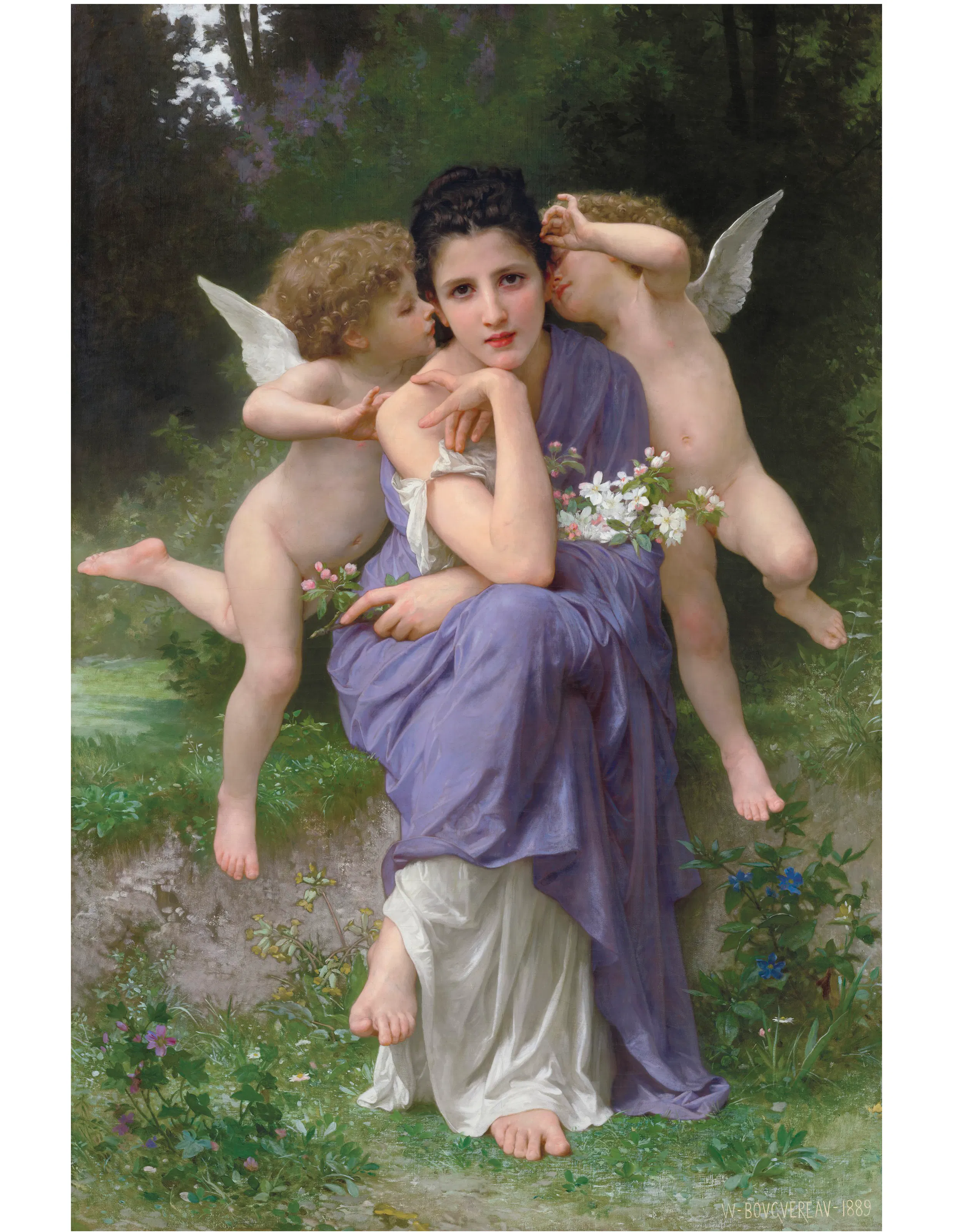
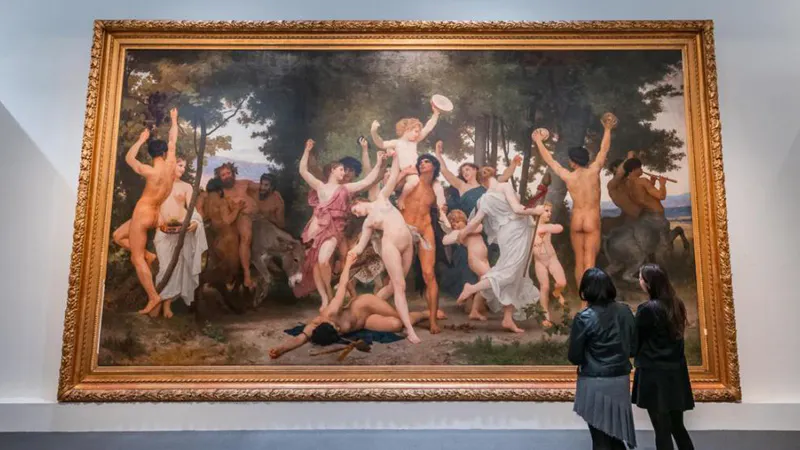
His command of graceful subjects, precise form and classical themes have experienced a renaissance in the past few decades and his work has achieved millions at auction. In 2019, Sotheby's offered his La Jeunesse de Bacchus, a large-scale painting that highlighted his classical background and close attention to accurate form and beautification. With staggeringly large proportions (3.35 metres high and 6.1 metres wide) and a veritable bacchanal of movement and colour, Bouguereau's Le Jeunesse de Bacchus (The Youth of Bacchus) is considered his most important painting. But with a hefty estimate of $25-35 million, the celebrated work failed to sell. His current record is for Chansons de printemps, which sold for £2.9 million at Christie's in 2019.