
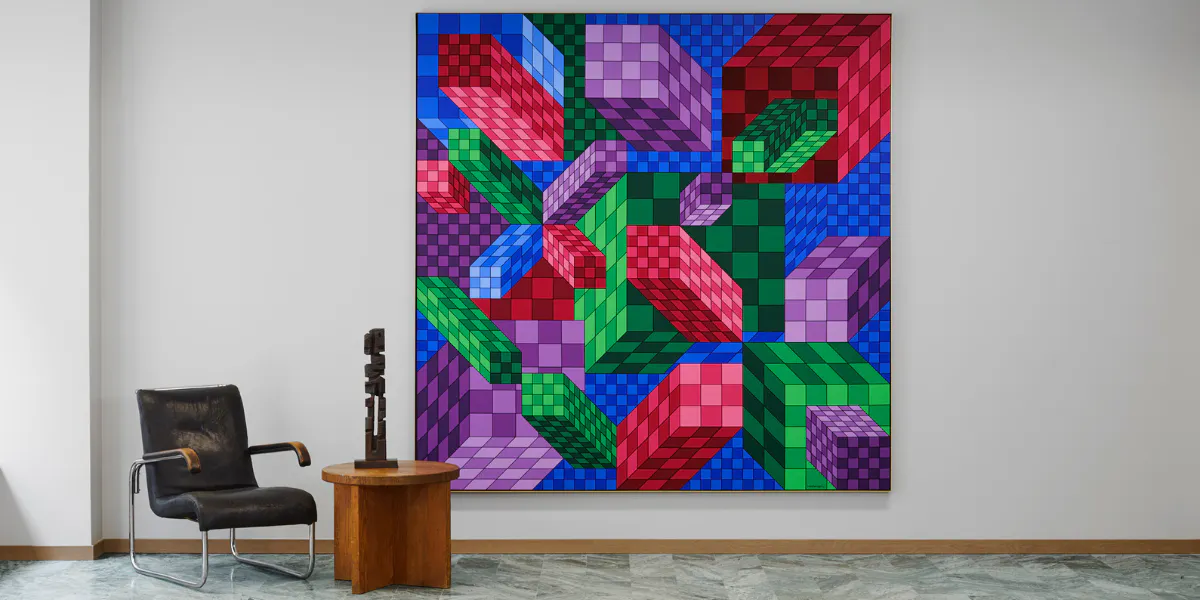
Between 18 and 20 May, the auction house Uppsala Auktionskammare will hold its international Modern & Contemporary fine sale. The catalogue includes high-class art and design by both Swedish and international masters. Among the highlights you’ll find works by Rolf Hanson, Leander Engström, Christo, Yohanan Simon and a great Victor Vaserely, which will go to auction for the very first time. You’ll also find the best of Nordic design by Axel Salto, Mats Theselius and Josef Frank, among others.
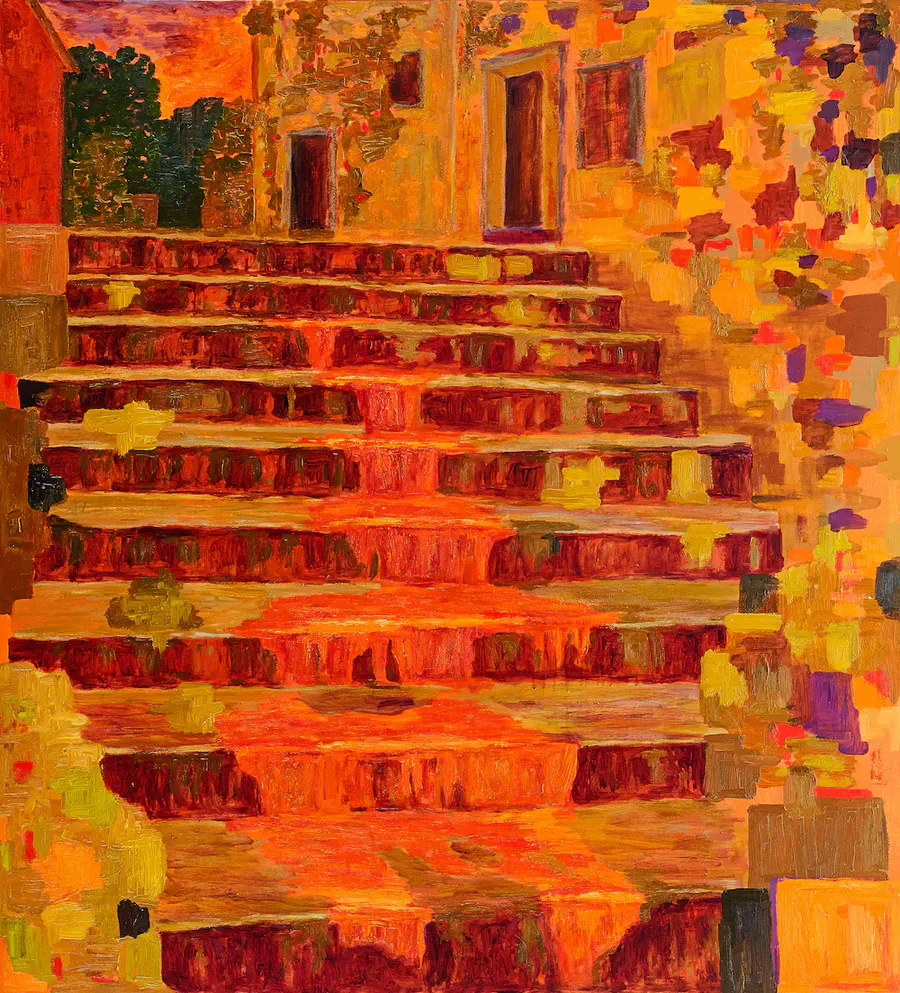
Rolf Hanson is one of the most important artists in Swedish contemporary art. He has developed a very distinctive style, characterised by glowing colours and an expressive style. Originally inspired by Carl Fredrik Hill's painting Trappgata in Montigny-sur-Loing from 1876, Hanson has returned to the stairs motif from the 1990s. The auction's painting from 2008 is part of the so-called ‘stairwell suite’, which is one of the artist's most sought-after works. Last year, the most extensive solo exhibition of his works to date was held at Artipelag in Stockholm.
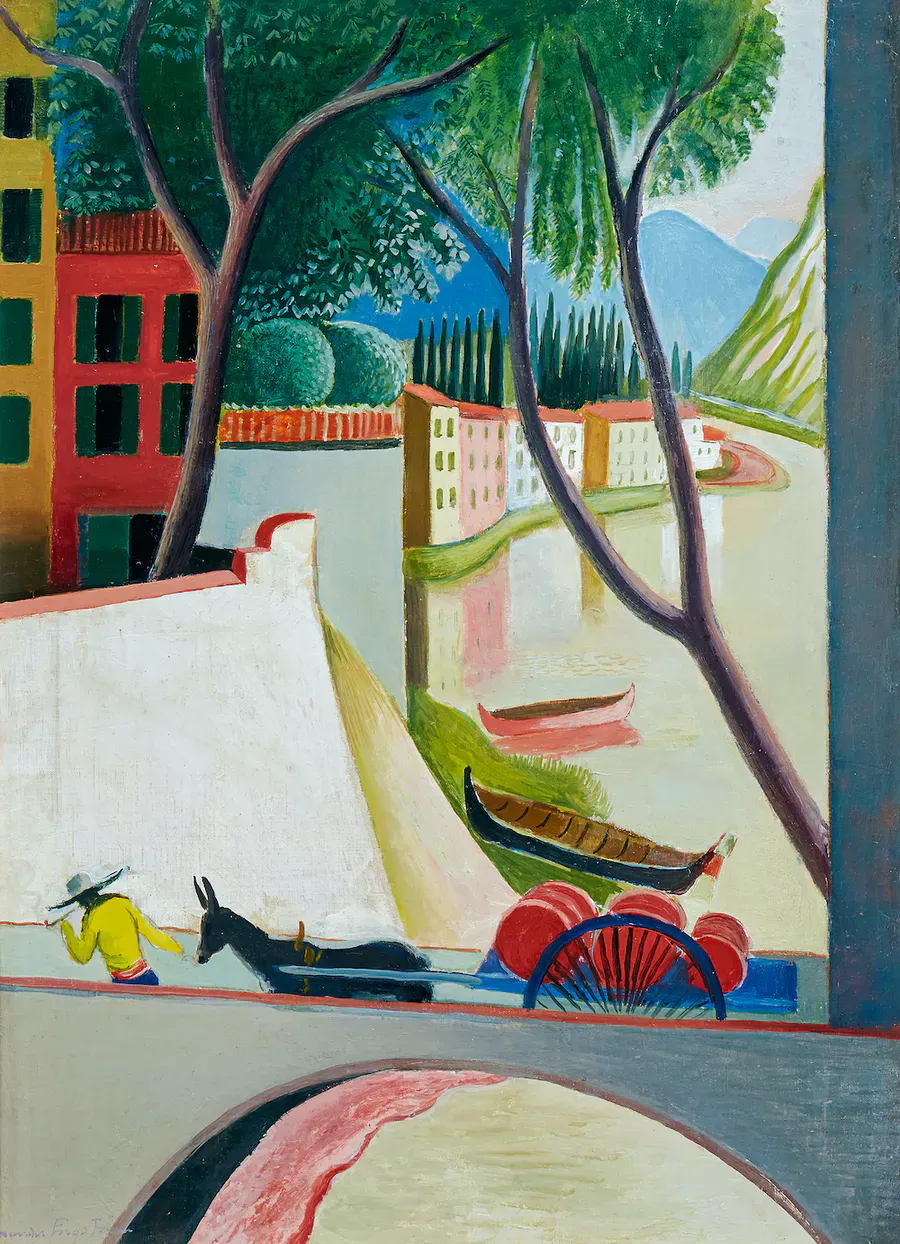
After the end of the First World War, a wave of optimism swept throughout Europe. A new generation of artists wanted to escape the ideals and values of the old days. Colour, form and a new kind of ‘internationalism’ were in focus. Leander Engström belonged to the modernist school and thus, like many of his generation, he went on a pilgrimage to Italy, where he fell in love with the rolling, sun-drenched Tuscan landscape. This particular motif is taken from Florence, and the title is derived from the river Arno which flows through the city.
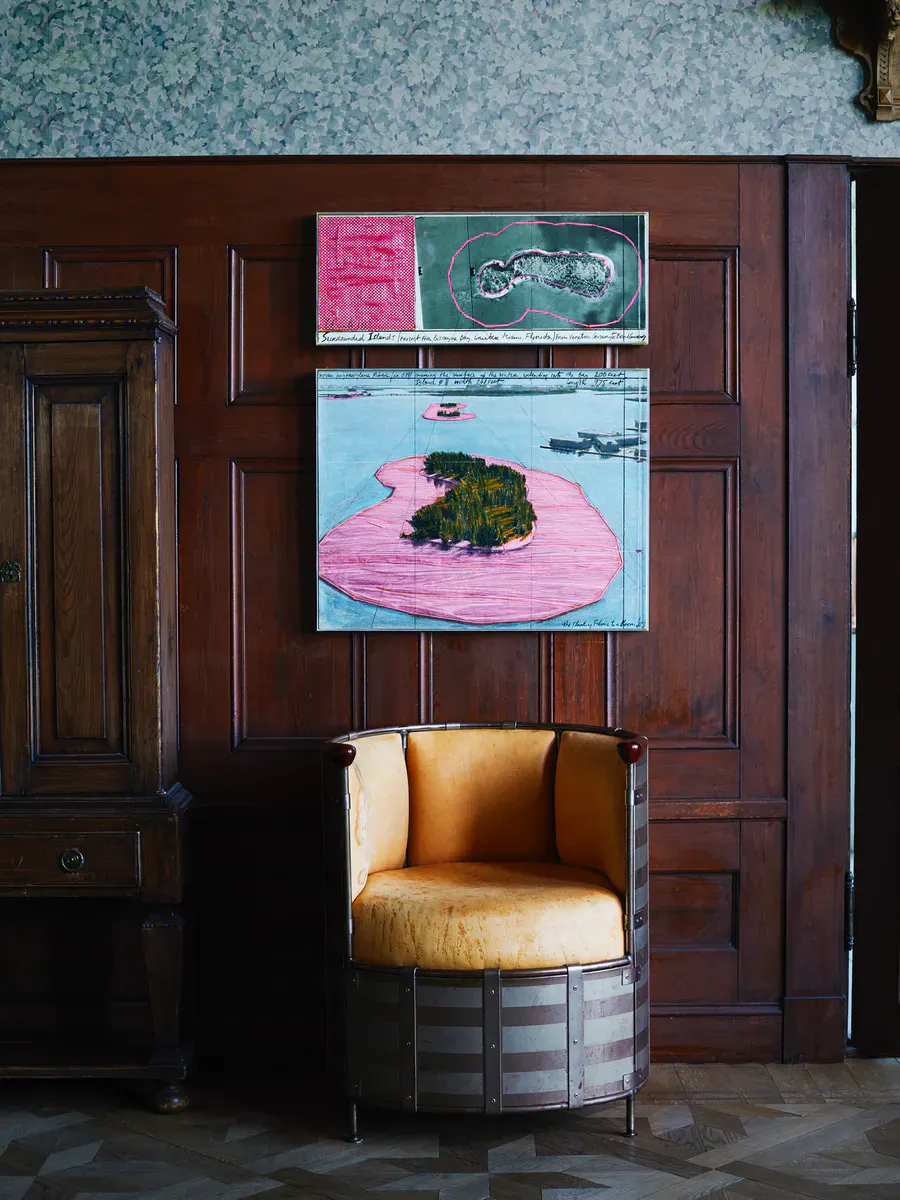
For two weeks during the month of May 1983, the coastline around two islands off Miami was covered in a shocking pink fabric. The French artist duo behind the installation were the married couple Christo and Jeanne-Claude. The project required meticulous planning and over 430 people contributed to the realisation of the vision. Surrounded Islands was a tribute to Miami and its beautiful beaches. The artwork received international attention, and visitors came in from all over the world to view it.
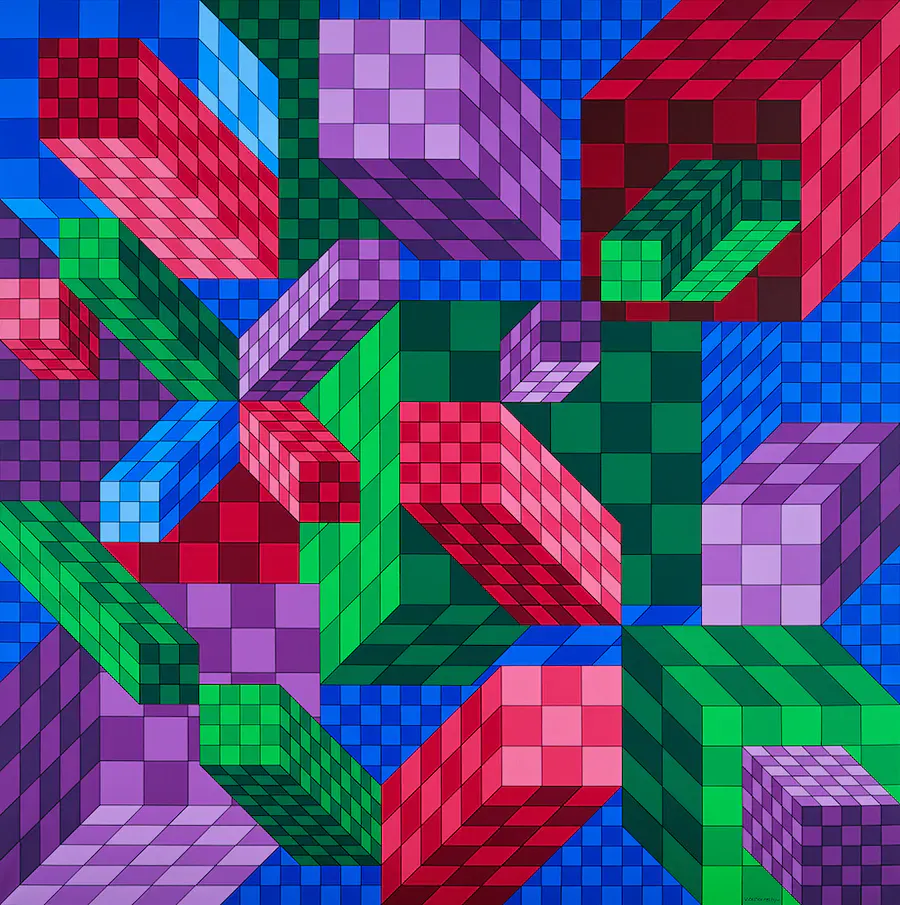
Citineu-II was painted at the end of Victor Vasarely's career, when he was already widely recognised. The size and the sharp colour palette render a monumental impression, and it is rare that a work of this calibre goes up for sale. Vasarely was one of the founders of the Op Art movement, an abbreviation of Optical Art. It was a new art movement that wanted to convene a universal expression and speak to a wide audience. To achieve this, Vasarely created optical illusions. These abstract compositions consist entirely of clear colours and geometric shapes, requiring no formal education to be interpreted. As such, Citineu-II calls for the viewer's personal reaction.
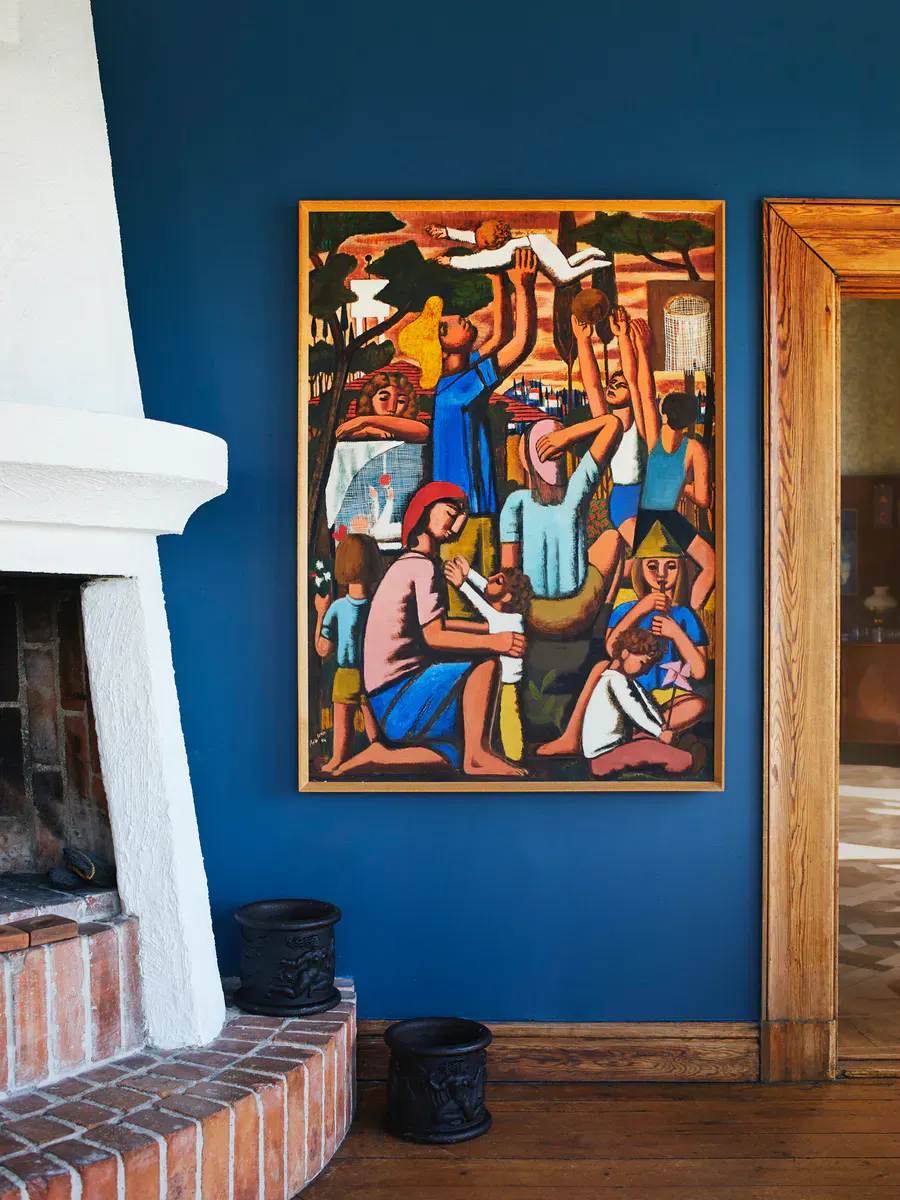
Having grown up in Germany and studied in Paris and New York, Yohanan Simon finally settled in Israel, where he became one of the most important portraitists of Jewish everyday life. While living in New York, he became friends with the Mexican artist Diego Rivera, whose Social Realism heavily influenced him.
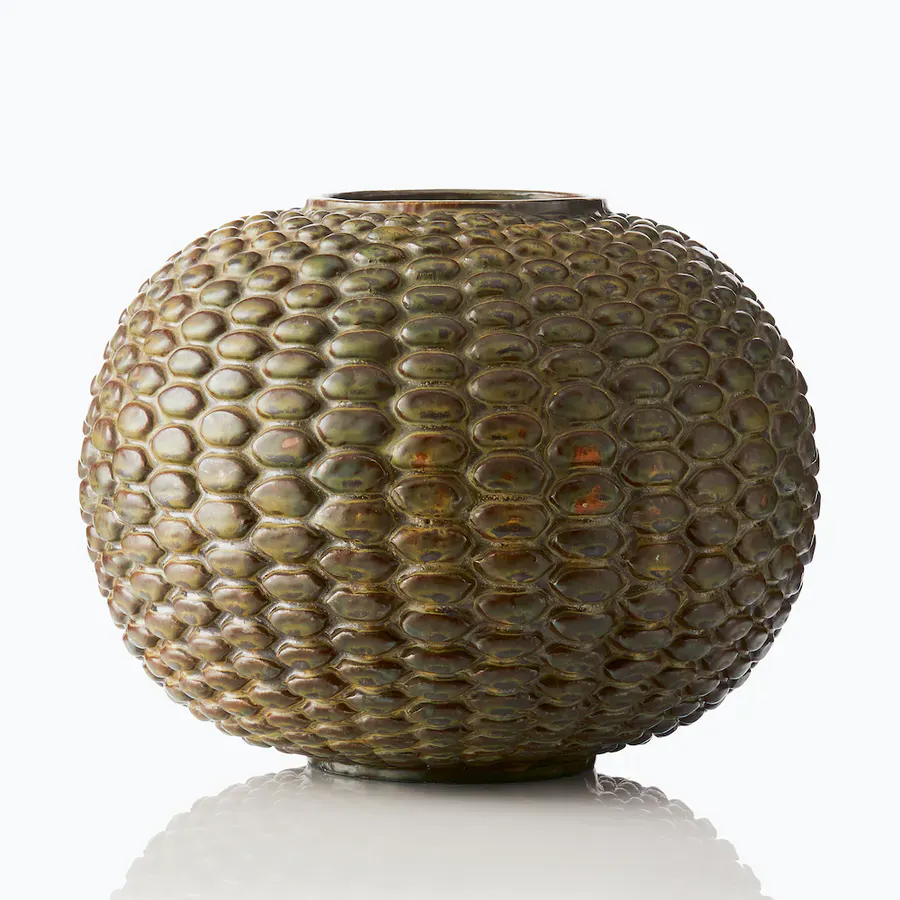
The Danish ceramicist Axel Salto wanted his craft to follow the principles of nature, rather than trying to capture or embellish it. Here he seems to have sought to capture the moment just before a bud blooms. The harmonious forms convey the sense of calmness typical in Salto, who often gave his works a meditative aspect.
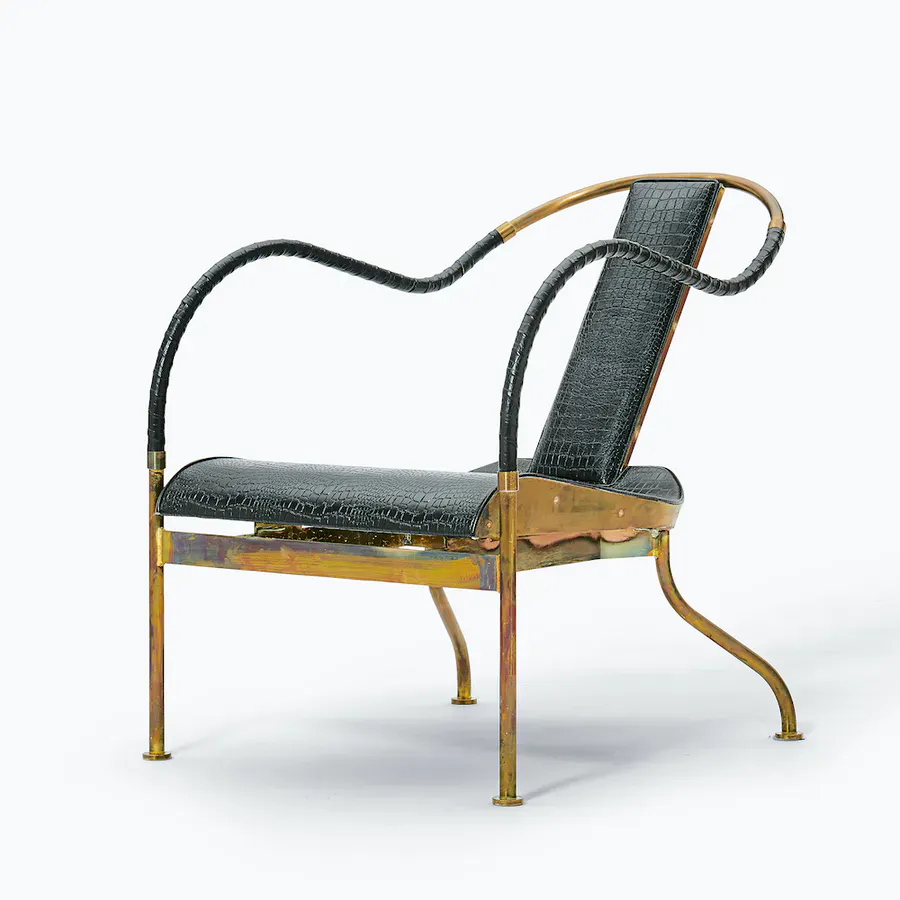
Early on, Mats Theselius came to be known as one of the most influential furniture designers of his generation. Educated at Konstfack (1979-84), he later became a professor of Arts and Crafts at the University of Gothenburg. His style is characterised by a sensual design language and surprising material.
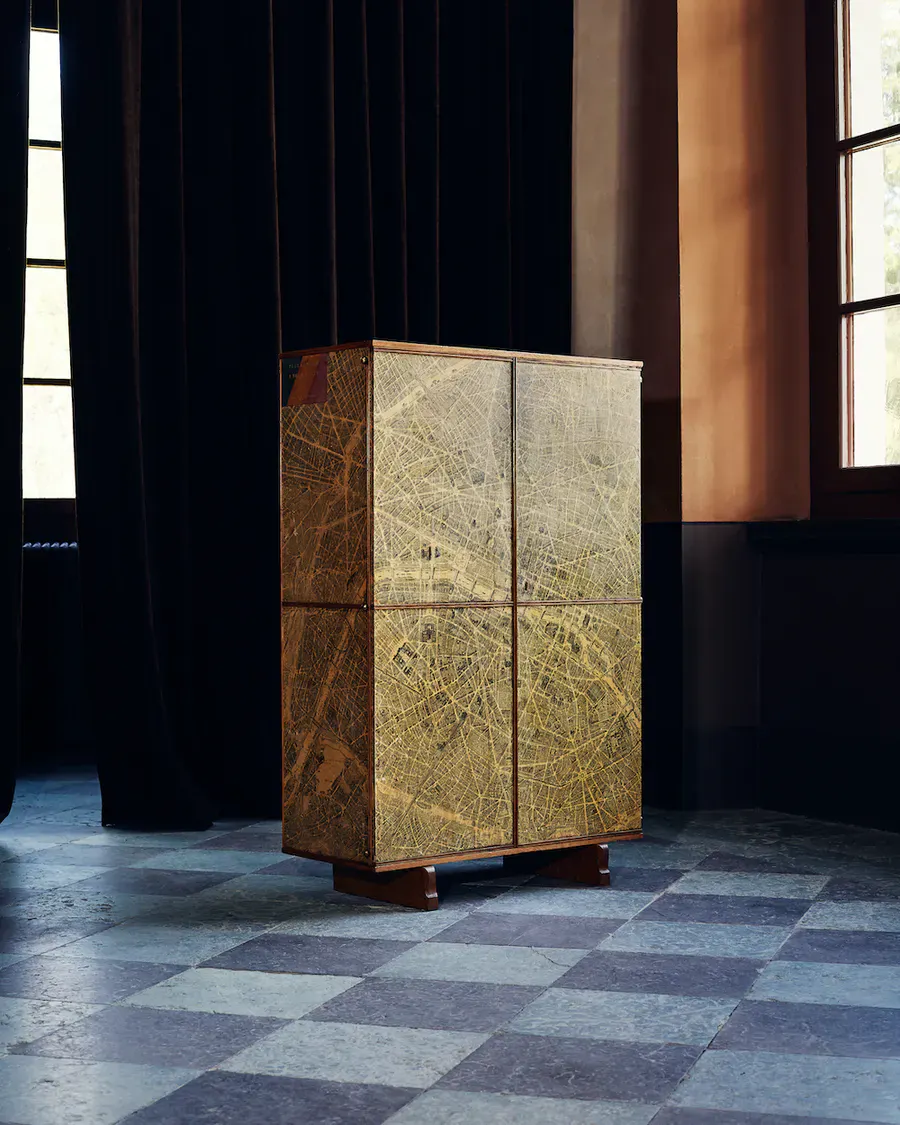
Although he was born in Austria, Josef Frank has become synonymous with Swedish modernism. During the 1930s, he escaped the Nazis and fled his homeland of Austria, arriving to Stockholm where he began his lifelong collaboration in 1934 with Estrid Ericson and her company Svenskt Tenn. Together, they got to develop the playfully elegant style that the interior design company is still known for to this day. Between 1937 and ‘43, Frank began designing cabinets with wallpapered surfaces. The most famous examples include botanical patterns, but here the cabinet is dressed in a Georges Peltier's map of Paris. Judging by the original motif, this cabinet is combined in a special order, which makes it even more sought after.