Paris waited a long time for its international exhibition. Since the Turin Expo in 1902, Italy had cornered the decorative arts in Turin, Milan and Rome. Société des artistes décorateurs was created in 1901 and endorsed the specifications of the Italian organisers. Their stipulations stated that only “original works that will show a marked tendency towards aesthetic renewal” may be accepted, excluding “imitations of old styles and uninspired industrial productions” from its exhibitions. It was their aim to raise the status of the decorative arts, which had been looked down upon until that point.
Paris, however, had a difficult time getting the exhibition arranged. In 1911, the Society of French Decorative Artists joined with Central Union of Decorative Arts and the Société d’encouragement à l’art et à l’industrie to appeal the government for an exposition to take place in 1915. It was postponed to 1916, then until 1922 because of World War I, then again to 1924, until it was finally set for 28 April to 30 November 1925.

In a sort of competition between modern and industrial nations, the 1925 Paris Exhibition opposed two distinct and difficult-to-reconcile movements: the Art Deco style on one hand, and the international avant-garde on the other. Born as a reaction to the organic forms of Art Nouveau, Art Deco hailed a return to a classic order in architecture, decoration and furniture, inspired by cubist geometry and the symmetry of the Viennese Secession.
See also: A Stable Investment: The Continuing Rise of Art Deco
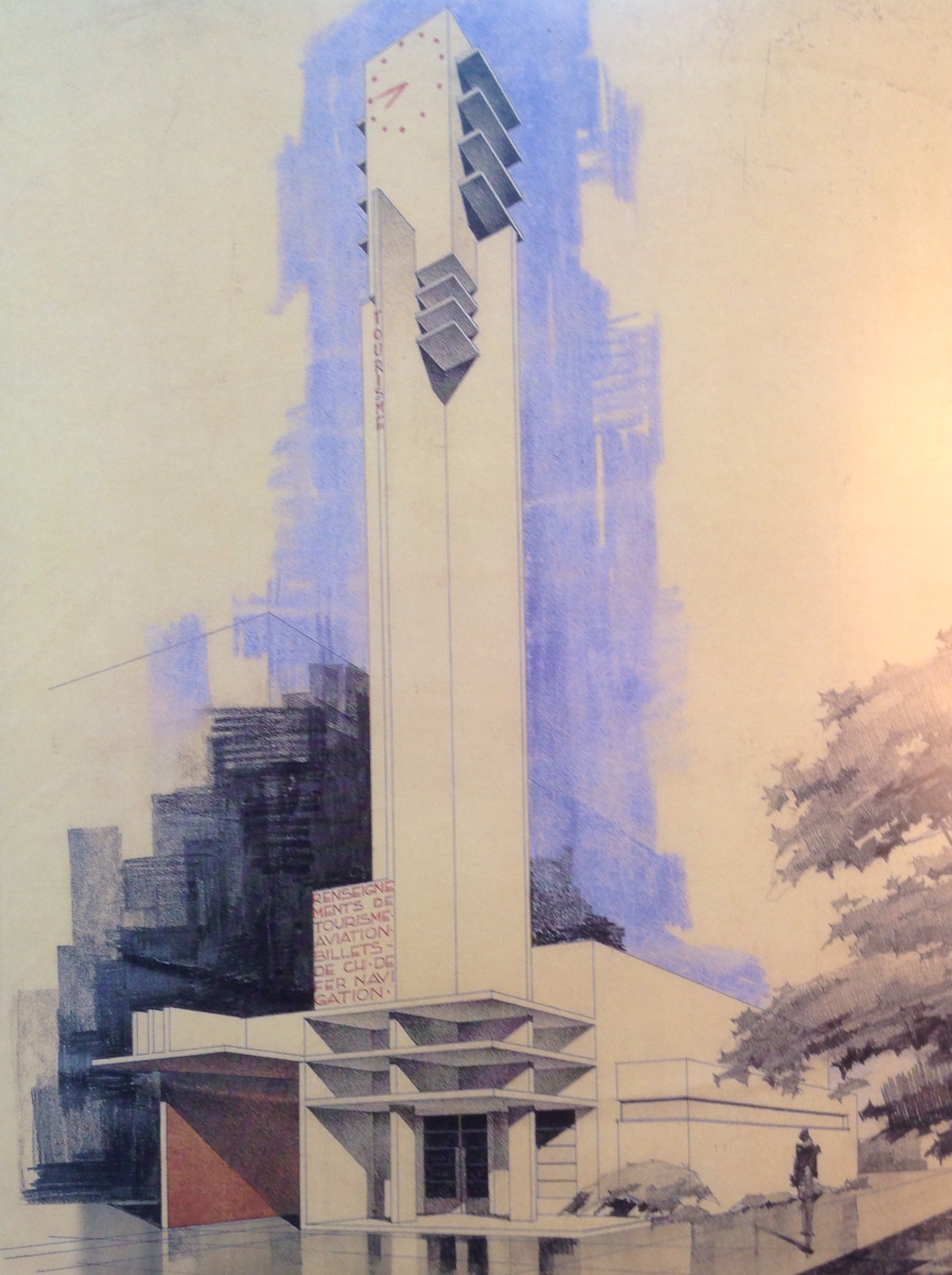
The avant-garde was distinguished by a more social and functional approach to the decorative and industrial arts, focusing on a stripped-down aesthetic inspired by the German Bauhaus. It took second place to Art Deco, which was expressed without restraint in department stores, furniture and design. The collector’s pavilion designed by architect Pierre Patout and decorated by Jacques-Emile Rulhmann, as well as the bell-shaped tourist pavilion designed by Robert Mallet-Stevens both featured the Deco style during the exhibition, with a view to elegance and overall coherence that was highly appreciated by the public.
The pavilion created by the Société des artistes décorateurs showcased Ruhlmann’s furniture and Mallet-Stevens’ talent as an interior designer, while also featuring Georges Chevalier, André Groult and Pierre Chareau. Chareau’s ‘library office’ designed especially for the exhibition was later restored at the Musée des arts décoratifs, where it is still on display today. The Bordeaux pavilion, designed by the local architect Pierre Ferret – who also designed the Frugès house – was located in one of the four towers built by Charles Plumet to display French wines, and was one of the most popular pavilions at the 1925 event.
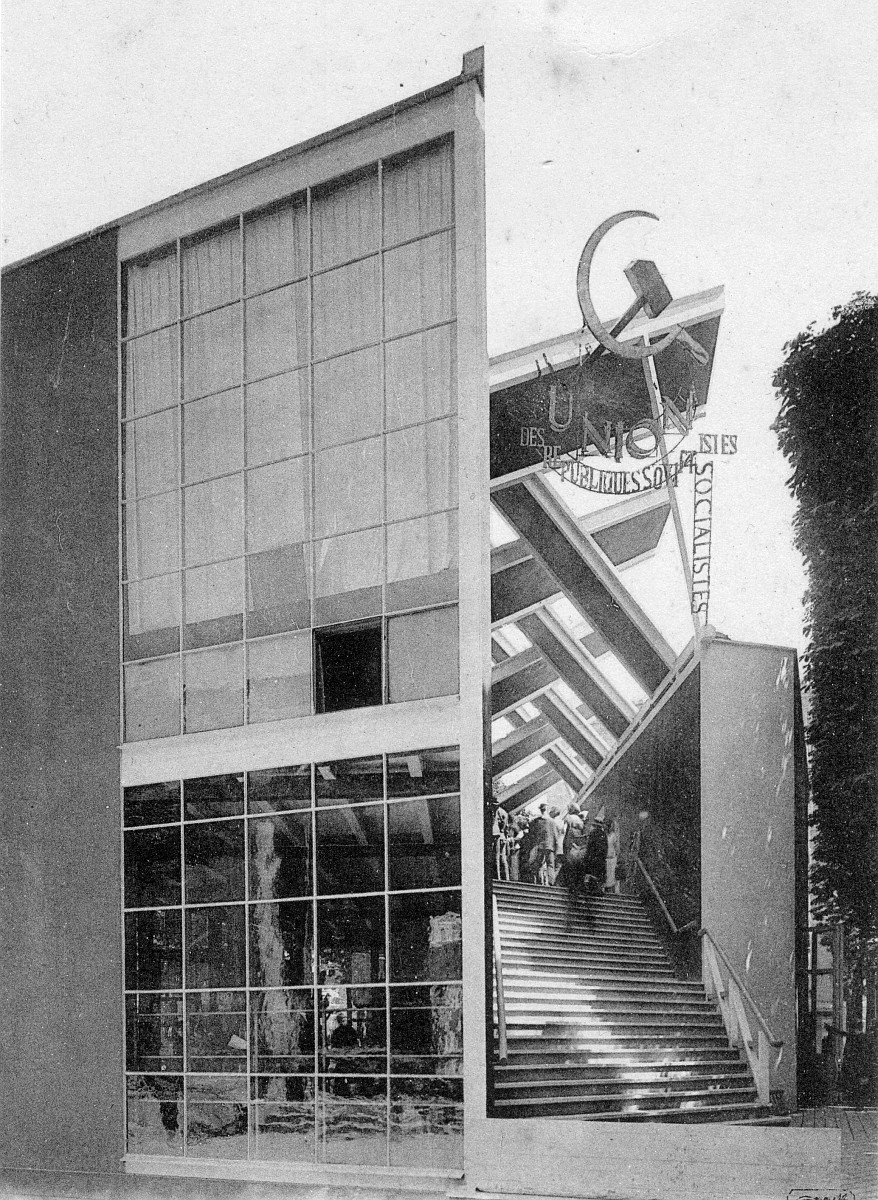
The avant-garde artists could be found inside the USSR pavilion, designed by Konstantin Melnikov. He had broken away from workers’ housing in 1922 and began following Le Corbusier’s ‘New Spirit’, which did not talk about ‘furniture’ but ‘equipment’, and which did not tolerate excessive decoration. In the same vein, Theo van Doesburg’s projects and the De Stijl movement were represented in the Dutch pavilion.

As a major showcase for the luxury industries, particularly in France, the 1925 International Exhibition of Decorative and Modern Industrial Arts was a great success. Its popularity caused by the 15 million visitors greatly contributed to the expansion of Art Deco throughout the world, and helped create the legacy that the style enjoys today. The expo was key for avant-garde styles as well – even if they weren’t yet fully appreciated, their pavilions already contained the founding elements of the future great architectural revolutions of the twentieth century.