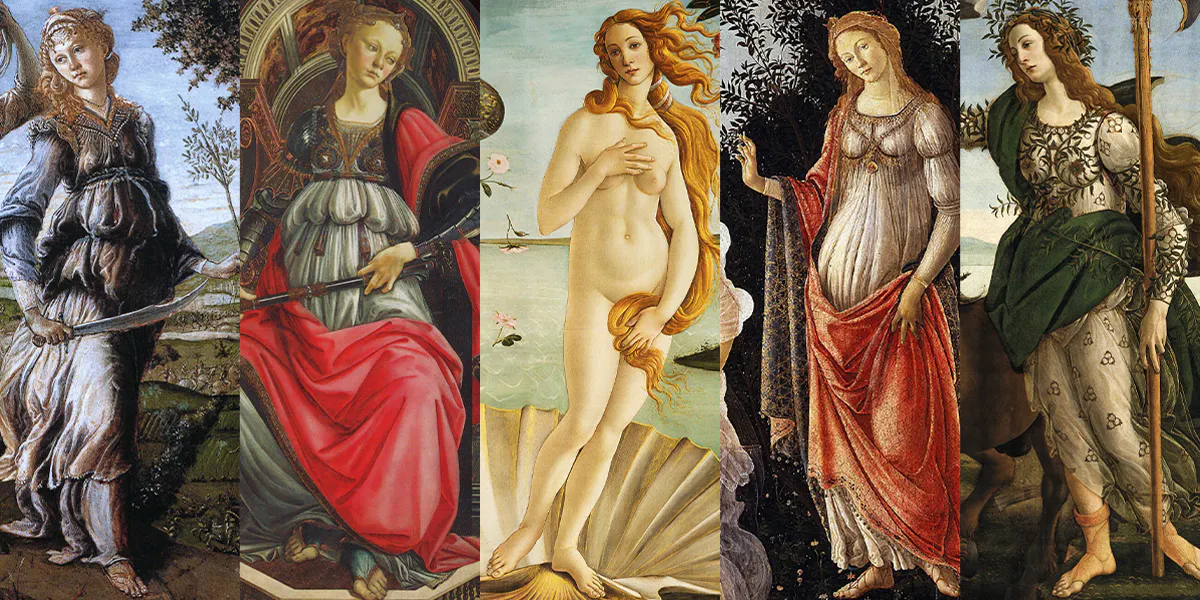
The colour red affects our psyche like no other, perhaps that's why it is associated with so many different emotions. Red attracts everyone's attention, which is why it is known as a symbol of danger or power. And, apparently, both women and men dressed in red are generally more attractive to potential partners.
In ancient times, Mars, a red planet, was associated with the god of war, and so red was a colour that was more likely to be worn by men (and pink by boys). This changed at the beginning of the 20th century when the colour blue, due to its frequent occurrence in military and work clothing, took on the dominant role in the male wardrobe. Red, however, in women's dress has always emphasised power, glamour and authority.
Here we have selected five portraits from the past 550 years in which women shine in red.
Sandro Botticelli, Portrait of a Lady known as Smeralda Brandini, c. 1471
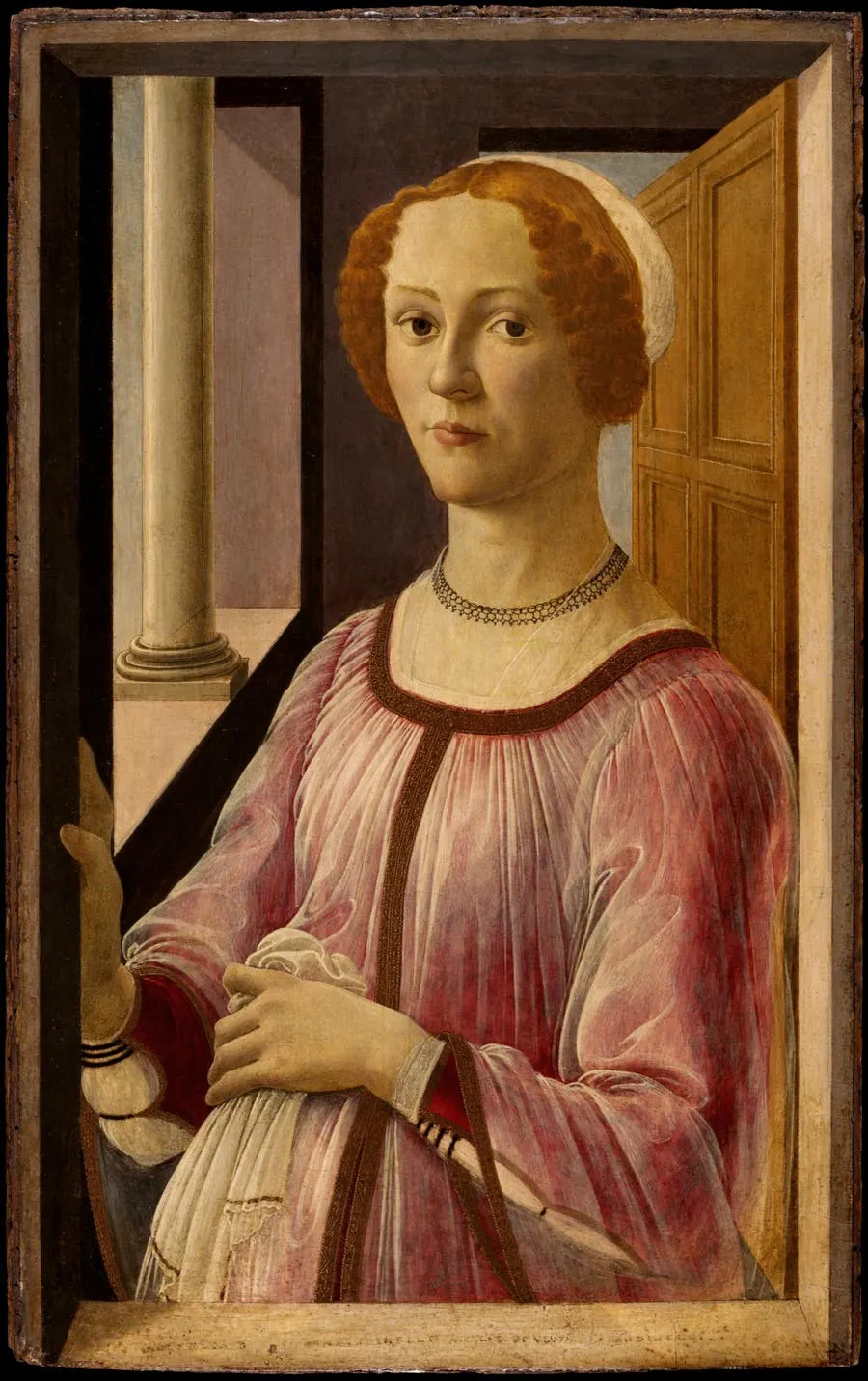
With the Portrait of a Lady Known as Smeralda Brandini, Sandro Botticelli broke new ground in the early 1470s, breaking with the tradition of depicting people in profile, which had prevailed in Florence up until then. Instead, he depicted his subject in the new three-quarter view.
In the past, rumours flew that it was not Botticelli himself, but one of his students or employees who painted the work. The innovative depiction of the woman portrayed and the slight trompe l'oeil effect, which makes the viewer believe that they are facing a woman at the window, bely this suggestion, revealing the work of Botticelli.
Related: Fire, Passion, Inspiration: Red Hair in Art
The sitter is identified as Smeralda Brandini by the inscription on the windowsill, which was probably added later. Smeralda Brandini's son Michelangelo was a respected goldsmith in Florence, and his son Bartolomeo worked as a sculptor under the name Baccio Bandinelli.
The English Pre-Raphaelite, and fan of red-haired women, Dante Gabriel Rossetti, who acquired the portrait in the 19th century, believed that the pictured woman was also the central figure in Botticelli's Primavera. However, this seems unlikely, as in 1482, when Primavera was created, Smeralda was probably around 40 years old. Thus, according to the opinion of the time, she was an old matron who wouldn't have been chosen as the personification of youthful spring.
Leonardo da Vinci, La Belle Ferronnière, 1495-99
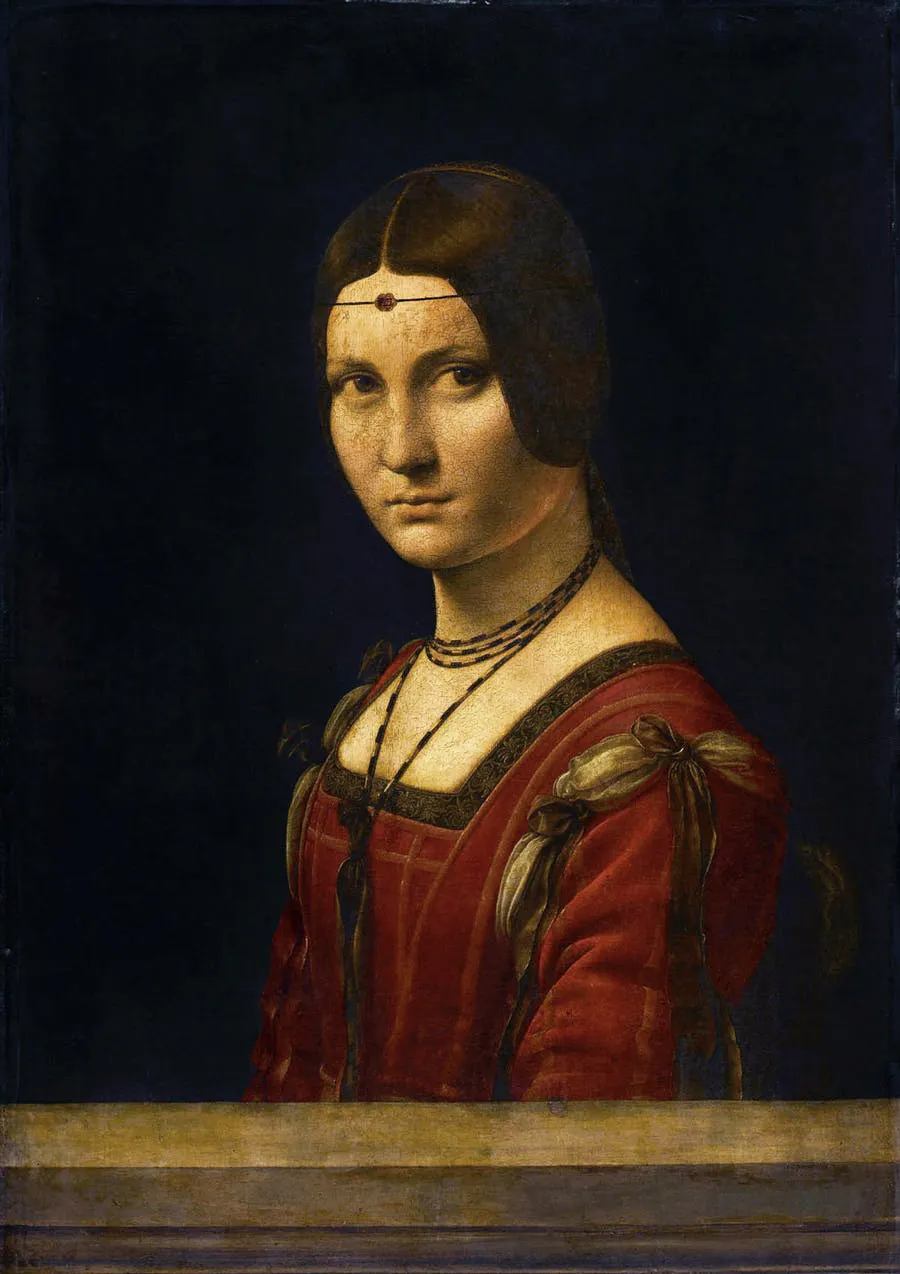
Mystery accompanies our next woman in red. It starts with the fact that Leonardo da Vinci's authorship cannot be clearly proven. The portrait painted on wood doesn't bear Leonardo's signature, nor is there any reference to it in his extensive notes. And so, in this case too, experts consider the possibility of the authorship of one of the master's collaborators, Giovanni Antonio Boltraffio, or Bernardino de Conti, a painter who also worked in Milan in the late 15th century.
The painting, which is today exhibited in the Louvre, was part of the royal collection before the French Revolution, listed there under the title La Belle Ferronnière, the name under which the work is still known, but which also poses some questions.
See also: The First Known Artworks of 10 Famous Artists
At the time the painting was made, da Vinci was in Milan at the court of Ludovico Sforza. Therefore, both his wife Beatrice d'Este and his mistress Cecilia Gallerani were suggested as possible models. Due to the connection with France, two mistresses of King Francis I were also brought into play: a Madame Féron and the wife or daughter of an iron trader (French ferronnier).
The title, which is still in use today, was probably due to a mix-up with another painting in the royal collection in the early 18th century. The reason for this was the headdress, called ferronière, which was titled after Francis's mistress who is said to have worn these headbands.
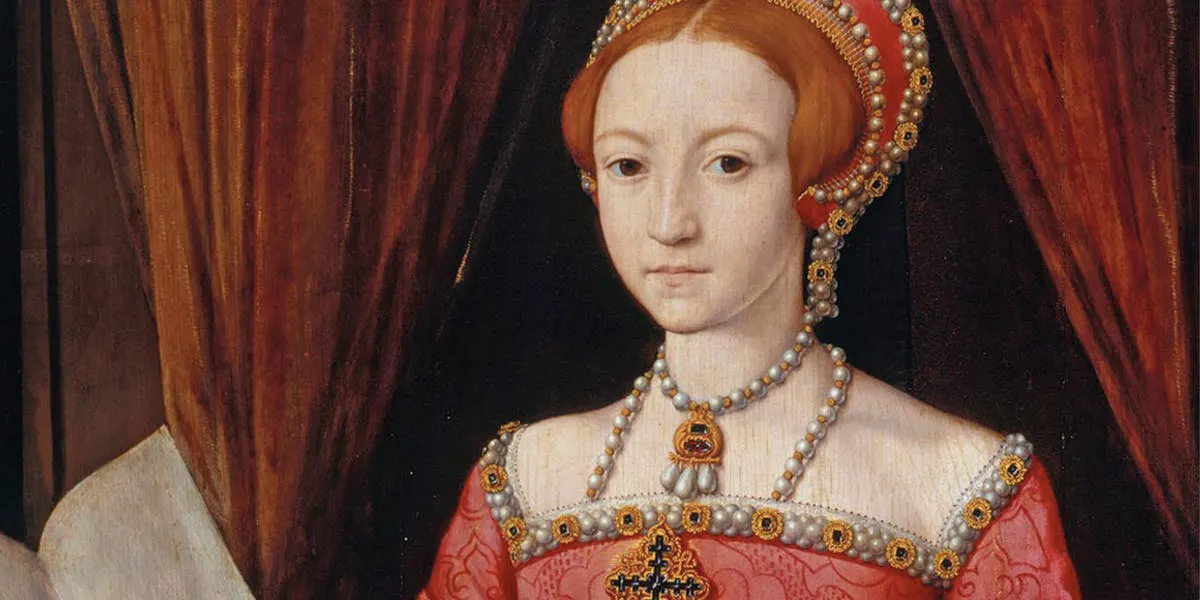
Unknown artist, Elizabeth I When a Princess, c. 1546
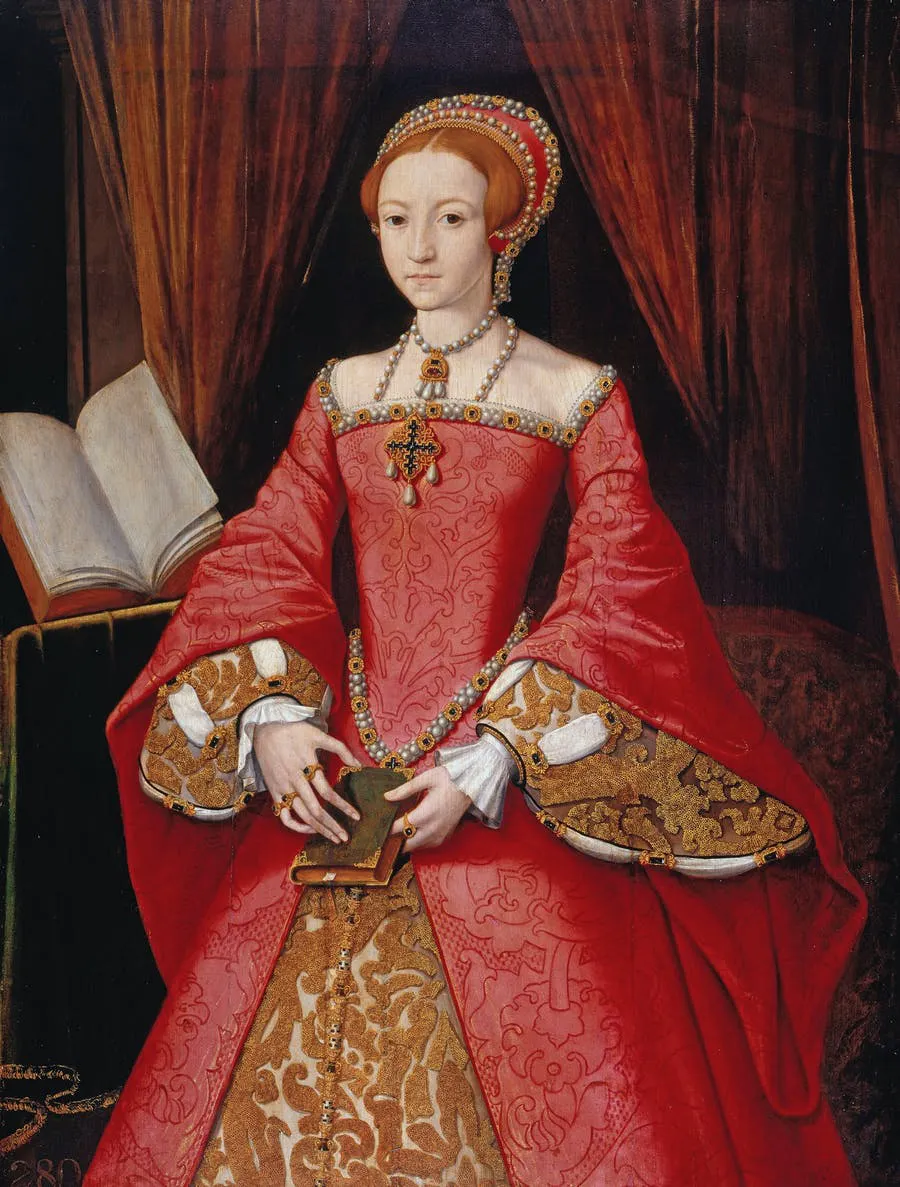
In our next portrait, the authorship is once again in question, but there is no doubt as to the person portrayed: it is the future Queen Elizabeth I of England at the age of about 13.
This is the first known portrait of the young Elizabeth. She was born in 1533 as the daughter of King Henry VIII and his second wife Anne Boleyn. In order to have his first marriage with the Spanish princess Catherine of Aragon annulled because she didn't produce a male heir, Henry turned his back on the Catholic Church and made himself head of an Anglican state church. When Elizabeth was two and a half years old, Henry VIII had his second wife beheaded for adultery.
See also: Diego Velázquez: The Portraitist of the Spanish Court
When Henry's third wife Jane Seymour finally gave birth to the longed-for heir to the throne in 1537, the king had his two daughters declared illegitimate. In 1544, this was repealed by a parliamentary resolution, and Elizabeth is consequently shown in this portrait as a 'real' princess, who was described by her contemporaries as pretty, lively and well educated. After the death of Henry VIII in 1547, it was 11, no less turbulent, years before Elizabeth finally ascended the English throne.
The portrait of young Elizabeth had long been attributed to the Flemish painter Guillem (William) Scrots, whom Henry VIII had appointed court painter in 1546. In the meantime, however, this attribution has been questioned, though without any definite results.
Claude Monet, La Japonaise (Camille Monet in Japanese Costume), 1875
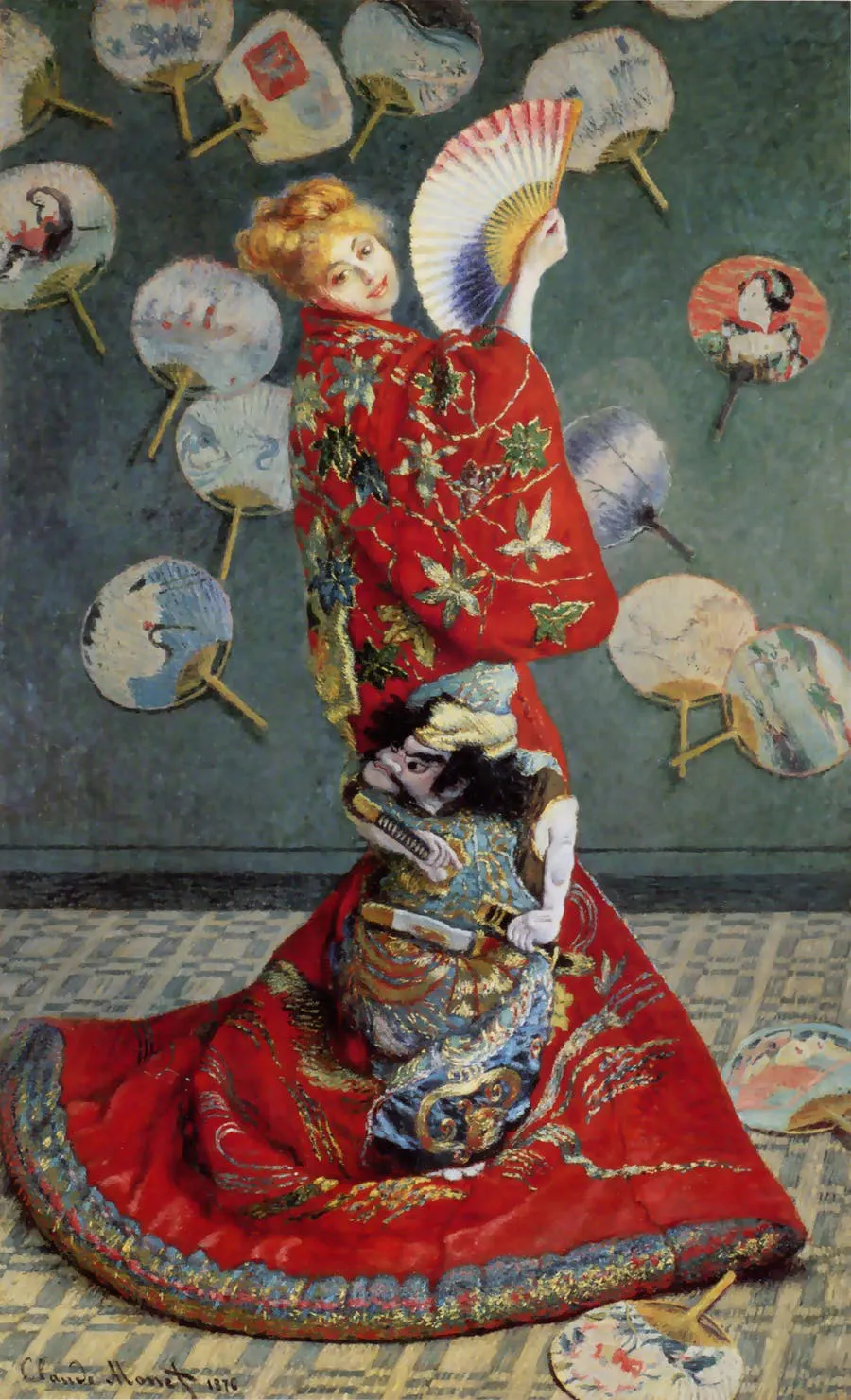
Of the at least 58 paintings, portraits, interiors, landscapes and group pictures for which Camille Doncieux was Claude Monet's model between 1865 and 1879, the Impressionist disliked Camille in Japanese Costume the most, even calling it “trash”.
In fact, it seems a bit like a foreign body in Monet's oeuvre and is not like any other of his paintings. The rejection was probably related to the fact that Monet had painted the picture purely for financial reasons. In order to increase the likelihood of a sale, he had fully relied on the then popular Japonism trend and spiced it with a little patriotism: the fan in Camille's hand is in the colours of the French flag. Whether it was 'trash' or not, at an exhibition in 1876, Monet was able to sell his work for more than 2,000 Francs.
See also: 5 Portraits of Women in Black
It was likely Monet's friend and supporter Ernest Hoschedé who paid this large sum to do the embarrassed painter a favour, because after the sale, the sensational painting was removed from the exhibition. However, Monet paid Hoschedé back the sum and took back the work, which was actually sold again the following year.
Did Monet already suspect the controversy it would spark while working on the painting? In any case, he put a blonde wig on his model wife, Camille, to conceal her identity. Camille's flirtatious smile, the samurai pulling his sword on the kimono and the erotic red colour of the exotic robe were perceived as suggestive.
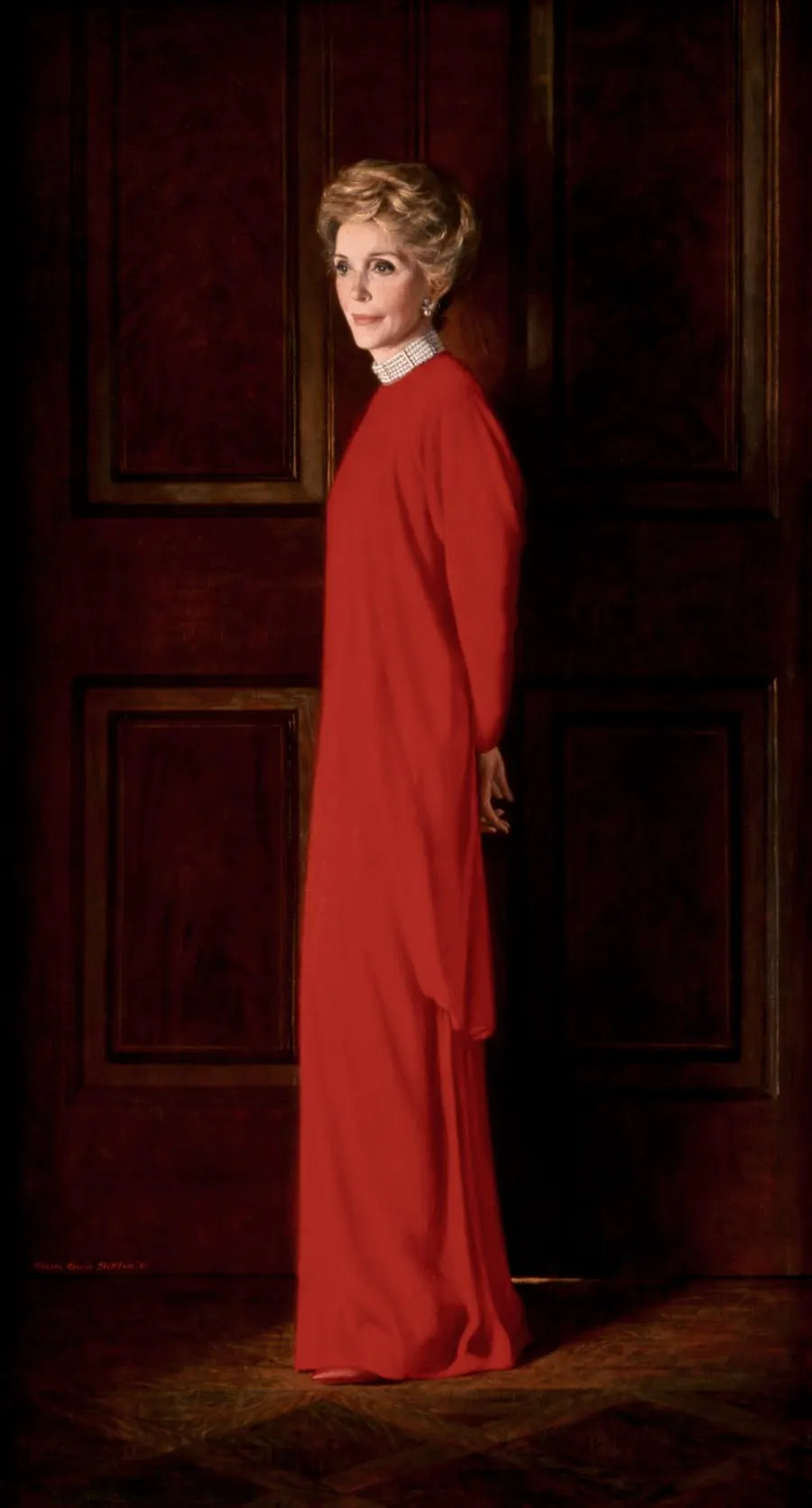
Aaron Shikler, First Lady Nancy Reagan Remembered, 1987
See also: The First Ladies of Fashion
"I like red, it's a picker-upper," once said First Lady Nancy Reagan. In fact, she has been spotted in a bright red hue time and again, including when her husband, former actor Ronald Reagan, was sworn in as the 40th President of the United States in 1981. The bright red of her dress, completed with a pillbox hat, soon became called "Reagan Red".
Nancy Reagan has often been hailed as the next First Lady of style and glamour after Jackie Kennedy. However, she was also criticised when it came to light that she had accepted dresses and other fashions from designers without these donations being recorded. The First Lady's outfit was viewed by fashion designers as a convenient way of promoting their designs – similar to what happens on Hollywood's red carpets.
Nancy also chose the dramatic Reagan Red in 1987 for her official portrait, which can be seen along with the portraits of the other First Ladies in the Vermeil Room at the White House. It was carried out by the New York artist Aaron Shikler, who had previously painted the official portrait of Jackie Kennedy. Jackie had also commissioned Shikler in 1970 for the posthumous portrait of her husband, assassinated in 1963, which shows President John F. Kennedy in a thoughtful pose.
1987 also included Nancy's 'terrible October' in which not only her mother died, but she was also diagnosed with breast cancer. Nancy Reagan was open about her condition, which resulted in more women in the United States going to breast cancer screenings.