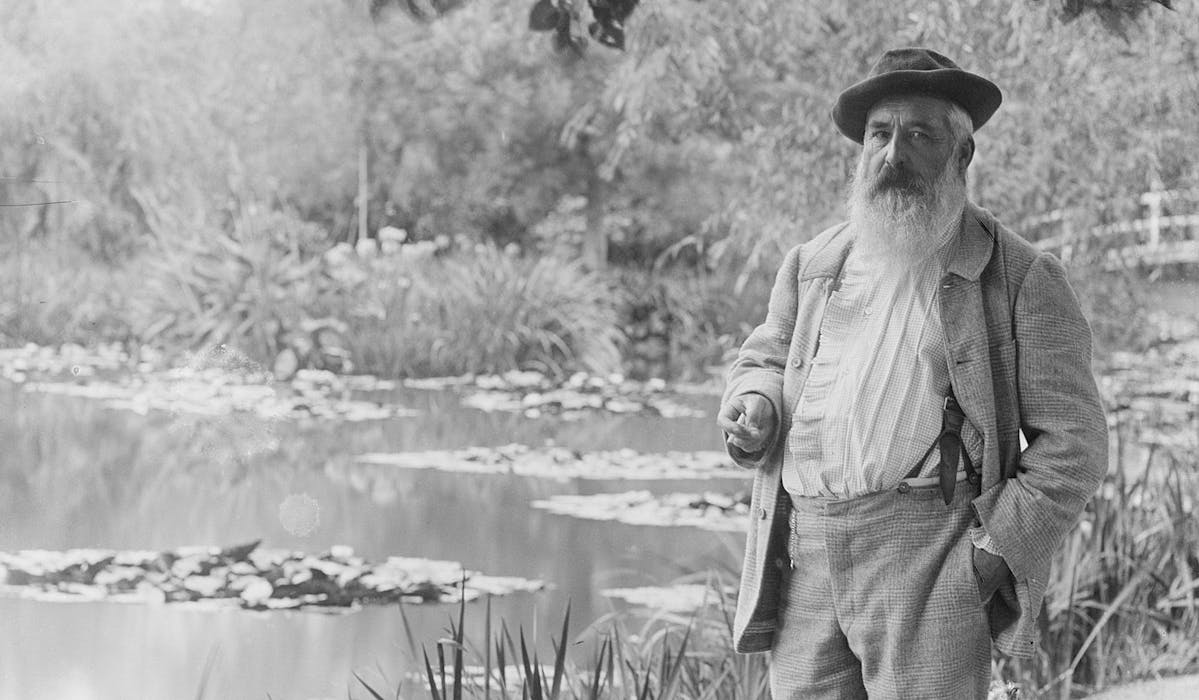
Though born in Paris in 1840, Claude Monet discovered his love of nature and painting in Normandy. In 1859, he returned to the French capital to pursue his career, and gradually he emerged as the leader of Impressionism, the movement that owes its name to one of his paintings.
Monet grew up in Le Havre, where he trained with Jacques-François Ochard. Initially, he painted portraits of well-born figures and caricatures, but he found a spiritual father in Eugène Boudin and, along with Johan Barthold Jongkind, the men would set up their easels in the open air and paint ‘from life’ – an approach that Monet would stick to from then on.
In 1859, Monet headed for Paris upon Boudin’s advice. Penniless at the time, he went to the Académie Suisse, where models could be found at cheap rates. There, he came across the capital’s other artists, including Camille Pissarro, Pierre-August Renoir and Gustave Courbet.
From the start, Monet was marked by a range of influences: his contemporaries, but also Eugène Delacroix, John Constable, Japonism, and photographic innovations. Being otherwise unoccupied, there was no way for him to escape from military service in Algeria, whereupon he contracted an illness. On the upside, the disability allowance that he subsequently became entitled to when he returned home to France was enough for him to be able to devote himself to painting.
See also: Juan Gris: The New Cubist on the Block
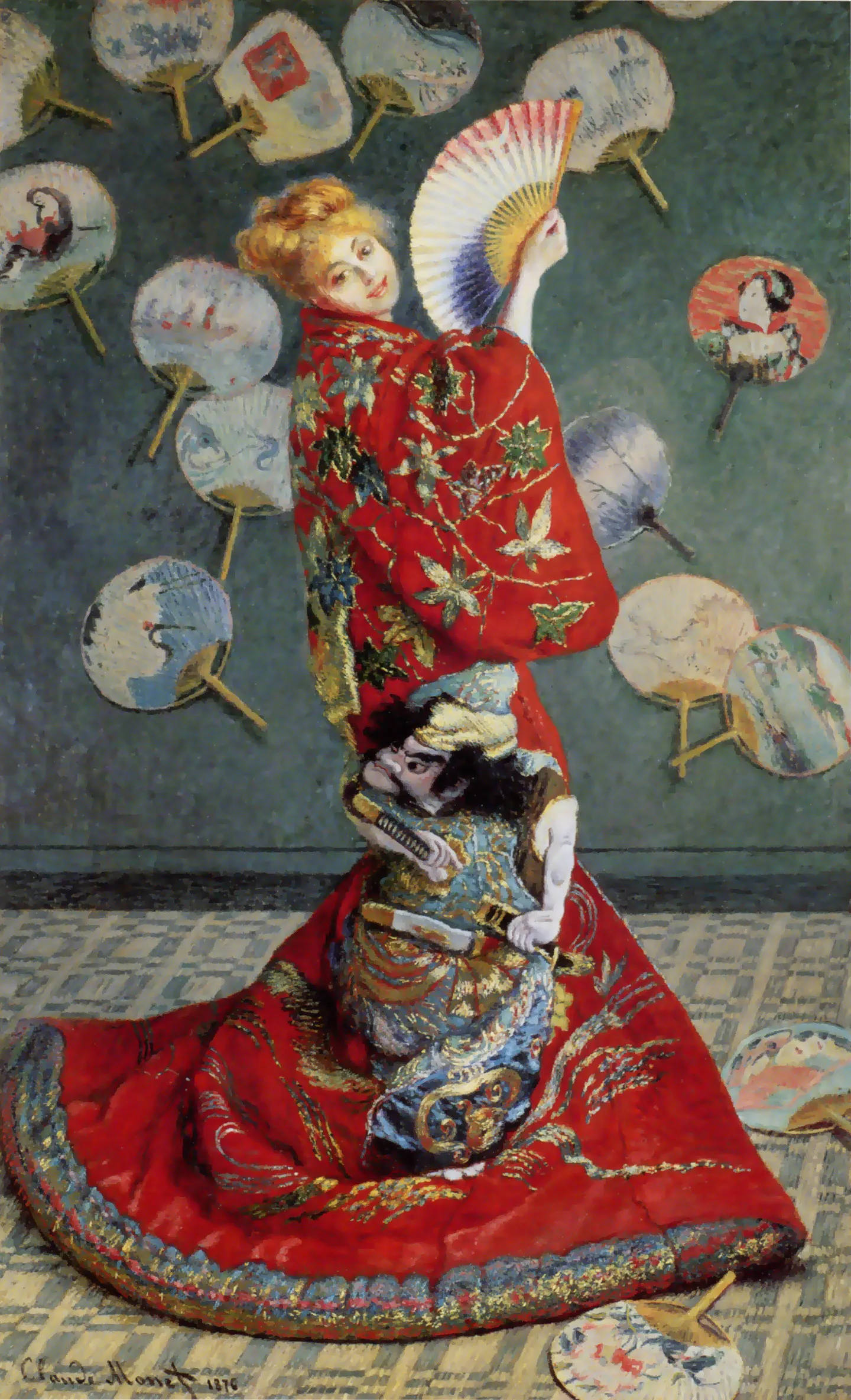
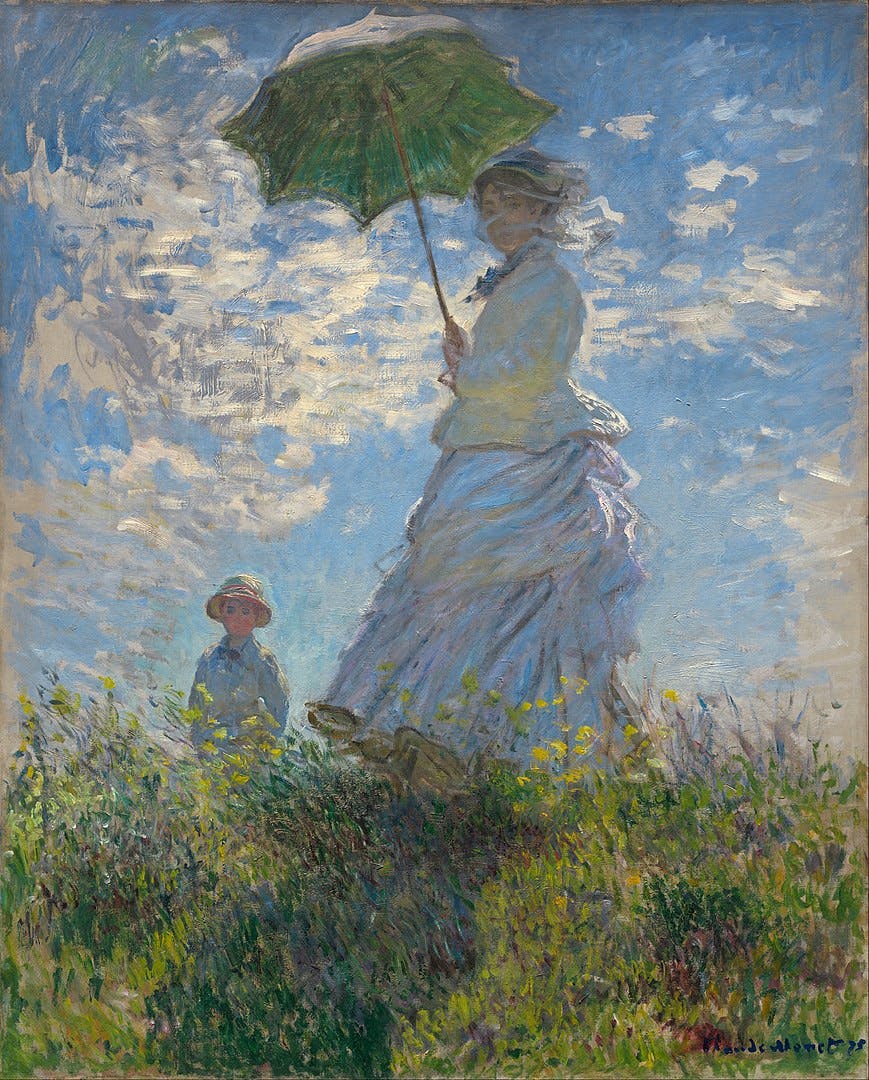
For a time, Monet made frequent trips between Paris and Normandy. He was first noticed for his depictions of Honfleur and Sainte-Adresse. In Paris, he was a regular at the Café Guerbois and joined Charles Gleyre’s studio. He participated in the 1866 Salon de Paris where his Woman in a Green Dress, showing Camille Doncieux, his future wife, was a hit.
In the company of fellow painters Alfred Sisley and Frédéric Bazille, Monet visited the forest of Fontainebleau, canvas in hand. Accompanied by Renoir, he also made outings to Bougival – but the critics and the public didn’t take to these new painting developments. Crushed by poverty, the painter was forced to give up two hundred of his paintings during a seizure in 1867. This painful episode prompted him to make a suicide attempt.
See also: The 10 Most Scandalous Artworks
In 1870, Monet fled the war by going to live in London. Pissarro, also in London, introduced him to the dealer French Paul Durand-Ruel, who subsequently became Monet’s patron. Above all, his time on the other side of the Channel gave him a chance to discover WilliamTurner, who became his new mentor figure, following Boudin. Turner’s influence is evident in Monet’s English and Dutch works, as well as his series on the Saint-Lazare Train Station (1877), Rouen Cathedral(1894) and London Parliament (1899).
See also: Fernand Léger: Art in Full Swing
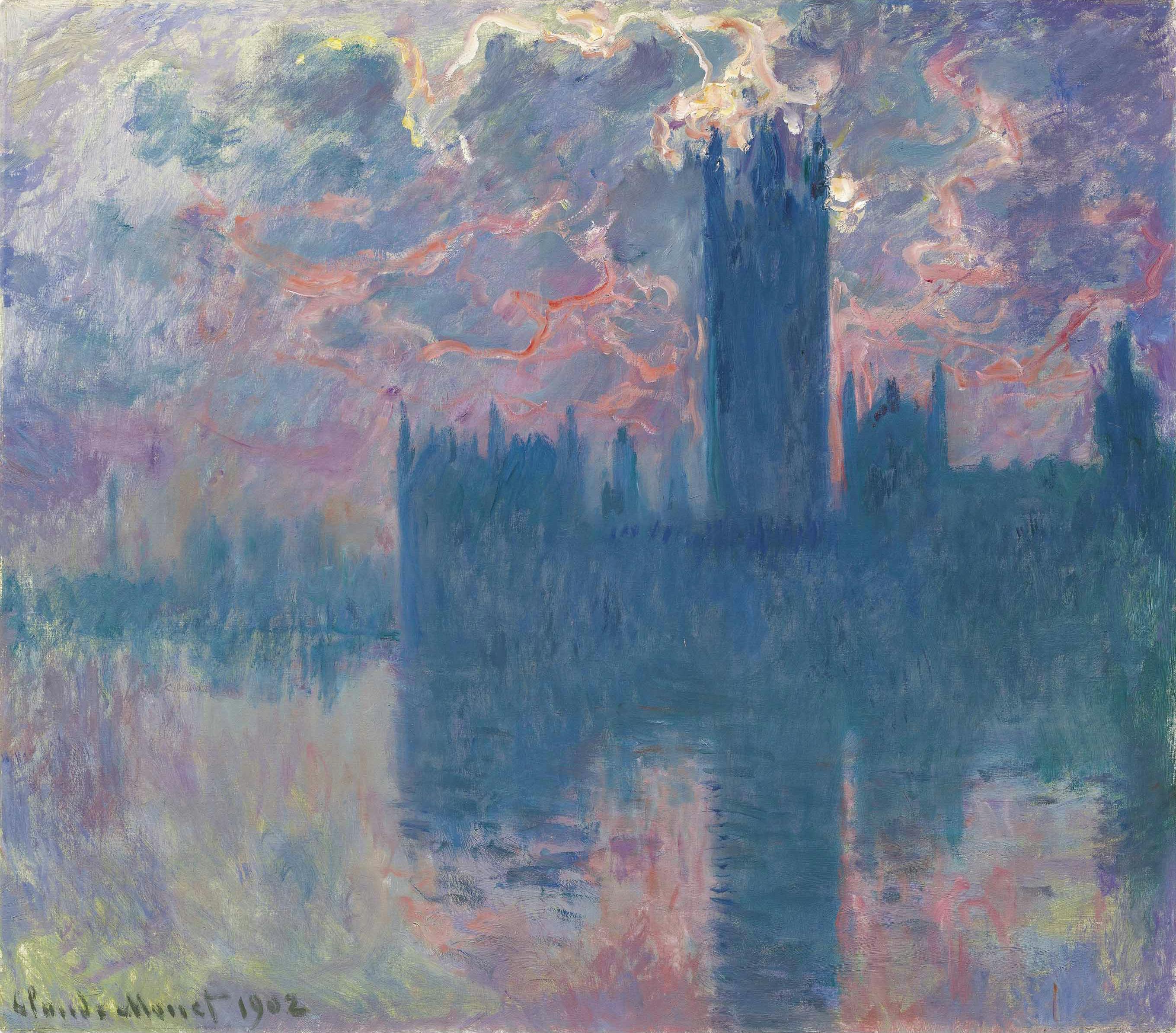
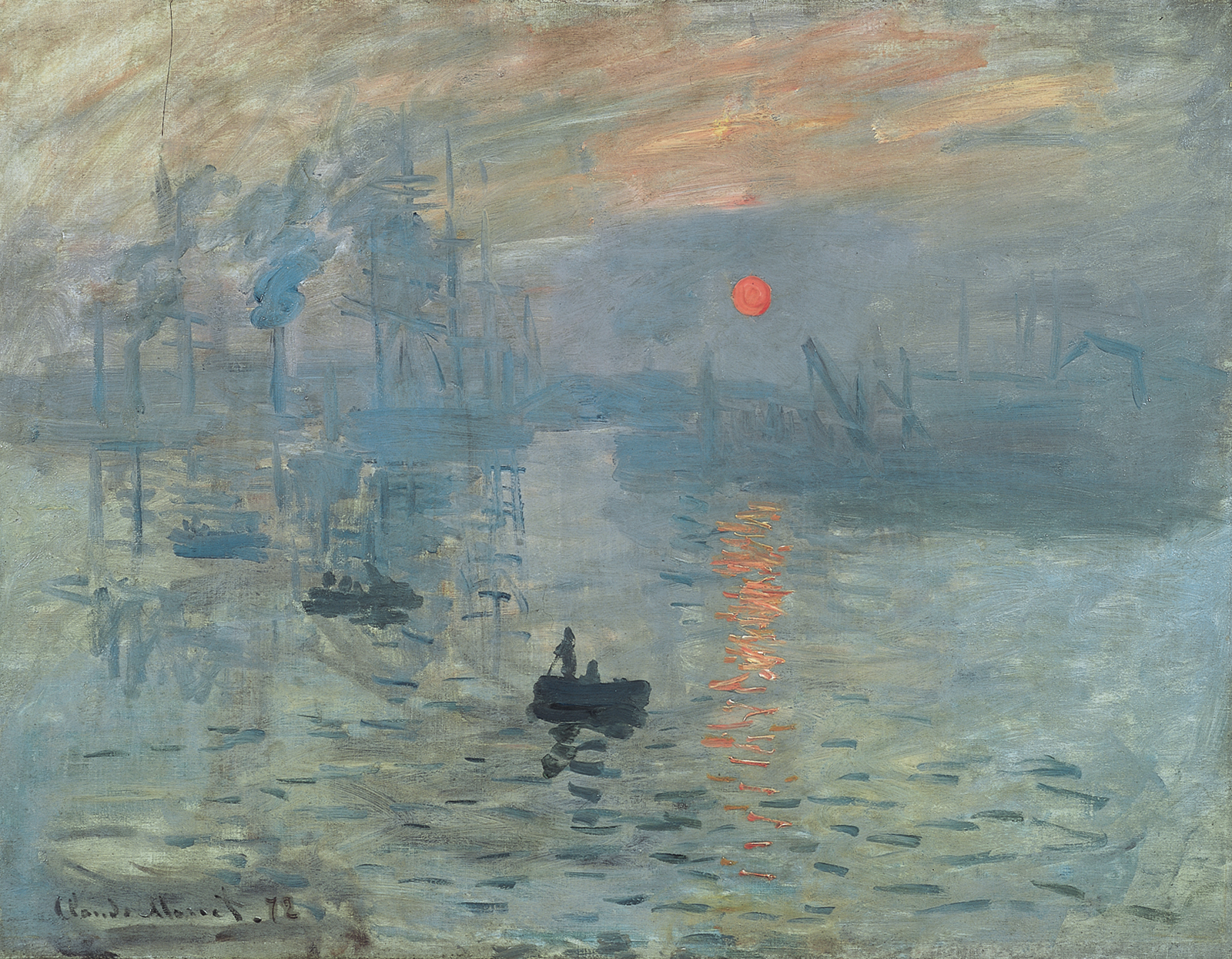
Monet returned to France in 1872 and organised his first Impressionist exhibition in the studio of the photographer Nadar. The event was a flop among the public: Impression, Sunrise became the symbol of a misunderstood movement. Nevertheless, he went on to paint similar works, such as Sunset on the Seine at Lavacourt, Winter Effect (1880).
I one day found myself looking at my beloved wife's dead face and just systematically noting the colours according to an automatic reflex!
The artist then moved to Argenteuil, where he continued his Impressionist experiments at the heart of nature. Following Camille’s death in 1879, he moved to Vétheuil, with the family of his patron Ernest Hoschédé (whose ex-wife he would marry in 1893). In a letter to his friend Georges Clemenceau, the artist later commented: “I one day found myself looking at my beloved wife's dead face and just systematically noting the colours according to an automatic reflex!”
See also: Paul Gauguin: The Lost Innocence
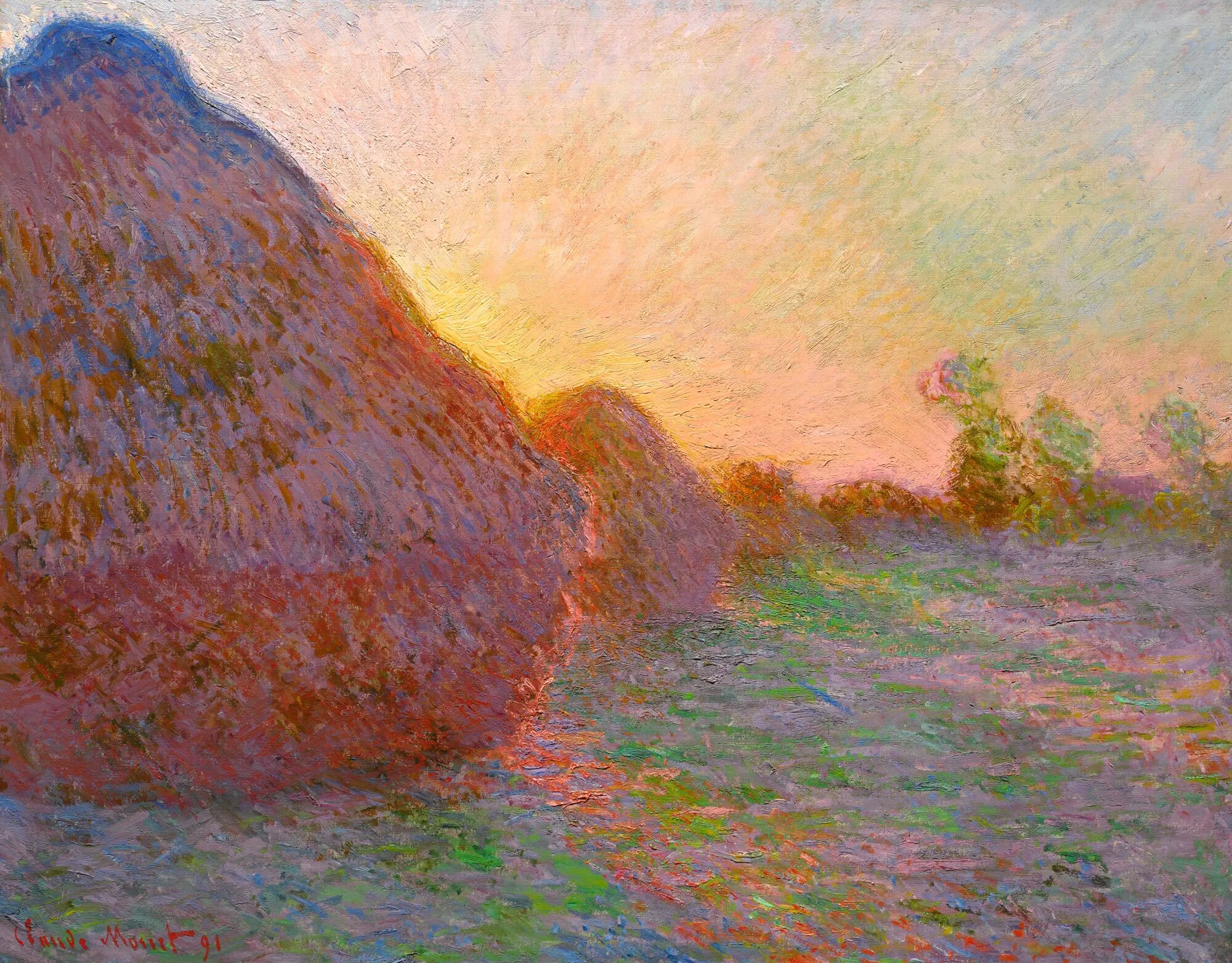
In 1883, the two families settled in Giverny. Monet produced some of his most beautiful and famous series, including his Haystacks and Poplars. He also went on voyage after voyage. From this, his works ranged from his depiction of grand, romantic storms over Belle-Île (1886) to the luminous landscapes of Antibes (1888), which revealed the influence of Pierre Bonnard.
However, Claude Monet’s greatest project was undoubtedly his Water Lilies. Over several years, the painter consulted horticulturalists and diverted a stream with the aim of converting his home into an artificial paradise. In his elderly years, despite cataract problems and a series of bereavements, Monet continued to work wholeheartedly, creating large-scale paintings in a specially-built mobile studio. He began by portraying water lilies fairly distinctly and gradually evolved to works that honed in on details of flowers on the pond. However, unsatisfied with his results, the painter destroyed many of his creations.
The artist died in 1926, one year after the opening of the Musée de l’Orangerie, which now houses many of his best Water Lily works.
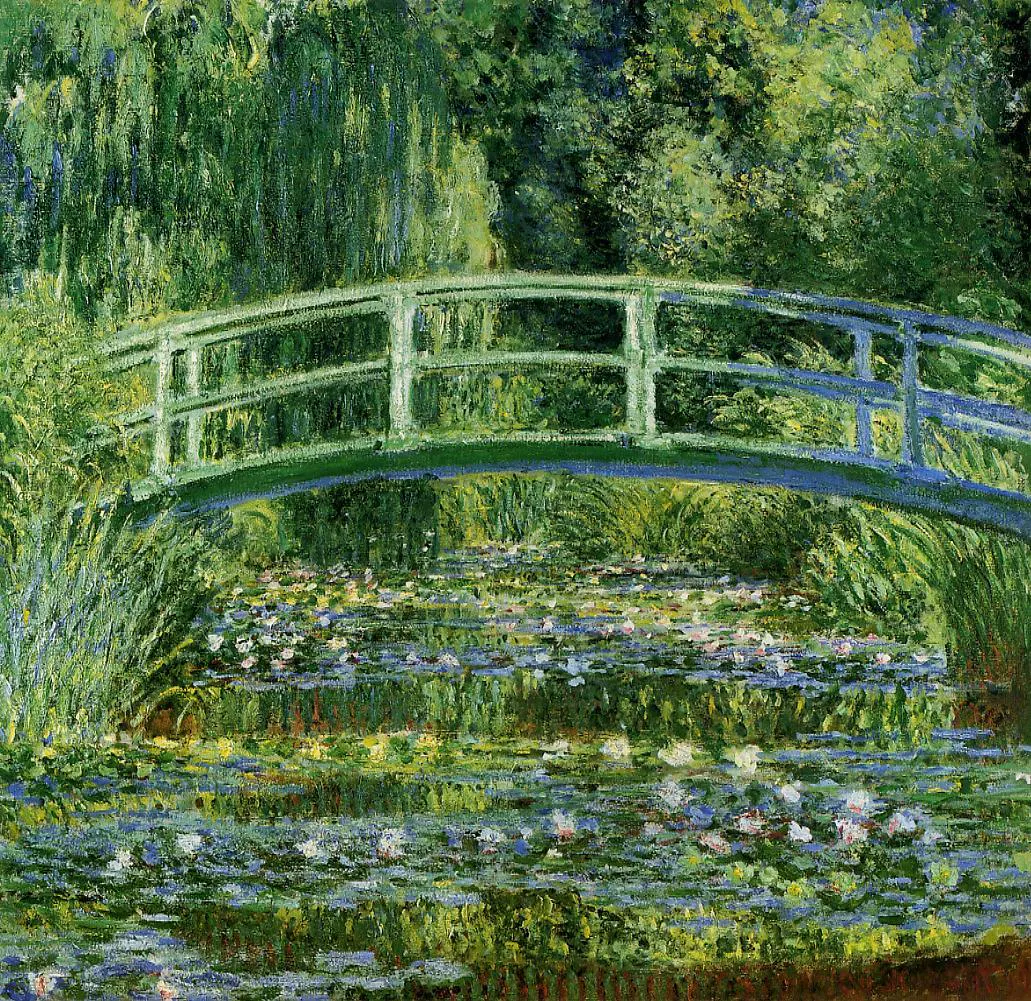
France has the United States to thank for its rediscovery of Claude Monet. In 1957, art critic Clement Greenberg wrote an article that drew comparisons between the French painter and lyrical abstraction. In his new interpretation of Monet, Greenberg saw him as the initiator of the ‘colour field’ and the ‘all over’, thus identifying a noble aesthetic predecessor for the American artists of the time.