Here are six of the most famous British paintings:
Thomas Gainsborough, The Blue Boy
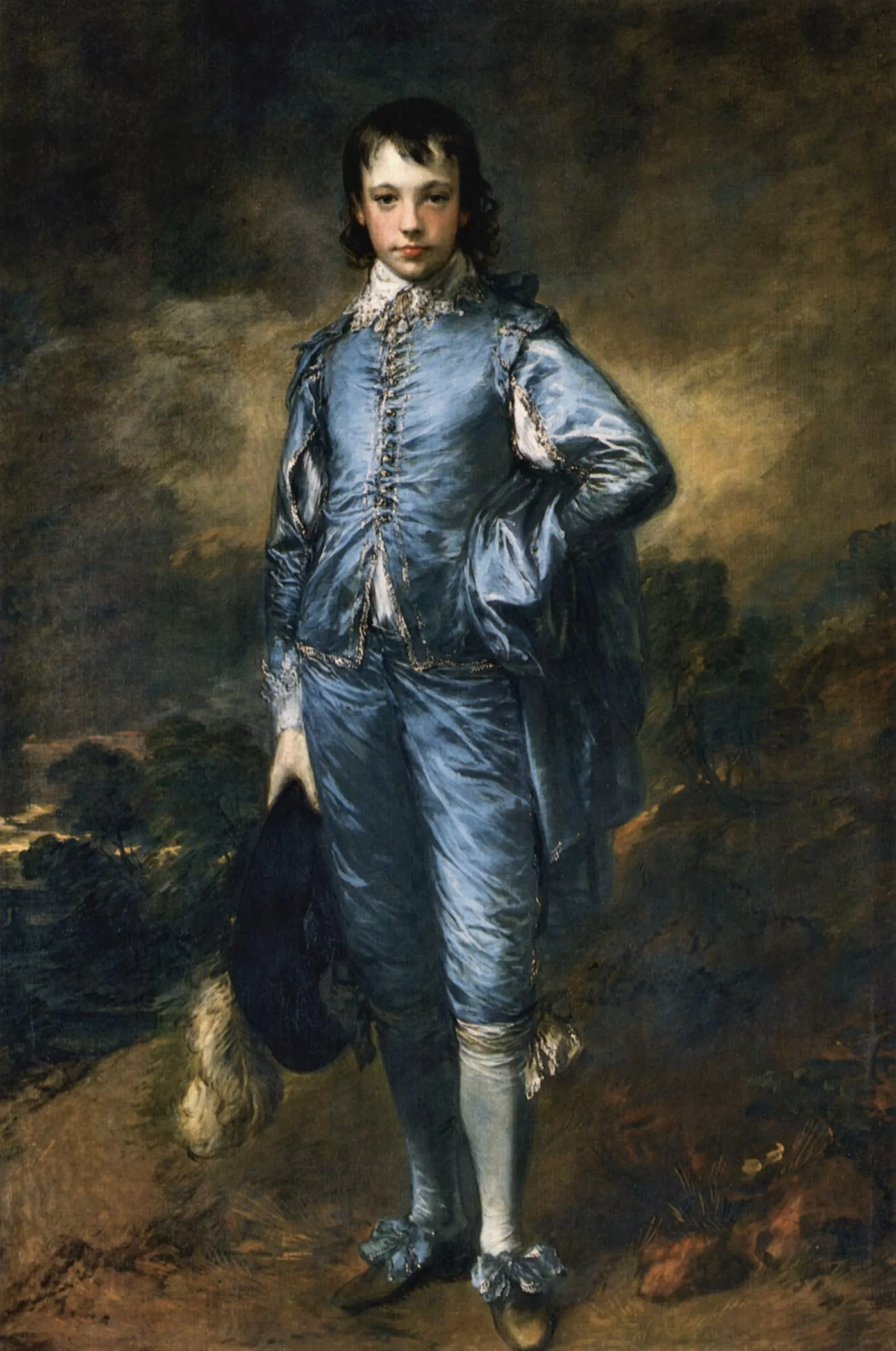
We will begin this list with Thomas Gainsborough's The Blue Boy, which became England's most well-known painting during the 19th century. Gainsborough painted it in 1769 and presented it the following year at an exhibition at the Royal Academy of Arts. Several myths surround its creation. For example, it is said this was Gainsborough's response to Joshua Reynolds' statement that the color blue could never be the central focus of a painting. The identity of the figure depicted in the 17th-century suit is also disputed. The most widely accepted theory is that it is Jonathan Buttal, a 18-year-old music-loving ironmonger and friend of Gainsborough. Buttal was the painting's first owner, but he had to part with it in 1796. After passing through various hands, the artwork was acquired in 1921 by the American railroad entrepreneur Henry E. Huntington for 128,000 GBP, which was the highest sum ever paid for a painting at the time. Before The Blue Boy left home for the Huntington Library in California, 90,000 visitors came to the National Gallery in London to say goodbye. Today, The Blue Boy is immortalized on cookie tins, calendars, postcards, and more.
See also: Thomas Gainsborough: Grand Portraits in Nature
John Constable, The Hay Wain
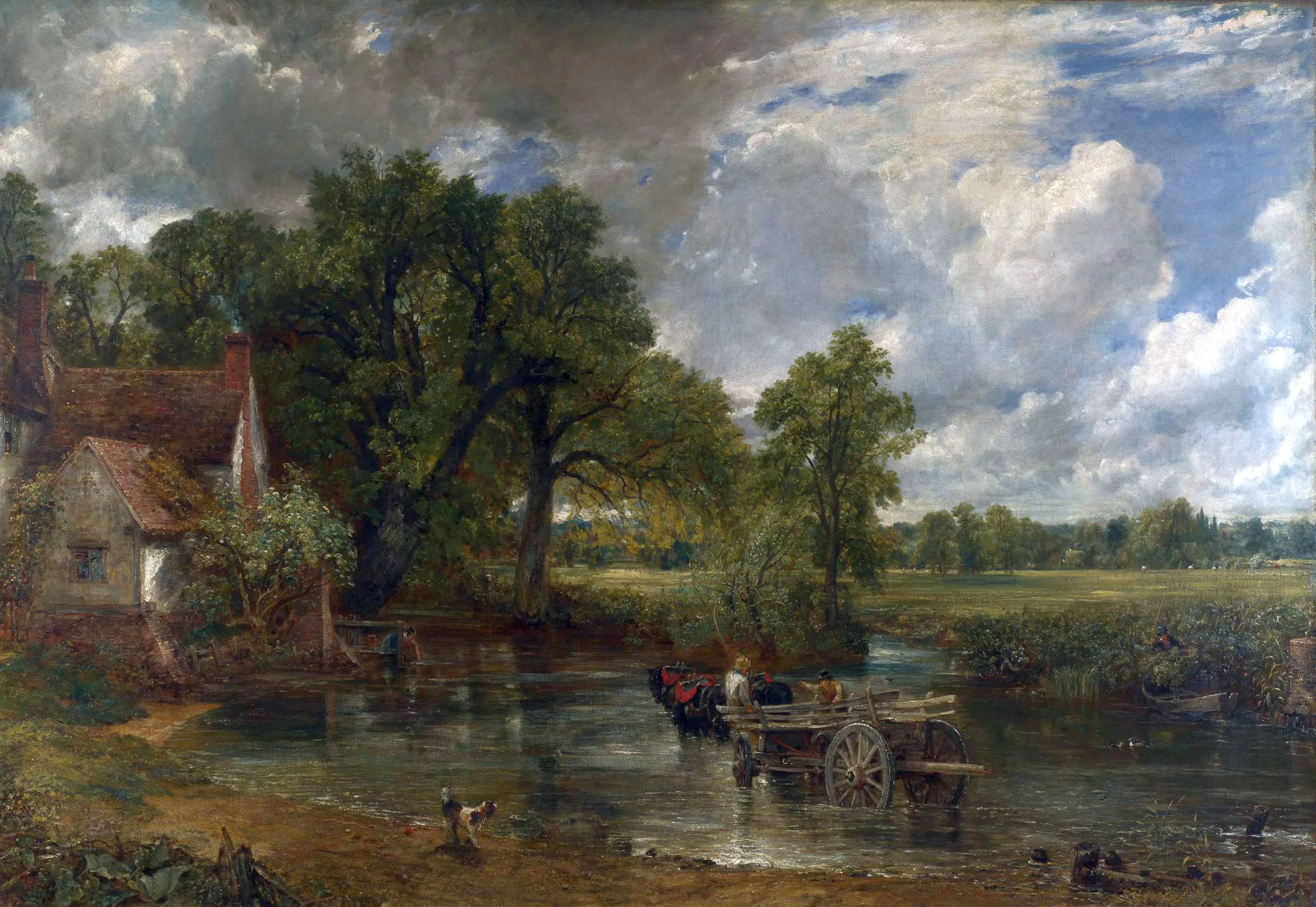
Since 1886, John Constable's The Hay Wain has been part of the National Gallery's collection in London, where it is one of the museum's most popular paintings. Like so many of Constable's landscapes, The Hay Wain was painted in his native Suffolk, although the bank of the depicted River Stour is actually in Essex. The location is clearly identifiable, as the building shown on the left, Willy Lott's Cottage, still stands there today. When Constable exhibited his work at the Royal Academy in 1821, it received little attention and found no buyers. The situation was different in France, where several of Constable's works were shown at the Paris Salon of 1824. There, The Hay Wain was awarded a medal by King Charles X and purchased by an art dealer, but it returned to England after a few years. In 1886, its then-owner, the art collector and patron Henry Vaughan, donated it to the National Gallery.
See also: The Art of Plein Air Painting
John Everett Millais, Ophelia
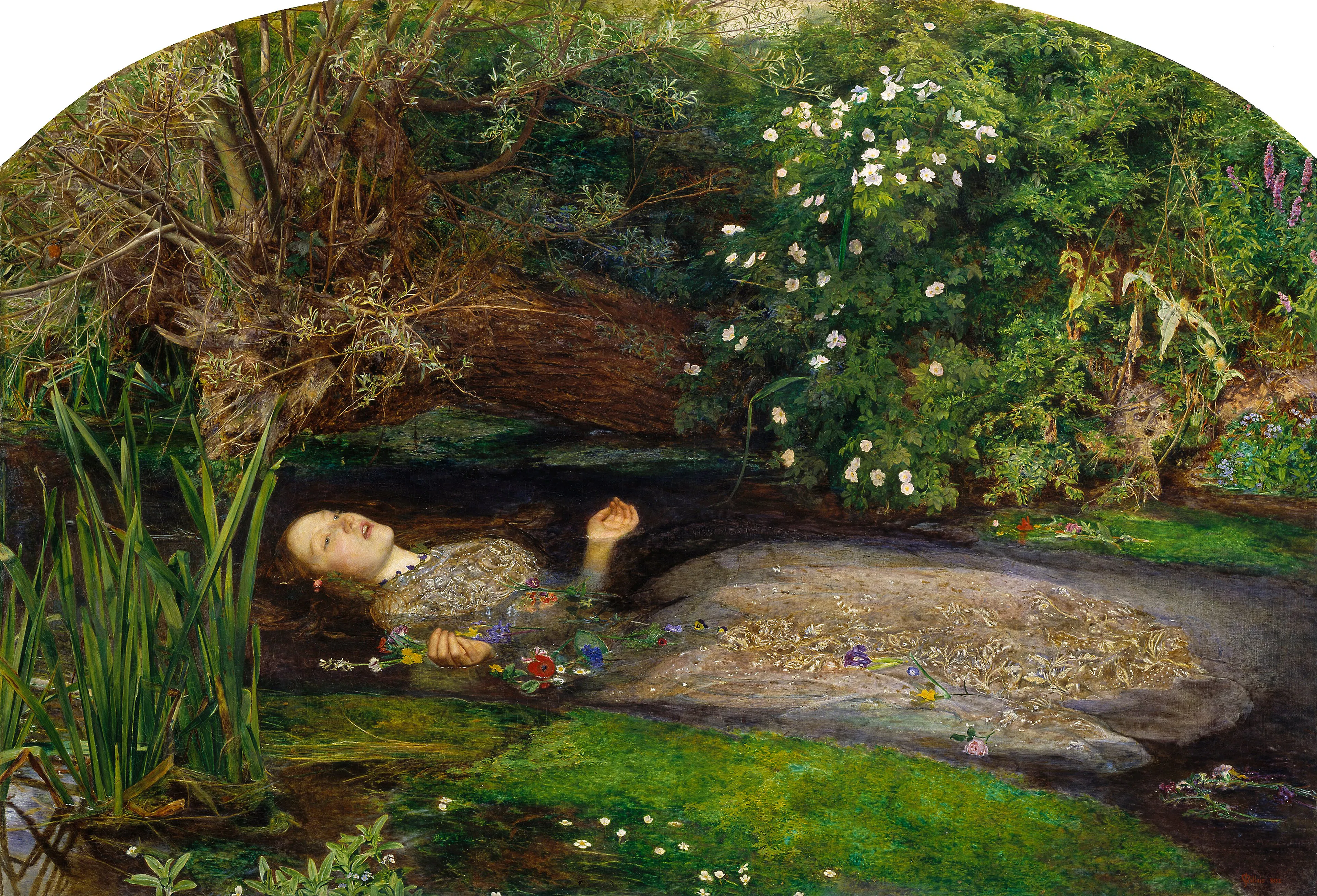
In mid-19th-century England, a group of artists who rejected the conventions of the academies formed a collective inspired by Gothic and Early Renaissance art. These Pre-Raphaelites found inspiration in myths and legends, but also in literature, including the works of Shakespeare. John Everett Millais' most famous work, Ophelia, which depicts Ophelia drowning in the water, was inspired by Shakespeare's tragedy Hamlet. The play itself merely describes this event and served as Millais' guide for his painting. For the landscape portion of the painting, Millais went out into nature in 1851. He added the figure of the drowning Ophelia in his London studio during the winter. His model was the 22-year-old Elizabeth Siddal, whose long red hair made her an important muse for the Pre-Raphaelites. Siddal had to pose fully clothed in a bathtub full of water. The water was usually kept warm by oil lamps, but the heat went out unnoticed by the painter. Siddal bravely persevered in the icy waters to not interrupt Millais' artistic process. However, she developed severe pneumonia that resulted in poor health over the years as she worked as a painter and poet.
See also: Elizabeth Siddal: The Tragedy of the World's First Supermodel
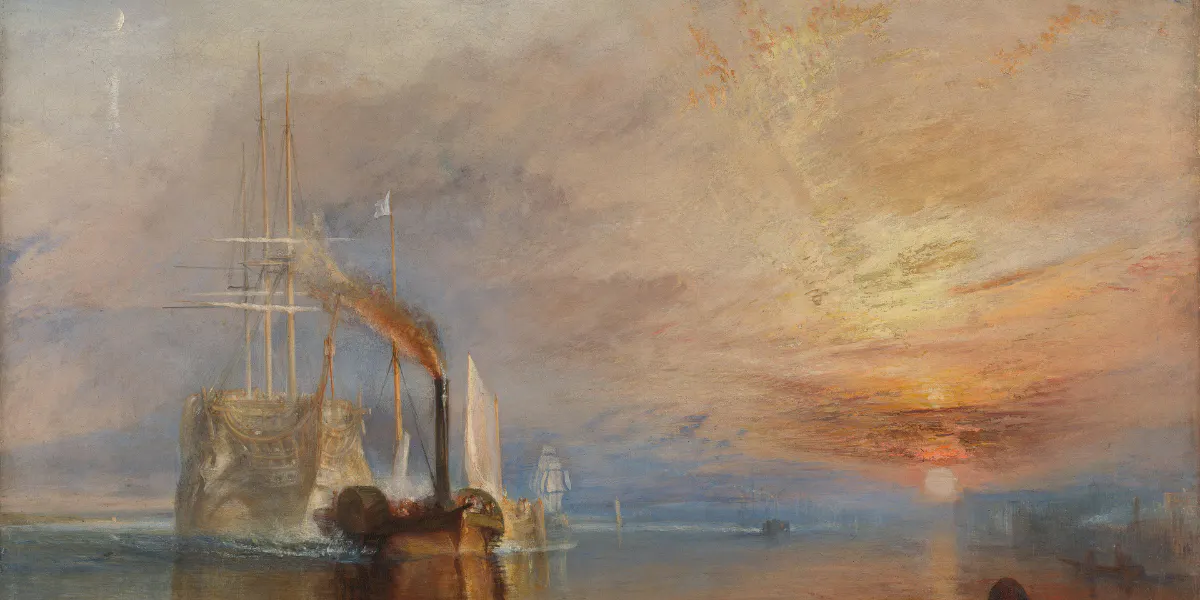
Joseph Mallord William Turner, The Fighting Temeraire
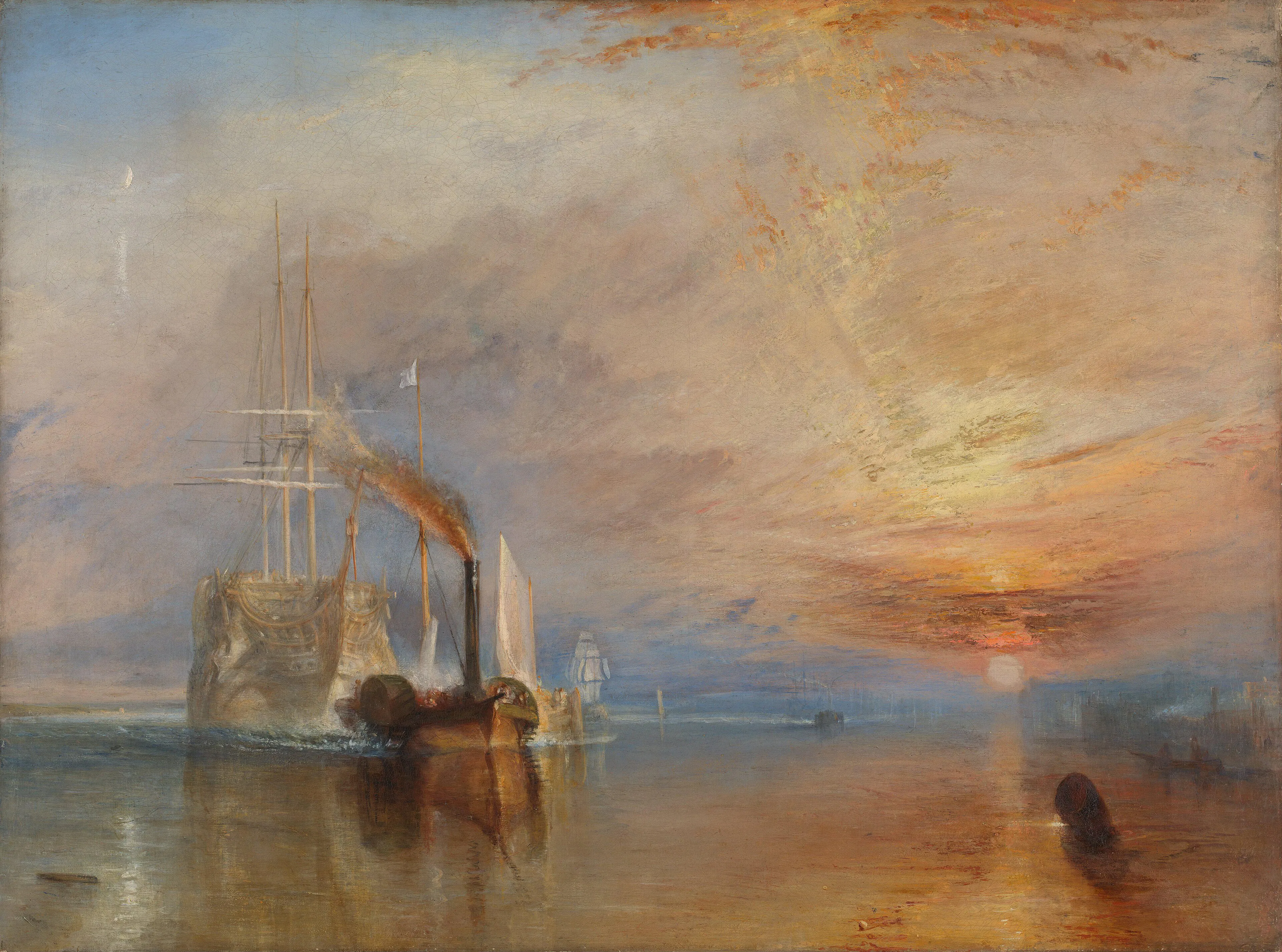
In 2005, BBC Radio 4 asked its listeners which British painting they considered the greatest. The answer was William Turner's The Fighting Temeraire, painted in 1839. The work's full title, The Fighting Temeraire, tugged to her last berth to be broken up, 1838, accurately describes its subject: the final voyage of the retired warship HMS Temeraire, which had fought in the Battle of Trafalgar in 1805. In Turner's painting, the Temeraire appears majestic and ethereal, like a ghost ship floating on the left side of the canvas. The ship is towed by a steamboat whose black color and squat shape serve as a sharp contrast. The scene is bathed in the light of the setting sun, which provides the source of Turner's characteristic use of color. The painting is a work of melancholy, reflecting the end of the era of tall ships, which were gradually being replaced by steamships. In this context, the sun serves as a symbol of a dying era, while the cold light of the already thin crescent moon can be seen as a harbinger of the industrial age. It is hotly debated whether Turner actually witnessed the Temeraire's final voyage with his own eyes. In any case, he greatly valued the painting, even referring to it as his darling, and he refused to part with it throughout his life.
See also: William Turner: In the Heart of Light
Edwin Landseer, The Monarch of the Glen
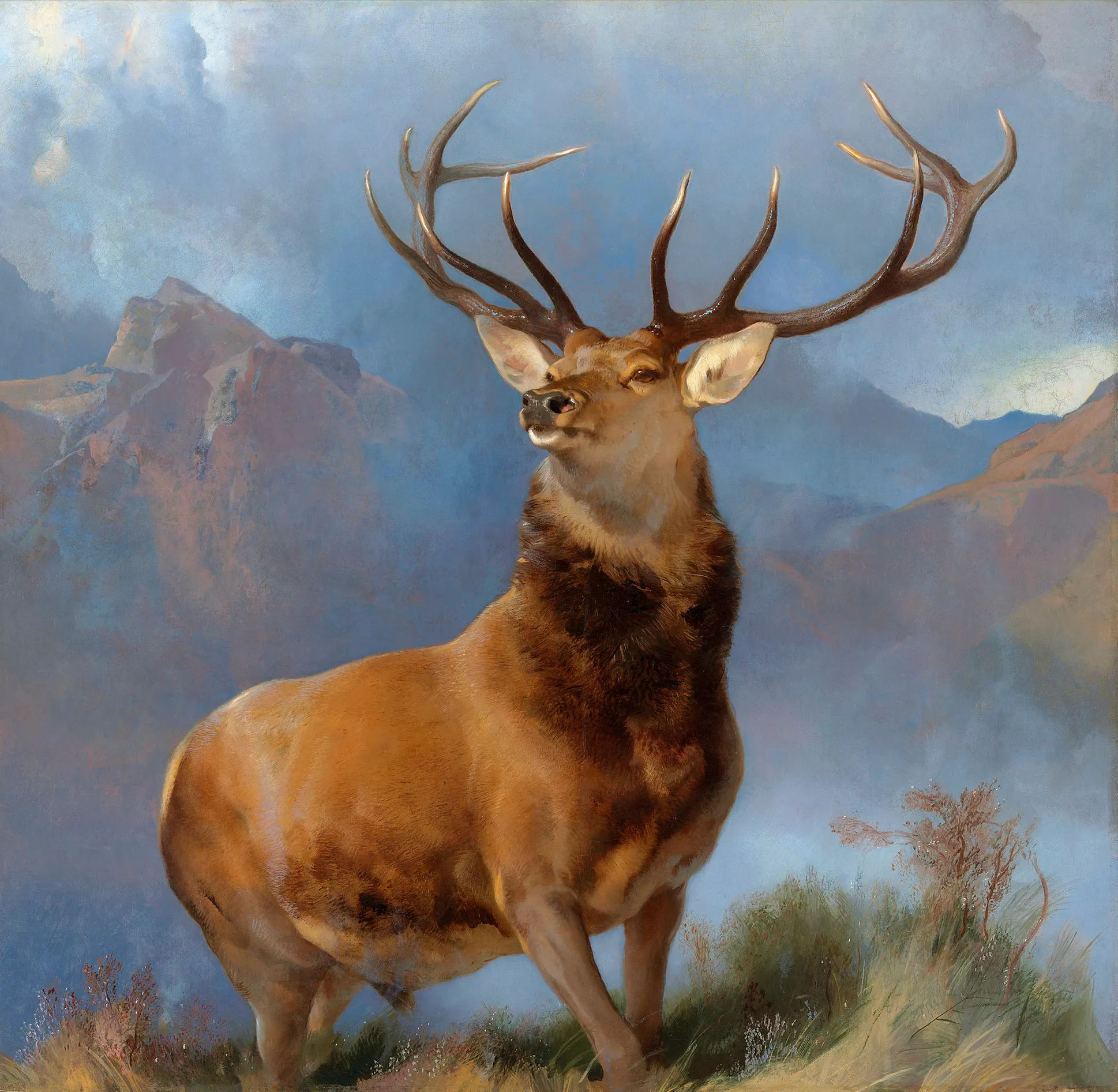
A similar fate to Gainsborough's The Blue Boy befell Edwin Landseer's painting The Monarch of the Glen. Its protagonist, a male red deer in the Scottish Highlands, became widely known through numerous reproductions as an advertising logo. Landseer, who was Queen Victoria's favorite painter and frequently portrayed her growing family, including her dogs, painted it in 1851. It was part of a commission of three paintings to decorate the Refreshment Room of the House of Lords in the newly built Palace of Westminster. However, the commission was ultimately withdrawn, and only The Monarch of the Glen was completed. At its first exhibition at the Royal Academy, it was immediately hailed as a masterpiece. From 1916 onward, the deer's career as an advertising icon began, and the impressive creature appeared in advertisements for products such as soap, butter, and whisky. In 2016, the spirits manufacturer Diageo, which had acquired the painting some 20 years earlier, announced its intention to sell it for 4 million GBP. Thanks to donations, the National Galleries of Scotland was able to acquire The Monarch of the Glen, and today it is exhibited in Edinburgh.
See also: Dogs in Art: 10 Portraits Through the Ages
Lemuel Francis Abbott, Rear-Admiral Sir Horatio Nelson
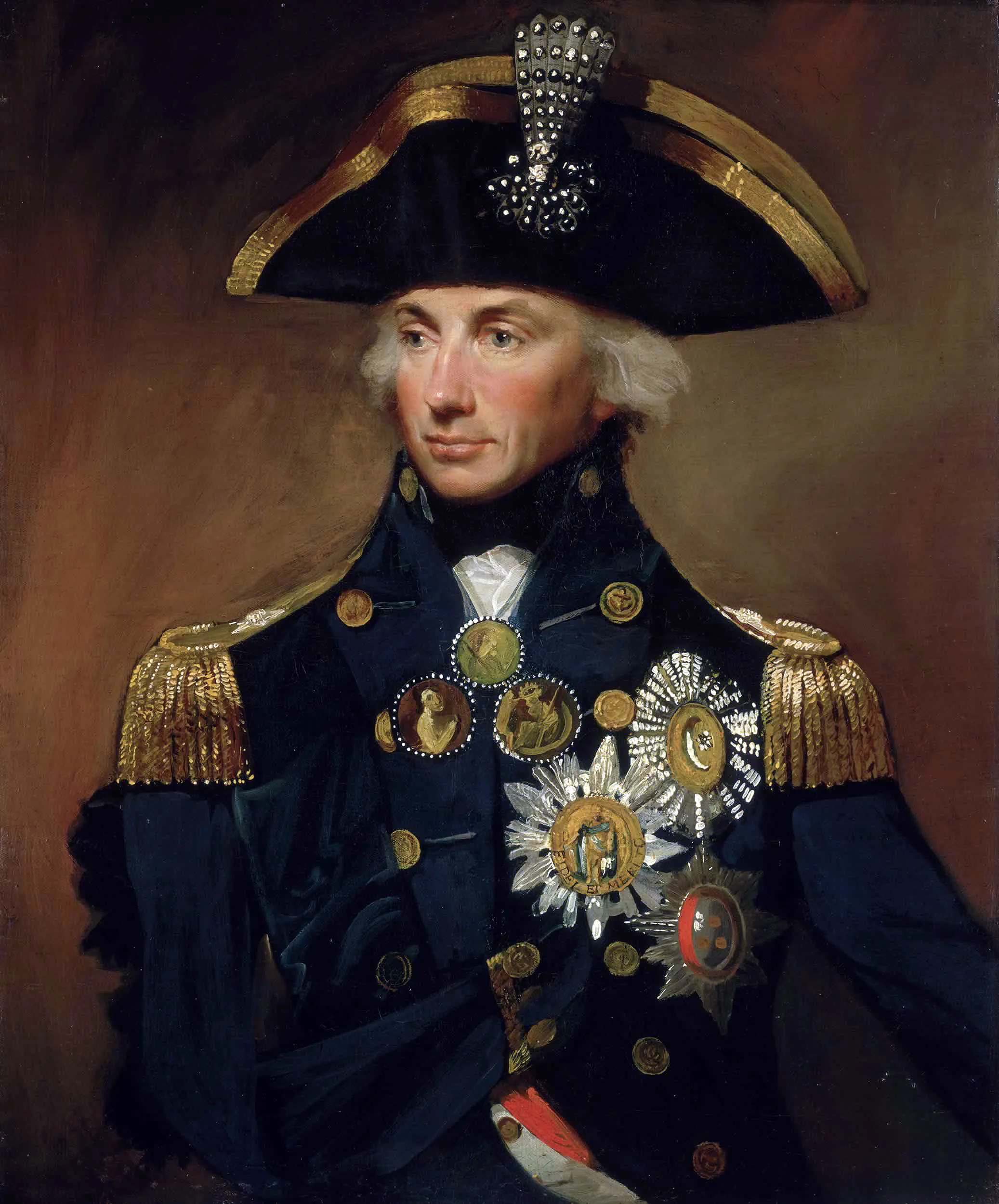
Finally, we have another "Blue Boy," outfitted in a navy naval officer's uniform. And this is not just any officer, but Admiral Horatio Nelson, the quintessential British naval hero. This portrait, painted by the lesser-known portraitist Lemuel Francis Abbott, dates to 1799, following Nelson's decisive victory over the French fleet at the Battle of the Nile the previous year. Numerous decorations adorn his uniform coat, and his severe war trauma—his right arm had to be amputated after a gunshot wound during the attack on Santa Cruz in 1797—is by no means concealed, but rather emphasized by the empty sleeve across his chest. Nelson made headlines not only for his heroic deeds at sea, but also for his extramarital affair with Emma Hamilton, the wife of the British ambassador to Naples. Health problems forced Nelson to retire to the English mainland, but he was called back to arms in the fall of 1805. In the Battle of Trafalgar, the British fleet decisively defeated the French, but this time the battle cost Hamilton not just an arm, but his life.