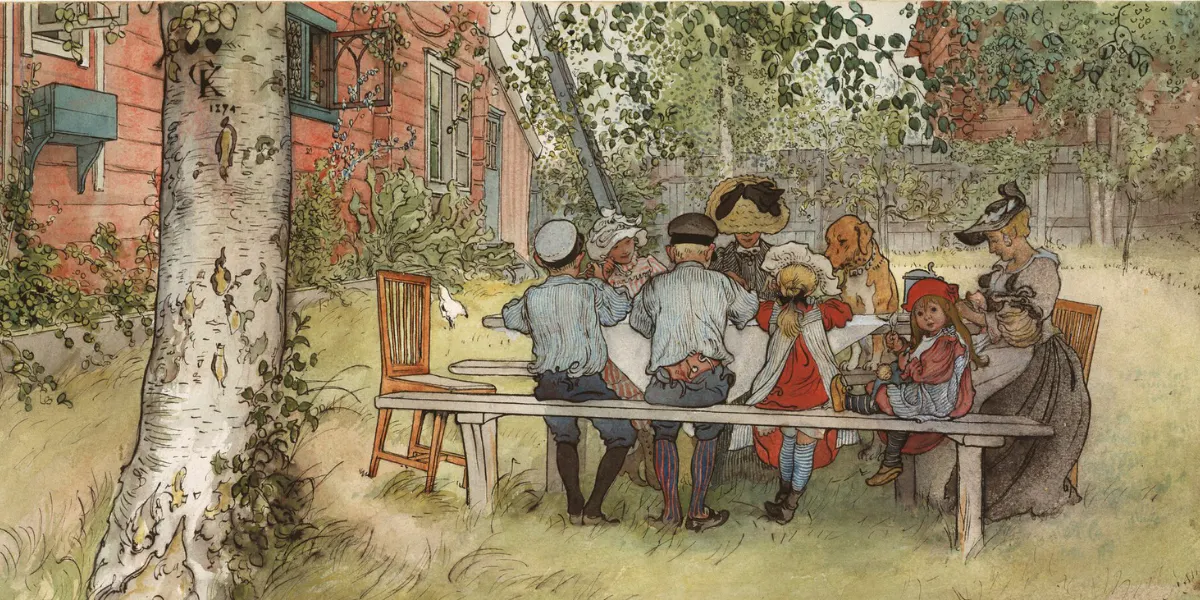
Carl Larsson's enchanting watercolours from his 1899 book Ett hem are certainly among the most recognisable Swedish paintings (see cover image). But Swedish art history has so much more to offer than idyllic family scenes in rural landscapes. Here, we've compiled six iconic Swedish works, most of which can be found at the same museum.
Carl Larsson, Midvinterblot
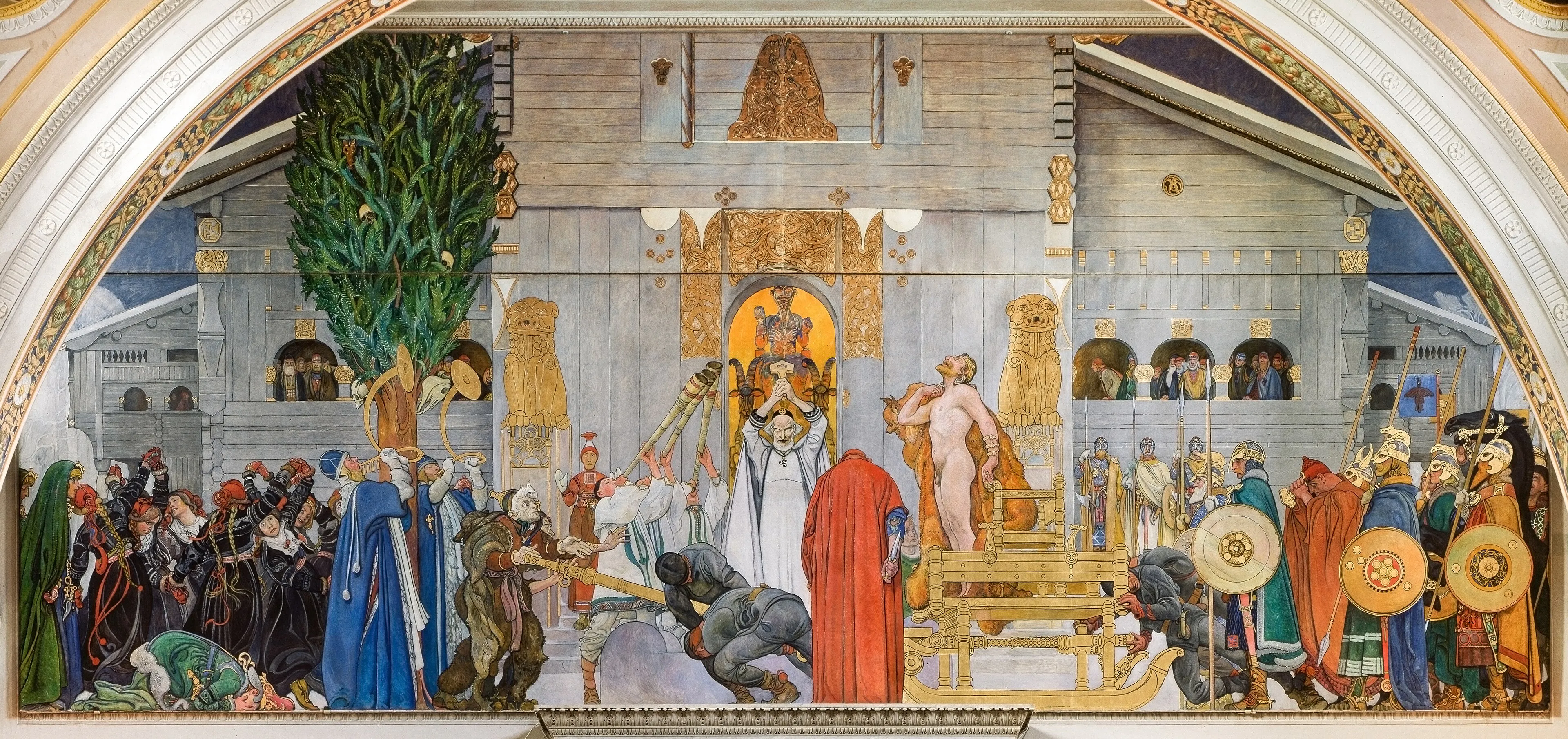
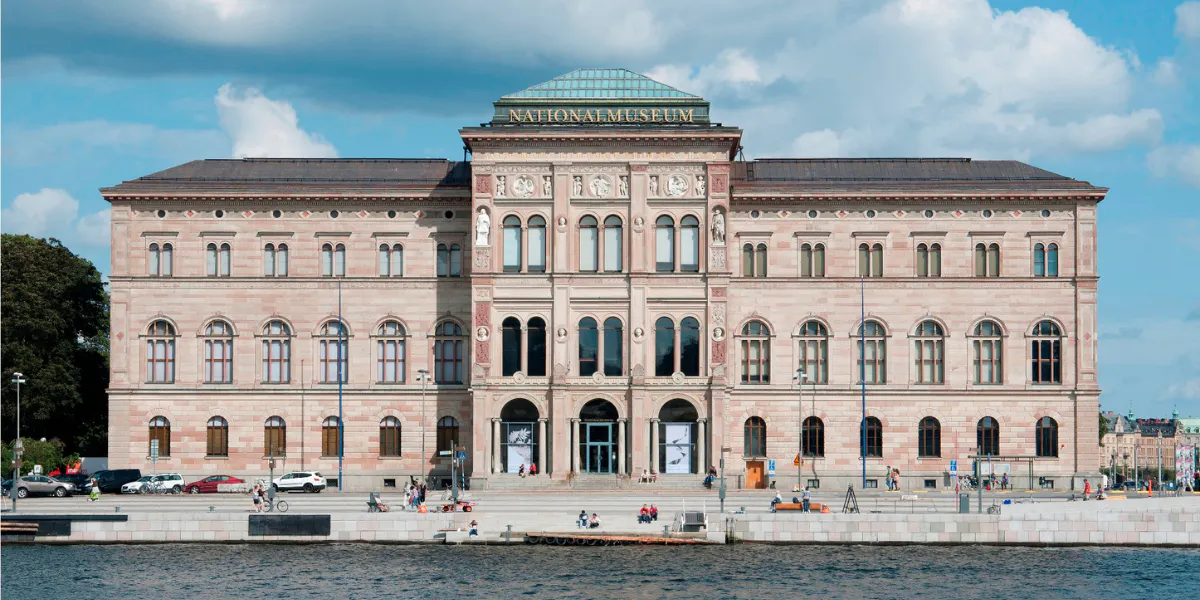
In 1883, discussions began in Stockholm about how to decorate the walls of the grand staircase in the Nationalmuseum, which had been completed in 1866. Five years later, a competition was finally announced. Gustaf Cederström won and Carl Larsson took second place. However, Larsson's submission featuring paintings on the themes of Swedish art and history so impressed Cederström that he withdrew in favor of Larsson in 1894. Larsson initially executed six frescoes in the lower staircase hall in 1896, followed in 1907-08 by the monumental painting "Gustav Vasa's Entry into Stockholm" for the upper staircase hall. He had originally planned to depict Gustav II Adolf's landing in Pomerania in 1630 on the opposite wall, but changed his mind after a trip in Denmark in 1910. There, he studied Iron Age artifacts and ornamentation and envisioned a motif from early Nordic history with its mythical kings. Back in Sweden, he developed a design based on an episode from the poem Ynglingatal, which depicts the sacrifice of King Domalde, who gave his life to end a famine. However, the committee disliked Larsson's new idea, and he revised his design several times—only to be rejected each time. In 1914, Larsson was on the verge of giving up when he finally decided to execute the large-scale painting, titled Midvinterblot (which translates to "Midwinter sacrifice") at his own risk. The following year, a trial hanging of the work took place in the museum, but most of the feedback was negative. After Carl Larsson's death in 1919, Midvinterblot was stored in an archive for 40 years before it was finally acquired by the Nationalmuseum. It has occupied its place in the upper stairwell there since 1997.
See also: A Brief History of Sweden's Nationalmuseum
Anders Zorn, Midsummer Dance
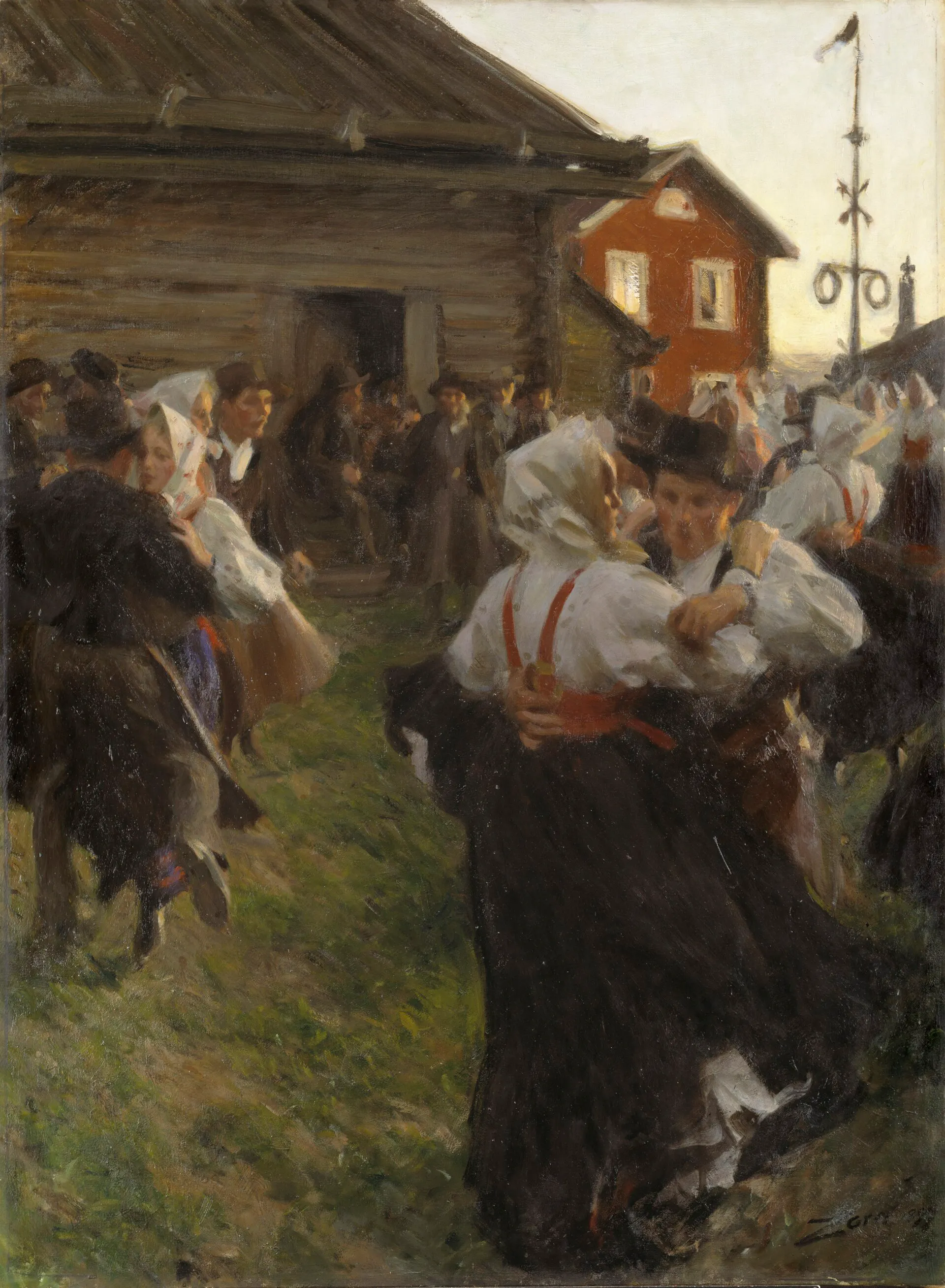
After living in Paris for eight years, the painter Anders Zorn returned to his native Sweden in 1896 with his wife Emma. The couple settled near Mora, Dalarna, where Zorn was born and raised. There, Zorn, who had made a name for himself as a portrait painter in Europe and North America, increasingly turned to nude painting and depictions of rural traditions, as well as everyday life in the region. Famous works such as "Dance in the Gopsmorkate" (1914), "Shepherdess" (1908), and "Midsummer Dance" (1897) were painted, the latter of which Zorn himself once described as his favorite. It depicts the dance under the maypole, which Zorn himself had donated, at the Midsummer festival in Morkarlby near Mora. Preserving the traditions of his native Dalarna was very important to Zorn. He not only painted folk costumes and customs, but also collected traditional objects, including furniture, tools, and textiles. He and Emma later bequeathed the collection to the Swedish state. Zorn had painted Midsummer Dance for the Stockholm Exhibition of 1897, and in 1903, the painting came to the Nationalmuseum as a gift from the Academy. It was there that an American collector may have seen it and commissioned another version from Zorn. This version remains in private hands to this day, but a very similar painting from 1896 is also displayed at the Pushkin Museum in Moscow.
See also: Anders Zorn: Sweden's Most Popular Painter
Gustaf Cederström, Bringing Home the Body of King Charles XII
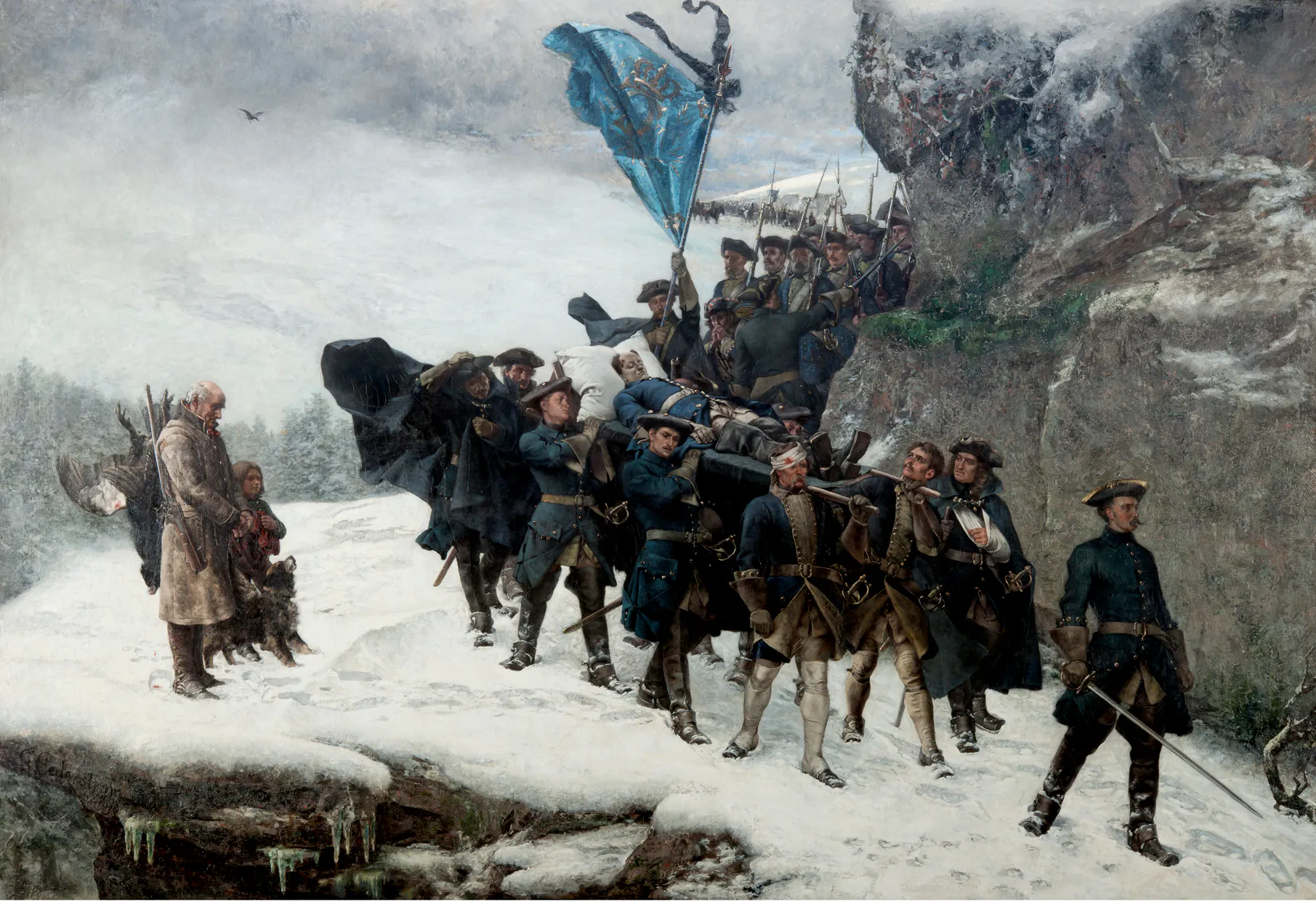
In 1877, Gustaf Cederström suffered a bitter setback when his history painting, "Albert of Mecklenburg mocked by Queen Margaret" (its whereabouts currently unknown), was rejected by the Paris Salon. Far from giving up, the Swedish painter began work on a new piece focusing on the Swedish King Charles XII, whom he admired. Cederström chose the tragic episode in which the king, who was killed in the Great Northern War in 1718, is brought home by his soldiers. The king's open transport on a stretcher was a product of the artist's imagination, however. Cederström worked on the painting for 13 months, pouring his heart and soul into it. He used numerous models to depict the king and the soldiers (though he gave the soldier at the head his own likeness) and had large quantities of salt brought into his studio to create the snow effect. Full of hope, he exhibited his work in the Swedish pavilion at the 1878 Paris World's Fair and was not disappointed. He was awarded a medal, and the painting was acquired by the Russian Grand Duke Konstantin Konstantinovich Romanov. Many Swedes wanted the painting in their homeland, so Cederström painted a second version, which has been part of the collection of the Nationalmuseum in Stockholm since 1884. The original version only arrived in Sweden after the October Revolution and has been on display at the Gothenburg Museum of Art since 1939.
Alexander Roslin, The Lady with the Veil
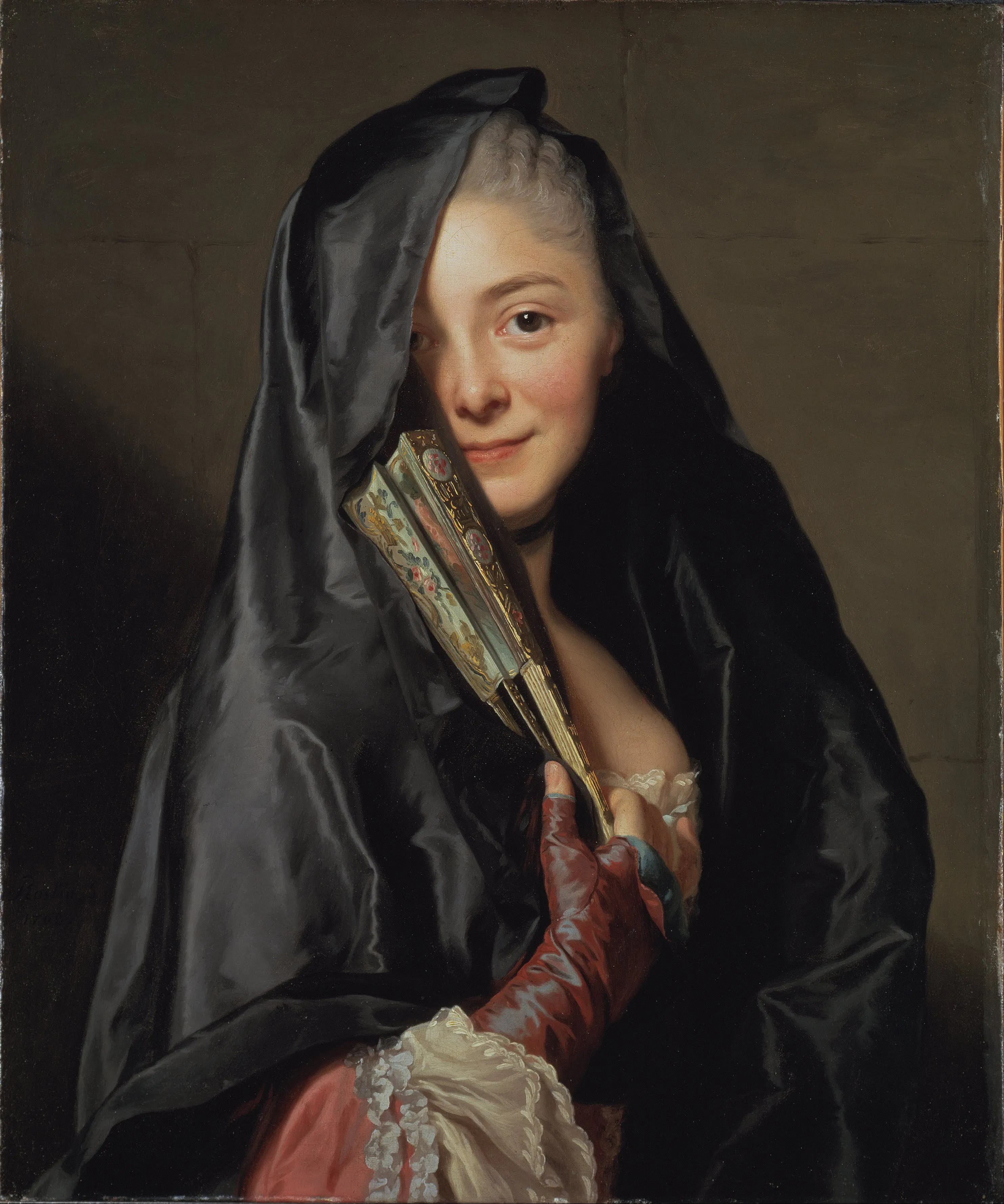
A century before Gustaf Cederström sought success in Paris, another Swedish painter had already found it there. Alexander Roslin settled in the French capital in 1752 and over the years rose to become one of the most sought-after portrait painters. He was renowned for his exceptional talent for rendering luxurious fabrics and imbuing his models with psychological depth. His patrons came from the highest aristocratic circles, but there was one lady he particularly loved to paint: the pastel painter Marie Suzanne Giroust. He married her in 1759, and the couple's happy union produced six children. The most famous portrait Roslin painted of his beloved is "The Lady with the Veil" in 1768. It depicts Marie Suzanne Giroust in a dress à la bolognaise, referring primarily to the long black veil that partially covers her face, a style characteristic of Bolognese fashion. The portrait conveyed a very intimate message through the way the fan was handled, since a folded fan touching the cheek supposedly meant "I love you." Alexander Roslin, however, did not keep this work. He presented it at the Paris Salon in 1769, where it received considerable acclaim and found a buyer. It then went to Sweden where it was part of various private collections before becoming part of the Nationalmuseum's collection in 1945.
See also: The Hand Fan: An Enchanting Collectible
Hilma af Klint, The Ten Largest, No. 3
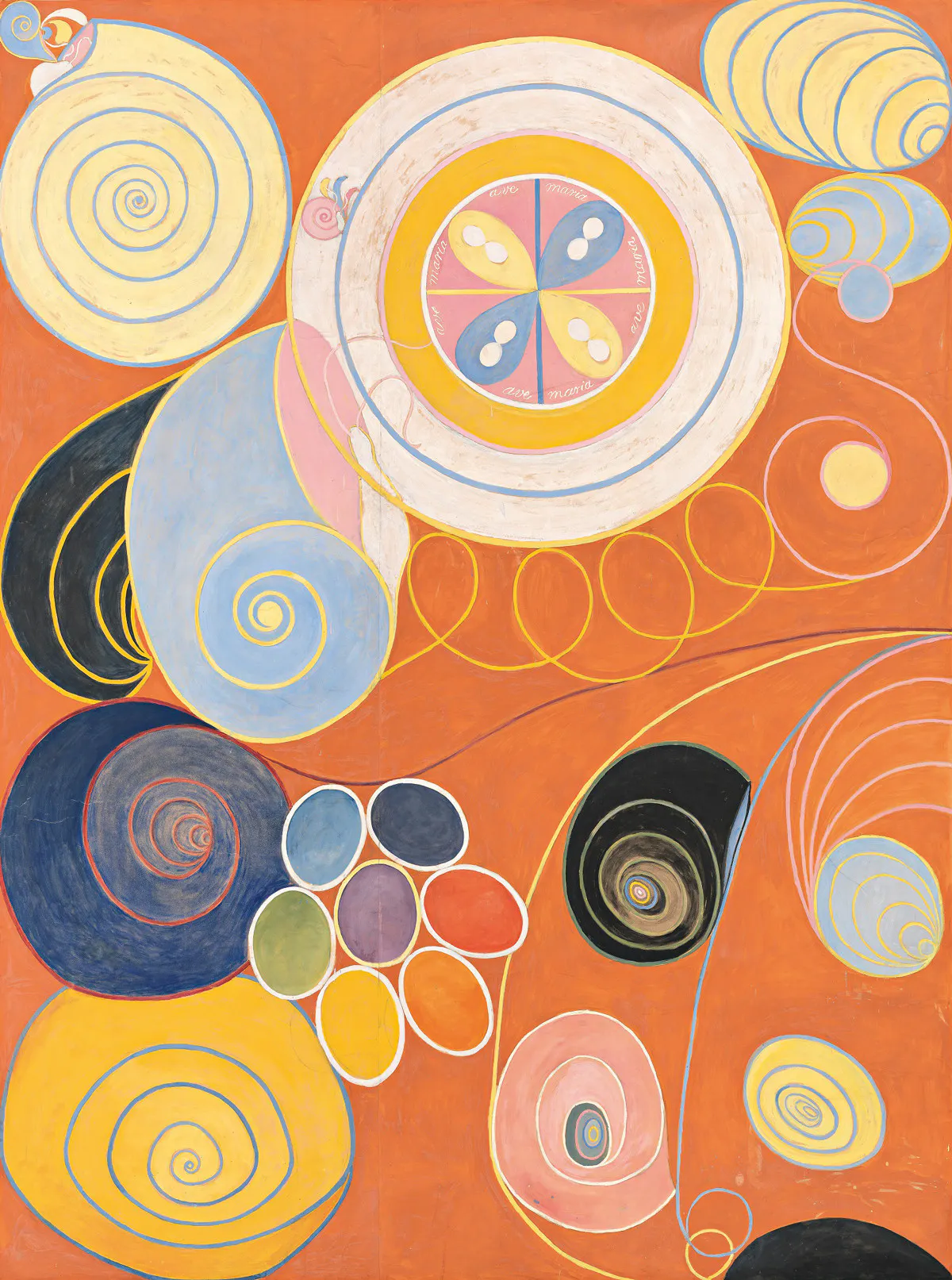
In 1984, the art world was turned on its head when works by Hilma af Klint, previously hidden from view, were presented in Helsinki. This unveiling occurred at the painter's request, as she had stipulated in her will that her oeuvre could not be publicly exhibited until at least 20 years after her death in 1944. As the presentation revealed, Hilma af Klint had experimented with abstract painting earlier than many artists considered pioneers of this art movement, such as Wassily Kandinsky and Kazimir Malevich Hilma af Klint's paintings were based on her deep connection to spiritualism and her resulting desire to create images that transcended the visible. This was initially expressed in organic forms, and later in geometric compositions. Hilma af Klint's series The Ten Largest from 1907 are her most iconic masterpieces and have thrilled the art world since their rediscovery.
See also: Hilma af Klint: The Non-Figurative Pioneer
Nils Dardel, The Dying Dandy
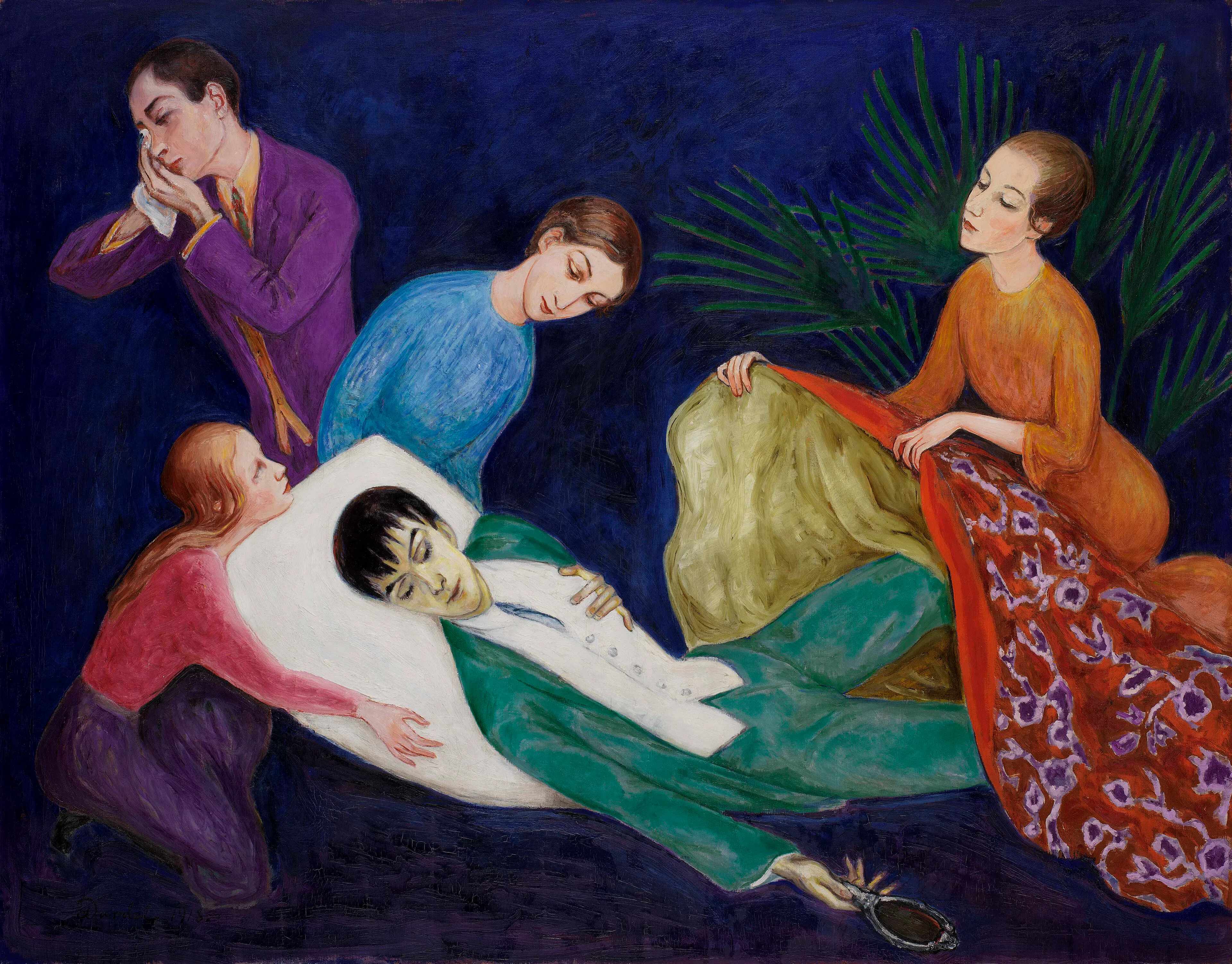
Colour, elegance, humor, and contradictions characterise the oeuvre of the Post-Impressionist Nils von Dardel and are also found in his most famous painting, The Dying Dandy from 1918. After studying art in Stockholm, Dardel went to Paris, where he was particularly influenced by the Fauvists around Henri Matisse. A second significant influence was Dardel's enthusiasm for Japanese art, and in 1917, he travelled to Japan. The following year, he painted The Dying Dandy, in which he clearly satirised the widespread sin of vanity. Surrounded by a man sobbing into a handkerchief and three women, the dandy is about to take his last breath. His gaze is not directed heavenward, but rather toward a mirror that rests loosely in his already limp hand. The black mirrored glass could be interpreted as an allusion to death and the end of all vanity. It sold at auction in 1984 for 3.4 million SEK, which made the painting the most expensive Swedish artwork in auction history up to that point. Since 1993, it has been part of the collection of the Moderna Museet in Stockholm. An earlier version, also from 1918, depicts the dandy surrounded by two men and a boy and holding a fan instead of a mirror. It was auctioned at Bukowskis in 2007 for 3.25 million SEK.