In the early 1970s, the successful London businessman and owner of the pharmaceutical company Underwoods the Chemists, Harry Woolf, became interested in the decorative handicrafts of the jeweller Fabergé, who supplied the imperial family and Russian aristocracy with its exclusive and expensive pieces in the late 19th and early 20th centuries.

Except it wasn't the famous jewelled Easter eggs or the jewellery by Fabergé that Woolf had an eye on, but rather the decorative and finely crafted objet d’art that Fabergé made. The result is one of the best Fabergé collections of the last fifty years. Christie's will auction 86 pieces from it as part of its Russian Art Sales in London on 29 November.
See also: Fabergé Eggs: 8 Little Known Facts
"Harry Woolf’s impeccable taste, discerning vision and quest for perfection led him to establish one of the most revered iconic collections of Fabergé known in private hands," said Alexis de Tiesenhausen, Christie's International Head of the Russian Art Department, and Margo Oganesian, Russian Works of Art Specialist. "His collection has been a point of reference for all connoisseurs and lovers of Fabergé around the world for nearly half a century."
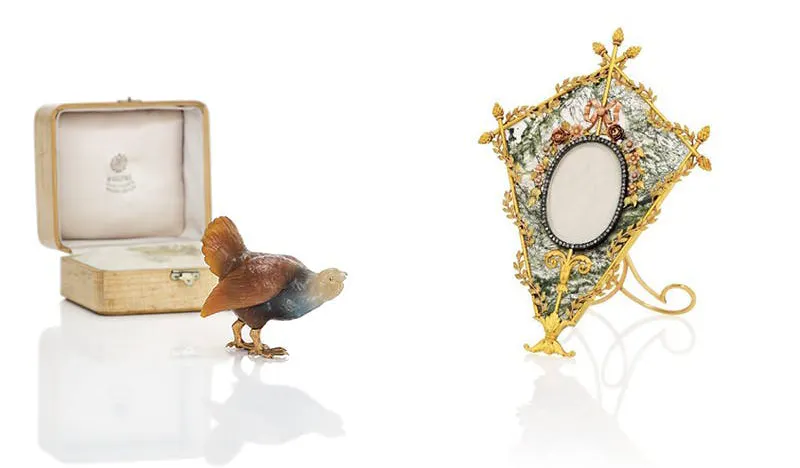
The Harry Woolf Collection is composed of a remarkable collection of carved miniature animals, functional objects such as picture frames, and decorative pieces inspired by Japonism and traditional Russian art. The collection is expected to achieve a total somewhere between £2.15-3.15 million.
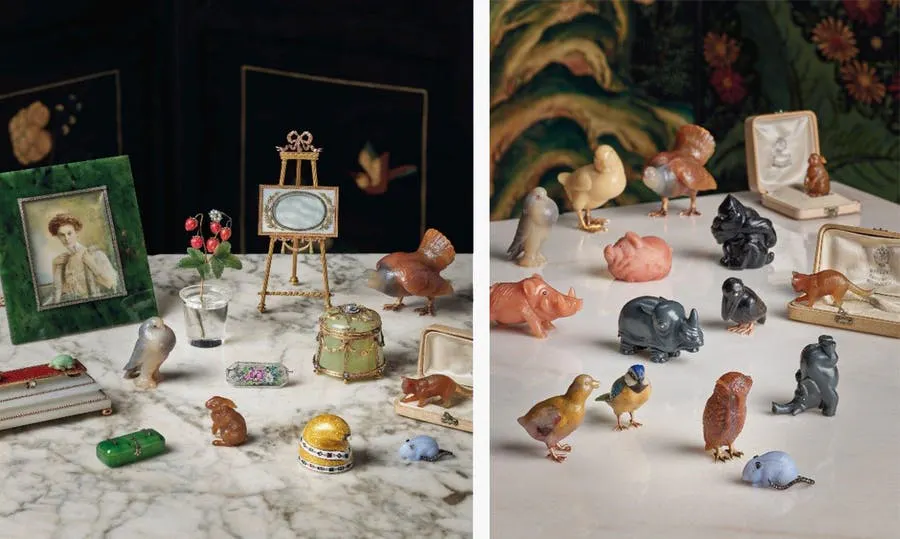
The objects come from some of the most capable minds in the Fabergé family, such as Henrik Wigström, Michail Perchin, Julius Rappoport, Feodor Rückert, Alfred Tillmann, Victor Aarne, Friedrich Koehli, August Holming, Anna Rings and Wladimir Finikow, and Alma Pihl.
See also: The 9 Most Popular Jewellery Brands
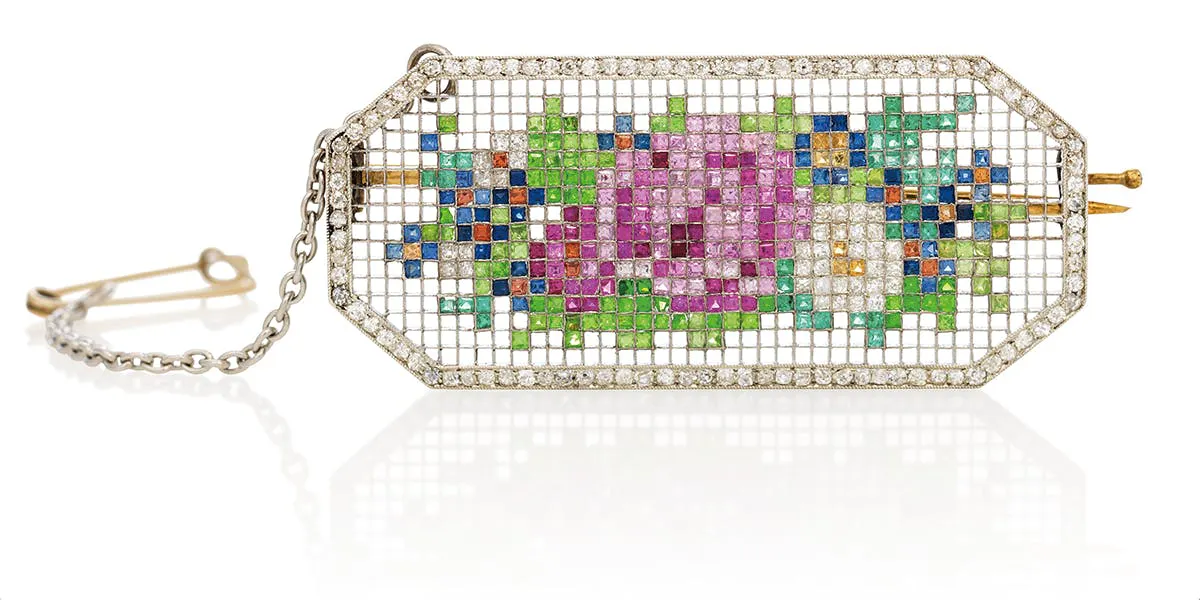
Alma Pihl, one of the only two women employed at Fabergé at the time, is the creator of one of the top highlights of this offer: a unique mosaic brooch, for which she was inspired by the embroidery of her mother-in-law around 1913. In addition to the brooch, which required the highest level of jewellery craftsmanship, there is only one other object with this type of design: the mosaic egg that Tsar Nicholas II gave to his wife Alexandra Feodorovna at Easter in 1914. The egg was also designed by Pihl, who entrusted the elaborate execution to her uncle, foreman Albert Holmström. In 1934, King George V bought the egg and gave it to his wife Mary as a gift. It has been part of the Royal Collection since then.
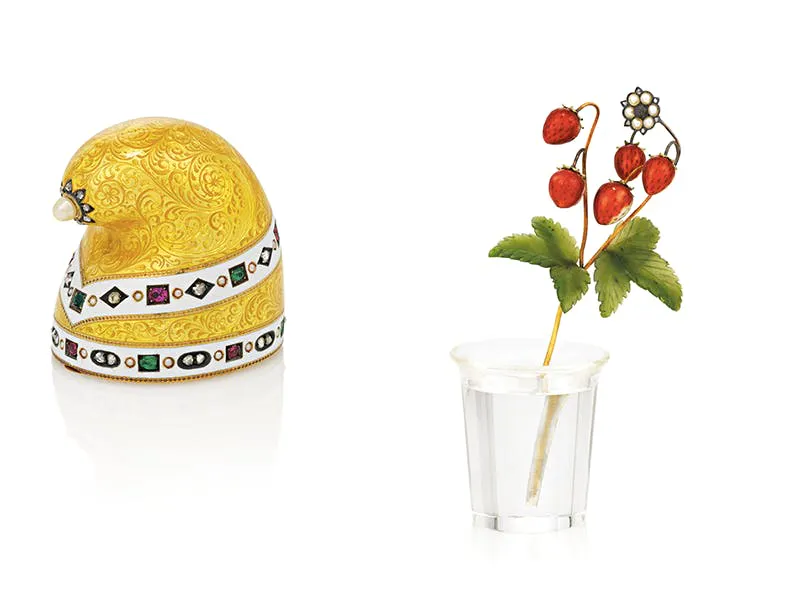
Other highlights include a bonbonnière (small box for candy) decorated with precious stones and yellow enamel in the shape of a doge's hat, and a wild strawberry branch in a vase made from gold, enamel, nephrite and rock crystal. Arrangements inspired by botany are among the most emblematic of Faberge's creations, which were well received by the imperial family and the nobility.
The pieces from the Harry Woolf Collection will be exhibited in advance of their auction on 29 November in Dubai, Paris and London.
Find more news from the auction market with Barnebys Magazine