At the age of 14 in 1770, the Austrian Archduchess Marie Antoinette married the heir to the French throne Louis-Auguste and moved to the Palace of Versailles. At the time, she was a tomboy who played with dogs and the children of her ladies-in-waiting.
That changed immediately, however, when Marie Antoinette became Queen four years later and came into contact with the stylish creations of the Paris milliner Rose Bertin, whom she met through her cousin-in-law, the Duchess of Chartres, and her dear friend, the Princess of Lamballe (both very fashion-conscious young women and sisters-in-law).
See also: The Art of Fashion: Fashion in Art
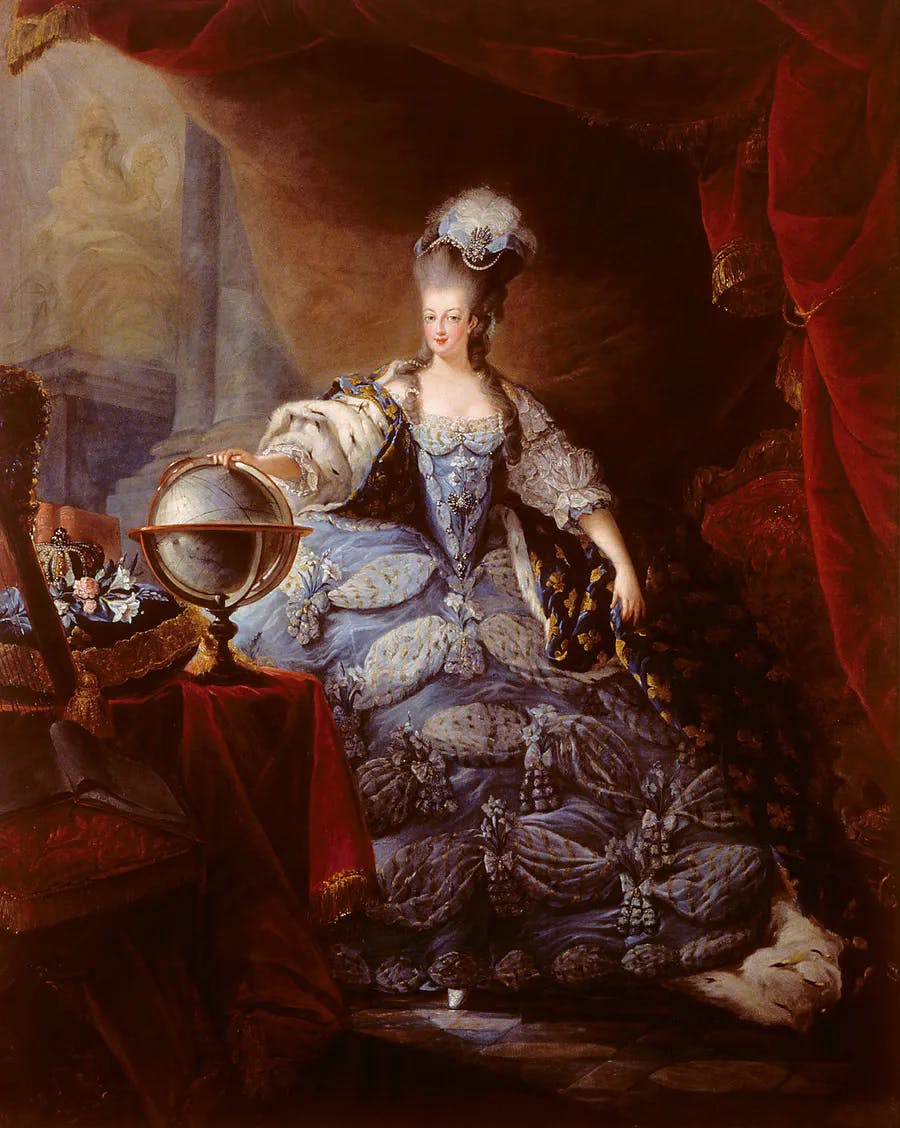
Fashion became one of the greatest pleasures for the unhappily married young queen, who loathed her royal duties. Together with Rose Bertin, who was named 'Minister of Fashion' during the course of their collaboration, Marie Antoinette created her hallmark look: towering hairstyles decorated with all sorts of ribbons and feathers - an invention of their hairdresser Léonard Autié.
Her interest in fashion earned her not only admiration, but also a lot of ridicule. Marie Antoinette's mother, Empress Maria Theresa, who had heard the rumours in distant Vienna, thought this was unworthy of a queen. Nevertheless, she longed for a portrait of her youngest daughter, whom she had married abroad at such a young age.
Marie Antoinette was willing to comply with her adored mother's wishes, but she simply could not find a painter whose skills she agreed with. No one had ever managed to reproduce her likeness as she wanted. "The painters are killing me and driving me to despair!", wrote the disappointed queen to Vienna.
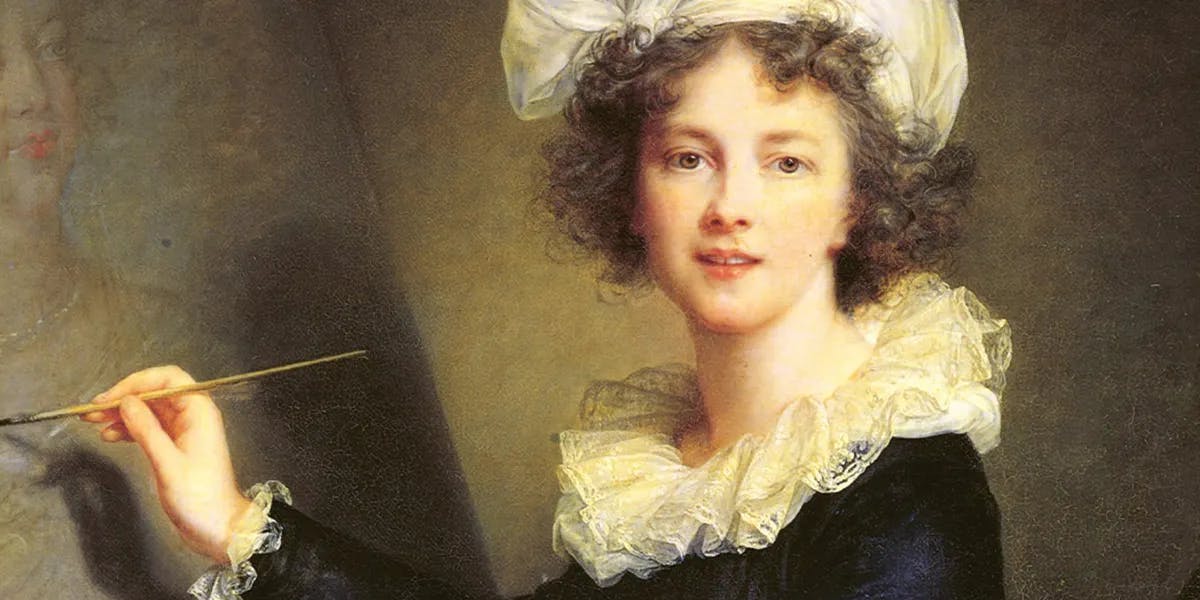
Finally, however, came a glimmer of hope when she heard of a young woman who was causing a sensation in Paris: Élisabeth-Louise Vigée Le Brun. Élisabeth Vigée was born in Paris in 1755, the daughter of the pastel painter Louis Vigée, whose talent she had inherited and whose ability she soon eclipsed. When Marie Antoinette, who was the same age, came to France, Élisabeth was already being commissioned as a portraitist by the nobility and wealthy bourgeoisie. In 1776 she married the art dealer Jean-Baptiste-Pierre Le Brun, who successfully managed his wife's business. Finally, in 1778, the call came from Versailles, where the Queen wished to be painted by Madame Vigée Le Brun.
See also: Élisabeth Vigée Le Brun: The Royal Favourite
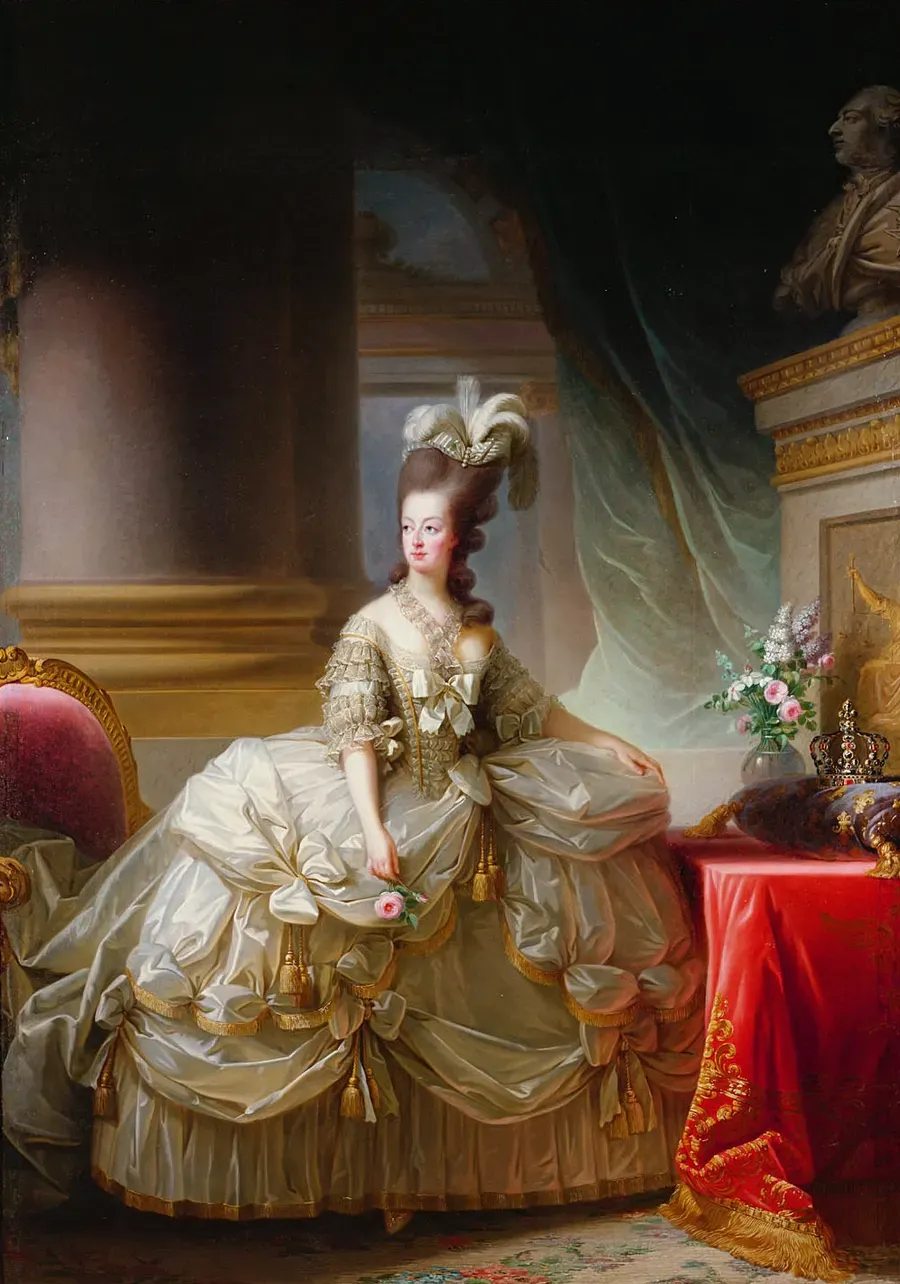
Right away, the two young women got along, and after Marie Antoinette, who was born in the music city of Vienna, found out that the painter had a beautiful singing voice, not a single portrait session went by without a duet. The first portrait, which depicts the queen in a large court robe, was well received and Marie Antoinette was happy to send it to Vienna, where it was also welcomed with enthusiasm. "Your large portrait delights me!", Maria Theresa wrote to her daughter upon seeing the painting in the spring of 1779.
See also: The 15 Most Expensive Female Artists
Élisabeth Vigée Le Brun had only words of praise for her royal client. Even in old age, when she wrote her memoirs, she emphasised the kindness that Marie Antoinette had always shown her, citing as an example when the queen insisted on picking up some brushes that the painter, who was pregnant at the time, had dropped. She was also impressed by the grace of her queen, but above all by her radiant complexion. She described the queen's skin as "so translucent it didn't pick up any shadows at all. I could not reproduce it [the complexion] as I would have liked. I lacked the colours, the subtle tones for this freshness..."
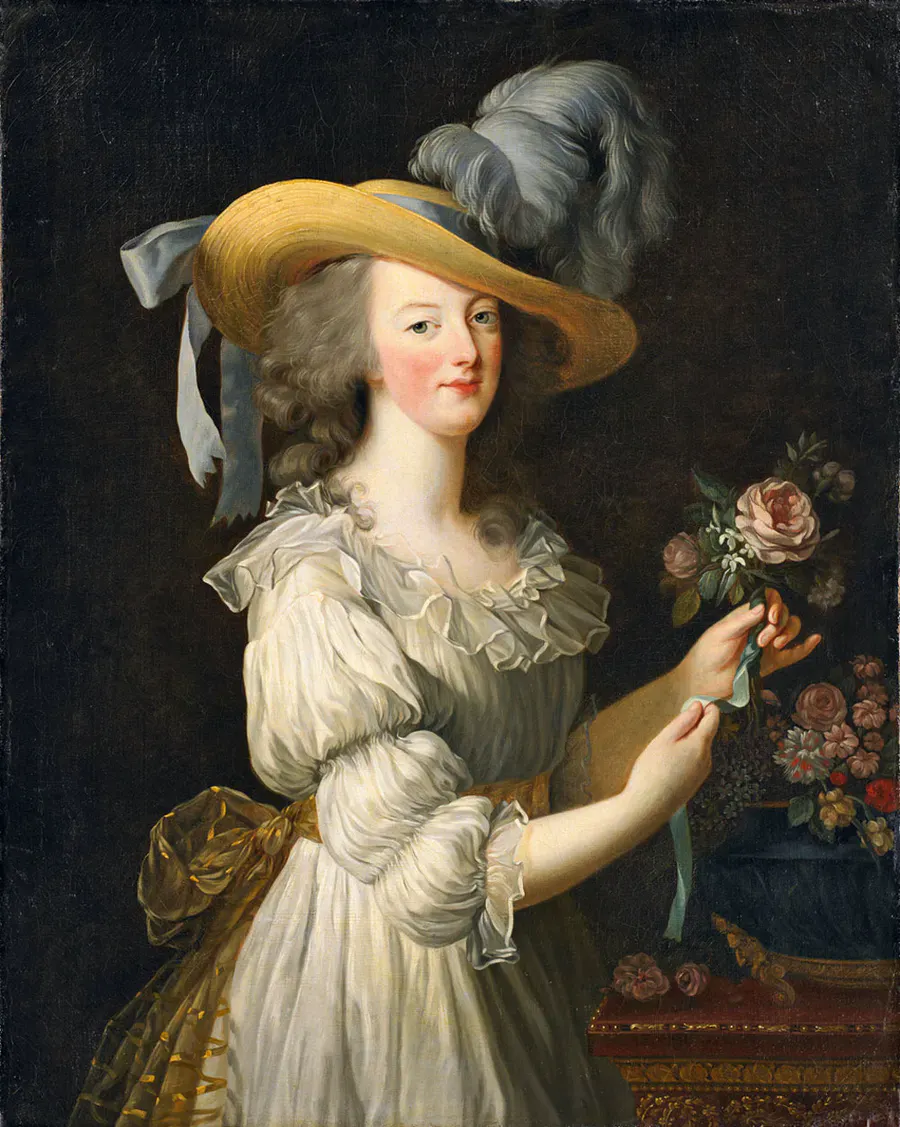
Marie Antoinette supported her friend to the best of her ability and made sure that she became a member of the Académie Royale de Peinture et de Sculpture on 31 May 1783, one of few women admitted. In the autumn of the same year, Vigée Le Brun exhibited at the Paris Salon for the first time. One submission was a portrait of the queen, who had in the meantime become a mother but had increasingly lost her popularity with the nation. Reasons for this were her love for expensive clothes, jewellery and gambling and the neglect of her royal duties, which alienated the nobility. As a result, Marie Antoinette chose to withdraw to her Petit Trianon in the park of Versailles, together with an illustrious circle of close friends, where she strolled around in light muslin dresses.
See also: Marie Antoinette Memorabilia Fetch Insane Sums
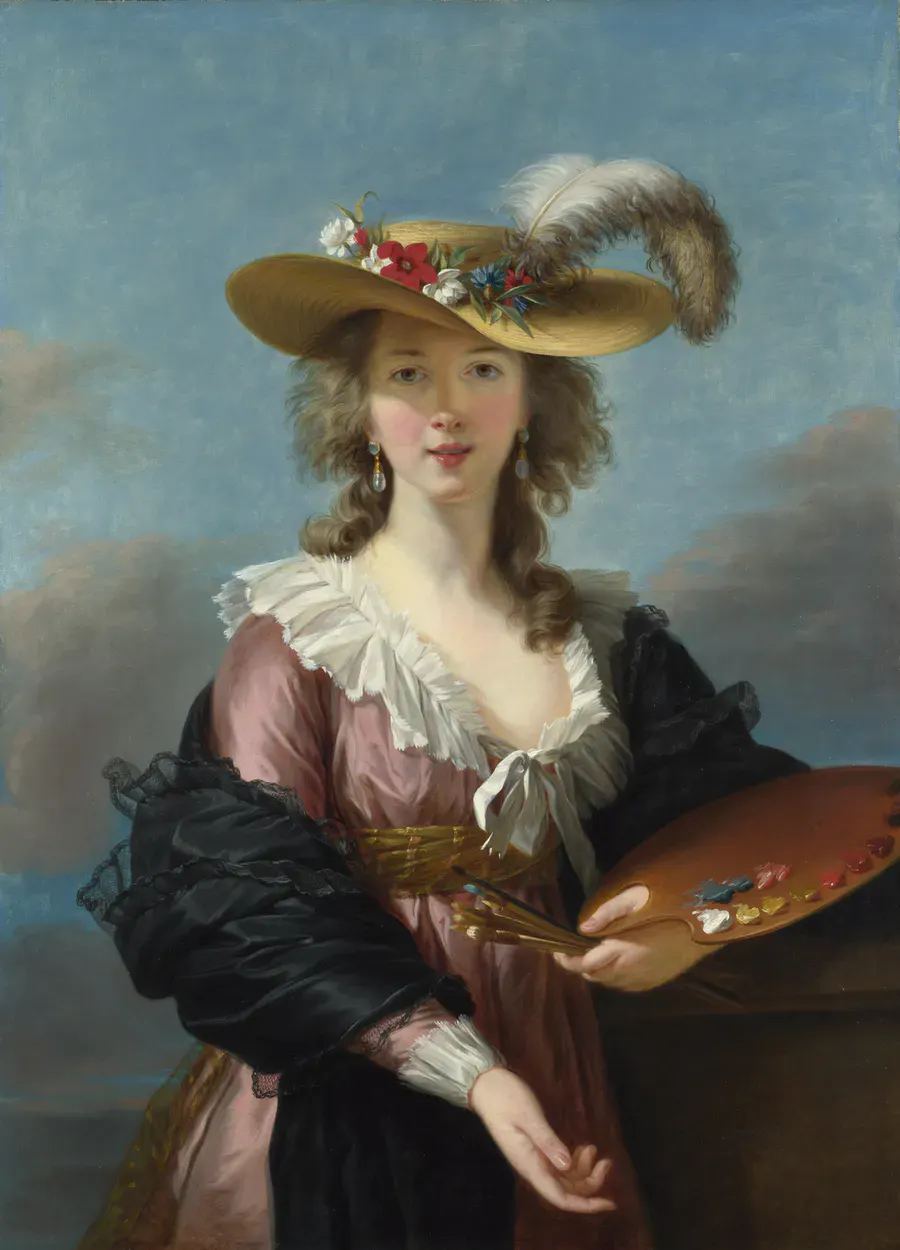
Madame Vigée Le Brun was the actual trendsetter here, always wearing light muslin dresses while painting. Marie Antoinette had herself painted in such a dress, holding a rose and wearing a wide-brimmed straw hat. When this painting was exhibited at the salon, visitors were outraged: they thought the queen was practically in her underwear. Some suspected that the Austrian-born queen intended to drive the French silk industry into decline.
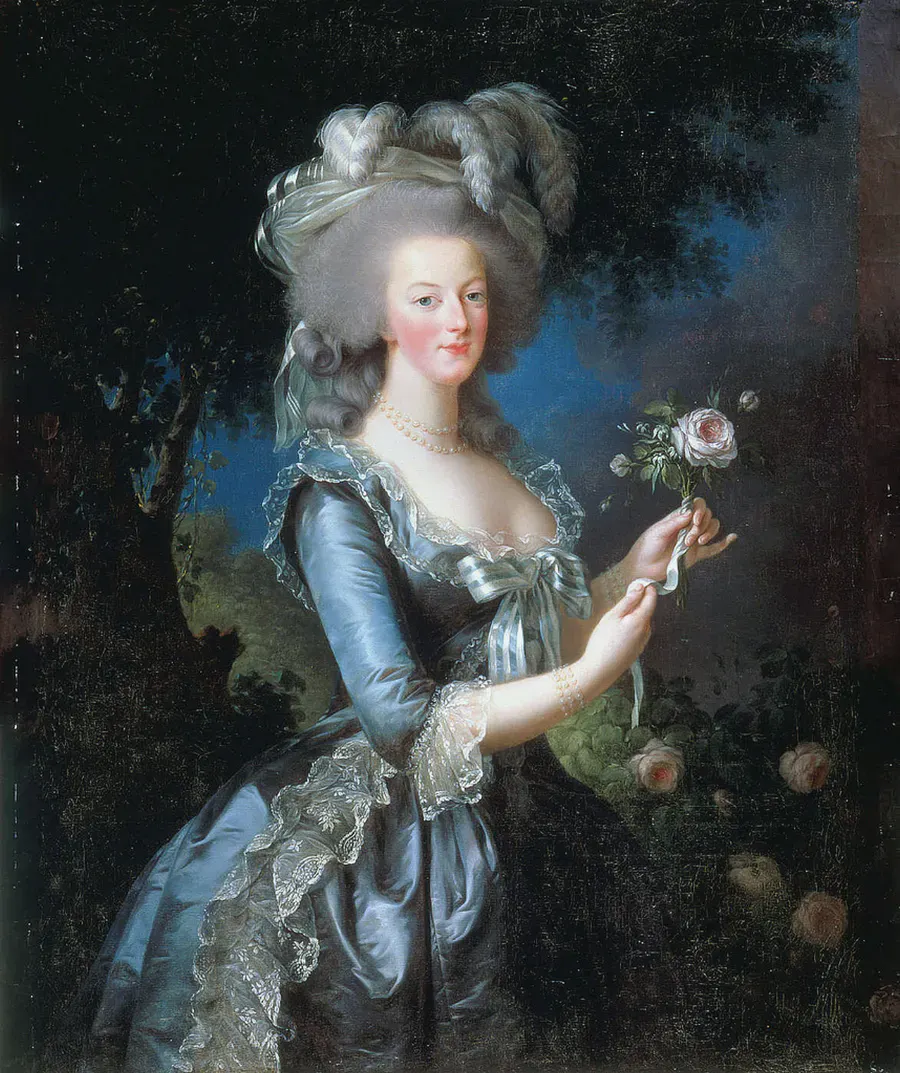
A replacement portrait was thus needed quickly. In record time, Élisabeth Vigée Le Brun painted another portrait of Marie Antoinette in the same pose, but replacing the muslin dress with a silk gown and the straw hat with a fashionable bonnet called a toque. Fortunately, the incident in the salon did not damage the friendship between the queen and the painter, and Marie Antoinette called on Élisabeth Vigée Le Brun several more times to have her portrait painted.
Want more articles like this straight to your inbox? Subscribe to our free newsletter!
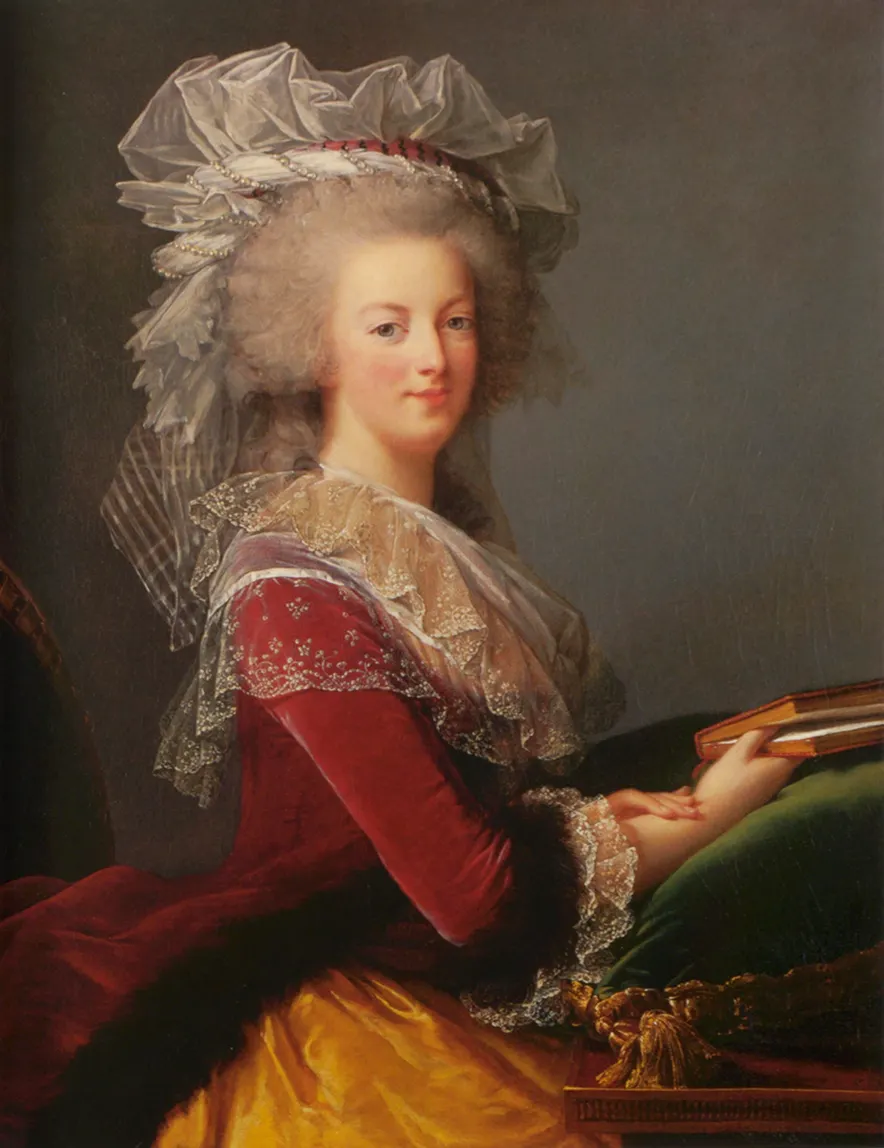
This was the case in 1785, when the Foreign Office asked for a portrait of the Queen to be sent to the then French ambassador in Constantinople. The clothing style of the now three-time mother Marie Antoinette had become more conservative. However, her earlier recklessness caught up with her, when in the same year the so-called 'Affair of the Queen's Necklace' further damaged her reputation, though it turned out she was innocent and had been framed by scammers.
See also: Crown Jewels: 5 Times Royal Jewellery Made Auction Headlines
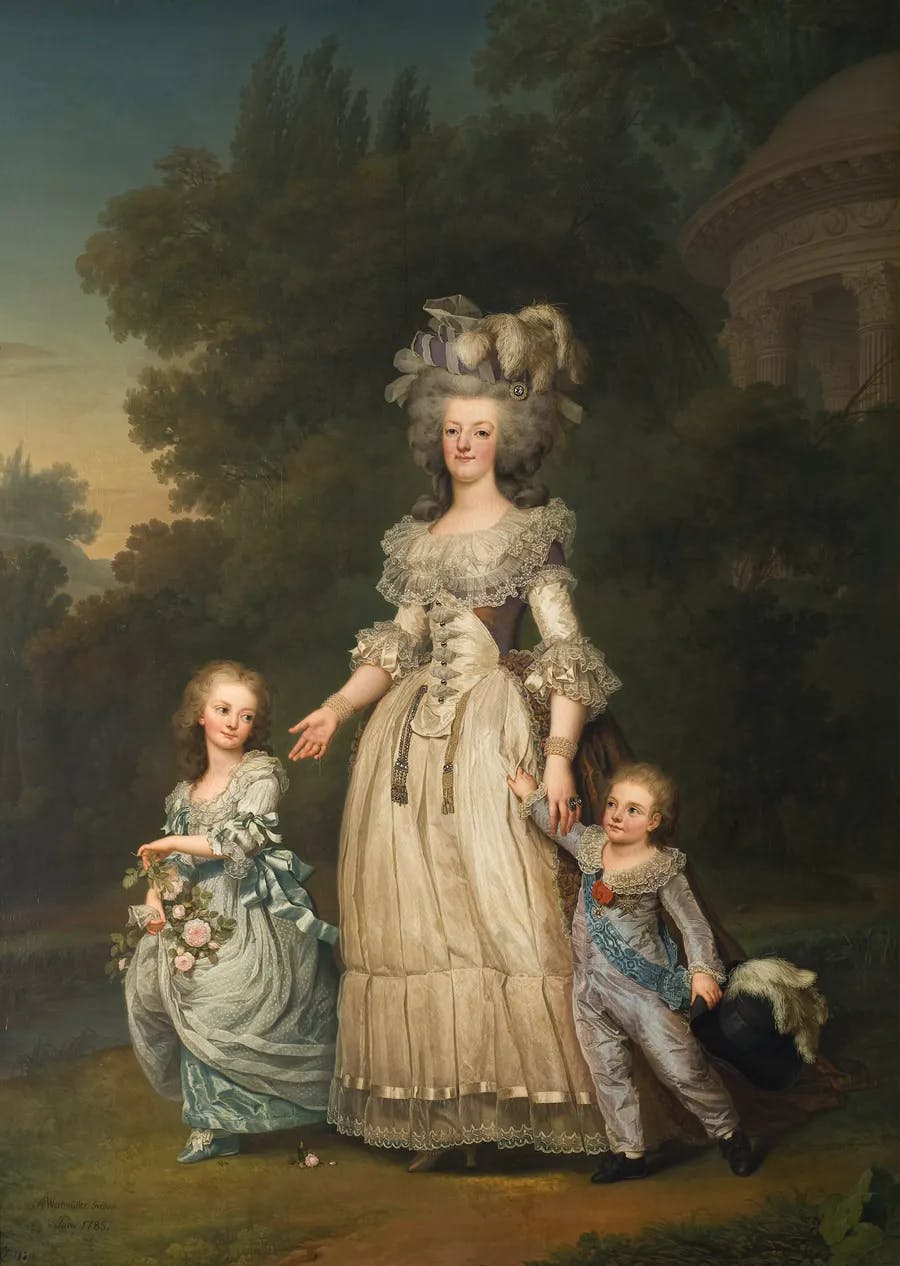
In the same year, the Swedish king Gustav III, who greatly admired Marie Antoinette, commissioned Adolf Fredrik Wertmüller to paint a portrait of the queen with her two eldest children, Marie-Thérèse and Louis-Joseph. The painting, however, was not well-received, and Marie Antoinette probably shed no tears for it as it left France for Sweden.
See also: On Rocky Paths: Female Artists from the Renaissance and Enlightenment
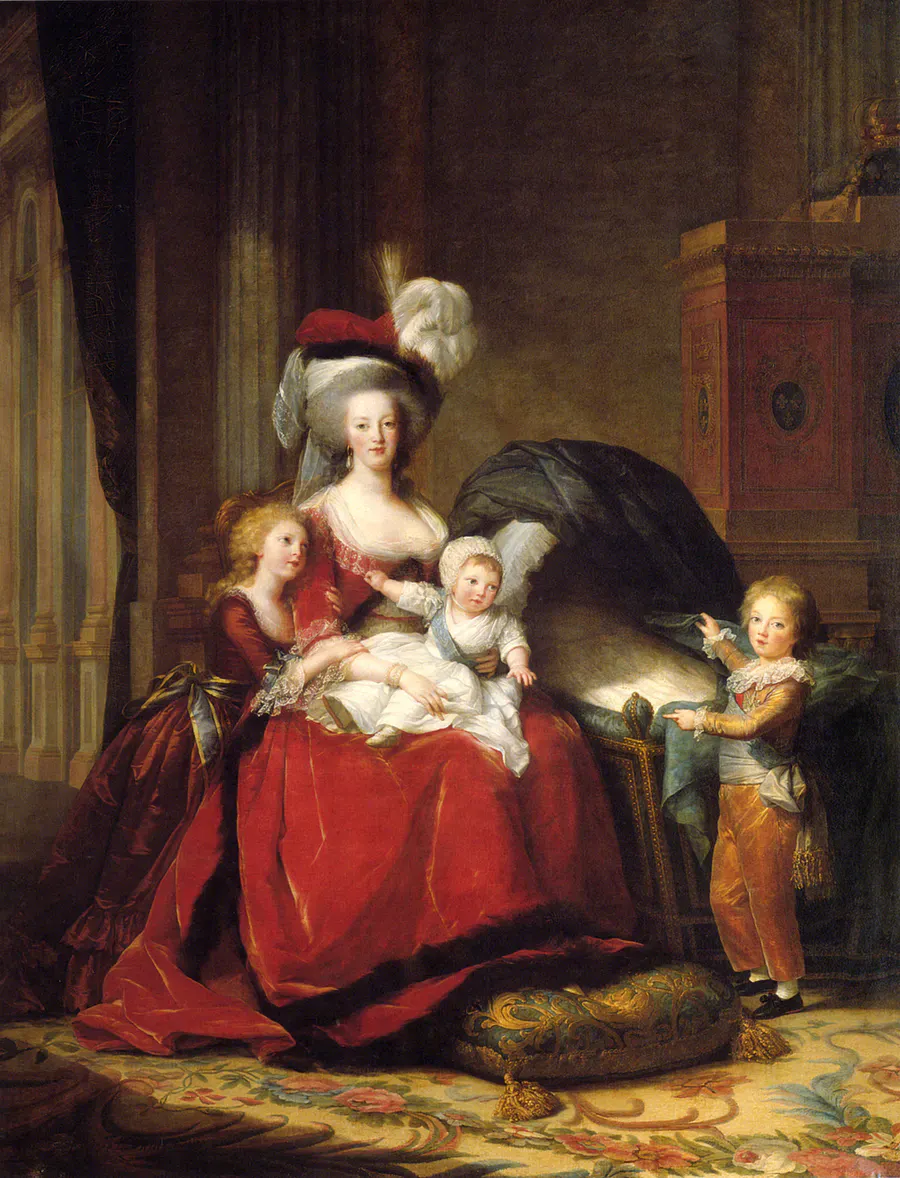
Perhaps as a way of putting the Queen's image in a better light, the Royal Buildings Administration also commissioned a portrait of Marie Antoinette with her children. To guarantee a good outcome, they turned to Élisabeth Vigée Le Brun, who began working on it in 1785.
See also: 12 Women Who Rocked the Art World
In 1787, Marie Antoinette's reputation was so bad that Madame Vigée Le Brun dared not show the portrait in the Salon. However, it was still given a place of honour in the Palace of Versailles, where Marie Antoinette passed by every day. This would change when she and her husband Louis XVI lost their eldest son to tuberculosis at the age of seven in 1789.. Now Marie Antoinette could no longer bear to look at the picture and had it hung in a less prominent place - although she immediately informed the painter of the reasons for her decision.
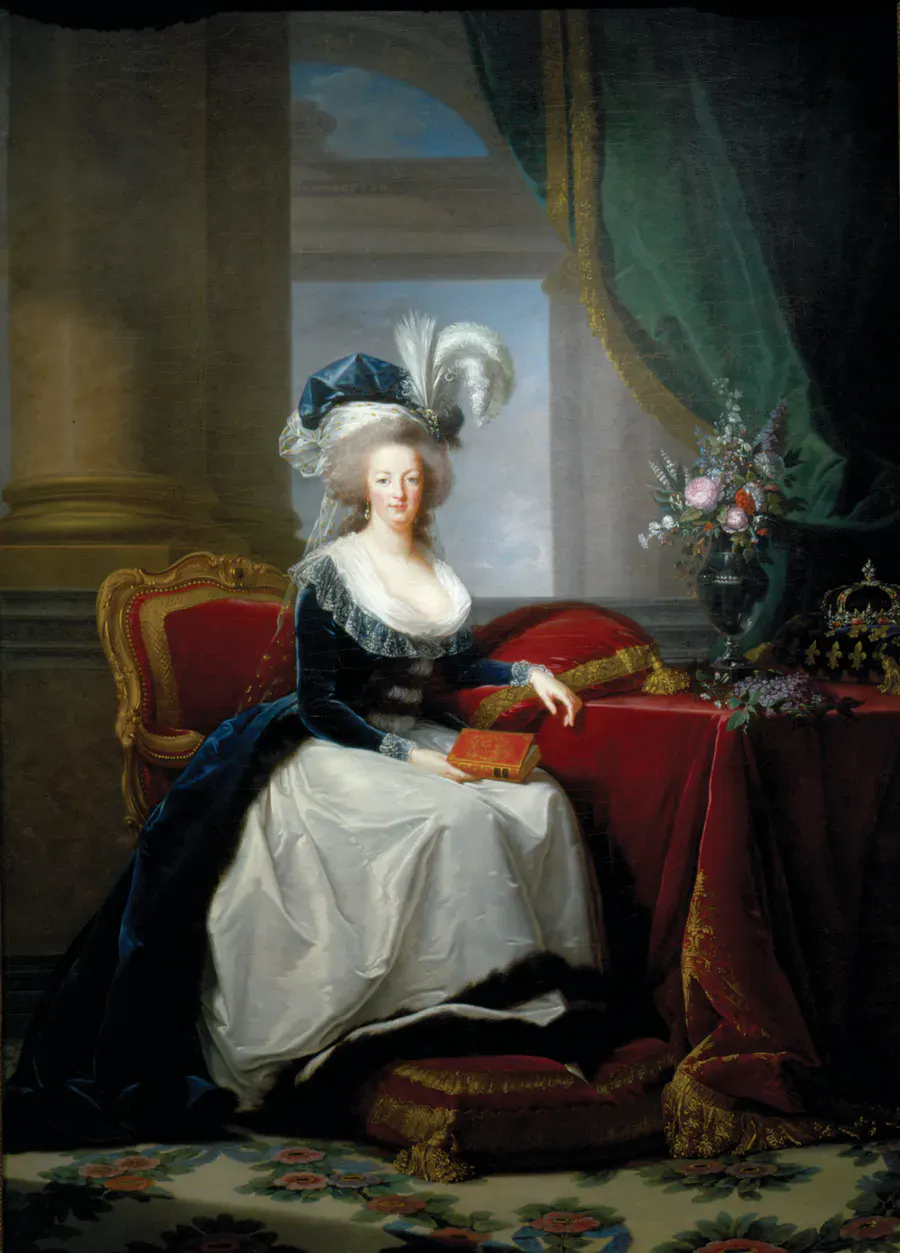
The portrait with her children was the last painting for which Marie Antoinette sat as a model for her favourite painter. She still insisted on commissioning another in 1788, which shows Marie Antoinette in a blue and white dress sitting on a chair with a book on her lap. The pose and clothing are based on the group portrait, while for the background Vigée Le Brun used the first background she had painted of the Queen ten years earlier.
See also: 5 Facts About Royal Mistress Madame du Barry
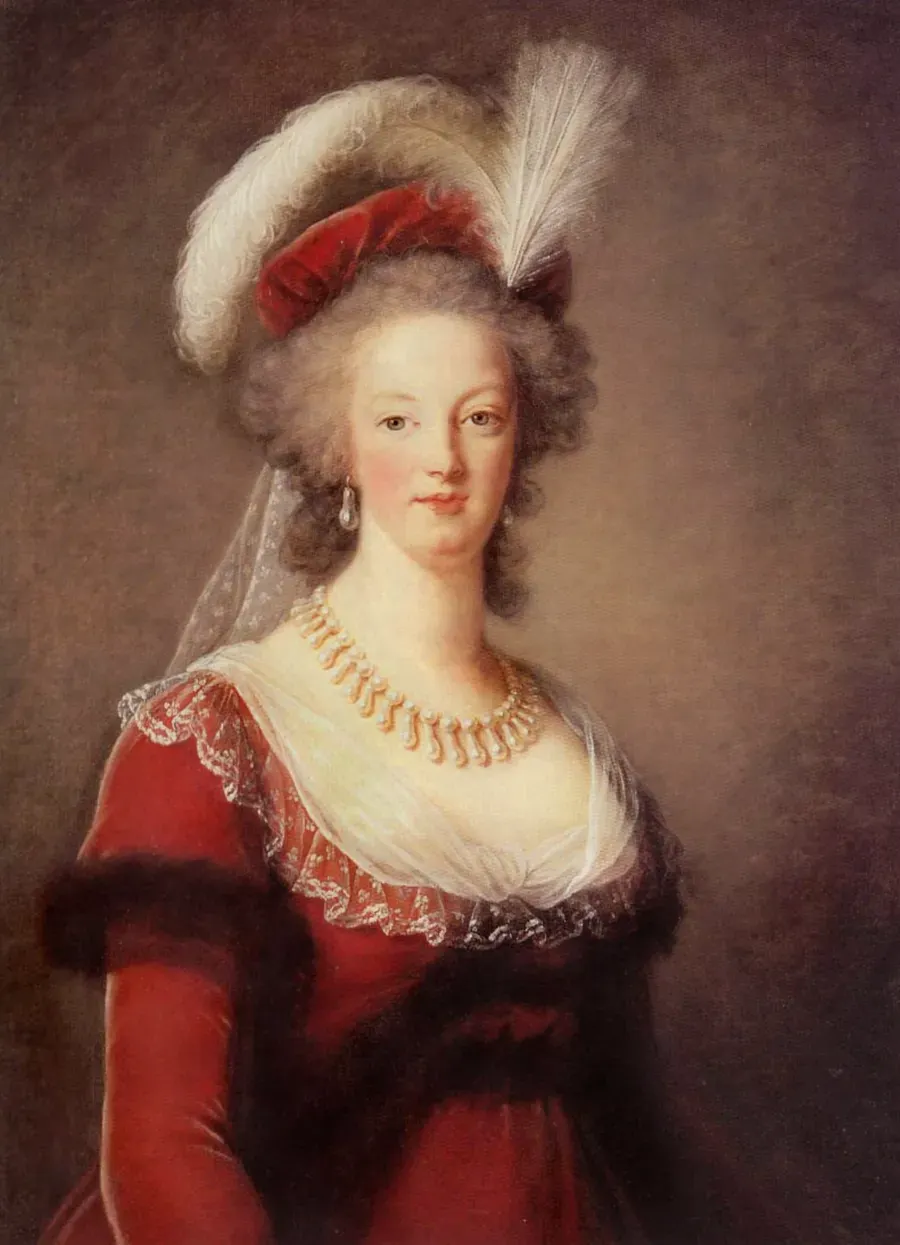
It is possible that another portrait of Marie Antoinette was created in this way, showing her in a similar design. However, since it shows the Queen with a striking pearl necklace, it was certainly not an official portrait, as Marie Antoinette no longer wanted to be associated with precious jewellery after the necklace affair.
When the Palace of Versailles was stormed at the beginning of October 1789 and the royal family was taken to Paris, Élisabeth Vigée Le Brun left her home country with a heavy heart together with her daughter Julie. The danger due to her connections to the highest circles of the French monarchy was simply too great. She began her journey across Europe, which took her to Italy, Vienna and Russia, and led to an exile that lasted twelve years.
See also: A History of the Smile in Art
Wherever she stayed, high-ranking people wanted to have their portraits painted by the 'painter of Marie Antoinette'. Especially in Russia she found a wealthy clientele. In Naples she painted the legendary Lady Hamilton, but above all she kept in her heart the memory of her work with the Queen of France, who lost her head under the guillotine on 16 October 1793.
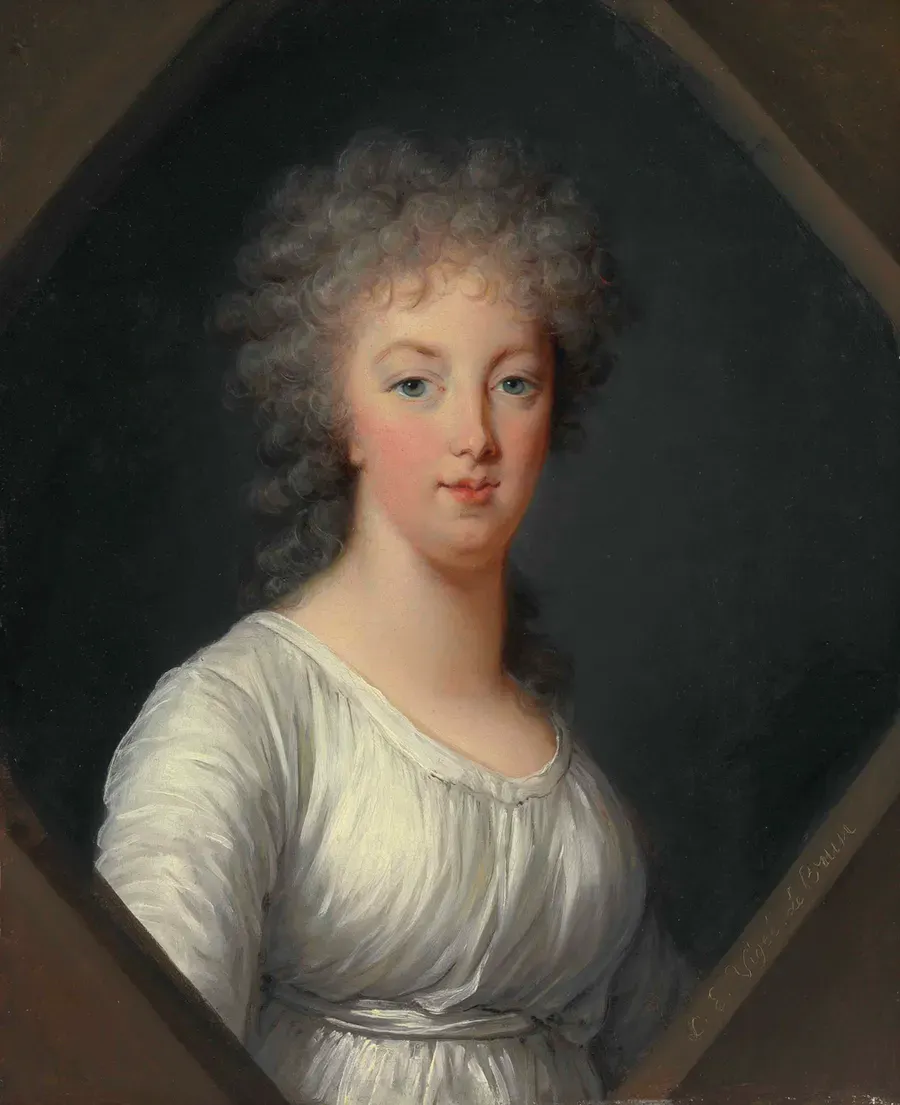
In July 1800 she painted a posthumous portrait of Marie Antoinette, which she sent to Marie Antoinette's only surviving child, her daughter Marie-Thérèse. The painting may have been a wedding present, as the now Duchess had married her cousin the year before. It showed the fated queen in a way for which she had been severely criticised 17 years earlier: in one of those plain white dresses she was so fond of wearing.